Bill McKibben: COVID-19 Is Presenting Us With an Opportunity to Reconceptualize Our Social Lives

It's awkward to discuss silver linings while so many people are suffering and when things might get much worse before they become better. That said, COVID-19 appears to be presenting us with an opportunity to reboot how we should be interacting with each other. Bill McKibben discusses this opportunity at Yale365:

[As Society Reopens], we might actually find ourselves embracing gregariousness. In truth, we began social distancing a long time ago. First came the move to the suburbs: In the postwar years, America spent the bulk of its prosperity on the task of building bigger houses farther apart from each other. This caused environmental woes — all those big houses to heat and cool and migrate between — but it also meant that we simply ran into each other less. The average size of a new house has doubled since 1970, even as the number of people living in it has steadily shrunk — the average density of most recent housing developments is about two people per acre, down from about 10 persons per acre for cities, suburbs, and towns in 1920. Between 1974 and 1994 the fraction of Americans who said they frequently visited with their neighbors fell from almost a third to barely a fifth. That number has kept dropping, now less because of suburbanization than because of screens: If you look at teenagers, for instance, a wild behavioral shift is noticeable beginning about 2012 when the numbers of Americans with a smartphone passed the 50 percent mark. The number of young people who got together with their friends in person every day dropped by 40 percent from 2010 to 2015, a curve that seems to be accelerating according to Jean Twenge, a psychology professor at San Diego State University.

Photo by Erich Vieth

Continue ReadingBill McKibben: COVID-19 Is Presenting Us With an Opportunity to Reconceptualize Our Social Lives

Darrin Patrick’s Final Sermon: Life is Precious and Fleeting

A friend of mine, Darrin Patrick, was a pastor of a St. Louis Church called "The Journey." He died suddenly two days ago. The Post-Dispatch reports this: [N]o official cause of death has been released. The gunshot wound appeared to be self-inflicted; foul play is not suspected." I don't know anything further than this cryptic account.

I hadn't seen Darrin for several years, but I could have tried harder to connect with him again. That's one of the crazy things that life does, right? You don't make enough effort and then, suddenly, it's too late. This is not the first time this has happened to me. Perhaps this was Darrin's last sermon: life is truly precious and fleeting and you need to seize the day and make real efforts to maintain your connections to your people. He would likely add that it is critically important to be creative in those connections, because it was a significant part of his mission to support artists and writers.

When we last visited, Darrin spoke highly of his wife Amie and their kids, but I hadn't met them. Yesterday, Amie posted a sad sweet announcement on his FB page, and I just posted a short comment, which I will paste below. Mine was the 918th comment to her announcement. For another glimpse at what an unusual and innovative person Darrin was, check out this post at Dangerous Intersection.  In fact, I'm going to spoil it: I would bet you don't know of any other pastor who invited an atheist to discuss skepticism in front of hundreds of parishioners as part of a church service.

Amie, you and I have never met, but I am one of the many people touched by Darrin. By no means am I the sort of person that would be expected to fit into Darrin's flock, but I suspect that Darrin was surrounded by such people. He challenged me and I challenged him back and that's how he wanted it. That's because he was a real person, filled with intelligence, good-heartedness and energy but also nuance. I'm so sorry for your loss. Please know that I will miss him too. He changed me for the better and that's the bottom line.

Continue ReadingDarrin Patrick’s Final Sermon: Life is Precious and Fleeting

Waking Up Podcast Interview: Sam Harris and Caitlin Flanagan

Today I listened to yet another engaging episode of "Making Sense," the podcast of Sam Harris. Sam's guest was Caitlin Flanagan, who often writes for The Atlantic. I enjoy listening to energized conversations like this, involving thoughtful people whose thought processes are not severely warped by political party tribal forces. I'm getting worn out from all of the conversations (in so many other places) involving people who are consciously and enthusiastically reverse-engineering their comments to fit the prevailing dictates of political parties. We would all be so much better off if only we would (as Jonathan Haidt suggests) unplug from the Matrix so that we could each be more consciously self-critical. 

Continue ReadingWaking Up Podcast Interview: Sam Harris and Caitlin Flanagan

Having Few Friends is Dangerous to your Health

Here's a good incentive to turn off your TV and go make real friends.

[C]lose relationships with children and other relatives had very little impact on how long you live, but people with the most friends tended to outlive those with the fewest by 22 percent. Better yet, a clinical review of nearly 150 studies found that people with strong social ties had a 50 percent better chance of survival, regardless of age, sex, health status, and cause of death, than those with weaker ties. . . . In fact, according to the researchers, the health risk of having few friends was similar to smoking 15 cigarettes a day, and more dangerous than being obese or not exercising in terms of decreasing your lifespan. Keep in mind that means real friends. Not Facebook friends or Twitter followers.

For more, here's the full article from Inc.

Continue ReadingHaving Few Friends is Dangerous to your Health

Irresolvable Negotiable Differences of our Culture Wars

Marriage/relationship researcher John Gottman has provided us with a stunning statistic:

"69% of relationship conflict is about perpetual problems. All couples have them — these problems are grounded in the fundamental differences that any two people face. They are either fundamental differences in your personalities that repeatedly create conflict, or fundamental differences in your lifestyle needs.In our research, we concluded that instead of solving their perpetual problems, what seems to be important is whether or not a couple can establish a dialogue about them."

Gottman's research reminds me of the our nation's cultural divide; apparently, we can no longer talk with those we perceive to be different. I don't think we differ from each other nearly as much as the mass media suggests. That said, it seems to me that Gottman's suggested strategies for keeping individual relationships happy and functional are relevant to what we need to do on a national level.

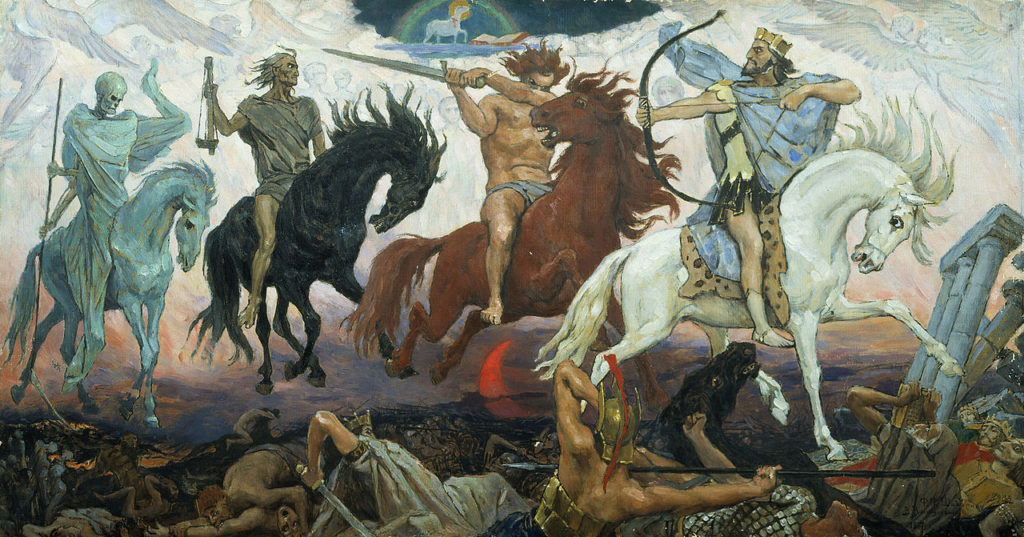
We have forgotten how to talk respectfully to one another, avoiding Gottman's "four horsemen," criticism, contempt, stonewalling, and defensiveness. We have forgotten that being in any functional relationship takes hard work and compromise. I believe that this difficult work has become logarithmically more difficult for two basic reasons: A) tribal ideologies running rampant and B) corporate money gushing through the political system. These two things distort the issues, cause us to create crude cartoons of one another, and permeate the national conversation with fear and loathing of each other.

Barking at each other never brings us any progress. We've seen that for years already. It will take lot of work, soul searching, and looking in the mirror to become more functional on a national level. It will take an act of faith that we can get along if only we worked harder to be civil. This is perhaps too much to ask in an age of widespread magic thinking and diminished attention spans.

Continue ReadingIrresolvable Negotiable Differences of our Culture Wars