
Pics or it didn’t happen!
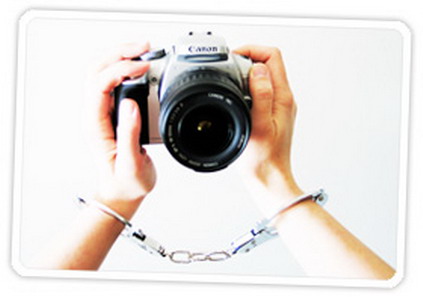 I was mulling around the Lincoln Park Zoo today with a friend when a man stepped on me. He was filming a Siberian tiger with a high-end digital video camera, which he held on an expensive mounting. He was fidgeting with all of the camera's features, backing up to get the perfect shot, and he stepped all over my feet. The foot-stomping didn't bother me so much as the man's intent focus on something other than his present surroundings. A beautiful creature stood before him, but his attention was directed at the camera and the filming of the tiger more than it was the tiger itself.
Not much later, something similar occurred in the Tropical Birds House. As I was watching the bleeding-heart pigeons, a man, family in tow, came around the corner with a massive video camera. He also had it placed on an expensive mount. Obliviously, he nudged forward until his lens nearly leaned on the display's glass. He fiddled and fidgeted. He zoomed on the critters for a moment, and left.
"Do you think he'll ever watch that footage?" my friend asked.
"No," I guessed. Without much thought I noted, "It isn't about the footage. He probably just bought that camera, and is filming because he wants to play with it."
"So the actual footage is useless," he observed in return.
I intuited that the man's camera was a new purchase because I've done the exact same thing with a fresh 'toy'.
I was mulling around the Lincoln Park Zoo today with a friend when a man stepped on me. He was filming a Siberian tiger with a high-end digital video camera, which he held on an expensive mounting. He was fidgeting with all of the camera's features, backing up to get the perfect shot, and he stepped all over my feet. The foot-stomping didn't bother me so much as the man's intent focus on something other than his present surroundings. A beautiful creature stood before him, but his attention was directed at the camera and the filming of the tiger more than it was the tiger itself.
Not much later, something similar occurred in the Tropical Birds House. As I was watching the bleeding-heart pigeons, a man, family in tow, came around the corner with a massive video camera. He also had it placed on an expensive mount. Obliviously, he nudged forward until his lens nearly leaned on the display's glass. He fiddled and fidgeted. He zoomed on the critters for a moment, and left.
"Do you think he'll ever watch that footage?" my friend asked.
"No," I guessed. Without much thought I noted, "It isn't about the footage. He probably just bought that camera, and is filming because he wants to play with it."
"So the actual footage is useless," he observed in return.
I intuited that the man's camera was a new purchase because I've done the exact same thing with a fresh 'toy'.