
What? The White House is endangering us by withholding information?
This is getting to be a familiar story, right? Here’s the typical plot: There’s something going on that poses a serious risk to Americans, and the White House decides to protect big corporations rather than protect the people at risk.
This time, the protected industry consists of chemical manufacturers. The victims are American citizens, many of them recalcitrant admirers of the Bush Administration. Here’s an excerpt of the article by the Associated Press:
The Bush administration is undermining the Environmental Protection Agency’s ability to determine health dangers of toxic chemicals by letting non-scientists have a bigger – often secret – role, congressional investigators say in a report obtained by The Associated Press.
The administration’s decision to give the Defense Department and other agencies an early role in the process adds to years of delay in acting on harmful chemicals and jeopardizes the program’s credibility, the Government Accountability Office concluded.
At issue is the EPA’s screening of chemicals used in everything from household products to rocket fuel to determine if they pose serious risk of cancer or other illnesses.
How many people are dying out there because they have been exposed to common chemicals of which most people don’t know of the dangers? How many of those people are children? Every time I hear of another person getting cancer (especially when I hear of a young child getting cancer), I wonder whether it’s because he or she has been exposed too long to that thick cocktail of chemicals in which we live. And we live our lives in ignorance thanks to a government which should be protecting us.
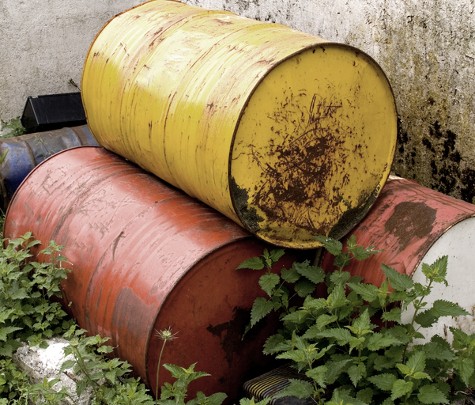
You might be thinking “Surely, the government is at least letting us know about the most commonly used risky chemicals?” That assumption would be wrong:
After years of stops and starts, the GAO said, the EPA has yet to determine carcinogen risks for a number of major chemicals such as:
-Naphthalene, a chemical used in rocket fuel as well as in manufacturing commercial products such as mothballs, dyes and insecticides.
-Trichloroethylene, or TCE, a widely used industrial degreasing agent.
-Perchloroethylene, or “perc,” a chemical used in dry cleaning, metal degreasing and making chemical products.
-Formaldehyde, a colorless, flammable gas used to making building materials.
Environmentalists say these chemicals have been widely found at military bases and Superfund sites and in soil, lakes, streams and groundwater.
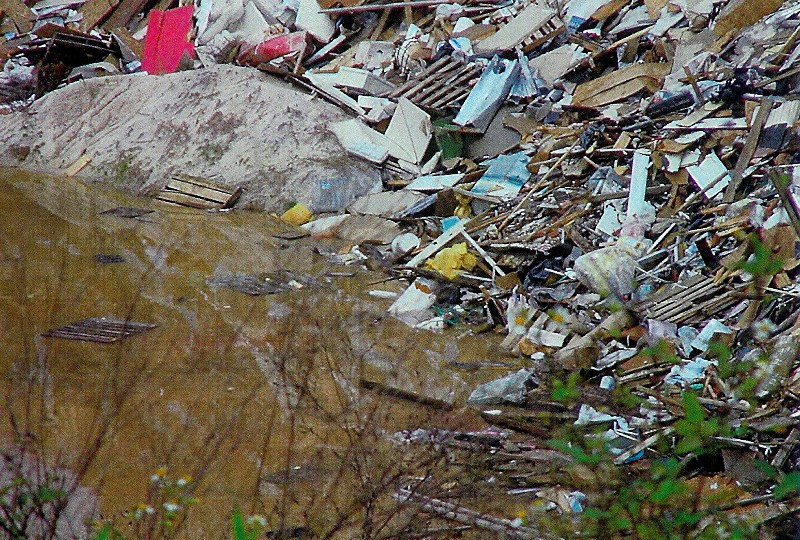
Now . . . if you really want to know how bad things are, read this Harper‘s article: “Toxic inaction: Why poisonous, unregulated chemicals end up in our blood.” It’s a detailed article but very much worth your time. Here are a some chilling excerpts:
Europeans have recently decided to do something about all the untested chemicals that are ending up in their blood. “The assumption among Americans is, ‘If it’s on the market, it’s okay,’” explained Robert Donkers, an E.U. official who was asked to review Europe’s regulatory laws after the baby-product scare. “That fantasy is gone in Europe.”
The primary target of Europe’s new chemical regulation is the more than 60,000 compounds [the U.S.] allowed to stay on the market without testing. Under [Europe’s] REACH [program], these chemicals will have to be registered, evaluated for toxicity, and authorized before being permitted to remain in use. . . . Europe is now compelling other nations’ manufacturers to conform to regulations that are far more protective of people’s health than those in the United States. Europe has emerged not only as the world’s leading economic power but also as one of its moral leaders. Those roles were once filled by the United States.
… According to a 2005 Government Accountability Office analysis, the EPA relies too heavily on industry test data when making safety assessments and allows companies to keep critical data from the public through “indiscriminate” claims that information is proprietary. . . .
One result of this industry-friendly screening is that the EPA has banned only five chemicals since its inception in 1970. For a brief time the banned list included a sixth substance: asbestos. In 1989, the EPA prohibited nearly all uses of asbestos, which it classified as a “known carcinogen.” The chemical industry challenged the agency, however, and in 1990 a federal court vacated the ban, asserting that the EPA had neither met TSCA’s requirement that the conclusive dangers of the chemical should exceed its perceived usefulness nor demonstrated that the ban was the “least burdensome alternative” for eliminating the “unreasonable risk” of exposure. The EPA has not acted to ban a chemical since that decision, . . .
Chemical companies have spent lavishly to preserve these lax standards. Since 1996, the industry has contributed $47 million to federal election campaigns, and it pays about $30 million each year to lobbyists in Washington.
The primary target of Europe’s new chemical regulation is the more than 60,000 compounds TSCA allowed to stay on the market without testing. Under [Europe’s] REACH [program], these chemicals will have to be registered, evaluated for toxicity, and authorized before being permitted to remain in use. Fifteen hundred chemicals are expected to be placed on a 2008 list of “substances of very high concern.” These toxins, which are known to cause cancer, alter genes, and affect fertility, will be the first to be removed from the market unless producers are able to prove that they can be “adequately controlled.” . . . REACH also extends to the endless array of consumer goods that utilize these compounds; thus, tens of thousands of “downstream users,” from construction companies to tennis-shoe manufacturers and fashion houses, will be forced to find out and report what chemicals are in their products and what effects they have on human health and the environment.
The American public, along with the American media, has so far been mostly oblivious to the new chemical regulations coming out of Europe. The Bush Administration and U.S. manufacturers, however, have been fixated on it for years. As REACH was being debated in the European Parliament from 2003 to 2006, the U.S. government and the nation’s industries teamed up to undertake an unprecedented international lobbying effort to kill or radically weaken the proposal.
Go to the Harper’s link and read on for details that will get you enraged. It’s so incredibly bad that you’ll think it can’t possibly be true.
Or, if you’re like a friend of mine, you’ll learn first hand. She is an American who sent a baby toy over to her friend’s baby in Denmark. Her friend in Denmark immediately wrote my friend and begged her to not send any more American toys overseas. The woman in Denmark explained that many American toys are rife with chemicals that have been banned by the EU.
Is the sort of information I’ve written about serious enough to make it onto the front page of your hometown newspaper? . . . I didn’t think so. They’re too busy writing about Hannah Montana.


The rhetoric of the Obama Administration stands in stark contrast to that of the Bush Administration regarding the need to test and disclose commonly used chemicals, according to Common Dreams:
"Of the 84,000 chemicals in commercial use in the United States — from flame retardants in furniture to household cleaners — nearly 20 percent are secret, according to the Environmental Protection Agency, their names and physical properties guarded from consumers and virtually all public officials under a little-known federal provision. The policy was designed 33 years ago to protect trade secrets in a highly competitive industry. But critics — including the Obama administration — say the secrecy has grown out of control, making it impossible for regulators to control potential dangers or for consumers to know which toxic substances they might be exposed to. . . Of the secret chemicals, 151 are made in quantities of more than 1 million tons a year and 10 are used specifically in children's products, according to the EPA."
http://www.commondreams.org/headline/2010/01/04-3
From a story by a man whose tumor luckily proved to be benign (but this episode got him wondering about the chemicals in our environment):
"In his book "The Omnivore’s Dilemma," Michael Pollan outlines the way our industrial food chain floats on an ocean of cheap oil. This is also true of our vast array of consumer products. Although coal companies in the mid-1800s were processing coal gas for lighting and synthesizing other products like dyes, this was but a baby step compared to what happened a hundred years later. Since World War II, Big Oil and, more recently, Big Coal and Big Natural Gas, have supplied our economy not just with energy for our homes and cars but with the very building blocks of our domestic lives: not only our plastics but our fertilizers and pesticides, our furniture, our personal care products, even our clothing. Consider this: in the last 25 years, the country’s consumption of synthetic chemicals has increased 8,200 percent.
The trouble with such rapid proliferation of products made from petrochemicals, of course, has been that the production and use of synthetic chemicals has vastly outpaced our ability to monitor their effects on our health and the environment. We learned to love what chemicals could make; we just never bothered to wonder if there could be a downside. By the mid-1970s, there were some 62,000 chemicals in use; today the number is thought to be closer to 80,000. The EPA has a full set of toxicity information for just 7 percent of these chemicals, and the U.S. chemical industry, a $637-billion-a-year business, is so woefully underregulated that 99 percent of chemicals in use today have never been tested for their effects on human health. Fewer than 3 percent of these chemicals have ever been tested for carcinogenicity. Far fewer (or none) have been assessed for their effect on things like the human endocrine system or reproductive health."