rss

Tag: "books"

3
To Read Or Not To Read, And Yet to Write—’Tis A Conundrum Devoutly To Be Solved

To Read Or Not To Read, And Yet to Write—’Tis A Conundrum Devoutly To Be Solved

I’ve heard of this phenomenon, but never before encountered it directly. Excuse me, I’m still trying to wrap my head around the utter vapidity of this…

I have a MySpace page. Admittedly, I pay less attention to it these days in lieu of my Facebook page (all these Pages…for such a functional Luddite, it amazes me I navigate these strange seas), but I do check it at least once a week. I post a short blog there. And I collect Friend Requests.

I received such a request the other day from someone whose name I will not use. Unless it’s from someone or something I recognize, I go to the requester’s page to check them out. Saves on a small amount of embarrassment. This person had a legit page. Aspiring writer. Claimed to be working on several short stories and a novel. Great. I’m all about supporting other writers. Sometimes we’re all we’ve got. But I scrolled down to the section where he lists his interests and find under BOOKS this:

I actually don’t read to much but I do like a few. Twilight, Harry Potter, Impulse, Dead on Town Line, etc.

I sat back and stared at that and the question ran through my head like a neon billboard, “How does that work? Just how the hell do you want to be a writer and not like to read?”

So I sent this person a message and asked. I told him that to be a writer you have to love words, love stories…

Well, here’s the exchange, sans names:

Okay, you sent me a friend request, so I looked at your profile. It says you want to be a writer, but then under Books you say you don’t read much.

How does that work? You want to be a writer you have to love words, you have to love stories, you have to love it on the page, and that means reading A LOT.

You might just blow this off, but don’t. If you really want to be a writer, you must read. That’s where you learn your craft, sure, but more importantly that’s where you nurture the love of what you say you want to do.

1

No Excuse—A Personal Gripe

Generally speaking, I don’t like to criticize books. Tim Powers told us at Clarion that a sale negates all criticism. That may be more true with fiction (though I reserve the right to privately diss any book that’s badly done, regardless) but when it comes to nonfiction, I find it inexcusable.

I’ve been slogging—slogging, mind you—through a history of the rise of the Spanish Empire under Fernando and Isabel, the period during which the New World (?) was discovered by Europeans and Spain became the pre-eminent power on the global scene. The book is called Rivers of Gold and it was penned by one Hugh Thomas, published in 2003. I’m finding it virtually unreadable.

Partly this is a style issue. The prose are flat, lifeless. He makes the mistake of introducing casts of characters in one-paragraph lumps, as if the average reader is going to remember all these people, many of whom do not seem to matter in later parts of the narrative. We are given chunks of delightful detail about some things (the make-up of Columbus’s crews on both the first and second voyage, which is very telling about the geopolitics of the day) and the rather revolutionary nature of Fernando’s and Isabel’s co-rule (for it was genuinely a partnership) and then little about other things (like the ultimate disposition of the Muslim populations after the fall of Granada and what happened to their libraries, which directly impacted the rest of Europe).

But these are small quibbles. Thomas seems to have a bias toward Christianity, but he is clearly restraining himself throughout and attempting to be even-handed, and largely succeeds (sincere mourning for what became of the Jews). He orders the events well, so that we see the relevance of Fernando and Isabel adhering to Law rather than acting as autocrats and their background and education as it affected their judgment concerning what Columbus found and what his enemies told them.

6
Never pay for textbooks again, in six steps.

Never pay for textbooks again, in six steps.

A college education (and even more, the “college experience”) costs a lot of money. One of the most bemoaned college-related expenses is textbooks. Every quarter or semester, students trudge through their local bookstores and shell out hundreds of dollars for the heavy, price-inflated compendiums of glossy photos, useless asides, and (maybe) small slivers of information.

The pattern of behavior is always the same: the students scan the bookstore shelves for cheaper, used editions (perhaps $70 a pop instead of $100). Some classes require multiple books; some classes require ten. The students carry the stack of texts to the counter and pony up hundreds. In class, the books may never be used- it’s impossible to tell when they will actually be relevant.

Later, these students gather the books up and try to return them to the store for a pittance (maybe $20-30). Often a book is not returnable because it is an “old edition”- a new version has just come out, with minor updates such as a new cover photo and a table with a new layout. Next quarter, everyone will be buying the full-priced new editions.

The textbook industry is a racket. The books are made unnecessarily expensive, for they are puffed-up with frilly nonsense. My school drove up the price of Psych 100 textbooks by requesting a special “Buckeye Edition”; the only difference was a black-and-white photocopy inserted into the first page, which acknowledge the student reader as a member of Ohio State. It’s a hose.

Last year, however, I realized that I never really have to pay for textbooks. For the past four quarters of school, I have not laid a cent on a bookstore’s counter. As I see it, there is no reason for any student to ever pay for textbooks, ever again. Here are my simple steps to attain free textbook access:

4
Books as Substitution for Television

Books as Substitution for Television

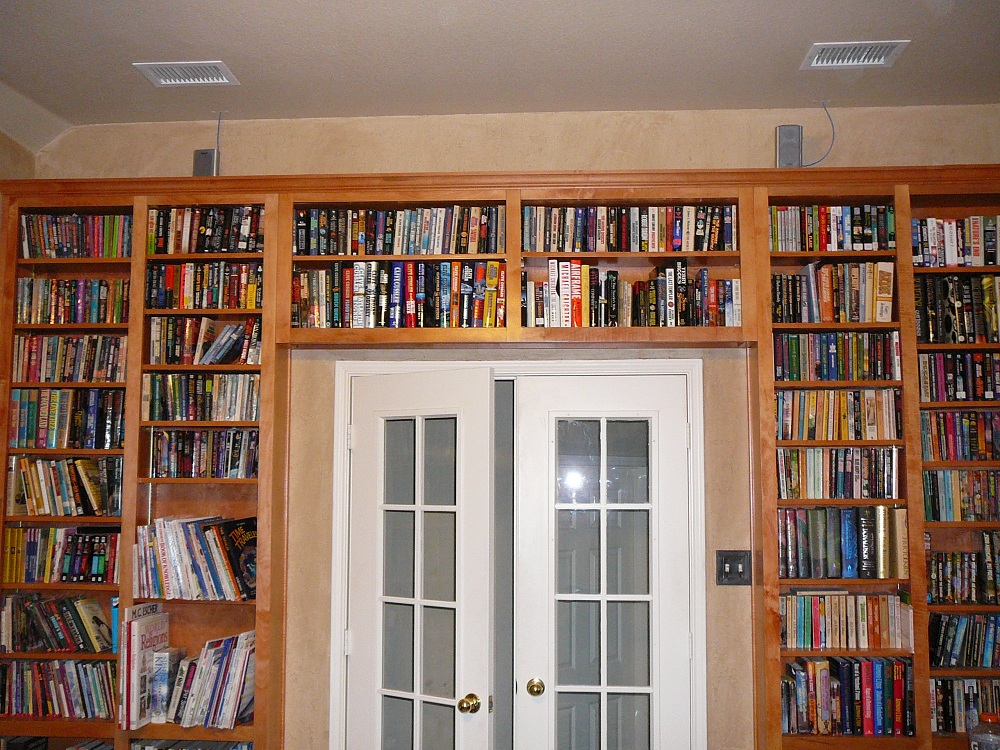
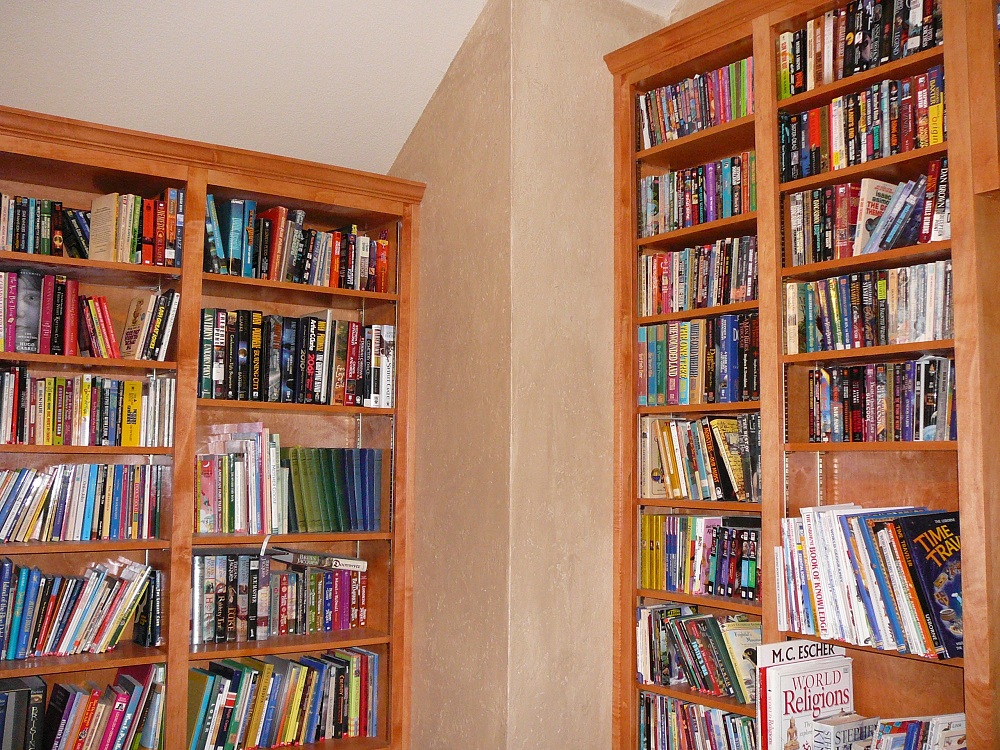
As I wallowed in my last bout of withdrawal from television over the last few weeks, I read a few books. I regularly join QPB to get a handful of books for about $25, and then cancel after fulfilling the membership requirement. I also have a few hundred well-worn science fiction paperbacks, and some in [...]

1

Richard Dawkins, Daniel Dennett, Sam Harris and Christopher Hitchens sit down to discuss religion.

Would you like to listen to Richard Dawkins, Daniel Dennett, Sam Harris and Christopher Hitchens discussing religion for two hours?  My initial impulse was that I wasn’t especially interested, even though I admire these thinkers/writers and I agree with many of their ideas.  My hesitation was that I was already quite familiar with their works.
I [...]