The Possibilities are Emptiness!
"Emptiness is described as the basis that makes everything possible"
- The Twelfth Tai Situpa Rinpoche, Awakening the Sleeping Buddha
“The truth you believe and cling to makes you unavailable to hear anything new.”
- Pema Chodron
Buddhism makes people uncomfortable when it talks of emptiness. Most Western minds immediately go to "nothingness" as the equivalent, which I am learning is not accurate. Mingur Rinpoche has a fantastic chapter on emptiness in The Joy of Living. In it he makes my language geek happy by explaining the Tibetan words for emptiness - "tongpa-nyi". He says Tongpa does mean empty, but only in the sense of something we can't capture with our senses, and better words would be inconceivable or unnameable. Nyi, he says, has no particular meaning but when added to a word conveys a sense of "possibility". Suddenly, instead of nihilism, we have an "unlimited potential for anything to change, appear, or disappear." That is cool stuff.
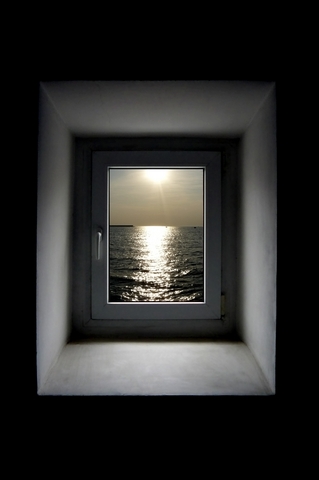 We, as human beings, simply can't conceive emptiness in that sense. Our minds are limited - they can only deal with so much - even with training. The assumptions we make and the perspectives we develop and yes, even the absolutes we live (and too often die) by, are simply our own constructions helping us navigate a reality that would otherwise overwhelm us. I'm not just talking about moral or ethical realms here, I also mean our physical reality. We are comforted by the thought that the chair we sit in and the floor we walk on are "solid" but science teaches us something else. The history of science itself demonstrates our understanding of the world is evolving. Quantum mechanics shows us things we didn't dream of 100 years ago. We keep learning new and better ways to grasp how the world works - our knowledge shifts constantly like sand in a desert storm.
Facing the possibility of everything being in flux frightens us, and so we create shields that offer protection, that make us comfortable. We then think we can know ourselves, the world, and those around us. We know what to expect, we know what to accept. We order our existence, and we feel safe. Often we don’t know that we are creating a structure with which to experience the world. We are born into them as much as we seek them out, but the effects are the same.
Habits of knowing, like habits of behavior, are comfortable, like well-worn shoes or a tasty turkey pot pie. Fear of losing that comfort and the accompanying feeling of safety is why we, collectively, often lash out at anyone or anything that is different from us. In those situations our core concepts of who we are and how we live are at risk. But when our worldview is so rigid it prevents us from adapting to what is, our carefully constructed truths are no longer places of refuge, they more resemble prison cells.
Consider a man who has been laid off from his job as a machinist who can only see himself going into work at a factory, but all of the factories in his town have closed. His options for factory work in his town are nonexistent. If that is all he can see for himself his options are very bleak. But if he can open his mind and see another way to put his skills to use - not as an employee of a factory - he can devise a plan of action. I don’t mean that he will transform himself into something different with brand new skills. But if he can let go of the rigidity of what work once meant to him, he has a better chance of finding ways to leverage what he currently has to offer.
The challenge is to hold lightly to everything I believe, and to see the lack of fixity as a source of possibility instead of a recipe for loss. As someone just getting started on this practice, I can say it feels much like standing and stretching luxuriously after being stuck in a painfully cramped space. One can learn to do a fine backstroke in the abyss, and abyss is more a fertile sea of possibility than terrifying vacuum. What a happy surprise.
Image: © Rozum | Dreamstime.com
We, as human beings, simply can't conceive emptiness in that sense. Our minds are limited - they can only deal with so much - even with training. The assumptions we make and the perspectives we develop and yes, even the absolutes we live (and too often die) by, are simply our own constructions helping us navigate a reality that would otherwise overwhelm us. I'm not just talking about moral or ethical realms here, I also mean our physical reality. We are comforted by the thought that the chair we sit in and the floor we walk on are "solid" but science teaches us something else. The history of science itself demonstrates our understanding of the world is evolving. Quantum mechanics shows us things we didn't dream of 100 years ago. We keep learning new and better ways to grasp how the world works - our knowledge shifts constantly like sand in a desert storm.
Facing the possibility of everything being in flux frightens us, and so we create shields that offer protection, that make us comfortable. We then think we can know ourselves, the world, and those around us. We know what to expect, we know what to accept. We order our existence, and we feel safe. Often we don’t know that we are creating a structure with which to experience the world. We are born into them as much as we seek them out, but the effects are the same.
Habits of knowing, like habits of behavior, are comfortable, like well-worn shoes or a tasty turkey pot pie. Fear of losing that comfort and the accompanying feeling of safety is why we, collectively, often lash out at anyone or anything that is different from us. In those situations our core concepts of who we are and how we live are at risk. But when our worldview is so rigid it prevents us from adapting to what is, our carefully constructed truths are no longer places of refuge, they more resemble prison cells.
Consider a man who has been laid off from his job as a machinist who can only see himself going into work at a factory, but all of the factories in his town have closed. His options for factory work in his town are nonexistent. If that is all he can see for himself his options are very bleak. But if he can open his mind and see another way to put his skills to use - not as an employee of a factory - he can devise a plan of action. I don’t mean that he will transform himself into something different with brand new skills. But if he can let go of the rigidity of what work once meant to him, he has a better chance of finding ways to leverage what he currently has to offer.
The challenge is to hold lightly to everything I believe, and to see the lack of fixity as a source of possibility instead of a recipe for loss. As someone just getting started on this practice, I can say it feels much like standing and stretching luxuriously after being stuck in a painfully cramped space. One can learn to do a fine backstroke in the abyss, and abyss is more a fertile sea of possibility than terrifying vacuum. What a happy surprise.
Image: © Rozum | Dreamstime.com