In in Forthcoming Book, Bart Ehrman Discusses the Book of Revelations
I don't hear much from the religious right these days, but I do know quite a few people who believe strongly in the Bible (some of them actually read it). I have a lot of posts early in my writings criticizing Bible cherry-picking (here's an irreverent look). Here are my top eight parts of the Bible that are ignored by most Christians.
I have also praised parts of the Bible, including the advice that one should always "Love your enemies." Most people who tell you that the Bible is the Way only tell you about their favorite parts and suppress the embarrassing parts.
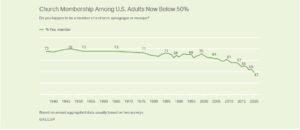
I've commented on Bart Ehrman's writings before. He is a Bible scholar, a fundamentalist turned agnostic/atheist (his position--I agree--is that one can be both of these simultaneously). In a post I wrote in 2006, I summarized Ehrman's findings that many parts of the Bible are not as written by the original authors (whoever they might be). Who changed the Bible and why? That post drew many hundreds of comments, back in a time when far more people claimed to be practicing Christians (30% of Americans are now religiously unaffiliated). Ehrman is about to release a new book on Revelations and he has some strong critical opinions about its message and tone, about its attempts to censor and violently coerce (and see here). Here's an excerpt from his website:
The overwhelming emphasis of Revelation is not about hope but about the wrath and vengeance of God against those who have incurred his displeasure. For the author of Revelation, that entails the vast majority of people who have ever lived, including, perhaps surprisingly, a number of committed Christians. The book repeatedly indicates that God is angry and that Christ seeks to avenge his own unjust death, not just on those who were responsible for it; his vengeance falls on the “inhabitants of earth.” His followers too want revenge and are told to go out and get it. The largest section of the narrative thus describes God and his “Lamb” inflicting horrible suffering on the planet; war, starvation, horrid disease, drought, earthquake, torture, and death. The catastrophes end with the Battle of Armageddon, where Christ destroys all the armies of earth and calls on the scavengers of the sky to gorge themselves on their flesh. This, then, is the climax of the history of earth.
But it is not the end of all things. After that there will be a final judgment. God’s faithful followers, his “slaves,” will be saved; everyone else who has ever lived will be brought back to life, judged for their wickedness, and then thrown, while still alive, into a lake of burning sulfur. Afterward, God will reward his obedient slaves by giving them a glorious new city of gold with gates of pearl. They then, the followers of Jesus, will rule the earth forever.
That is indeed a happy ending for some people. But it not because God loves them deeply – at least the book never says so. The saved are God’s enslaved minions who do what he demands. The love of God – for anyone or anything – is never mentioned in the book, not once. The book is instead about the “wrath of God” — as stated repeatedly — as well as the wrath of Christ, and the violent vengeance wreaked on the inhabitants of earth leading up to the appearance of the glorious city from which God’s slaves will rule the planet.
At first glance this summary may seem slanted and implausible. I will try to show, however, that it is exactly what the book itself repeatedly emphasizes. Its troubling emphases have been seen by other modern readers, of course, including, rather unexpectedly, D. H. Lawrence, who described Revelation as the “dark side of Christianity.” I could not agree more.