
Survivorship Bias

Many of us are somewhat anxious, but there are other people out there who lack the ability to feel any anxiety.  Many of those flagrant risk-takers are not with us any more.  They died because they drove recklessly, explored base jumping and generally lived on the edge.  Many others who are no longer with us ignored long term risks like drinking, eating and smoking to excess.  Many of them struggled with cancer, heart diseases and strokes on their way out.

What we see at any given moment are only the survivors. We are the survivors.  We are not living among a true cross-section of humanity.  It's good to remind ourselves of that, because doing risky things puts us at risk, right?  We are living among those who have hit the lottery, and that includes more than a few of the risk takers who are here because they have been extraordinarily lucky.  Those risk-takers are interesting to us.  We watch them, sometimes with admiration, intrigued that they can do dangerous things and yet survive.  They seem to defy death, disease and immense financial risks.  But, again, we forget that we are not looking at a cross-section. Many people jump in and open new restaurants even though 80% of restaurants fail within four years.  When we decide to go out to eat at a restaurant, we are choosing only among the survivors.  The streets are also populated by hundreds of invisible ghost restaurants too.
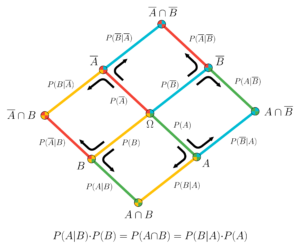
We are looking at only the lucky ones, and this can mislead us to think that it is relatively easy to do those sorts of things and yet survive.  We might cheerfully announce that we are going to engage in risky behavior without doing a Bayesian analysis. This is exacerbated by the fact that we don't know enough to know the risks, an over-confidence invited by the Dunning Kruger Effect. 

Farnham Street Blog recently took a look at the Survivor Bias:

Can we achieve anything if we try hard enough? Not necessarily. Survivorship bias leads to an erroneous understanding of cause and effect. People see correlation in mere coincidence. We all love to hear stories of those who beat the odds and became successful, holding them up as proof that the impossible is possible. We ignore failures in pursuit of a coherent narrative about success.

Few would think to write the biography of a business person who goes bankrupt and spends their entire life in debt. Or a musician who tried again and again to get signed and was ignored by record labels. Or of someone who dreams of becoming an actor, moves to LA, and ends up returning a year later, defeated and broke. After all, who wants to hear that? We want the encouragement survivorship bias provides, and the subsequent belief in our own capabilities. . . . Most leaps of faith go wrong. It does not mean we should not try, just that we should be realistic with our understanding of reality.


How could I end this article without mentioning the biggest survivorship bias of them all? The eight billion human animals now populating the surface of the earth are all survivors of long unbroken lines of ancestors. We can look around and see only these those human beings who are actually here, not those whose ancestors failed to survive long enough to pass on the next generation at every generation, extending back to the beginnings of life on earth.  This survival of the fittest, natural selection, is sometimes referred to as "breed and weed," nature's amoral culling of ever-new versions of human beings, separating the survivors from those who do not survive.

I find this to be an immensely terrifying and awe-inspiring thought. If you are lucky enough be able to read this, you are a survivor in one of the most long-shot schemes you could ever imagine.  In order for you to be here, your parents had to meet at the right time, be attracted to each other, have sex at the right time and then someone had to take enough interest in you to raise you.  This had to happen twice for your parents to exist. Eight times for your great-grandparents to exist. These numbers grow exponentially as you you look back even a few hundred years.  This is even more stunning when you consider how quickly this occurred--even a millennium is not a long period of time when you break it into generations.  I illustrated this quick passage of time with a hypothetical visual in a post I titled, "Ancestors along the Highway."

On those days when you might not feel special, then, cheer up!  You are special! You are literally a survivor in a long line of organisms extending back to shew-like mammals who found opportunities with the demise of the dinosaurs.  Your line survived all the way back to the first fish to walk on the land, Tiktaalik.  You are a survivor of the sponges, and beyond.

The odds of you being here are infinitesimally small, essentially nil.   So, again congratulations!  That said, good luck with the rest of your day.  And please remember to treat each of the people you encounter as the miraculous survivors they are.  And remember, also, that each of them is a member of your own family.  

Continue ReadingSurvivorship Bias

The Big Things that Aren’t Obvious, Until They Are

Rather than staring at the things in front of you, it’s sometimes better to step back and ask yourself what is missing in order to understand what happened. Sometimes, the things that you can directly see and hear simply don’t add up.

My favorite illustration of this process involves one of Charles Darwin’s epiphanies:

On this tour I had a striking instance of how easy it is to overlook phenomena, however conspicuous, before they have been observed by any one. We spent many hours in Cwm Idwal, examining all the rocks with extreme care, as Sedgwick was anxious to find fossils in them; but neither of us saw a trace of the wonderful glacial phenomena all around us; we did not notice the plainly scored rocks, the perched boulders, the lateral and terminal moraines. Yet these phenomena are so conspicuous that, as I declared in a paper published many years afterwards in the 'Philosophical Magazine' ('Philosophical Magazine,' 1842.), a house burnt down by fire did not tell its story more plainly than did this valley. If it had still been filled by a glacier, the phenomena would have been less distinct than they now are.


Sometimes it takes the first person to recognize a two-step process and only then does it become always obvious for everyone who follows. Sometimes the person who first "gets it" is you. You might have tried to figure something out for a month or more before you finally saw it for what it was. And then, of course, it's obvious for you and for everyone else you mention it to, whether it be a puzzle solution, how to make your software do a task or figuring out a person's secret motivation.

"The obvious is that which is never seen until someone expresses it simply." Khalil Gibran

Because I work as a trial lawyer, this also reminds me that many people assume that circumstantial evidence is "second rate" evidence; that it is not as persuasive as the things and events that people observe directly. There is no basis for believing this. Some circumstantial evidence is sometimes much more persuasive than some direct evidence. A well-known example of powerful circumstantial evidence is a “smoking gun.” Circumstantial evidence is often sufficient to convict a criminal defendant even when the burden of proof for guilt is "beyond a reasonable doubt." A multi-step puzzle involving circumstantial evidence can evoke such an "A-ha!" moment that it can even leave you no doubt at all.

If you want a great example of how something can suddenly become obvious, go to Andy Clark's Edge video on Predictive Processing, Minute 11:30, and listen to the sine wave speech pattern examples. It will hit you like a ton of bricks. The entire lecture is phenomenal, but the examples will only take a couple minutes and it's worth your while.

The (obvious) take-away: Don't give up, even where the solution is not obvious.

Continue ReadingThe Big Things that Aren’t Obvious, Until They Are

The Many Benefits of Playing Music

My parents offered me the chance to take guitar lessons when I was 7, and I agreed to do that, so now, decades later, I'm doing what many guitar players are doing: Playing self-learned keyboards! Truly, I am grateful to my parents for digging deep to buy me a guitar and provide me with lessons. I'm still playing lots of music--it is a wonderful way to spend time on planet Earth. Here's one my most recent compositions, which I call "Striding."


As much as a digital studio (Logic Pro) provides endless enjoyment, I also still love playing the guitar, absolutely love it. And I love my guitars. If the house ever caught fire, I'd work hard to save them. There is a lot to love about music, especially if you end up hitting a high enough level of competence that you are comfortable sharing your music with others in your community. I was lucky in that regard. In my late teens, I was co-band leader for a 7-piece jazz rock band that played throughout St. Louis. I treasure those days.

But now I learn that there are many other benefits to playing music that are backed by science. "Music Lessons Were the Best Thing Your Parents Ever Did for You, According to Science" lists 13 of them, along with links to the science. Check out this article for explanations and links to the science. This is an impressive list:

Continue ReadingThe Many Benefits of Playing Music

I Cannot Read your Mind. Or your Face.

I'm not good at reading other people's minds, even when they think that I should have seen the emotions on their faces. Now there is science substantiating that I am not unusual in this regard.

Most of the time, other people can’t correctly guess what we’re thinking or feeling. Our emotions are not written all over our face all the time. The gap between our subjective experience and what other people pick up on is known as the illusion of transparency. It’s a fallacy that leads us to overestimate how easily we convey our emotions and thoughts.

The above excerpt is from an excellent blog, Farham Street.
Therefore, if we happen to be together, if you want to make sure that I understand what you are thinking, please use your words!

Continue ReadingI Cannot Read your Mind. Or your Face.

The Opposite of Multitasking

I'm really enjoying the articles and podcasts of Farnam Street, where Shane Parrish is the writer/host. Here is an important lesson he offers: "Learning How to Think: The Skill No One Taught You." This lesson is to avoid multi-tasking. Researchers have found that the more one multi-tasks, the less effective one is at learning. When you multitask, you are always restarting, never going down to the next level. I want to be someone unique, at least sometimes. I love the good ideas of others. I swim in them most of my hours on the planet. But at least once in a while, I’d like to step out of the echo-chamber and contribute something original to the world. What I have found is that when I'm distracted by phone calls or texts even once every 15 minutes, I never develop high quality ideas of my own. That's why I need to shelter myself in blocks of many hours when I'm writing. At least 3 hours at a time. That's when good things happen. On this point, Shane cites to "Solitude and Leadership," an essay by William Deresiewicz:

I find for myself that my first thought is never my best thought. My first thought is always someone else’s; it’s always what I’ve already heard about the subject, always the conventional wisdom. It’s only by concentrating, sticking to the question, being patient, letting all the parts of my mind come into play, that I arrive at an original idea. By giving my brain a chance to make associations, draw connections, take me by surprise. And often even that idea doesn’t turn out to be very good. I need time to think about it, too, to make mistakes and recognize them, to make false starts and correct them, to outlast my impulses, to defeat my desire to declare the job done and move on to the next thing.
This doesn't mean that exciting original ideas don't sometimes come out of no where, like a flash. Nietzsche commented on this in The Gay Science, 381. "The Question of being understandable": [More . . . ]

Continue ReadingThe Opposite of Multitasking