Alcohol-Related Deaths: More Than a Big Number

The following excerpt is from an article at Gizmodo: "Alcohol Is Killing More Americans Than Ever."

More and more Americans are drinking themselves to death. A new study this week finds there were around 72,000 alcohol-related deaths among people over the age of 16 in 2017—more than double the number of similar deaths recorded two decades earlier.

When an airplane crashes, killing 200 people, we get upset and we demand to know how airplanes can be made more safe. When the equivalent of 360 airplanes filled with people die of alcohol use each year, we shrug. We shrug even though every one of these alcohol deaths affects many other people, including members of the dead person's immediate family. We shrug even though for each death, there are many living alcoholics out there destroying precious relationships they used to have with their loved ones.

Gizmodo based its article on a study published January 7, 2020.  Here is an excerpt:

The number of alcohol‐related deaths per year among people aged 16+ doubled from 35,914 to 72,558, and the rate increased 50.9% from 16.9 to 25.5 per 100,000. Nearly 1 million alcohol‐related deaths (944,880) were recorded between 1999 and 2017. In 2017, 2.6% of roughly 2.8 million deaths in the United States involved alcohol. Nearly half of alcohol‐related deaths resulted from liver disease (30.7%; 22,245) or overdoses on alcohol alone or with other drugs (17.9%; 12,954). . . . The largest annual increase occurred among Non-Hispanic White females. Rates of acute alcohol‐related deaths increased more for people aged 55 to 64, but rates of chronic alcohol‐related deaths, which accounted for the majority of alcohol‐related deaths, increased more for younger adults aged 25 to 34
Continue ReadingAlcohol-Related Deaths: More Than a Big Number

Project Concludes: Many Classic Psychological Studies are Not Reproducible

Some of my favorite findings are being called into question. Excellent discussion at the Atlantic, in an article titled "Psychology’s Replication Crisis Is Running Out of Excuses":

In recent years, it has become painfully clear that psychology is facing a “reproducibility crisis,” in which even famous, long-established phenomena—the stuff of textbooks and TED Talks—might not be real. There’s social priming, where subliminal exposures can influence our behavior. And ego depletion, the idea that we have a limited supply of willpower that can be exhausted. And the facial-feedback hypothesis, which simply says that smiling makes us feel happier.

One by one, researchers have tried to repeat the classic experiments behind these well-known effects—and failed. And whenever psychologists undertake large projects, like Many Labs 2, in which they replicate past experiments en masse, they typically succeed, on average, half of the time.

Continue ReadingProject Concludes: Many Classic Psychological Studies are Not Reproducible

On Fragility of Memory and on Picking Friends

From "The Reality of Illusory Memories," by Elizabeth Loftus, et al (1995).

The fragility of memory in real-life settings has been simulated in the interference studies of the last two decades. In these studies, subjects first witness a complex event such as a simulated violent crime or an automobile accident. Sometime later, half of the subjects receive misleading information about the event, while the other half do not. . . . With a little help from misinformation, subjects have recalled seeing stop signs when they were actually yield signs, hammers when they were actually screwdrivers, and curly-haired culprits when they actually had straight hair. Subjects have also recalled nonexistent items such as broken glass, tape recorders, and even something as large and conspicuous as a barn in a scene that contained no buildings at all.

These finding are critically important, both on a cultural scale and in our individual lives. This is why it is so important to choose friends who will challenge us and question not only our assumptions but also our perceptions, our FACTS. Our memories become sick and dysfunctional to the extent that we spend time with people who want to bask in the cozy warmth of agreeableness, who crave loyal tribal friendship more than truth. We need friends who (lovingly) challenge us when we most want them to agree with us.

Next time you crave someone to agree with you on politics, religion or your belief that someone has treated you unfairly, choose your audience wisely. Don't choose a friend who simply wants to make you feel happy and supported. Choose friends who will put you under the spotlight.

Continue ReadingOn Fragility of Memory and on Picking Friends

Family Gymnastics Traditions

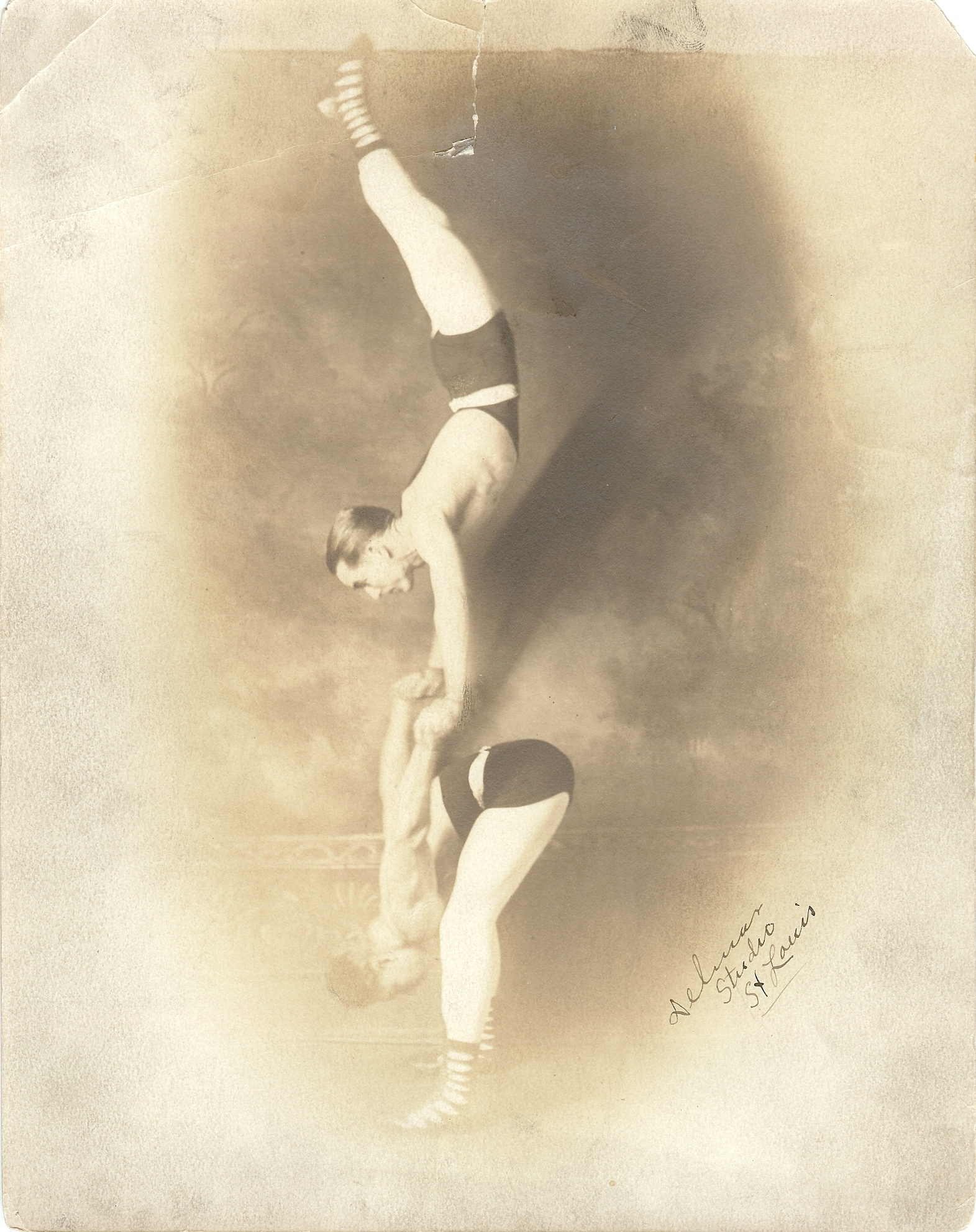
My grandfather, Robert Wich, was an amateur gymnast. Below, you'll see a photo of him doing a routine with his gymnastics partner (I'm assuming that this photo was taken in the early 1920's My grandfather is the one in the air).


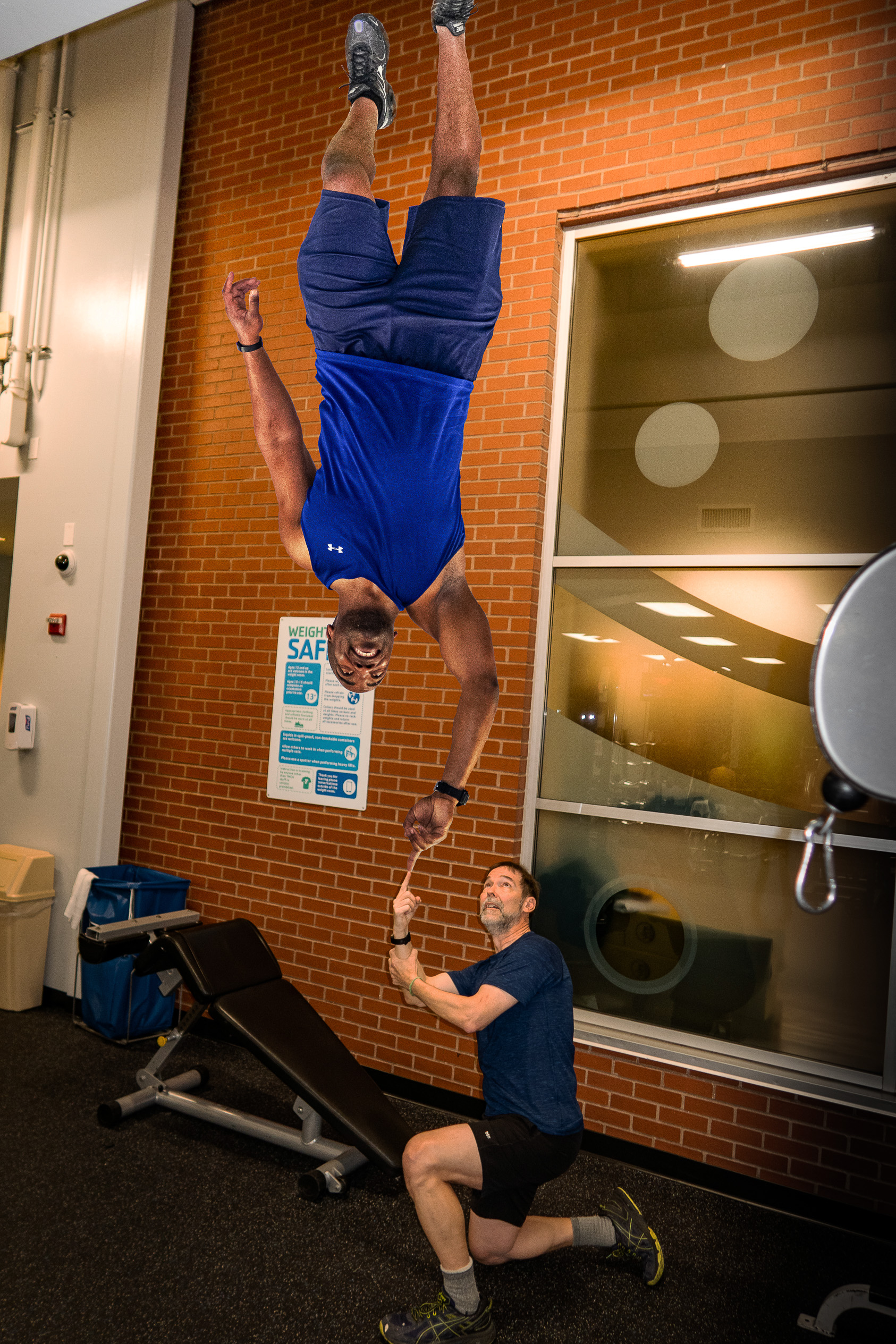
I am trying to respect this family tradition, but I find it easier to do impressive acrobatics in my own way at the Oto-phay Op-Shay Branch of the YMCA. Here I am performing the rarely seen finger-balancing routine with my gymnastics partner, Edie White. I'm also attaching a close-up so you can appreciate the critical placement of fingers.


Continue ReadingFamily Gymnastics Traditions

The Courage to be Seen As You Are

At her TED talk, "The Power of Vulnerability," Brené Brown points out that courage and vulnerability are two sides of the same coin. When I first heard this, it seemed oxymoronic, but then it made total sense. You need courage to be vulnerable to others and when you are vulnerable, you can have real relationships, which makes you strong, courageous. Here's an except from Brown's TED talk:

There was only one variable that separated the people who have a strong sense of love and belonging and the people who really struggle for it. And that was, the people who have a strong sense of love and belonging believe they're worthy of love and belonging. That's it. . . . What they had in common was a sense of courage. . . . [T]he original definition of courage, when it first came into the English language -- it's from the Latin word "cor," meaning "heart" -- and the original definition was to tell the story of who you are with your whole heart. And so these folks had, very simply, the courage to be imperfect. They had the compassion to be kind to themselves first and then to others, because, as it turns out, we can't practice compassion with other people if we can't treat ourselves kindly. . . . [T]hey were willing to let go of who they thought they should be in order to be who they were, which you have to absolutely do that for connection. The other thing that they had in common was this: They fully embraced vulnerability. They believed that what made them vulnerable made them beautiful. They didn't talk about vulnerability being comfortable, nor did they really talk about it being excruciating . . . They just talked about it being necessary. They talked about the willingness to say, "I love you" first ... the willingness to do something where there are no guarantees ... the willingness to breathe through waiting for the doctor to call after your mammogram. They're willing to invest in a relationship that may or may not work out. They thought this was fundamental.

. . . .

[W]hen we work from a place, I believe, that says, "I'm enough" ... then we stop screaming and start listening, we're kinder and gentler to the people around us, and we're kinder and gentler to ourselves. 

Continue ReadingThe Courage to be Seen As You Are