About the Climate Emergency . . .

Where are all of those people who, in recent years, insisted that climate change was the most urgent issue, all the while doing NOTHING regarding their personal lifestyle to lower their own impact on the alleged situation?

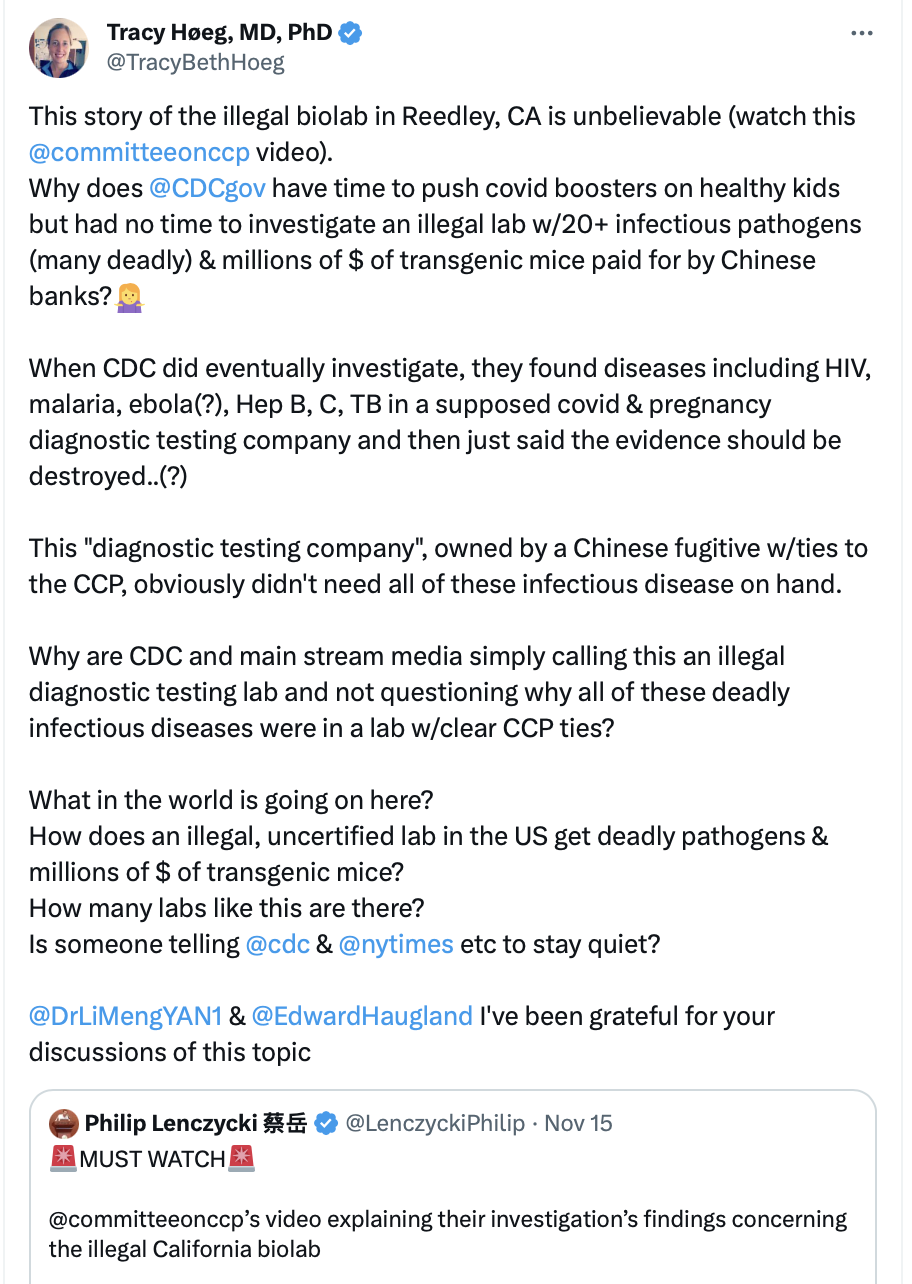
UPDATE: The journal Nature has officially retracted the fake climate study that JP Morgan used in its ESG report.

The Biden admin relied on this junk research as well. And numerous financial institutions and European central banks continue to employ it in policymaking.

Continue ReadingAbout the Climate Emergency . . .

Luxury Beliefs in Chicago

Rob Henderson coined the term "Luxury Beliefs" as follows:

Luxury beliefs are ideas and opinions that confer status on the upper class while inflicting costs on the lower classes.

Here, Rob offers a more expansive discussion:
In addition to my own experiences with social mobility, my luxury beliefs idea stems from Thorstein Veblen’s work, particularly his 1899 book, The Theory of the Leisure Class. Veblen, a sociologist and economist, described how the elites of his era displayed their status through conspicuous consumption, such as wearing delicate, expensive clothing, carrying pocket watches, or attending lavish ballroom events. While material possessions still play a role in signaling status today, I argue that they have become a noisier indicator of wealth. A century ago, one could easily distinguish the rich from the poor based on appearance alone. However, in our wealthier modern society, where access to goods is more widespread, it’s harder to gauge someone’s wealth at a glance.

Instead, status is increasingly expressed through what I call luxury beliefs, which have largely replaced luxury goods. These beliefs reflect what sociologist Pierre Bourdieu termed cultural capital. Elites invest in attending prestigious schools and universities, where they adopt the mannerisms, vocabulary, habits, and fashionable opinions of the upper class. This process enculturates them into the elite and sets them apart from the broader population. For example, while the conventional view might support law enforcement, someone seeking to signal their elite status might advocate for abolishing the police or reimagining law enforcement with ideas like hiring “violence interrupters.” Such unconventional or avant-garde views serve as a way to distinguish oneself from the masses and signal a superior social position.

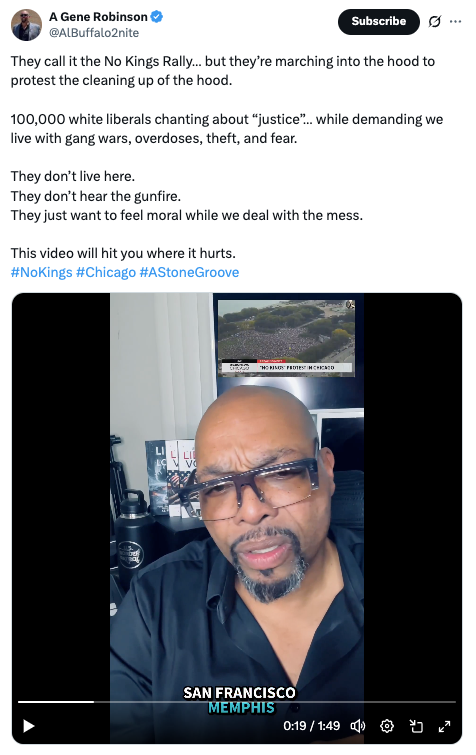
Today, I noticed this post by A Gene Robinson, who doesn't use the term "luxury beliefs," but is angry about non-stop high crime in Chicago contrasted with what he considered the detached cheap signaling of those who participated in the Chicago No Kings Rally:
I asked Grok to compare the economic circumstances of those in Chicago's crime ridden neighborhoods to the circumstances of people who work for corporate media:

Corporate media workers earn 2–5 times more than residents in these Chicago neighborhoods ($60,000+ vs. $25,000–$50,000), enabling comfortable lifestyles with savings, travel, and leisure. They benefit from employer perks like health insurance and flexible time off, contrasting with reliance on public aid in high-crime areas, where poverty rates are 2–3 times higher (40%+ vs. national 12%). Media lifestyles involve professional growth and urban amenities, while these neighborhoods face survival challenges, unemployment-driven desperation, and violence that perpetuates economic stagnation. This disparity highlights broader urban inequalities, where media professionals might even report on these communities from a position of relative privilege.

Then I asked Grok to compare the economic circumstances of those in Chicago's crime-ridden neighborhoods to those who marched in the Chicago no-kings rally:

The economic divide between residents of Chicago's crime-ridden neighborhoods and No Kings rally marchers is stark, highlighting urban inequalities in race, class, and opportunity. Neighborhood residents endure entrenched poverty, with incomes 2–4 times lower than the implied stability of rally participants, who benefit from assets like homes and retirement funds accumulated over decades.

While the former face unemployment, reliance on aid, and violence-linked economic stagnation, marchers—often older, white, and from more affluent backgrounds—enjoy financial security enabling activism without personal economic risk.

This contrast underscores how protests like No Kings may draw from privileged demographics, potentially overlooking the direct economic hardships in the city's most vulnerable areas.

Continue ReadingLuxury Beliefs in Chicago

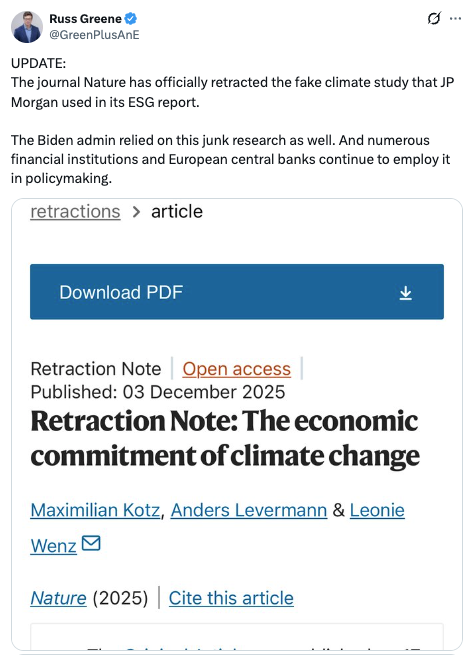
CDC and Corporate News Media Profoundly Disinterested in Reedley, California Nightmare-Level Illegal Biolab

Almost no news media coverage of this surreal situation: CDC disinterest in an illegal Chinese-funded lab with pouches of ebola, transgenic mice with COVID-19 and other extreme hazards. No coverage by NYT, CNN, MSNBC or NPR. Only one day of token bury-the-lede coverage by WaPo. See the 8-minute video at Twitter explaining how the city of Reedley, California rang the alarm, crying out for help to the CDC, which reluctantly, ultimately, did a shitty job of "investigating" this lab, despite ubiquitous evidence of dangerous wrongdoing.

Continue ReadingCDC and Corporate News Media Profoundly Disinterested in Reedley, California Nightmare-Level Illegal Biolab

Robert Malone’s Bleak Assessment of Where We are Headed

Compare this bleak assessment by Robert Malone to the fairy tale version of how government works that many of us learned in grade school. I wish I could disagree with Malone. I see no reason that any of these things are going to get any better, despite the fact that many intelligent and good-hearted people are out there fighting for free speech and government accountability.

Functionally, unlike either industry (market forces) or the military (failed wars), there are no external forces currently limiting the expansion of the dysfunctional, counterproductive and (frankly) parasitic behavior of today’s Executive branch. Legislative branch oversight has been emasculated by consent with lobbyists collectively clamping down the Burdizzo, and in 1984 the Judicial branch conceded its authority to serve as a functional check on Executive/administrative branch arrogance via the Supreme Court Chevron Deference decision. And like the Federal Reserve, the informal “fourth estate” (corporate media), which historically provided a separate and semi-autonomous oversight function, has also been captured by this permanent bureaucracy.

The administrative and deep state has been so successful in capturing and manipulating media and related communication (largely via CIA, FBI, CISA and intelligence community infiltration) that they are able to seamlessly deploy advanced modern propaganda, PsyWar technologies and financial giveaways to control all narratives and information which might otherwise cause the majority of the electorate to check their actions, and in this way they completely avoid accountability. The CIA, FBI, CISA and intelligence community have become enablers of administrative and deep state excesses and overreach. With this corrupted information ecosystem, there cannot be any accountability of the administrative and deep state. In cooperation with a variety of corporate and NGO partners via “public-private partnerships”, the executive branch has completely captured and co-opted all oversight mechanisms which could enable or enforce checks and balances. The “ballot box” is well on its way to being a mere inconvenience, because for the majority of voters the synthetic false reality projected by captured media is the only political “reality” they encounter.

This is how modern nation-states abruptly collapse. As one recent example, recall the history of the USSR and most of the former communist Eastern European states. Modern nation-states fail by suffocating under the weight of bloated unaccountable bureaucracies whose primary objectives are to serve and sustain themselves rather than to promote and defend the general welfare and security of the citizenry. The social contract is stomped into dust by the boot of an uncontrollably arrogant, authoritarian, self-serving bureaucracy...

Continue ReadingRobert Malone’s Bleak Assessment of Where We are Headed

Rob Henderson: The Costs of Luxury Goods Are Not Always Obvious

Rob Henderson, writing at The Free Press:

I’ve long argued that many people who hold “luxury beliefs”—ideas and opinions that confer status on the upper class, while often inflicting costs on the lower classes—are oblivious to the consequences of their views. Support for defunding the police is a classic example. Luxury beliefs can stem from malice, good intentions, or outright naivete. But the individuals who hold those beliefs, the people who wield the most influence in policy and culture, are often sheltered when their preferences are implemented.

Some online commenters have said that my luxury beliefs thesis is undermined by these tragic events, because the victims were affluent and influential—and they still suffered the consequences of their beliefs.

But the fact remains that poor people are far more likely to be victims of violent crime. For every upper-middle-class person killed, 20 poor people you never hear about are assaulted and murdered. You just never hear about them. They don’t get identified by name in the media. Their stories don’t get told.

According to the U.S. Census Bureau, the poorest Americans are seven times more likely to be victims of robbery, seven times more likely to be victims of aggravated assault, and twenty times more likely to be victims of sexual assault than Americans who earn more than $75,000. One 2004 study found that people in areas where over 20 percent of inhabitants live in poverty are more than 100 times more likely to be murdered than people in areas where less than 10 percent of residents live in poverty.

Continue ReadingRob Henderson: The Costs of Luxury Goods Are Not Always Obvious