Rob Henderson: The Costs of Luxury Goods Are Not Always Obvious

Rob Henderson, writing at The Free Press:

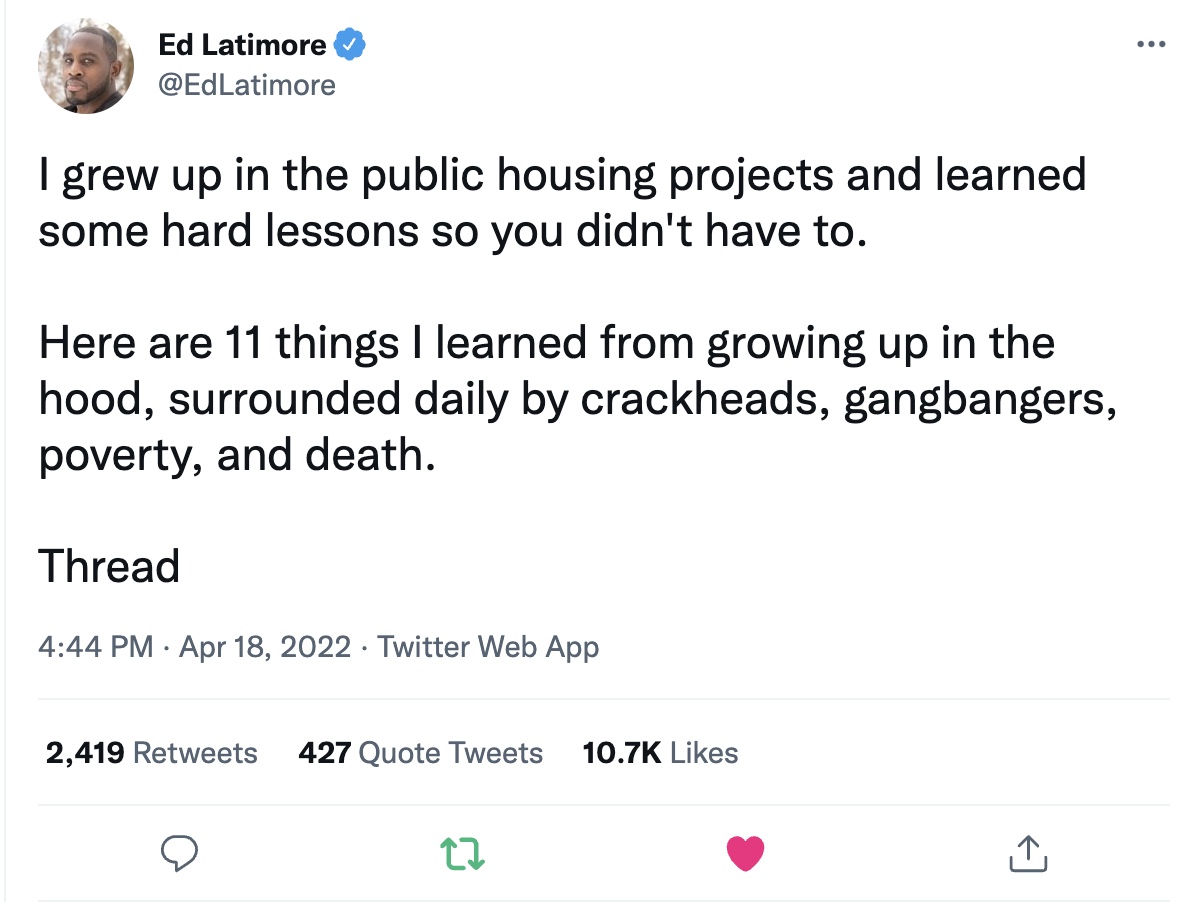
I’ve long argued that many people who hold “luxury beliefs”—ideas and opinions that confer status on the upper class, while often inflicting costs on the lower classes—are oblivious to the consequences of their views. Support for defunding the police is a classic example. Luxury beliefs can stem from malice, good intentions, or outright naivete. But the individuals who hold those beliefs, the people who wield the most influence in policy and culture, are often sheltered when their preferences are implemented.

Some online commenters have said that my luxury beliefs thesis is undermined by these tragic events, because the victims were affluent and influential—and they still suffered the consequences of their beliefs.

But the fact remains that poor people are far more likely to be victims of violent crime. For every upper-middle-class person killed, 20 poor people you never hear about are assaulted and murdered. You just never hear about them. They don’t get identified by name in the media. Their stories don’t get told.

According to the U.S. Census Bureau, the poorest Americans are seven times more likely to be victims of robbery, seven times more likely to be victims of aggravated assault, and twenty times more likely to be victims of sexual assault than Americans who earn more than $75,000. One 2004 study found that people in areas where over 20 percent of inhabitants live in poverty are more than 100 times more likely to be murdered than people in areas where less than 10 percent of residents live in poverty.
Continue ReadingRob Henderson: The Costs of Luxury Goods Are Not Always Obvious

About our Increasingly Visible Political Realignment.

Matt Taibbi has such a way with words. This is an excerpt from his most recent article, "Campaign 2024: Not Left Versus Right, But Aflluent Versus Everyone Else: The realignment of major parties away from blue against red and toward a rich versus poor dynamic is America's most undercovered political story."

"People like to say nothing matters anymore,” Greenberg said. “But the conversation that you’re not having actually does matter.” Try saying that one three times fast.

A lot of coverage of Campaign 2024 is going to be like this, in which aides, pundits, and pollsters speak like fridge-magnet haikus or Alan Greenspan pressers. There are now so many taboo subjects in American politics that even data journalists, whose job is to give us the cold hard facts, are forced to communicate in allusions and metaphors, because what’s happening can’t be discussed.

American politics has long been a careful truce, in which natural economic tensions were obscured by an elegantly phony two-party structure that kept urban and rural poor separate, nurtured a politically unadventurous middle class, and tended to needs of the mega-rich no matter who won. That system is in collapse. Voters are abandoning traditional blue-red political identities and realigning according to more explosive divisions based on education and income. As the middle class vanishes the replacement endgame emerges. A small pocket of very wealthy and very educated, for whom elections have until now mostly been ceremonial and to whom more fraught realities of the current situation are an annoyance, will move to one side. That’s your “15% strongly approve” group, the Marie Antoinettes who’ll go to the razor pledging loyalty to the regent, even if he’s a loon in a periwig, or Joe Biden.

The inevitable other constituency is just everyone else, which should be a larger demographic. The only reason polls are at 43-43 (or perhaps slightly in Biden’s disfavor) is because the other actor is Donald Trump. If Democrats should be panicking because they’re not trouncing an opponent whose biggest campaign events have been arraignments, it’s just as bad for Trump that he polls even with a man who’s a threat to walk into a propeller or carry a child into a forest every time he walks outside. Still, the abject horror Trump inspires among the Georgetown set may be his greatest political asset, and a reason the realignment seems to be proceeding even with him around."

Continue ReadingAbout our Increasingly Visible Political Realignment.

A Chart that Challenges Uni-causal Arguments on Income Disparity

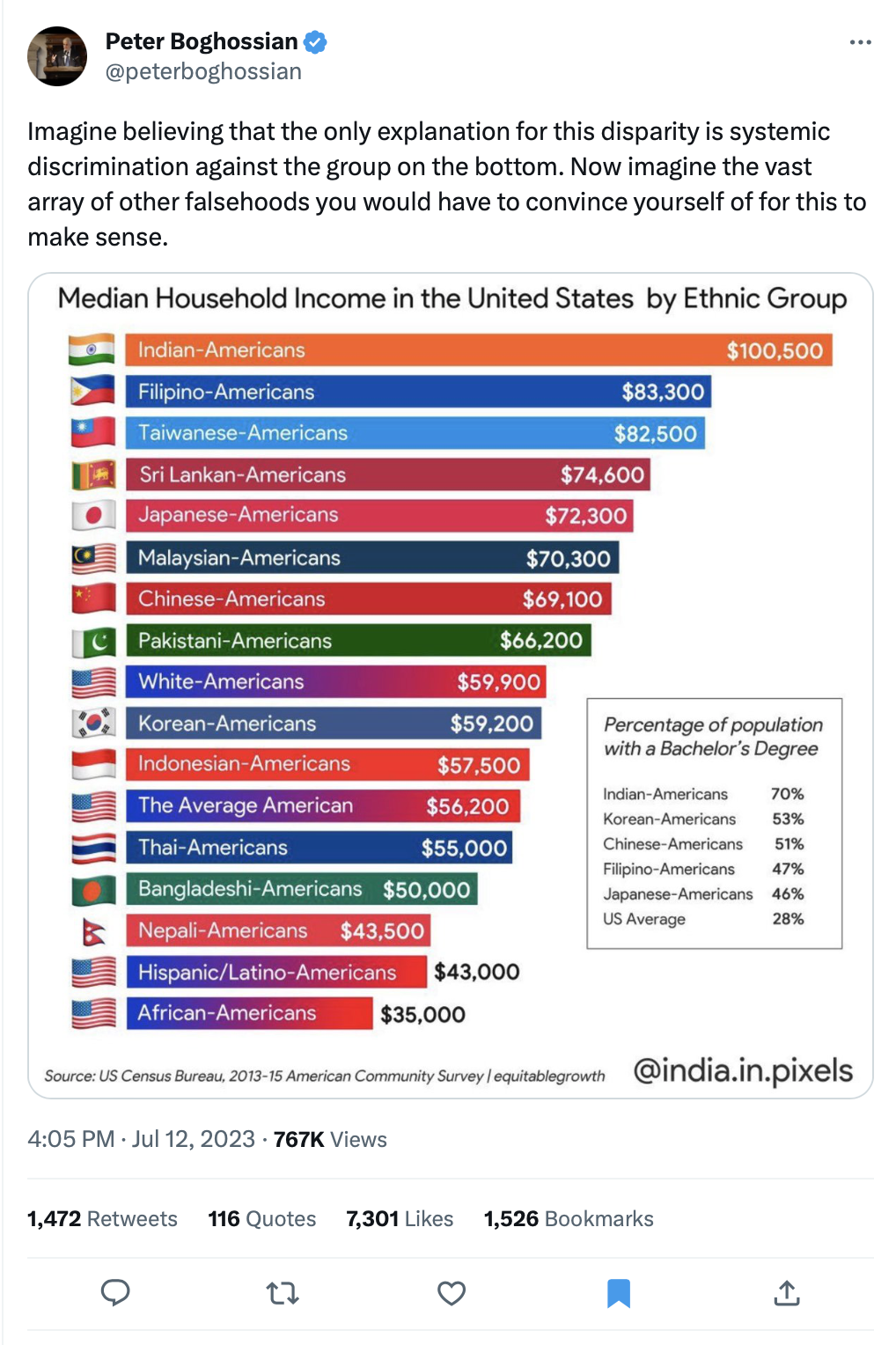
p> It's trendy to argue that "racism" is the necessary and sufficient explanation for the lack of earnings of groups at the bottom of this chart of household income. Anti-racists reject the need for multivariate analyses. If so, what would it be that accounts for the groups at the top of the chart? That Americans especially like members of those groups? This is an inconvenient chart for those who promote DEI dogma.

Continue ReadingA Chart that Challenges Uni-causal Arguments on Income Disparity

Milton Friedman Points to the Lack of Viable Alternatives to Capitalism

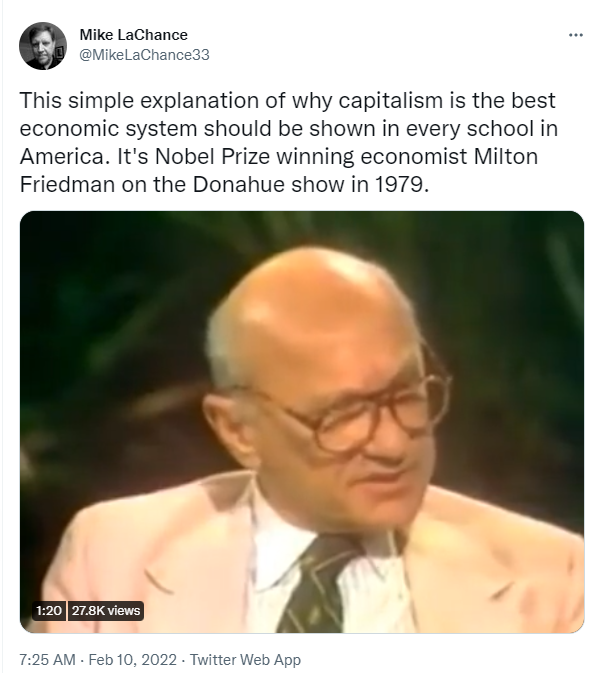
Milton Friedman schools Phil Donahue on the lack of alternatives to capitalism:

The full interview:

This interview occurred in 1979, when people often sat down to talk with people even when they had disagreements.

Continue ReadingMilton Friedman Points to the Lack of Viable Alternatives to Capitalism