Soon after George Floyd's death, thousands of people peacefully marched in American streets protesting police violence. As the sun went down in those cities, however, multitudes of people rioted and looted, causing more than $1 billion in damage.
The damage from riots and looting across the U.S. following the death of George Floyd is estimated to be the costliest in insurance history – between $1 billion and $2 billion. Insurance Information Institute (or Triple-I) compiles information from a company called Property Claim Services (PCS), which has tracked insurance claims related to civil disorder since 1950, and other databases.
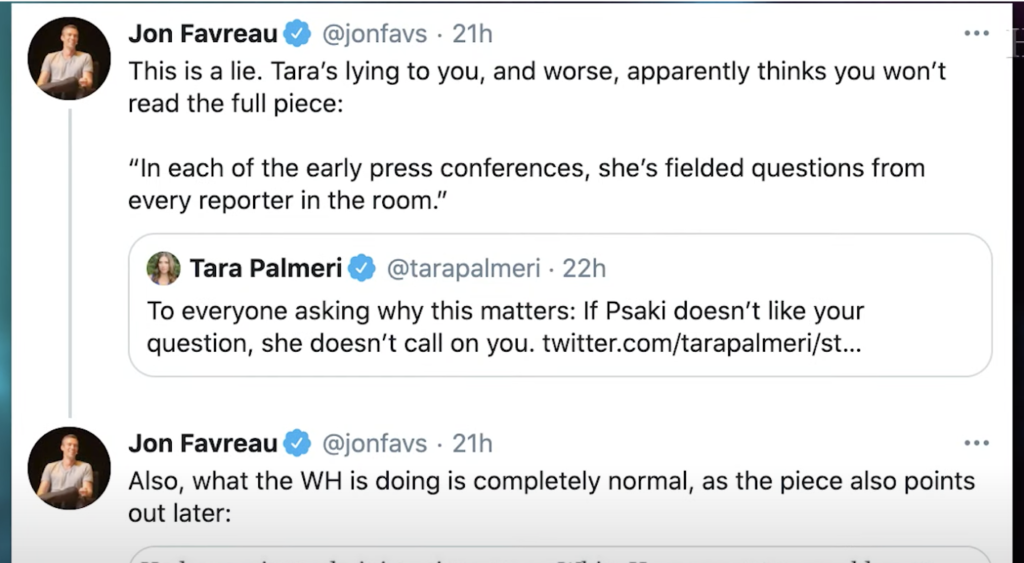
Yet we have millions of people in the U.S. and major newspapers who will not call $1 billion in damages "rioting" or "looting." That is a repeated phenomenon these days on both the political right and political left: people making strong arguments by ignoring contradictory evidence. This article focuses on denialism on the political left. My topic is police violence and race.
It's important that we gather the facts, whether it be the existence of riots and of police violence, especially violence toward African American people.
Many people would rather not look at actual crime statistics, however, and this has led to an untethered and dysfunctional conversation regarding police violence. Sam Harris experienced harsh pushback (and also praise) when he released a podcast titled, "
Can We Pull Back From the Brink?" His "sin" is that his podcast contained actual crime statistics:
Again, cops kill around 1000 people every year in the United States. About 25 percent are black. About 50 percent are white. The data on police homicide are all over the place. The federal government does not have a single repository for data of this kind. But they have been pretty carefully tracked by outside sources, like the Washington Post, for the last 5 years. These ratios appear stable over time. Again, many of these killings are justifiable, we’re talking about career criminals who are often armed and, in many cases, trying to kill the cops. Those aren’t the cases we’re worried about. We’re worried about the unjustifiable homicides.
Now, some people will think that these numbers still represent an outrageous injustice. After all, African Americans are only 13 percent of the population. So, at most, they should be 13 percent of the victims of police violence, not 25 percent. Any departure from the baseline population must be due to racism.
Ok. Well, that sounds plausible, but consider a few more facts:
Blacks are 13 percent of the population, but they commit at least 50 percent of the murders and other violent crimes. If you have 13 percent of the population responsible for 50 percent of the murders—and in some cities committing 2/3rds of all violent crime—what percent of police attention should it attract? I don’t know. But I’m pretty sure it’s not just 13 percent. Given that the overwhelming majority of their victims are black, I’m pretty sure that most black people wouldn’t set the dial at 13 percent either.