The sacred places of people who are not religious
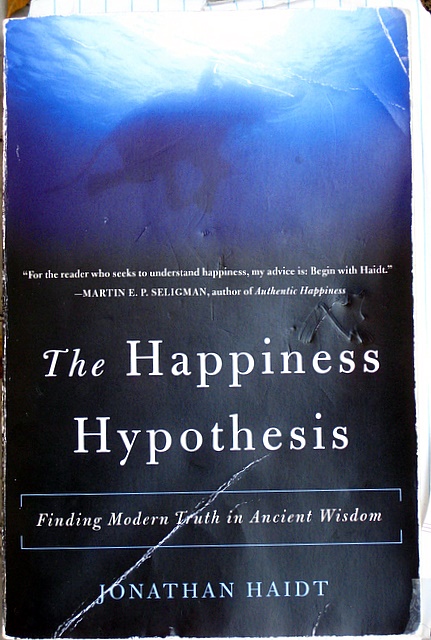
I've been reading more of Jonathan Haidt's The Happiness Hypothesis, including Chapter 9, titled "Divinity With or Without God." Haidt's travels through India led him to conclude that divinity and disgust were located on the same axis. As evidence of this, consider that throughout the world, cultures hold that divinity and disgust must be kept separate at all times. The relevant practices include "food, body products, animal's, sex, death, body envelope violations and hygiene." Haidt found that people recruit disgust "to support so many of the norms, rituals and beliefs that cultures use to define themselves." (Page 186). To know that which is sacred, identify that which elicits disgust and travel the opposite direction:
If the human body is a temple that sometimes gets dirty, it makes sense that "cleanliness is next to godliness." If you don't perceive this third dimension, then it is not clear why God would care about the amount of dirt on your skin or in your home. But if you do live in a three-dimensional world, then disgust is like Jacob's Ladder: it is rooted in the earth, and our biological necessities, but it leads or guides people toward heaven--or, at least, toward something felt to be, somehow "up."
Haidt, an atheist Jew, is not suggesting a particular path to that which is Divine. He is certainly not concluding, for instance, that religion is the only path to that which is divine. Rather, he is emphasizing that we all have a sense of what is sacred to us, what is "divine," and we justify it in various ways. He cites Mircea Eliade's The Sacred and the Profane, agreeing with Eliade that "sacredness is so irrepressible that it intrudes repeatedly into the modern profane world in the form of "crypto-religious" behavior." He specifically cites Eliade's conclusion that even a person who is committed to a "profane existence" hasprivileged places, qualitatively different from all others--a man's birthplace, or the scenes of his first love, or certain places in the first foreign city he visited in his youth. Even for the most frankly nonreligious man, all these places still retain an exceptional, a unique quality; they are the "holy places" of his private universe, as if it were in such spots that he had received the revelation of a reality other than that in which he participates through his ordinary daily life.