
Evolutionary Psychologist Diana Fleischman Begins a New Blog at Psychology Today: “How to Train Your Boyfriend”

I've followed Diana Fleischman's work for many months. She's smart and funny, but takes her evolutionary psychology seriously every step of the way. Diana has started writing a column on Psychology Today titled, "How to Train Your Boyfriend." Here an excerpt from her opening post:

You have two grandmothers, four great grandmothers, 512 great-great-great-great-great-great-great-great-grandmothers and millions of grandmas further in your past, before the word grandma even existed. These grandmas that scraped by, suffered, and survived long enough to reproduce, are only a fraction of all the women that existed. One important characteristic that set grandmas apart from the millions of non-grandmas was their ability to shape the behavior of others, especially children and grandpas. You probably have grandmas who lived on farms trying to get multiple children to cooperate with (and not kill) one another and in villages where they had to manage their reputations for the good of their families. But you definitely have grandmas who convinced men to take care of them and their children. Without any one of them, and their abilities you wouldn’t exist to read this blog. We evolved to be able to get other people to do what we want.

But, how do people get other people to do what they want?
Continue ReadingEvolutionary Psychologist Diana Fleischman Begins a New Blog at Psychology Today: “How to Train Your Boyfriend”

Happy Neanderthal Father’s Day

I'm speaking up for the much-maligned Neanderthals today on this Father's Day, but not merely because many of us have a bit (1 to 2%) of Neanderthal DNA in our chromosomes and not merely because this population lasted until only 25,000 years ago. It's mostly because I just now stumbled upon this pretty cool Neanderthal reconstruction by Tom Bjorklundart of what a Neanderthal parent and child might have looked like.

Continue ReadingHappy Neanderthal Father’s Day

About the Sex Organs of Eels.

I never know what I'm about to learn when my weekly email digest arrive from The New Yorker.  Today's lesson is about the non-existent sex organs of eels, in this article, "Where Do Eels Come From," by Brooke Jarvis.  The bottom line is that the sex organs do exist, if you are patient enough to wait for them through four metamorphoses:

Careful observers discovered that what had long been taken for several different kinds of animals were in fact just one. The eel was a creature of metamorphosis, transforming itself over the course of its life into four distinct beings: a tiny gossamer larva with huge eyes, floating toward Europe in the open sea; a shimmering glass eel, known as an elver, a few inches in length with visible insides, making its way along coasts and up rivers; a yellow-brown eel, the kind you might catch in ponds, which can move across dry land, hibernate in mud until you’ve forgotten it was ever there, and live quietly for half a century in a single place; and, finally, the silver eel, a long, powerful muscle that ripples its way back to sea. When this last metamorphosis happens, the eel’s stomach dissolves—it will travel thousands of miles on its fat reserves alone—and its reproductive organs develop for the first time. In the eels of Europe, no one could find those organs because they did not yet exist.

Continue ReadingAbout the Sex Organs of Eels.

Why Trump Blames the Chinese for Creating Coronavirus

Why would Donald Trump and many of his acolytes want to blame Chinese people for creating COVID-19? Why make this claim where there is no evidence to support the claim and where the U.S. national intelligence director's office said it had determined Covid-19 "was not manmade or genetically modified." I would suggest the following three reasons:

1. Because Trump and Mike Pence are proudly ignorant of science. . Relatedly, Trump has expressed skepticism about the use of vaccines.  Pence is hostile to the scientific theory of evolution by natural selection. And see here.

2. Due to their hostility to science, Trump and Pence are not likely entertain the possibility that the coronavirus could have evolved naturally, despite the fact that viruses do evolve and coronavirus did, in fact, naturally evolve.

3. Because Trump and Pence have established themselves as xenophobes, they would be inclined to blame “outsiders,” i.e., the Chinese, for the coronavirus. .

Continue ReadingWhy Trump Blames the Chinese for Creating Coronavirus

Parents, Plants and Darwin’s Dangerous Idea

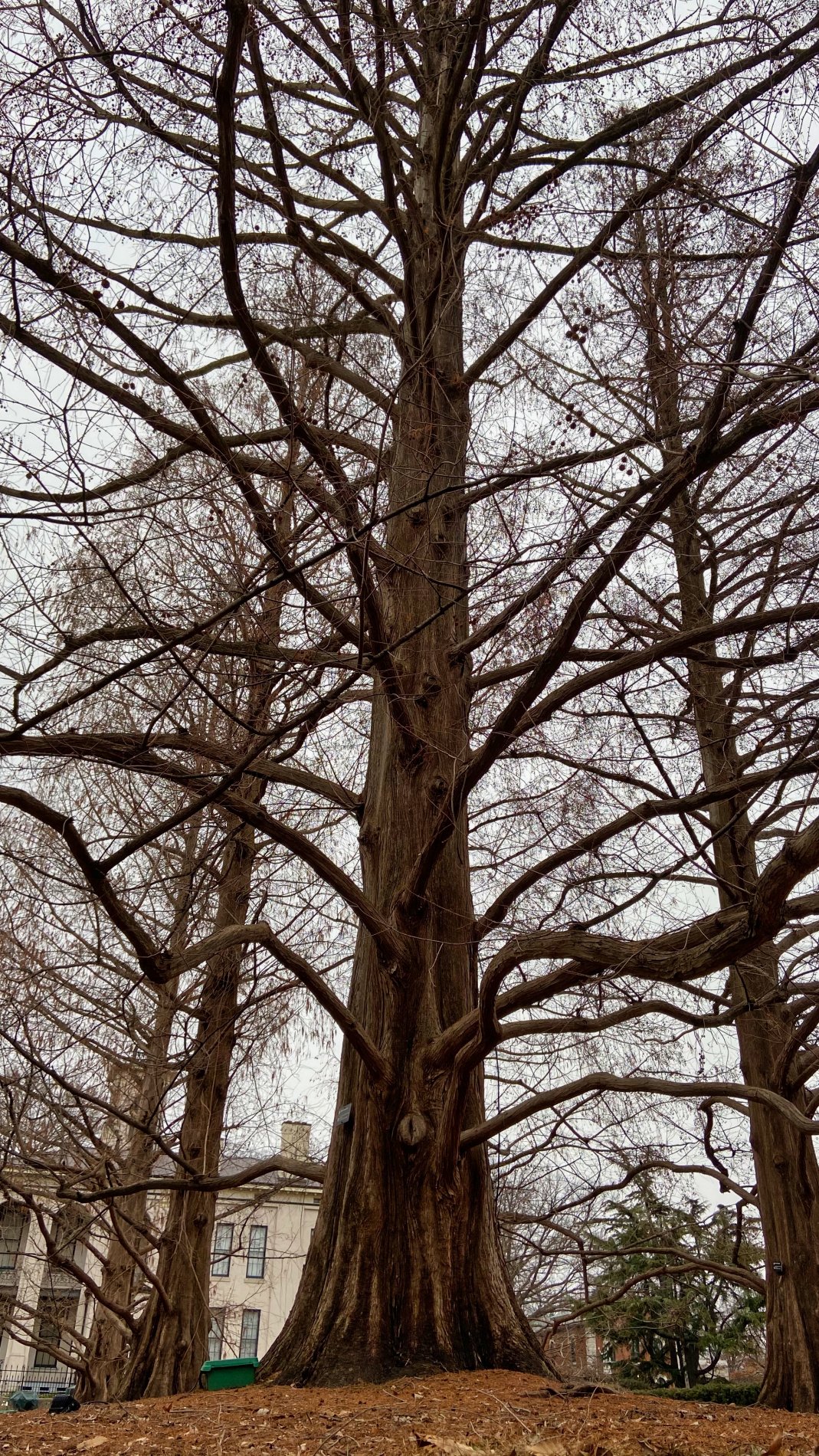
Life has been too good to me recently, filling me with more upbeat energy than usual. That type of good fortune can make it difficult to sit still and concentrate on my work, so yesterday I took my monkey-mind for a brisk walk to the Missouri Botanical Garden. I then meditated while sitting on a park bench in front of a huge tree. I didn’t know that this big tree would trigger vivid thoughts about my parents and my attraction to dangerous ideas.

My dad was an engineer who designed weapons of war for McDonnell-Douglas. Now deceased, he was proud of his ability to analyze problems and to come up with answers, even when he was considering life’s heaviest mysteries. He also embraced many of the pat answers offered by his religion and repeatedly tried to shame me into accepting them, which led to the extremely strained relationship I had with him.

My mom is very much alive and, at age 87, she still lives independently. She did not work outside of the home, was not hardened by the outside world, and was not comfortable challenging the arguments and lectures my dad launched from his seat at the family kitchen table. Far from those dinnertime arguments between her husband and her teenage son, however, she allowed her mind to freely explore ideas based on a rather unfettered sense of curiosity. My mom often asked me simple questions around the house, not realizing that simple questions would be the ones most likely to challenge my comforting inner narratives and presumptions. Simple questions can even be dangerous.

Friedrich Nietzsche recognized that truth is dangerous and that it took courage to determine what is true. Are you willing to question your most basic beliefs? For Nietzsche, real philosophizing was a demanding and dangerous endeavor that many people simply cannot endure.

From her perspective, my mom simply asked questions about things that seemed interesting, like “What is time?” Or “Is more always better?” Or “What if the beliefs of Buddhism are correct?” To this day, she looks puzzled whenever I thank her for being such a free-thinker (which she was, well before that term became popular). Regardless, her dangerous questions took root in me and they prepared me to appreciate many of the extraordinary aspects of life’s “ordinary” things. Her questions were probably a big reason why I majored in philosophy and psychology and, ultimately, created my website, Dangerous Intersection. [More . . . ]

Continue ReadingParents, Plants and Darwin’s Dangerous Idea