
Sasha Stone: How to Remake America

On a recent podcast, Sasha Stone condemned the Biden administration, offering some words of support for Donald Trump. Unlike Stone, I would never consider voting for Trump. Nor can I in good conscience vote for Biden, as I did three years ago. That said, I very much agree with Stone about the many ways the United States has gone off the rails during the Biden years. An excerpt:

Four words on a red hat. Make America Great Again.

Make America able to take a joke again.

Make America understand basic biology again.

Make America the land of the free and home of the brave again.

Make it okay to be white, a Christian, a male, a Jew, a woman, a mother and American again.

Make Thomas Jefferson a hero again.

Make movies watchable again.

Make America a country where we can still say what we think without fear of banishment, public humiliation or the loss of our jobs.

Make America tolerant again.

Make reality cool again, make it okay to reward merit.

Make it okay to be friends with people you don't agree with.

Lots of the hysteria is happening on both sides. It has to do with algorithms and their effects on our brains and our perception of reality.
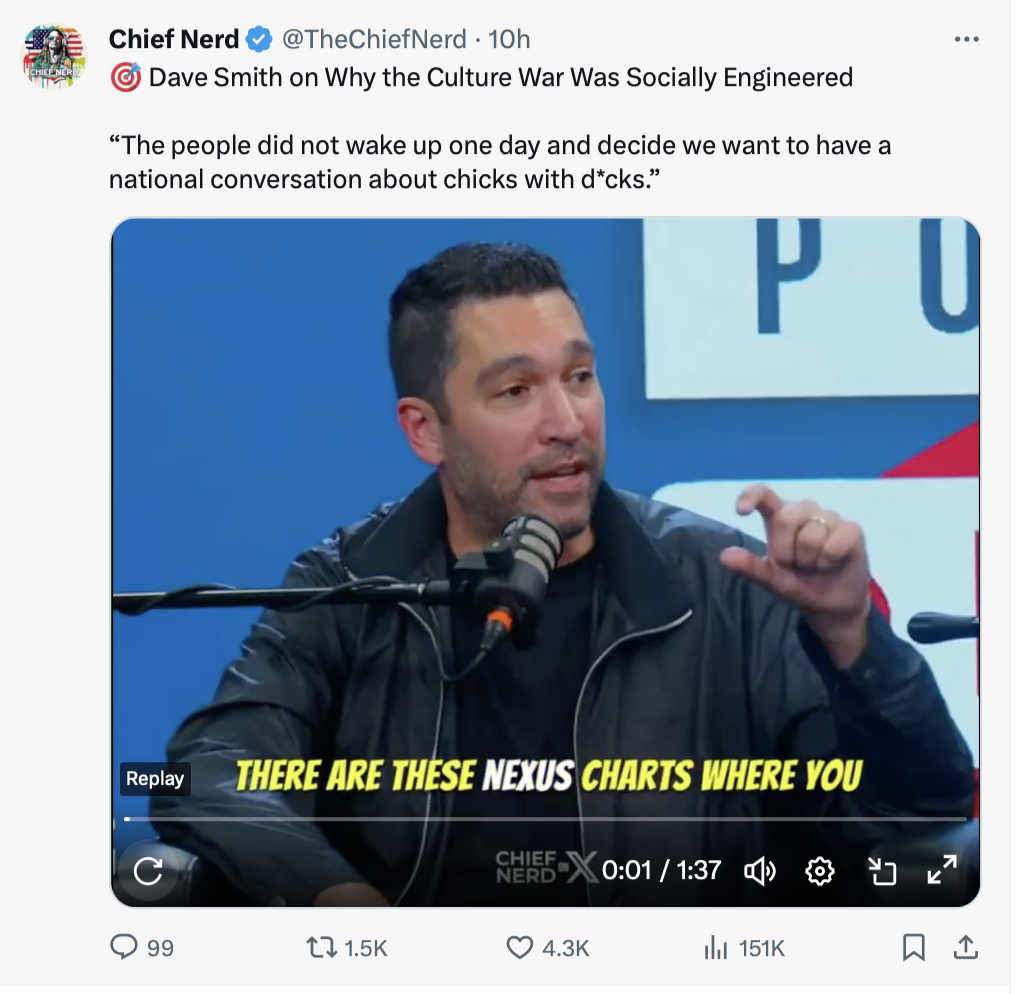
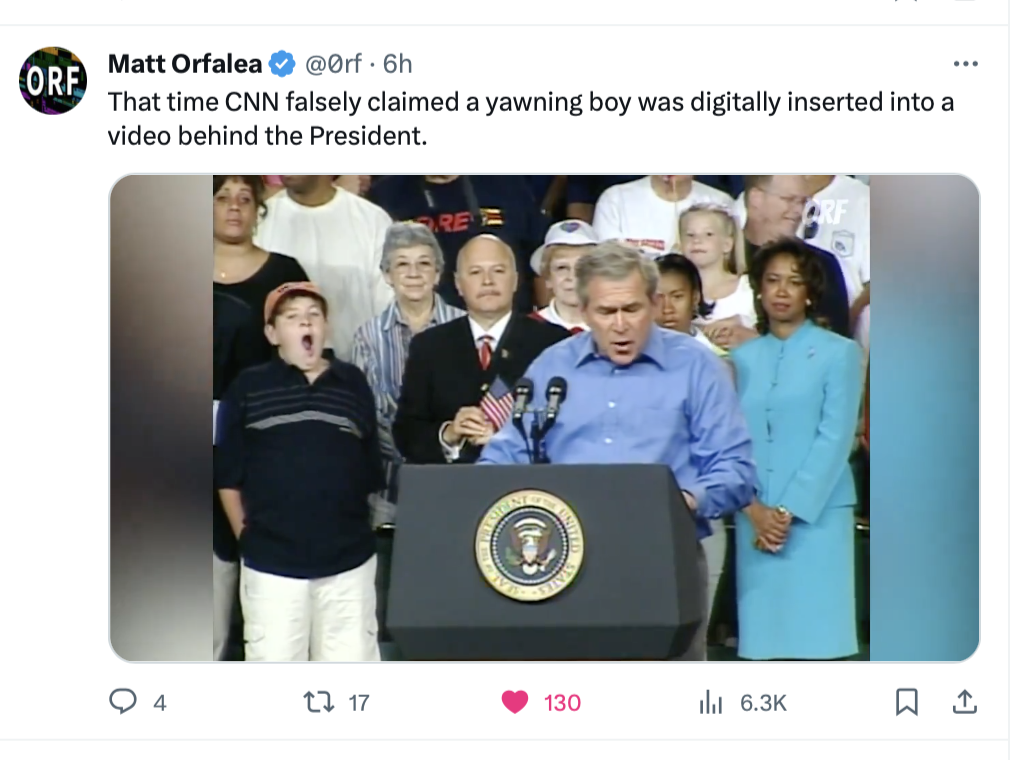
Continue ReadingSasha Stone: How to Remake America

Corporate/Government Propaganda: A Tutorial

Robert Malone cites the work of Paul D. Thacker, who describes how powerful entities such as corporations and governments deceive us through propaganda. It was a technique developed by cigarette companies and it has been used ever since, including by COVID grifters. Here's an excerpt:

In December 1953, the CEOs of America’s leading tobacco companies cast aside competitive rancor and gathered at New York City’s Plaza Hotel to confront a menace to their incredibly profitable industry. An emergent body of science published in elite medical journals cast doubt on the safety of cigarettes and threatened to destroy a half-century of corporate success. Joining them at the Plaza was John W. Hill, the president of America’s top public relations firm, Hill & Knowlton. Hill would later prove a decisive savior.

Hill had closely studied Edward Bernays, whose work on propaganda in the 1920s and 1930s laid the foundation of modern public relations and defined common techniques to manipulate popular opinion. Hill understood that any traditional campaign would fail to sway society, which perceived advertising as little more than corporate propaganda. Effective public relations required comprehensive off-stage management of the media. At its best, it left no fingerprints.

Instead of ignoring or denigrating new data that found tobacco dangerous, Hill proposed the opposite: embrace science, trumpet new data, and demand more, not less research. By calling for more research, which they would then fund, tobacco companies could harness academic scientists in a battle to confront a major scientific controversy and amplify skeptical views of the relationship between tobacco and disease. Such a scheme would let companies shroud themselves in doubt and uncertainty—core principles of the scientific process, in which every answer leads to new questions.

Hill & Knowlton’s campaign for the five largest US tobacco companies corrupted science and medicine for decades to follow, laying the foundation for financial conflicts of interest in science, as other industries mimicked tobacco’s techniques to protect their own products from government bans and regulations—later, from consumer lawsuits. While tactics have varied over time, the core strategy has changed little since tobacco wrote the playbook, providing a menu of techniques now employed across industries.

Continue ReadingCorporate/Government Propaganda: A Tutorial

About Lying

“We know that they are lying, they know that they are lying, they even know that we know they are lying, we also know that they know we know they are lying too, they of course know that we certainly know they know we know they are lying too as well, but they are still lying. In our country, the lie has become not just moral category, but the pillar industry of this country.” ― Aleksandr Solzhenitsyn

Continue ReadingAbout Lying