I just finished reading Michael Crichton's Complexity, & Environmental Management in the 21st Century. It's a long read, but well worth it. Crichton was a true Renaissance Man.
I first learned of the existence of complex systems in about 1975, when I observed that the world did not operate in a linear manner. The next thing I learned was that, while many people considered themselves clever by defining crazy as "Doing the same thing and expecting different results," that was more cleverness than truth. Anyone who is married will understand this. It is possible to do exactly what you did earlier, and your spouse will react in a completely different manner. With teenagers, it's more probable than possible.
Everywhere I looked I found complex systems, and began to do some self-study. The first thing I learned is that complex systems are highly sensitive to initial conditions, and we are foolish to believe we know all of them. In the "spouse" example, above, the second interaction is not a precise duplicate of the first. Your spouse weighs 2.4 grams less than yesterday, talked with your mother-in-law in the intervening period, and got a massage. All of these things affected your spouse and you're interacting with a different person.
The lecture is about fear, complexity and environmental management. Crichton set out to write a book about a global catastrophe in the late 1990s, so he looked at the Chernobyl meltdown. He read the predictions of up to 3.5M or more eventual deaths and the destruction of ecosystems. Articles about the event were heavily sprinkled with fear-inducing words such as cancer and catastrophe, and there were calls for urgent immediate action to save the planet. Then he looked at reality: 56 people died. The health issues with residents near Chernobyl were largely a reaction to bad information about direness, certainty of destruction, urgency, cancer, catastrophe, etc.
He winds his way through a series of predicted civilization-ending imminent catastrophes with calls to set aside all normal rules and turn over resources to "experts'" control, none of which actually came to pass. He concluded that the planet is far more resilient than doomsayers understand. And the pattern is too obvious to ignore. We are controlled through fear, created by bad information from authorities. Today's existential crisis is decarbonization, but Crichton notes that is already underway without surrendering control to authority. That appears typical of the successes claimed by authorities due to their actions. They urged action that was already underway, and he uses Y2K as an example. Governments' contribution to solving the real problem was negligible, not to mention unnecessary, since banks, heavily dependent on old mainframe systems, had already identified the problem and were working to fix it.
We're told many things by authorities, who are rarely held accountable for prior bad information, to maintain a State of Fear, the title of one of one of his last books. About global warming, we're assured that the earth will end in 12 or 50 or 100 years, and this time we're smarter because we've got all the information. That is exactly what we were told about Global Cooling in the 1970s. "But, this time is different." Right.
For several years I have taught week-long courses at law schools in Istanbul, Turkey. Those visits have been put on pause due to COVID. I was a couple weeks from traveling to Istanbul once again in early March, 2020, but I reluctantly cancelled that.
I often think of the many people I repeatedly visit when I'm in Turkey. Like most of my friends in the U.S., digital technologies have made it possible to keep in touch, but I look forward to the day when I can once again take it all in through all five senses.
Back here in St. Louis, Missouri, I tend to my ordinary life. Every week or so, however, I fondly think of something that I couldn't have predicted before I first visited the Middle East. I often think of the call to prayer.
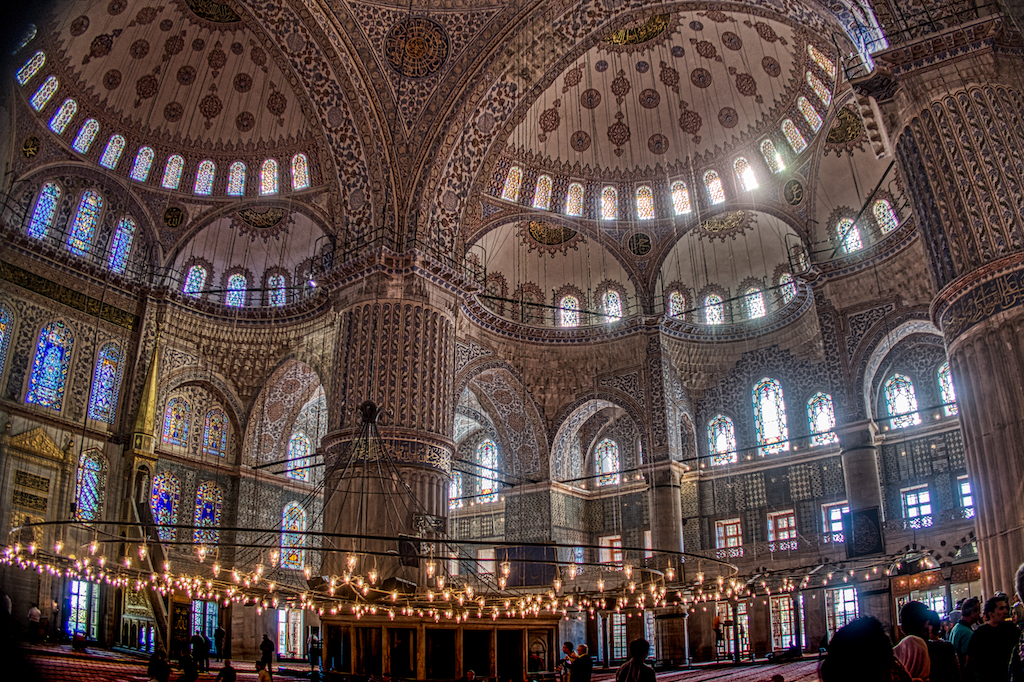
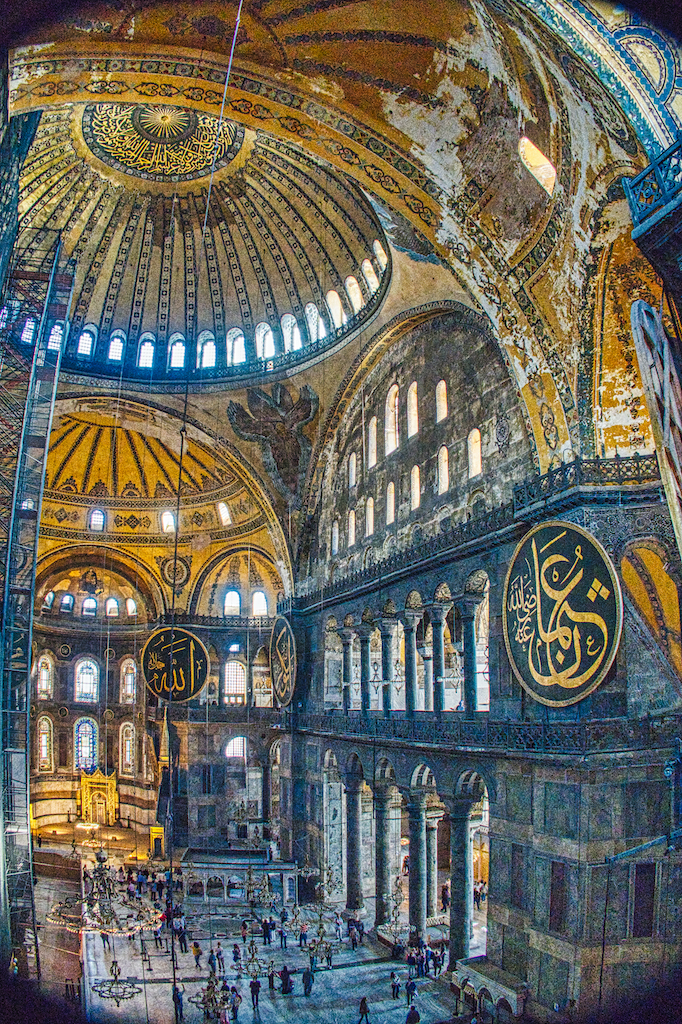
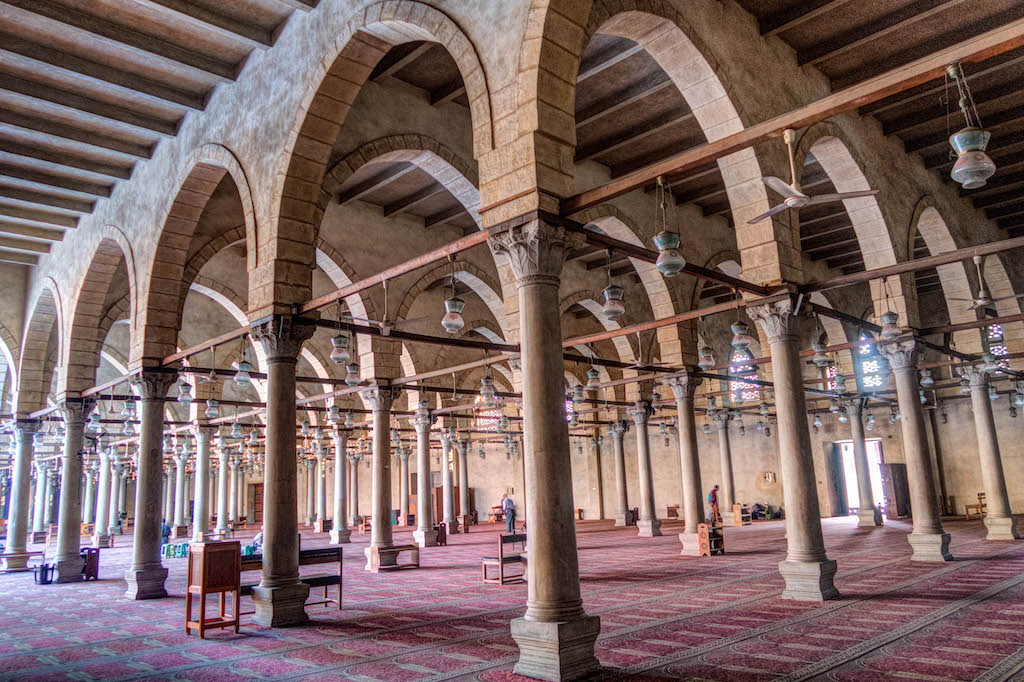
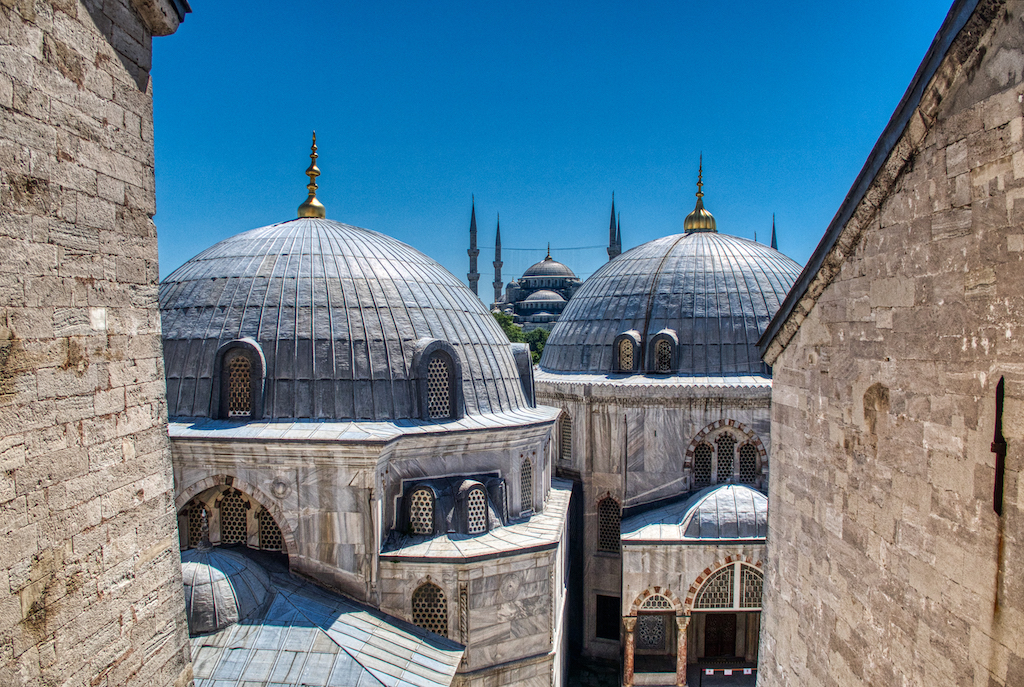
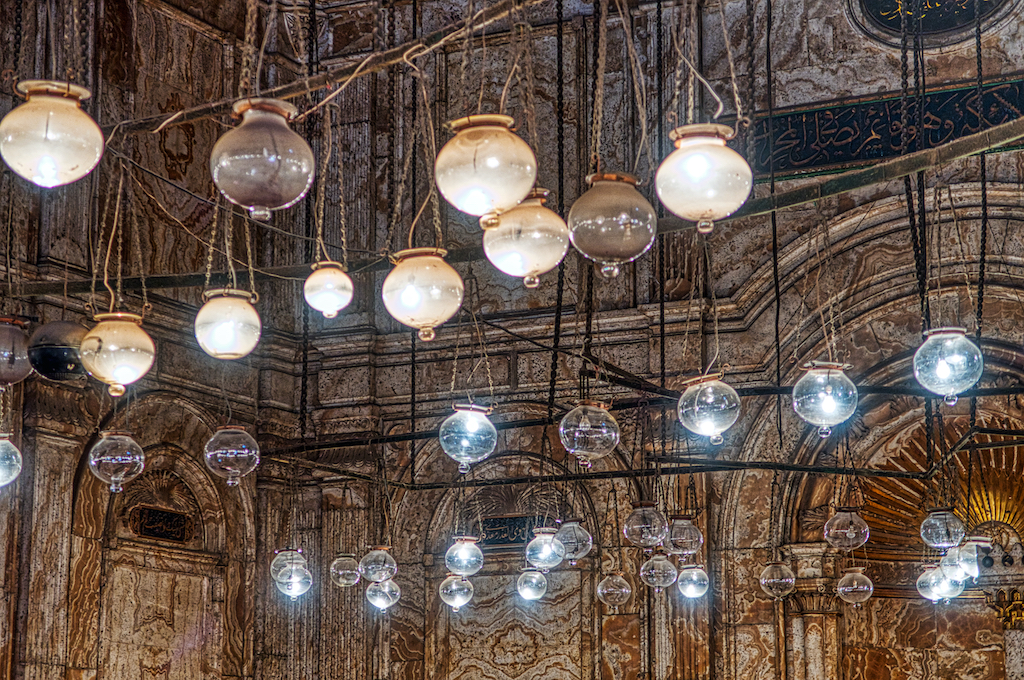
In the Middle East, the muezzin calls out from the top of nearby minarets five times each day (sometimes more than one at the same time if you are between minarets). It's a call, for sure, and almost seems like a song, but I've been told that it is not singing. The calls seemed like intrusions on my ears until I heard many of them. Gradually, over my repeated visits, the call to prayer became an exceptionally beautiful moment for me. I write this as an atheist who doesn't understand any of the words of the call to prayer. For me, its beauty is about the sounds and the moment, coupled with images of the venerable mosques I visited (I took these photos in Turkey and Egypt). Also coupled with the second-to-none hospitality of the people I met in the Middle East. It's different than church bells, because it's only five times each day and because you are not hearing a mechanical bell--you are hearing a human being earnestly calling out to you.
As I repeatedly visited Turkey, I started looking forward to the calls as opportunities to stop and think about life and my place in the world. I also took it as a reminder to always be tending to things that really matter because the day is always slipping away. It is also a reminder that you are part of a much bigger community because that call is to everyone in hearing distance, not just you.
There are many reasons for craving an effective vaccine for COVID. For me, this is a reason that I didn't anticipate. This is a good example of a reason that you should travel to new places: If you travel with the right state of mind, you will be changed by what you encounter.
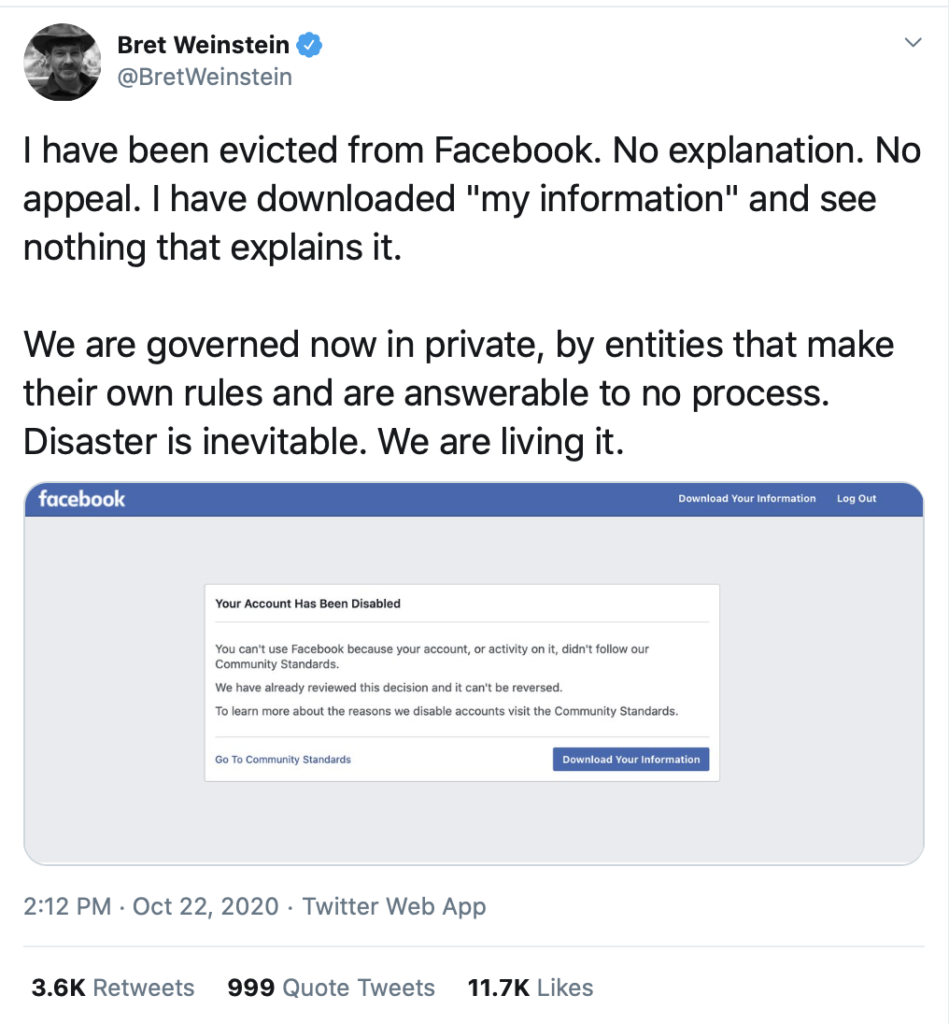
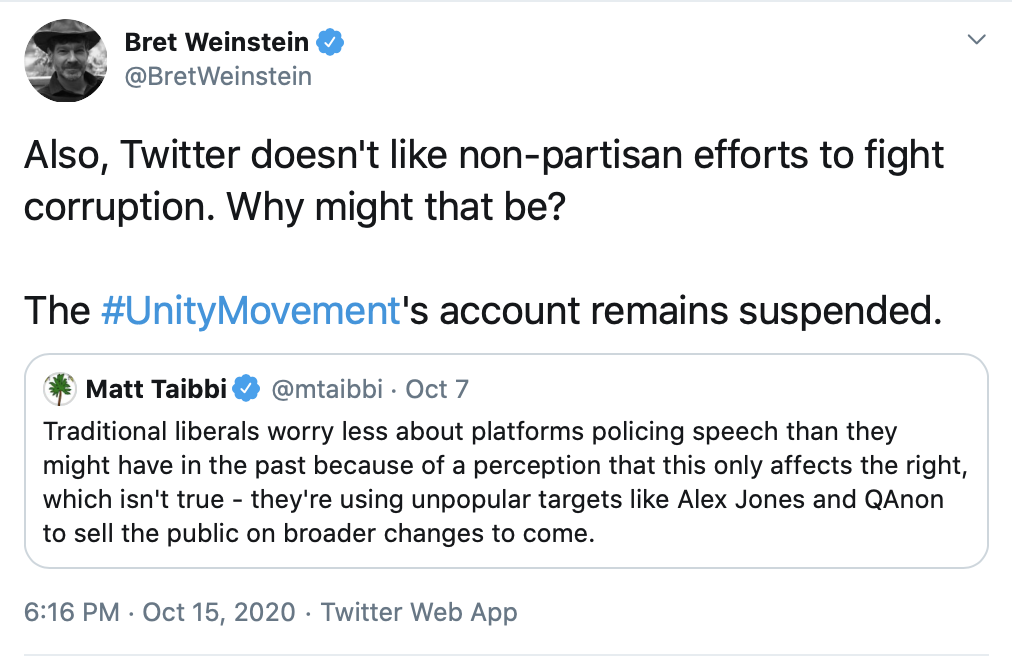
This action by FB should send a shockwave through America. Brett Weinstein is a good-hearted and extremely thoughtful voice that we desperately need. The curtain has now been pulled back and we can see that Private-Owner Social Media Wizards can flip a switch to cancel anyone without any stated reason. This comes on the heels of Brett's recent muzzling by Twitter, apparently for his spot-on criticism of our precious political duopoly.
So where is one supposed to lodge a complaint once FB and Twitter have both decided to become supervising nannies regarding the *content* of one's posts?
We are moving down an extremely dangerous slippery slope.
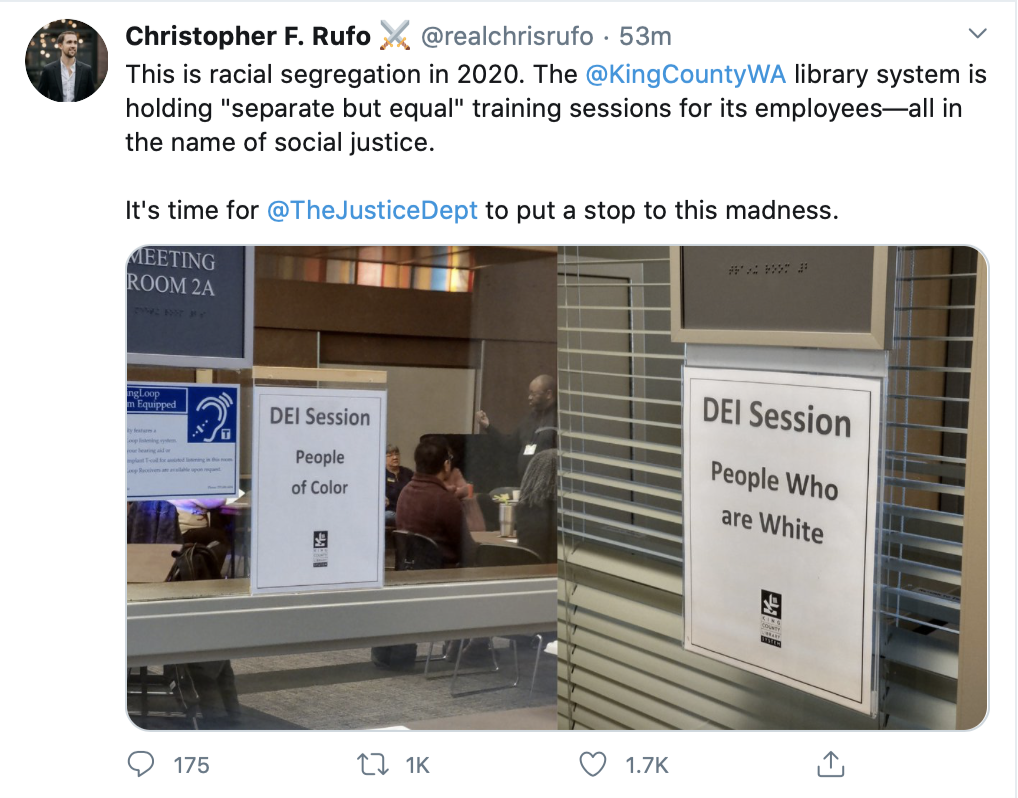
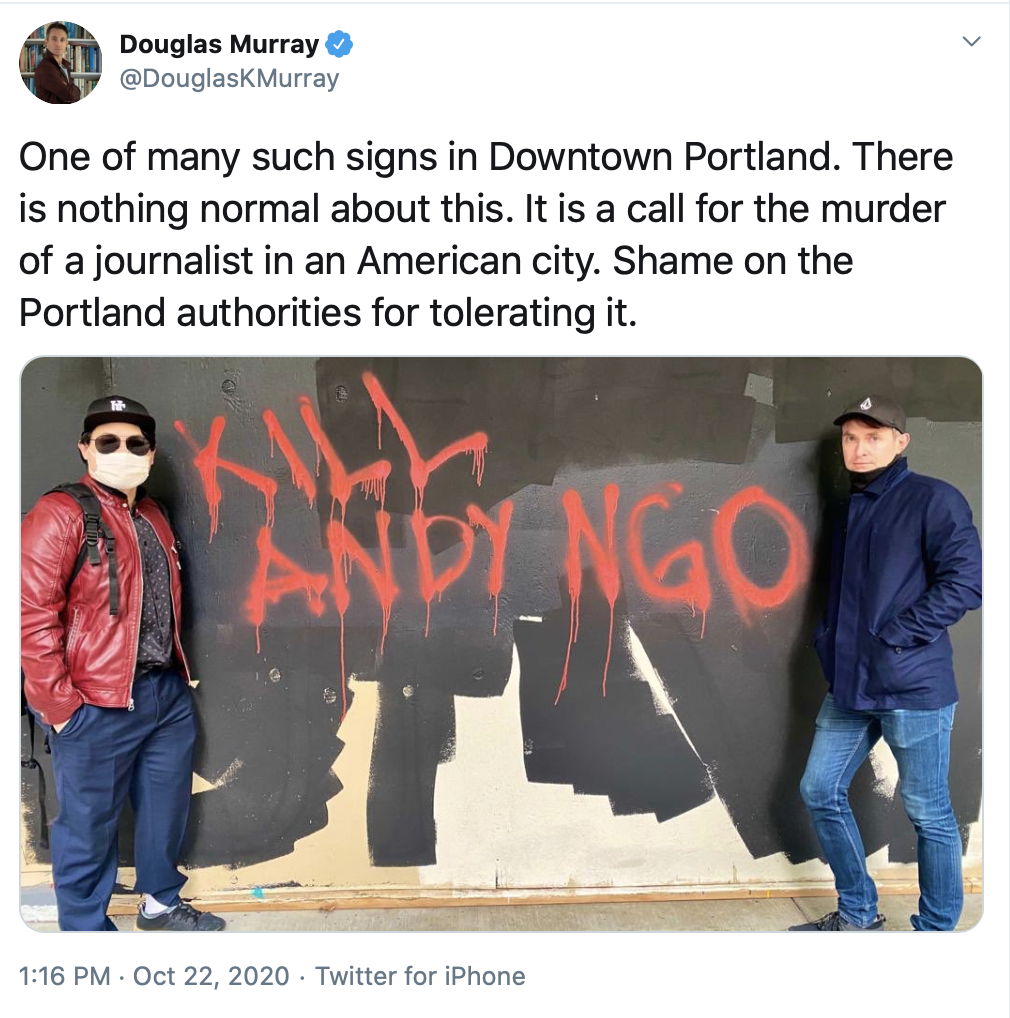
I hate to keep writing about Woke issues, but this ideology increasingly concerns me as the 2020 election approaches. It is an issue that mainstream Democrats ignore or downplay, yet the Republicans have recognized it for the cultural cancer that it is. Woke ideology has successfully entrenched itself deeply into many of our meaning-making institutions and this has positioned it well to spread far, which is unfortunate. Here's a recent example:
Making things worse, far too many Woke advocates are willing to tap into authoritarian tactics.
Andy Ngo's "crime" is that he is reporting on what he is seeing on the streets in Portland, including ongoing attempts to damage or destroy federal property. The NYT thought this sort of thing was a worthy topic, even when it occurred in a much milder form, when right wing zealots merely occupied federal property for a month in 2016 (see here, for example), but "America's newspaper of record" has barely any interest in Portland or Seattle. Because of this vacuum, these stories and concerns critical of Woke culture are being covered mostly by conservative media and without sufficient discussion or nuance. As I noted above, it is my concern that these issues are keeping the upcoming election close. This unwillingness by people on the political left to criticize "their own" is unfortunate. Those relatively few socially brave traditional liberals who are willing to speak out, many of whom consider themselves well-entrenched on the political left, are often being accused of being conservatives/Republicans by others on the political left, merely because they are willing to speak out. This has left many traditional liberals (like me) feeling like we no longer have a political home.
One must usually seek out alternative news sources to find thoughtful discussion about the Woke movement. For those who are trying to get up to speed, consider visiting New Discourses(founded by James Lindsay) and Quillette.
Woke ideology is disproportionately affecting younger adults, people who are increasingly coming into positions of power. This phenomenon was rather predictable based on The Coddling of the American Mind, by Greg Lukianoff and Jonathan Haidt. For another thoughtful discussion about the correlation of age and receptiveness to Woke ideology, see this Wiki letter exchange between Sarah Haider and Ayaan Hirsi Ali (the following excerpt was written by Sarah Haider):
Wokeism is, perhaps, an anti-ideology—a will to power that can be most concretely identified not by what it values or the future it envisions, but by what it seeks to destroy and the power it demands. This makes it especially disastrous. For, when an existing organizing structure is destroyed with no replacement, a more brutal force can exploit the resulting power vacuum. . . . Once liberal institutions have been delegitimized by the woke, what will replace them?
But while its philosophy is empty, the psychology of wokeism is deeply satisfying to our baser instincts. For the vicious, there is a thrill in playing the righteous inquisitor, in mobbing heretics and demanding deference—brutal tactics that keep the rest of us in line, lest we be targeted next. Meanwhile, the strict social hierarchies of the woke are reassuringly simple to navigate: one always knows one’s place.
By contrast, liberalism flies in the face of human nature. “I disapprove of what you say, but I will defend to the death your right to say it” is a phrase so often repeated that we have forgotten how deeply counterintuitive it is. We want to punch the Nazi (or gag him), not defend his right to march. Liberalism might ultimately be good, but it doesn’t feel good. And this is why it may find itself vulnerable to public abandonment, especially in times where it is most necessary. . . .
You rightly point out that liberalism has formidable champions in Sam Harris, Richard Dawkins, Christopher Hitchens and J. K. Rowling. Yet Hitchens is gone and all the others are over fifty. Likewise, this summer, when I co-signed an open letter in defense of free debate, I was disconcerted to see how few of the other signatories were even close to my age.
Bari Weiss recently noted that:
The civil war inside The New York Times between the (mostly young) wokes and the (mostly 40+) liberals is the same one raging inside other publications and companies across the country. The dynamic is always the same. The Old Guard lives by a set of principles we can broadly call civil libertarianism. They assumed they shared that worldview with the young people they hired who called themselves liberals and progressives. But it was an incorrect assumption.
This has been my experience too. Woke adherence can be predicted by generation - where true liberals exist, they exist primarily among the old guard. If the woke have won over the young, they have captured the future.
This ideology manifests in many other ways too. For instance, insincere and dishonest debate about the unprecedented surge in (mostly) young girls who are being convinced that they were born in the wrong body, leading to permanent body-altering surgery, hormones and other treatments. You won't find honest discussion about these issues in mainstream media--certainly not in the NYT. Instead of wide-open discussion based on a foundation of biology and medicine, you will only hear discussions where the "factual" foundation is ideology. This is insane. There is a war going being waged to protect young girls (progress being made in Great Britain), yet many media outlets are afraid to cover the story. To learn young girls are being physically damaged by this ideology, you'll need to go to places like Joe Rogan's podcast. His recent episode featuring Abigail Shrier and her excellent book, Irreversible Damage: The Transgender Craze Seducing Our Daughters, resulted in an attempt by employees of Spotify to muzzle Rogan on this issue and other Woke issues. Refreshingly, Rogan counter-attacked by posting this video on Twitter, suggesting that he has carefully anchored his right to speak freely in his Spotify contract:
There are some bright spots--some well-placed people calling out Woke ideology for the illiberal, dysfunctional and mostly dishonest cult that it is. For instance, check out this recent discussion between Sam Harris and John McWhorter. That said, for each of these well-placed people willing to speak out, there are many other people who believe in a vigorous and open discussion, a willingness to consider dissenting speech and a dispassionate determination of the facts as the basis for conversation. Unfortunately, most of these people are lesser known than Joe Rogan (and J.K. Rowling) and more vulnerable to cancellation (see the comments here).
I could go on, but I won't do that here. I'll try to move on to other topics for awhile . . .
Hello, I invite you to subscribe to Dangerous Intersection by entering your email below. You will have the option to receive emails notifying you of new posts once per week or more often.