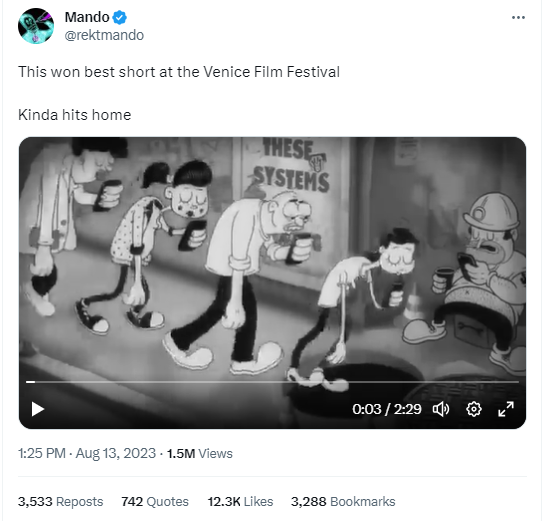
Video Synopsis of Jonathan Haidt’s Newest Book: “The Anxious Generation”

Jonathan Haidt's newest book, The Anxious Generation, is out. I bought a copy but haven't read it (though I've watched several interview of Haidt and he makes a compelling case). The statistics are sobering:

Here's a 7-minute video synopsis of Haidt's book to whet your appetite:

Continue ReadingVideo Synopsis of Jonathan Haidt’s Newest Book: “The Anxious Generation”

The Modern Destruction of Romance?

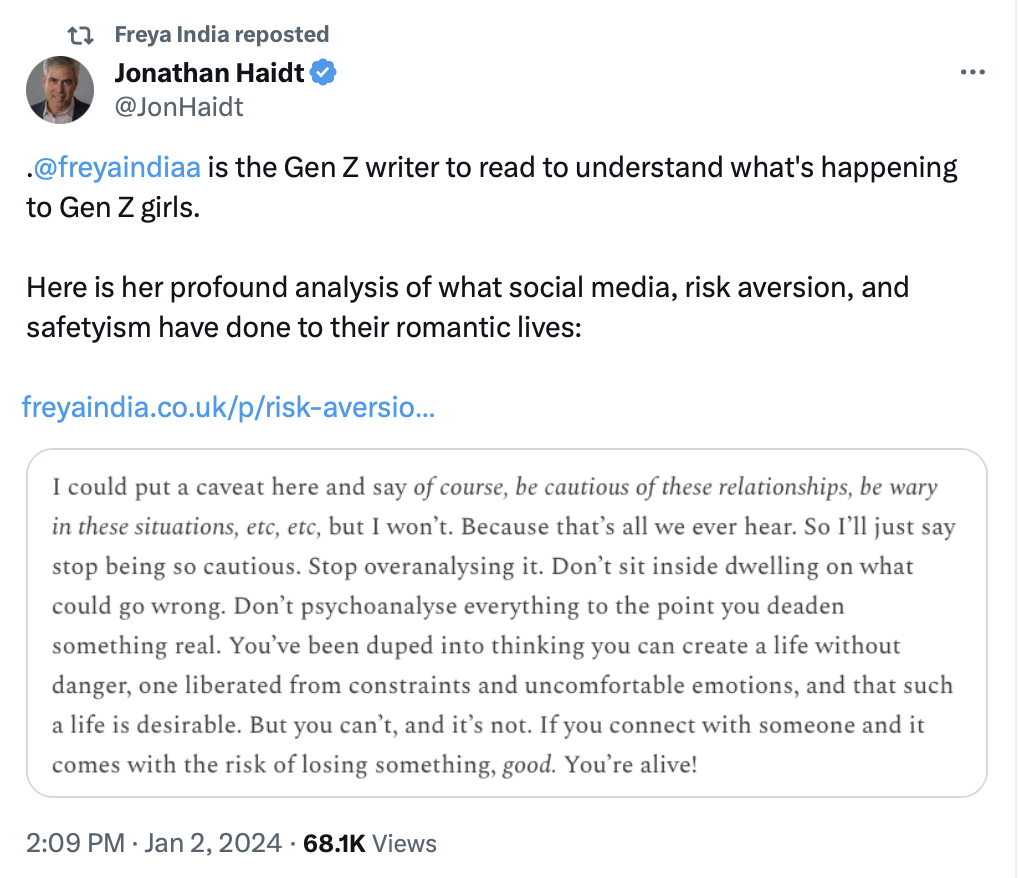
Have we convinced our young adults to give up on romance? Freya India thinks so and "It’s tragic, all of this. Tragic because it’s putting us on a trajectory to miss out on what’s actually meaningful." Her evidence? See the following excerpt for some and read her entire article for a lot more:

Gen Z are dating less. Having less sex. Settling for situationships that are empty and meaningless. And I think a major part of this is that human connection comes with a high level of risk. Among young men, for example, I’d say this risk-aversion is most obvious in fear of rejection. A recent survey found that almost 45% of men aged 18 to 25 have never approached a woman in person. Another Pew Survey found that half of single men between 18 and 30 are voluntarily single, which some suggest is in part because of fear.

But I think young women are also risk-averse about relationships. We are naturally more risk-averse, for a start, and an even higher number of women are voluntarily single. But our risk-aversion plays out differently. Most obvious to me is the way we talk about relationships, the advice young women give each other, the therapy-speak and feminist clichés that I think often cloak a deep fear of hurt and vulnerability. . . . Social media is full of young women warning each other and listing out red flags and reasons why you should dump him or dodge commitment. He compliments you a lot? Love-bombing. Says I miss you too soon? Run. Approaches you in person? Predator. It’s all so cynical. It’s all about how not to catch feelings; ways not to get attached; how “you’re not gonna get hurt if you have another man waiting”! We blunt romance and passion with this constant calculation of risk, this paranoid scanning for threats, and by holding back to avoid being hurt. We encourage each other to be emotionally absent, unfazed, uncaring. We even call it empowerment! It’s not. It’s neuroticism. I think we are a generation absolutely terrified of getting hurt and doing all we can to avoid it.

Jonathan Haidt is also impressed with India's analysis:
Continue ReadingThe Modern Destruction of Romance?

The Importance of Unstructured Play for Children

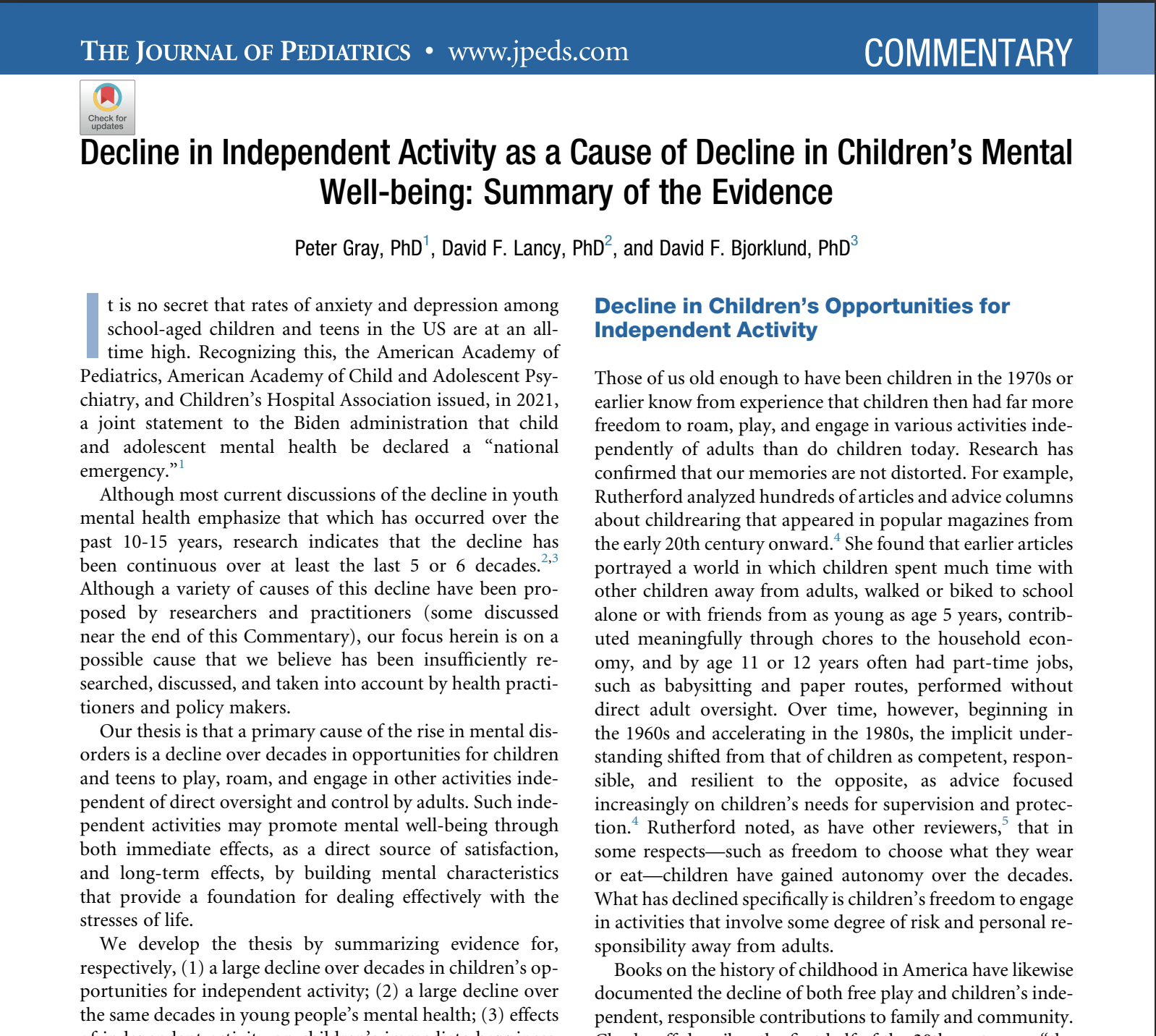
2023 study:

Our thesis is that a primary cause of the rise in mental disorders is a decline over decades in opportunities for children and teens to play, roam, and engage in other activities independent of direct oversight and control by adults.

Continue ReadingThe Importance of Unstructured Play for Children

Ressentiment Redux

Nietzsche, painted a vivid image of ressentiment that is applicable in modern times:

They monopolize virtue, these weak, hopelessly sick people, there is no doubt of it: "We alone are the good and just," they say, "we alone are homines bonae voluntatis.*" They walk among us as embodied reproaches, as warnings to us--as if health, well-constitutedness, strength, pride, and the sense of power were in themselves necessarily vicious things for which one must pay some day, and pay bitterly: how ready they themselves are at bottom to make one pay; how they crave to be hangmen. There is among them an abundance of the vengeful disguised as judges, who constantly bear the word "justice" in their mouths like poisonous spittle, always with pursed lips, always ready to spit upon all who are not discontented but go their way in good spirits. Nor is there lacking among them that most disgusting species of the vain, the mendacious failures whose aim is to appear as " beautiful souls" and who bring to market their deformed sensuality, wrapped up in verses and other swaddling clothes, as "purity of heart": the species of moral masturbators and "self-gratifiers." The will of the weak to represent some form of superiority, their instinct for devious paths to tyranny over the healthy--where can it not be discovered, this will to power of the weakest!

--Genealogy of Morals, Third Essay, Section 15 (1887)

Translation by Walter Kaufmann (1967)

*Men of good will

Continue ReadingRessentiment Redux