Jonathan Haidt and Jonathan Rauch Discuss “The Constitution of Knowledge”

From Heterodox Academy, a discussion of Jonathan Rauch's excellent new book, The Constitution of Knowledge. Here's the HxA landing page for this video.

The production of knowledge thrives when universities value open inquiry, but recent trends in conformist thinking pose new threats to research, writing, and teaching. How do we combat conformist culture in our classrooms and research, while encouraging inquiry into unorthodox ideas? How can our epistemic institutions continue to seek and know truth? We were joined by HxA co-founder and Board Chair Jonathan Haidt for an in-depth discussion with Jonathan Rauch, author of The Constitution of Knowledge: A Defense of Truth.

As Rauch states in the teaser, the system doesn't work by magic. It requires all of us to participate in good faith:
Continue ReadingJonathan Haidt and Jonathan Rauch Discuss “The Constitution of Knowledge”

Modern Journalism’s Task: Protecting Us From the Facts

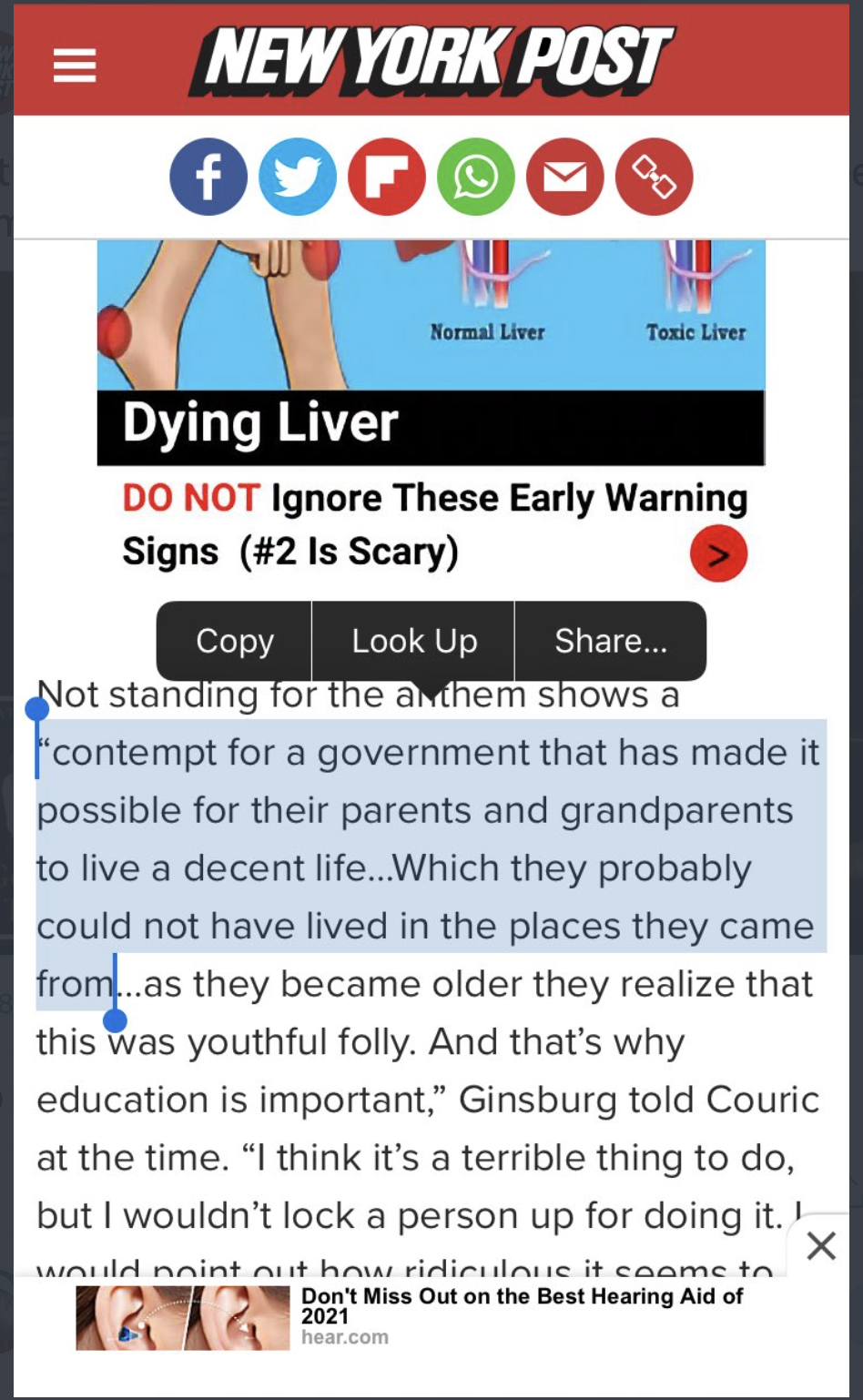
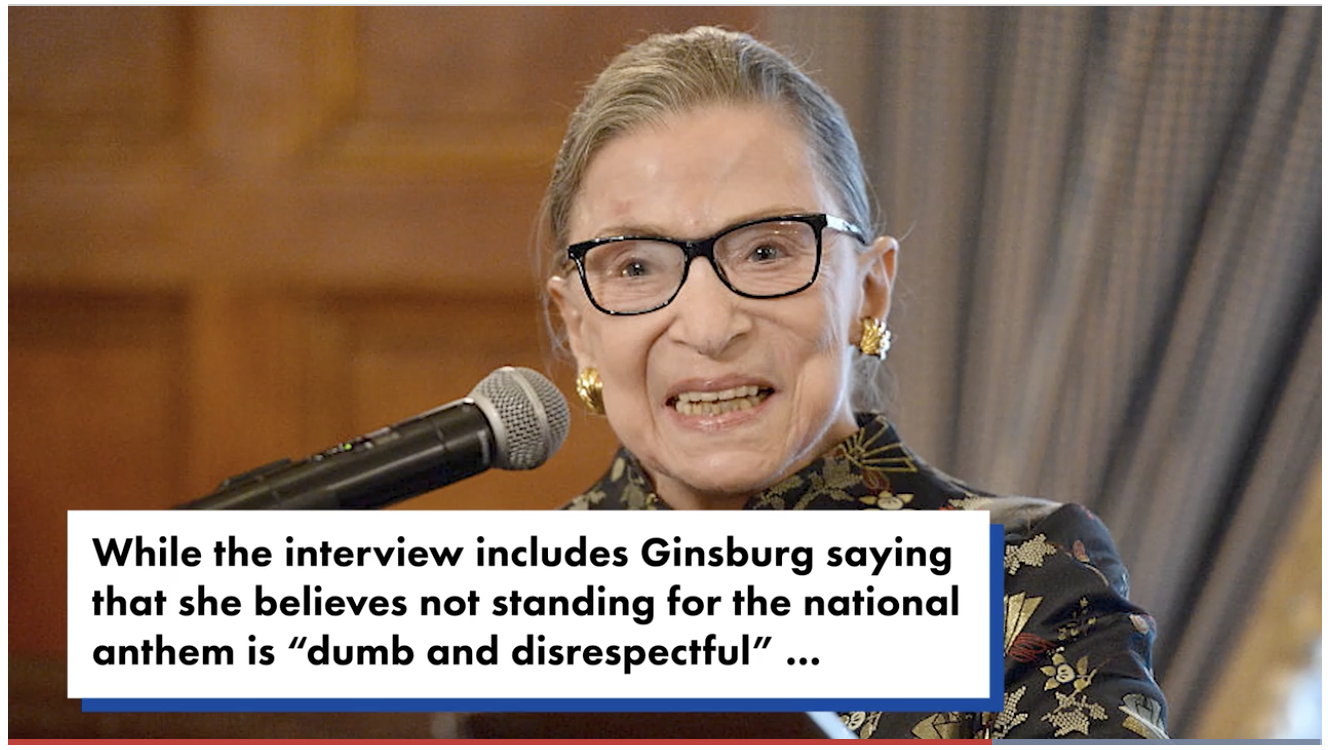
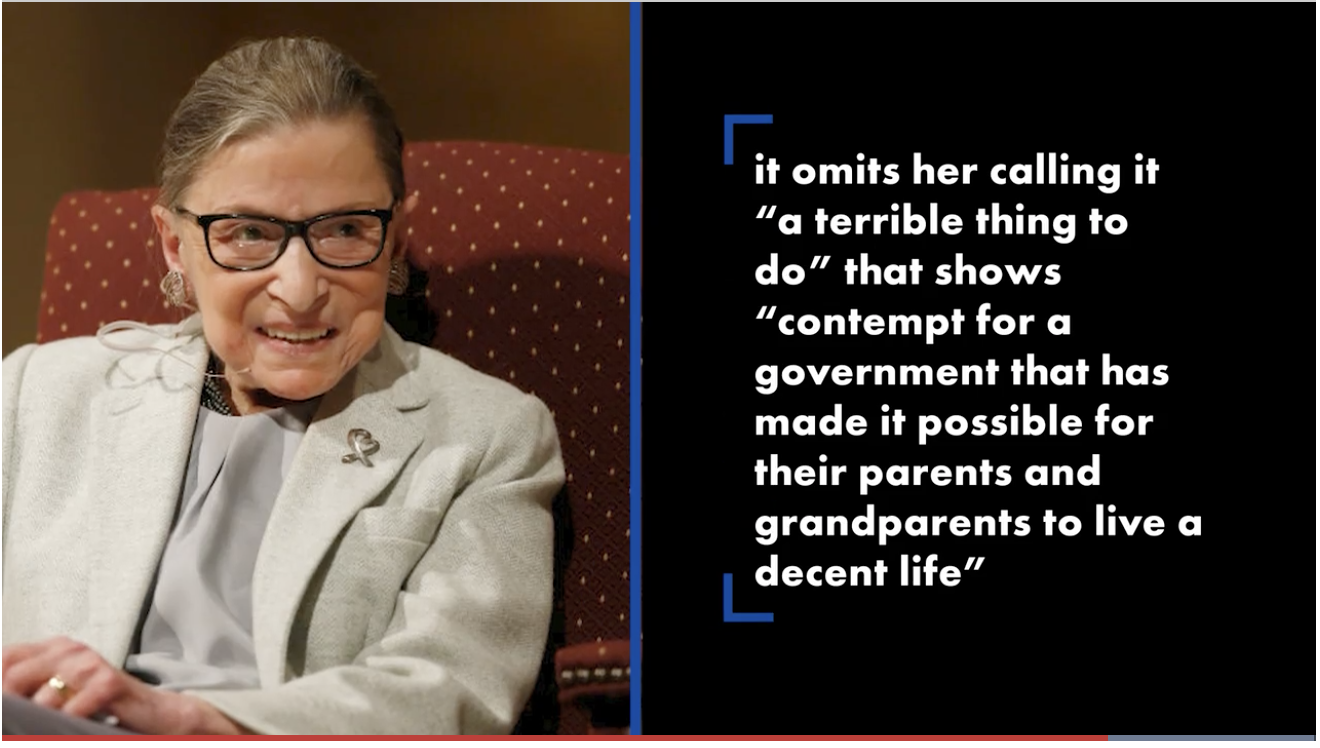
Katie Couric now admits that she censored Ruth Bader Ginsburg's comments regarding kneeling during the national anthem to "protect" RGB. Here is an excerpt from the NY Post:

Couric, being a “big RBG fan” and feeling protective of her and the controversy the comments would likely embroil her in, wrote in the book that she “lost a lot of sleep” and felt extremely “conflicted” over deciding whether she should include Ginsburg’s full thoughts on the matter.

In her new book Couric claims that she withheld the full quote (which would have been highly newsworthy) because RBG “was elderly and probably didn’t understand the question.”

What did RBG actually say in 2016? Here are a few screen shots from the New York Post:

Note that for Couric, RBG was too old to understand Couric's question but not too old to serve as a high-functioning Justice on the Supreme Court.

Here's what is really going on: RBG's statement simply didn't fit the preconceived media narrative Couric was serving up. That was the real problem.  Modern journalism is both what they tell you and what they withhold from you. They are not content to tell you facts so that you can think for yourself. They want to tell you how to think and they do this by misleading you.

BTW, this is not the first left-leaning institution that refused to accurately report the words of their hero, RGB.  Remember what the ACLU recently did? 

Continue ReadingModern Journalism’s Task: Protecting Us From the Facts

Shedding Light on Left-Wing Authoritarianism

From a recent article in The Atlantic: 'The Experts Somehow Overlooked Authoritarians on the Left Many psychologists wrongly assumed that coercive attitudes exist only among conservatives."

One reason left-wing authoritarianism barely shows up in social-psychology research is that most academic experts in the field are based at institutions where prevailing attitudes are far to the left of society as a whole. Scholars who personally support the left’s social vision—such as redistributing income, countering racism, and more—may simply be slow to identify authoritarianism among people with similar goals.

One doesn’t need to believe that left-wing authoritarians are as numerous or as threatening as their right-wing counterparts to grasp that both phenomena are a problem. While liberals—both inside and outside of academia—may derive some comfort from believing that left-wing authoritarianism doesn’t exist, that fiction ignores a significant source of instability and polarization in our politics and society.

Continue ReadingShedding Light on Left-Wing Authoritarianism

Being “Smart” Does Not Protect You from Being Duped.

Jonathan Rauch has written an excellent new book, "The Constitution of Knowledge" (2021). His analysis is deep and unrelenting. Here's a passage that provides a warning: Being "smart" does not protect a person from being duped:

On the more abstract moral and intellectual questions which so often preoccupy and divide us, reasoning, argues Haidt, is like a press secretary whose goal is to justify whatever position her boss has already taken. “Intuitions come first, strategic reasoning second,”writes Haidt. Moreover, in conversations about matters which arouse strong moral reactions, “people care a great deal more about appearance and reputation than about reality.”They care more about looking right than being right. “Our moral thinking,”says Haidt, “is much more like a politician searching for votes than a scientist searching for truth.” Maybe Socrates would rather be right than popular, but most of us prefer to maintain our good standing with our tribe, a reasonable call when one considers that Socrates was executed by his fellow citizens.

Besides being useful for persuading others, the ability to construct reasons is useful for persuading ourselves. Persuading others is easier, after all, if we believe what we say. The old political saw holds that if you can fake sincerity, you’ve got it made; but that is not quite right, because the best way to seem sincere is to be sincere. Detecting trustworthiness is a basic life skill in small groups which depend on sharing and reciprocity, and so people have developed good bullshit detectors. The best way around other people’s bullshit detectors is to believe what you say. If your social reputation and group identity depend upon believing something, then you will find a way to believe it. In fact, your brain will help you by readily accepting and recalling congenial information while working to bury and ignore uncongenial information.

That is why intelligence is no defense against false belief. To the contrary, it makes us even better at rationalizing. Super-smart people, as Haidt notes in The Righteous Mind, are more skilled than others at finding arguments to justify their own points of view. But when they are asked to find arguments on the opposite side of a question, they do no better than anyone else. Brainpower makes people better press secretaries, but not necessarily better at open-minded, self-critical thinking.

Continue ReadingBeing “Smart” Does Not Protect You from Being Duped.

Questioning the NYT COVID Narrative

Glenn Greenwald offers Jeremy Beckham's look at the official NYT COVID narrative. That NYT narrative tries to make the case that COVID vaccine resistance is largely a politically partisan problem and that Trump voters are the villains. An excerpt:

The corporate media has worked very hard to propagate the liberal-pleasing narrative that COVID has become a partisan disease due to vaccine hesitancy on the right, often ignoring the inconvenient truth that large percentages of politically diverse groups, principally African-Americans and Latinos, remain resistant to vaccination. Recent reporting from The New York Times serves to further this distorted narrative, dubbing the positive correlation between support for Donald Trump and COVID death rates “Red COVID," and brandishing it as evidence of a partisan pandemic. But the Times’ report misleads readers through statistical manipulation and data games, as illustrated by this meticulous analysis, presented in an Outside Voices contribution by Jeremy Beckham . . .

Continue ReadingQuestioning the NYT COVID Narrative