What are we to do with the many millions of people who poured over the border during the Biden Administration, while the Biden Administration denied that it was happening and then denied that it could do anything to stop the flow of unvetted people over American borders?
I know this is a complex issue at this point, but it has been more and more clear to me that this movement of migrants across our borders was orchestrated by the Biden Administration for the purpose of electing Democrats in swing states. What to do with millions of people who are illegally here now? Especially given the negative impact mass unvetted immigration has had on many parts of the US, including increased crime. It's a big mess, but it's important to understand what happened and why. Joe Rogan sums it up well when discussing the possibility that Kamala Harris might run for president in 2028:
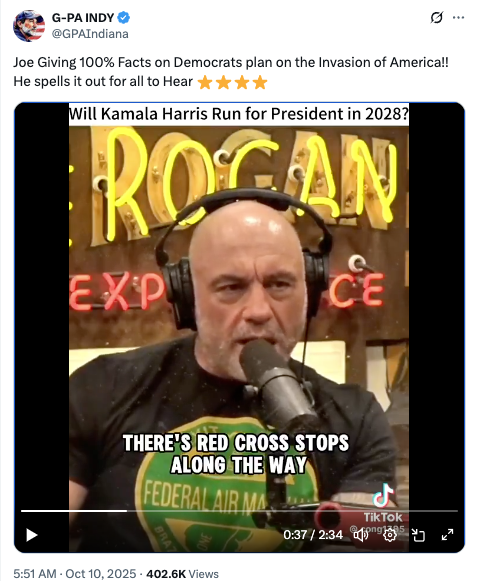
I'll ask [Harris] controversial things, man. It's all I have to do is ask you, Why [was] the border open?" We can talk about that for three hours. Oh my gosh. What are you trying to do? Right? You could close that border. Trump closed that border in a day. Amazing. In a day. You could say I hate what's going on with ice, and I don't like it either. I don't like this thing of like taking people.
And here's the thing, well, they should have done it the right way. But if you're poor and you live in a third world country, that's not an available option. Okay? What is an available option is this one administration over four years was encouraging people to go through, not only encouraging you to go through. There's Red Cross stops along the way. They give you maps. They tell you how to do it. People are being, they're funding people getting in. They're paying for air flights. They're flying people in. They're moving people into swing states. They're getting them on Medicare. They're getting them on Social Security.
We talked about this one lady who did an interview. She was being told to try to get people on permanent disability. So she was told to ask them, "Do you have back problems?" They're like, yes, okay, great, personal disability. Now that she she said I was told to view them as a client now, And so you're trying, essentially to bribe people to Now, once you get them in to move to swing state. Then they count on the census. Once they count on the census, it adds congressional seats. So it's like you're rigging elections by bringing in immigrants, and then you're giving them money.
And all these people that live in these poor communities, they're like, "Hey, where was all this money for us? Where was all this money for the people in Chicago? In Chicago? Where was all this money the people in Baltimore?" No, no, they're doing it because they're trying to manipulate the election. It didn't work. You know, it didn't work. Like, I got into an argument someone about it. But, yeah, it didn't work, though. I go, Yeah, but they tried to do it. It didn't work.
But they did move people to swing states. They did leave the border open for four years. They did let in millions of people. They don't even know how many. They don't know how many people got through. That's crazy. Once they got them here, they did give them EBT cards. They did give them cell phones. They did. They moved them into the fucking hotel, that Roosevelt Hotel in New York City, this luxury hotel filled with migrants. They paid for their food. They did do this. They encouraged people. They did have sanctuary cities where they weren't going to arrest them. They let them come in.
Every bit of the above is easily substantiated by searching first hand accounts on X. Almost none of it can be found in corporate media outlets. Therefore, there's no way to discuss it civilly with people "across the aisle" since, factually speaking, we come from two almost non-overlapping informational ecosystems.


 [More . .. ]