Bill Maher: It’s Time to Ask Questions about Social Contagion and the Phenomenon of Transgendering Children
Bill Maher: "It’s okay to ask questions about something that’s very new and involves children."

Bill Maher: "It’s okay to ask questions about something that’s very new and involves children."
Meanwhile, in England, experts and authorities are pushing back at the prevailing gender ideology, arguing that children should receive real medical care, not "affirmation." When a child thinks she has an appendectomy (because many of her friends think she should get an appendectomy), doctors don't automatically operate. They do (and should) ask questions and conduct test to determine whether an appendectomy is really needed. Excerpt from the article, "Sajid Javid inquiry into gender treatment for children":
"Vulnerable children are wrongly being given gender hormone treatment by the NHS, Sajid Javid believes, as he prepares to launch an urgent inquiry. The health secretary thinks the system is “failing children” and is planning an overhaul of how health service staff deal with under-18s who question their gender identity . . .
Hilary Cass, a former president of the Royal College of Paediatrics and Child Health, has been leading a review into NHS gender identity services for children. In interim findings last month, she said children were being affected by a lack of expert agreement about the nature of gender identity problems, a “lottery” of care and long waiting lists.
Javid is said to be particularly alarmed by her finding that some non-specialist staff felt “under pressure to adopt an unquestioning affirmative approach” to transitioning and that other mental health issues were “overshadowed” when gender was raised.
“This has been a growing issue for years and it’s clear we’re not taking this seriously enough,” an ally of the health secretary said. “If you look at Hilary Cass’s interim report, the findings are deeply concerning and it’s clear from that report that we’re failing children.”
The ally said services should have a holistic view of what might be causing problems for that child: a mental health issue, bullying or sexual abuse.
“That overly affirmative approach where people just accept what a child says, almost automatically, and then start talking about things like puberty blockers — that’s not in the interest of the child at all,” the ally said."
First the shocking data: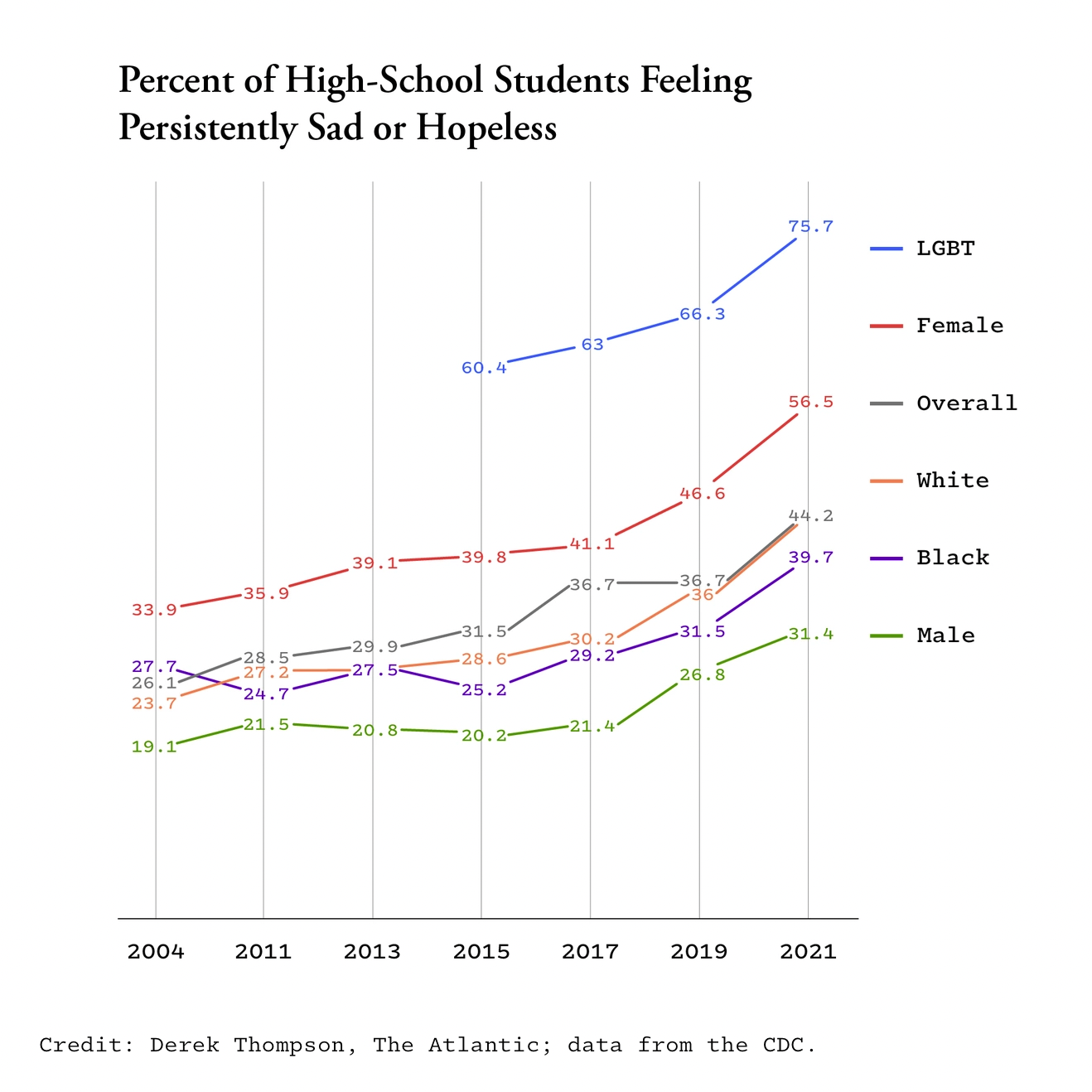
The above is from Derek Thompson's article in The Atlantic: "Why American Teens Are So Sad: Four forces are propelling the rising rates of depression among young people."
The four forces are:
1. Social-media use
Social media isn’t like rat poison, which is toxic to almost everyone. It’s more like alcohol: a mildly addictive substance that can enhance social situations but can also lead to dependency and depression among a minority of users.
2. Sociality is down.
More social media means less unstructured face-to-face time with others.
3. The world is stressful—and there is more news about the world’s stressors
"Fears about finances, climate change, and viral pandemics are smashing into local concerns about social approval and setting oneself up for success."
4. Modern parenting strategies
Today's helicopter parents are depriving their teenagers of opportunities for learning how to tolerate discomfort and developing a sense of personal competence. Further, Thompson notes "a broad increase in an “accommodative” parenting style."
In conclusion, here is an excerpt from Thompson's article:
The world is overwhelming, and an inescapably negative news cycle creates an atmosphere of existential gloom, not just for teens but also for their moms and dads. The more overwhelming the world feels to parents, the more they may try to bubble-wrap their kids with accommodations. Over time, this protective parenting style deprives children of the emotional resilience they need to handle the world’s stresses. Childhood becomes more insular: Time spent with friends, driving, dating, and working summer jobs all decline. College pressures skyrocket. Outwardly, teens are growing up slower; but online, they’re growing up faster. The Internet exposes teenagers not only to supportive friendships but also to bullying, threats, despairing conversations about mental health, and a slurry of unsolvable global problems—a carnival of negativity. Social media places in every teen’s pocket a quantified battle royal for scarce popularity that can displace hours of sleep and makes many teens, especially girls, feel worse about their body and life. Amplify these existing trends with a global pandemic and an unprecedented period of social isolation, and suddenly, the remarkable rise of teenage sadness doesn’t feel all that mysterious, does it?
My faith that legacy media outlets will take journalism seriously has plummeted in recent years. Matt Orfalea's "conspiracy theory" mashup explores one issue (of many recent issues) where media coverage has been abysmal.

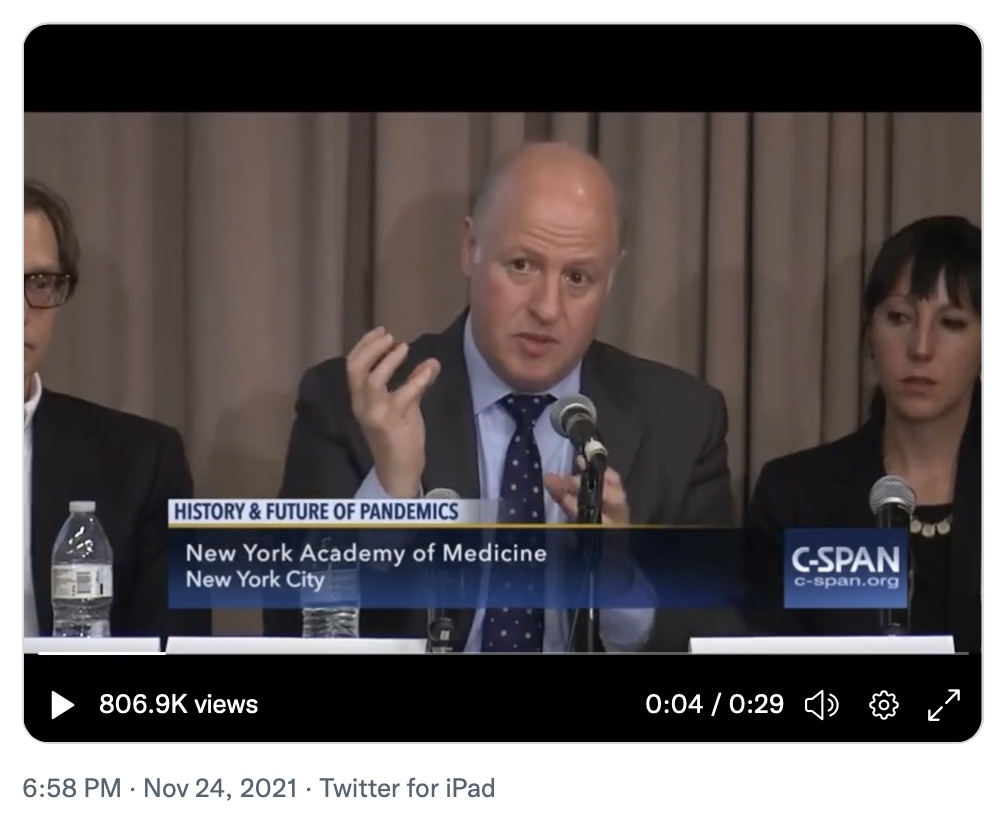
The news outlets kept claiming that the virus could never ever have emerged in a lab, yet they avoided this Peter Daszak video like kryptonite. Whenever they pompously trumpeted that the lab leak was a conspiracy theory, they NEVER mentioned this 2016 video featuring Peter Daszak, president of Eco-Health.
Tweeted by Sagar Enjeti