Helen Pluckrose Discusses Obesity and Fat Shaming

It occurred to me to write this article because 'tis the season where we celebrate refined carbohydrates and overeating. Holiday eating automatically means a table filled with sugary treats. Here's another well-known fact: Here in the U.S. more than 70% of us are overweight or obese.

The thought of holiday sweets automatically puts me in defensive mode.  I've substantially modified my eating and exercise routines several times during my life. I've once lost more than 30 pounds and I've lost more than 20 pounds twice. I know from experience that I need to consciously watch what I eat, make myself get on the scale several times each week and force myself to exercise. If I don't do these things, I inevitably gain at least 2 or 3 pounds each month. Over the course of 12 months, that can add up to more than 30 pounds. My personal struggles and hard-won successes probably explain my lack of patience with the common claim that being obese is something over which they have no control.  Or the claim that obesity is something that can be healthy or even admirable. I bristle when I hear people accuse me of "fat shaming" when my careful words and motives focus purely on health issues faced by obese people.

I've followed the writings of British writer Helen Pluckrose on many topics, including weight loss and "fat shaming." I follow her on Twitter and really enjoy her matter-of-fact upbeat attitude. Pluckrose currently describes herself as obese and indicates on Twitter that she is working on losing weight. In the attached 2019 article, "Big Fat Lies: The Fat Activism Movement is Risking Lives by Suppressing Obesity Research," she offers the facts first, then her opinions, regarding obesity and accusations of fat-shaming. For starters, according to WHO, most of the world's population "lives in countries where an excess of weight now kills more people than being underweight."

The accusation of "fat shaming" often begins with the false claim that overeating has little to do with obesity.  Pluckrose does not buy this attempt to portray obesity as an immutable characteristic:

There are certainly plenty of people who insist they eat very little and yet are heavily overweight, but it’s hard not to notice that in regions where people genuinely don’t have enough to eat, none of them are obese.  Similarly, people who tell us they are obese because of their genes do not seem to have answers for where all these obese genes suddenly came from as our grandparents’ generation did not have the same problem

[More . . . ]

Continue ReadingHelen Pluckrose Discusses Obesity and Fat Shaming

Making Farming a Reality in Rose Bud, Arkansas

I met Steve Grappe ten years ago in St. Louis when I was attending a Lightroom course he was teaching. Back then, Steve was an excellent photographer who eventually became my photography mentor. He taught many other people too. He was the center of vibrant photography community. I quickly learned that Steve was an indefatigable man with an expansive skillset and nonstop creativity. A few years ago Steve left St. Louis to reconnect with Kelly, his prom date from many years earlier when they attended high school together in Arkansas. They were married in May 2018. He took a day gig as a car mechanic and she continued her job as a telecom executive. They settled down and lived happily ever after. The End.

Actually, that's not quite the end of the story. A few months later, they bought a dilapidated old farm in Rose Bud, Arkansas. It was actually much worse than dilapidated. I think Steve said he bought it for a bag of acorns. They worked around the clock to fix up the place and this took an enormous amount of sweat equity. Steve and Kelly were helped considerably in this project by Kelly's teenage daughter, Grace.

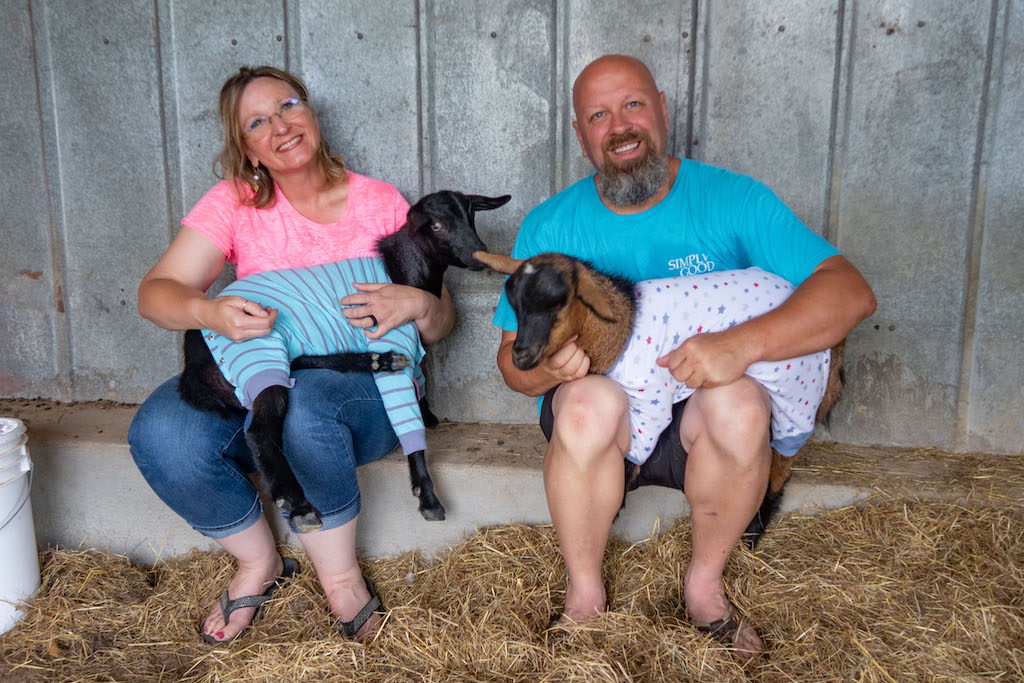
Steve and Kelly were still most definitely not farmers, but at about this same time they decided they needed to learn how to run a farm, so they attended one of the best farm schools available: Youtube. They also asked lots of questions and listened to others in the business. They jumped right in and brought in some livestock, including chickens, pigs, turkeys, rabbits and pigs. They named their special place "Forevermost Farms," a name based upon a syrupy romantic encounter that I don't have time for right now. All of that was such long time ago . . . To recap, Steve and Kelly got married all the way back in May of 2018. They then bought a run-down farm, turned it into a really cool place where some of the animals wear clothes and sometimes sing in little animal quartets. Steve and Kelly went to YouTube University in order to learn how to humanely and organically raise these eccentric critters. Their work has become their passion and I now realize that they were just getting started.

Fast forword: In the past couple weeks, Steve and Kelly said goodbye to their latest batch of 3,000 chickens that they raised over the past few months. They also recently said goodbye to 300 turkeys, 60 pigs and, if I'm remembering correctly, a partridge in a pear tree. Most recently, they announced that one of their dogs is pregnant, which will provide them with more dogs to help them raise their livestock. Things are always happening at Forevermost.

The above numbers boggle my mind, but I've visited Steve and Kelly and I've seen their beautiful place. I've seen many of their animals and I know that many of those animals have both personalities and names. Steve has also become an expert in the mating habits of their animals. He carefully (some would say voyeuristically) observes the animals to see who is doing what to whom. Beware. If you ask Steve a question about animal sex, he will speak to you much more directly than your parents ever did when they gave you the "sex talk."

As Forevermost Farms has become a reality, I've seen a special glow in the eyes of Steve and Kelly. They have accomplished something I would have thought impossible until I saw it with my own eyes, especially in that short time frame, and it was all done on a limited budget. But guess what? My two wonderful upbeat hard-working friends have now most definitely become farmers.

If you'd like to know more about the story of Forevermost Farms, you are invited to follow Steve and Kelly on Facebook or at the Forevermost Farms Website. Please do visit their website so that you can take in some of this celebration that has become their lives.

Continue ReadingMaking Farming a Reality in Rose Bud, Arkansas

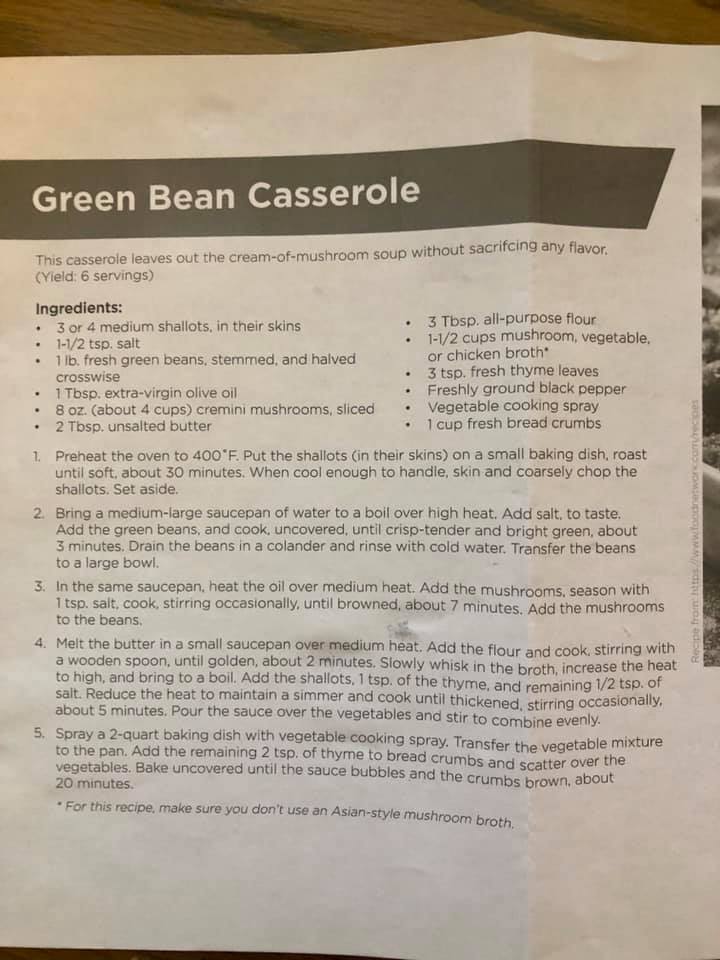
The History of the Green Bean Casserole Using Campbell’s Cream of Mushroom Soup. And what about Jello Pretzel Salad?

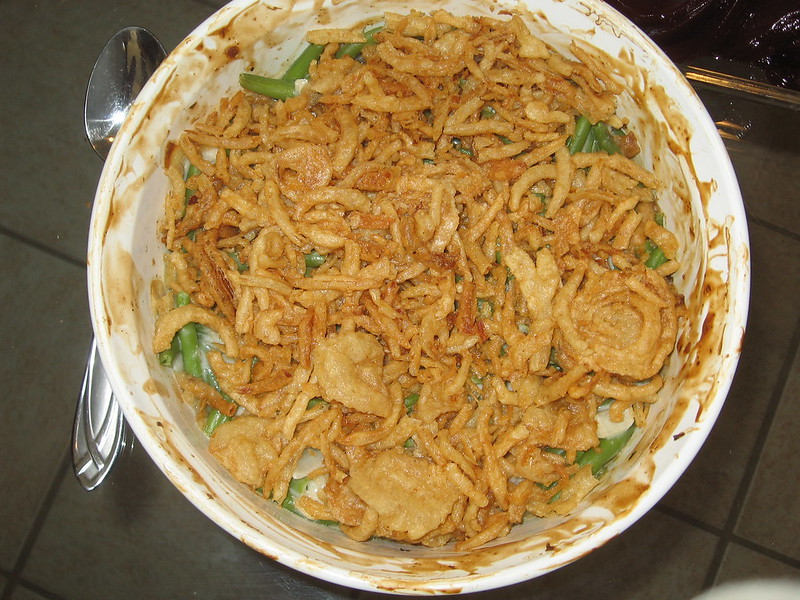
Green Bean Casserole is standard fare at my extended family gatherings. I've wondered how it originated, and I now know:

The Campbell’s Soup Company had its own kitchen, in Camden, New Jersey, dedicated to pumping out recipe pamphlets. A home economist named Dorcas Reilly worked at the Campbell’s kitchen, and in 1955 she successfully devised and tested the infamous green bean casserole recipe. . . . Campbell’s now estimates 40% of the Cream of Mushroom soup sold in the US goes into making green bean casserole.

A friend of mine recently offered me a "healthier alternative" to the standard recipe for green bean casserole.

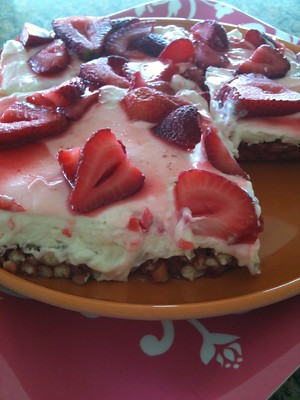
Next investigation based upon a tradition in my family: Jello Pretzel Salad. Here's what I found, from an article titled: "Why strawberry pretzel salad is the queen of all Jell-O salads":

In 2018, surrounded by full plates of lettuce, it is hard for us to image that congealed sugar and flavoring could ever be considered as a salad. However, these dishes continue to be a mainstay of holiday meals, barbecues, showers and potlucks alike. We have the Jell-O corporation to personally thank for decades of congealed and molded fruits and sometimes vegetables.

BON APPÉTIT!

Continue ReadingThe History of the Green Bean Casserole Using Campbell’s Cream of Mushroom Soup. And what about Jello Pretzel Salad?

Concern with Obesity, Fat-Shaming and Racism

People who don't know me well sometimes assume that it's easy for me to keep my weight down.  This is completely untrue.  I constantly watch what I eat. I constantly force myself to exercise and I make myself get on the scale several times each week.  If I don't do these things I will gain 2 or 3 pounds per month.  I've repeatedly and unwittingly run the experiment of not paying attention to my weight during my life. Each time I fall off the rails, I have had to call a stop to the nonsense and declare war on my fat. Over the past 30 years, this has led me to begin ever new rounds of weight loss boot camp (on my own, at home) where I've worked hard to lose 35, 20, and 20 pounds, as well as various smaller amounts of weight. I'm currently in yet another (minor) boot camp that will end when I lose 5 more pounds. This is my plight, my burden and my opportunity if I am going to maintain a body that  feels good and fits my clothes. I also want to avoid risks of diabetes, cancer, heart disease, strokes and other illnesses associated with excess weight.

Whenever I find out that friends are trying to reduce their size, I encourage them and celebrate their successes with them. I silently applaud when I see obese people I don't know exercising at the park  Good for them! I hope they reach their goals!

Increasingly, however, the excesses of the "body positivity" movement invade my thought process, occasionally making me do mental double-takes. Body positivity is a double-edged sword:

On the one hand, body positivity—the attitude associated with the movement—aims to try to help overweight and obese people (especially women—see also, fat feminism—and sometimes, when intersectionally analyzed, specifically black women) accept themselves and their overweight status as they are so that negative emotions are not tied up with it. This, of course, has the direct benefit of helping people not feel bad about themselves for a state of facts about the world (weight, BMI, body fat percentage, etc.), which can be demotivating and hinder weight loss attempts (or, which can just be mean and bullying—see also, fat shaming).

On the other hand, body positivity tends to rather aggressively deny any connection between weight status, including obesity, and health (see also, healthism). It rejects such connections as a “medicalized narrative” (see also, regulatory fiction). This rejects mountains of medical evidence suggesting otherwise, that being overweight and especially obese correlates strongly with and causes a number of serious health issues. This view relies upon seeing body weight status and obesity ultimately as a social construction that is used to create an unjust power dynamic that discriminates against and oppresses fat people. Activism in the body-positive movement often encourages overweight people not to want to lose weight (sometimes as a means of identity politics—see also, identity-first), which is irresponsible, at best (e.g., a book in the movement is titled You Have the Right to Remain Fat).

I agree with the benefits of body positivity described above.  Overweight people should not be shamed.  They should not be shunned.  Doing these things is cruel and destructive.  We should recognize every other person to be a precious human being. It all starts with I and Thou, Martin Buber's version of the golden rule.

That said, how can it possibly be bigoted when I work hard to be healthy and look better by losing weight. How can I possibly be acting out of bigotry to the extent that I encourage others to reach their weight loss goals?  It's not.  For background, see this article on Woke attitudes toward obesity at New Discourses. This is shut-up ("Woke") culture doing what it does best: halting important and necessary conversations under the guise of combating alleged discrimination. Today's excess is an article by CBS featuring a sociology professor who claims that concern with obesity is veiled racism.

Continue ReadingConcern with Obesity, Fat-Shaming and Racism