Women should shut up.

According to 1 Timothy 11-12, woman should be silent. They should not teach or lecture to men:

A woman should learn in quietness and full submission. I do not permit a woman to teach or to have authority over a man; she must be silent.
I personally think that this is absurd advice, but when I hear female neocons and fundamentalists (e.g., Sarah Palin) lecturing to the country on "family values," morals or anything political, I'm going to be pulling out the above quote from the New Testament. It's a simple two-step to deal with woman who get on the national stage to tell the rest of us that we must continue being an aggressive, war-mongering nation, or that we shouldn't teach real science in biology classes, or that we can't provide instruction and medicine and devices to prevent pregnancies:
A) Do you believe the Bible to be inerrant? B) If so, then you most be silent. It is the Word of your God.
Note further, that braided hair, gold, pearls and expensive clothing are absolutely banned.

Continue ReadingWomen should shut up.

Climate: OJ and the Haystack

Why Climate Change Denial Is Like the O.J. Trial is an interesting article. The essence is that the climate denialists are using the same techniques as the OJ defense team: Find anything resembling a needle in a vast haystack of data, then claim that the presence of the needle casts doubt on the character of the haystack itself. Because there is an overwhelming pile of evidence in support of anthropogenic global warming, there are bound to be occasional pieces of data that can appear to contradict the mass of affirmative information. The pile is overwhelming, especially to non-scientists. Therefore few have the patience to understand the whole thing. Those who want to spin the counter argument claim that, because the two sides are both represented, therefore the issue is in doubt. And, as in the OJ trial, if there is cause for doubt, then no action is to be taken.

Continue ReadingClimate: OJ and the Haystack

News story pet peeve

Here's an example of a type of news story that really bugs me, and it happens every so often. Someone gets fired for saying something, and the entire story revolves around the thing that was said. Should the guy who said it resign? Should he be suspended? Did he have a right to say it? Intense story, right? But wait a minute! What, exactly did the guy say? In stories like this, you never learn what he said. Nope, viewers are little babies and the news media must protect our ears from such potentially vile/rude/inappropriate language. Or should they? It all depends on what he said, and we'll never know. But it was rude and he deserved what he got, or maybe not.

Continue ReadingNews story pet peeve

Payday loan opponents struggle to get a fair hearing

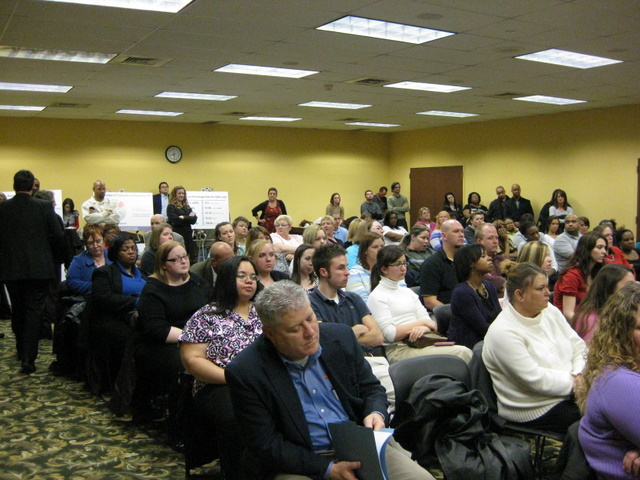
Payday loans are high-interest short-term unsecured small loans that borrowers promise to repay out of their next paycheck, typically two weeks later. Interest rates are typically 300% to 500% per annum, many multiples higher than the exorbitant rates charged by banks on their credit cards. A typical payday borrower takes out payday loans to pay utility bills, to buy a child’s birthday present or to pay for a car repair. Even though payday loans are dangerous financial products, they are nonetheless tempting to people who are financially stressed. The growth of payday lenders in the last decade has been mind-boggling. In many states there are more payday lenders than there are McDonald’s restaurants. In Missouri Payday lenders are even allowed to set up shops in nursing homes. Missouri’s payday lenders are ferociously fighting a proposed new law that would put some sanity into a system that is often financially ruinous for the poor and working poor. Payday lenders claim that the caps of the proposed new law would put them out of business. Their argument is laughable and their legislative strategy is reprehensible. Exhibit A is the strategy I witnessed Thursday night, February 18, 2010. On that night, Missouri State Senator Joe Keaveny and State Representative Mary Still jointly held a public hearing at the Carpenter Branch Library in the City of St. Louis City to discuss two identical bills (SB 811 and HB 1508) that would temper the excesses of the payday loan industry in Missouri. Instead of respecting free and open debate and discussion regarding these bills, payday lenders worked hard to shut down meaningful debate by intentionally packing the legislative hearing room with their employees, thereby guaranteeing that A) the presenters and media saw an audience that seemed to favor payday lenders and B) many concerned citizens were excluded from the meeting. As discussed further down in this post, payday lenders are also responsible for flooding the State Capitol with lobbyists and corrupting amounts of money.carpenter-branch-library When I arrived at 7:00 pm, the scheduled starting time, I was refused entry to the meeting room. Instead, I was directed to join about 15 other concerned citizens who had been barred from the meeting room. There simply wasn’t room for us. But then who were those 100 people who had been allowed to attend the meeting? I eventually learned that almost all of them were employees of payday lenders; their employers had arranged for them to pack the room by arriving en masse at 6 pm. Many of the people excluded from the meeting were eventually allowed to trickle into the meeting, but only aspayday-employees other people trickled out. I was finally allowed into the meeting at 8 pm, which allowed me to catch the final 30 minutes. In the photo below, almost all of the people plopped into the chairs were payday lender employees (the people standing in the back were concerned citizens). This shameful tactic of filling up the meeting room with biased employees has certainly been used before.

Continue ReadingPayday loan opponents struggle to get a fair hearing

The problem with politicians

Colin Beavan (No Impact Man) sums it up like this at his blog:

[T]he politics of Washington are defunct. The Democratic politicians want to beat the Republicans. The Republican ones want to beat the Democratic ones. They are, like the rest of us, scared for their jobs! But the American people? We just want to get along with each other and solve problems. We want happy lives and to be kind to our neighbors. We want leaders who care about us more than their own careers.
Americans are often under the illusion that we have meaningful choices when we vote in national elections, but that is dangerously simplistic. Big money and commercial media pre-designate the candidates who qualify as "serious candidates" long before the citizens vote. Those candidates who prevail are those that have given sufficient winks and nods to big money such that they continue to get well-funded. To compound things, big money likes the status quo. Hence, Barack Obama's continuing lovefest with Wall Street (Disclosure: I voted for Obama but I'm sorely disappointed--yet I still think he is far preferable to McCain-Palin). There are no easy solutions to this problem. The start of a solution, in my opinion, is to give smart, "non-connected" and non-monied people a real chance to get elected. There are several "clean money" campaign reform proposals floating about (for details on one of these, see this post by Lawrence Lessig). The purpose of clean-money elections is the radical idea promoted by the Founding Fathers: that We the People would self-govern. The topic Colin Beavan raises today is the most important political topic out there, in my opinion. Without an honest, open and self-critical deliberative process, we don't actually have a democracy. With the current system of private-money elections (especially in the wake of Citizens United), we don't have an honest, open and self-critical deliberate process. What we have instead, is what Beavan has described: a big expensive game where politicians do anything and say anything to maintain their power and perks.


Continue ReadingThe problem with politicians