Random Thought
If I ever decided to open a retail store that sells only toy boats, I've decided that the name for the store would be: "Toy Boat Toy Boat Toy Boat."

If I ever decided to open a retail store that sells only toy boats, I've decided that the name for the store would be: "Toy Boat Toy Boat Toy Boat."
I'm really enjoying the articles and podcasts of Farnam Street, where Shane Parrish is the writer/host. Here is an important lesson he offers: "Learning How to Think: The Skill No One Taught You." This lesson is to avoid multi-tasking. Researchers have found that the more one multi-tasks, the less effective one is at learning. When you multitask, you are always restarting, never going down to the next level. I want to be someone unique, at least sometimes. I love the good ideas of others. I swim in them most of my hours on the planet. But at least once in a while, I’d like to step out of the echo-chamber and contribute something original to the world. What I have found is that when I'm distracted by phone calls or texts even once every 15 minutes, I never develop high quality ideas of my own. That's why I need to shelter myself in blocks of many hours when I'm writing. At least 3 hours at a time. That's when good things happen. On this point, Shane cites to "Solitude and Leadership," an essay by William Deresiewicz:
I find for myself that my first thought is never my best thought. My first thought is always someone else’s; it’s always what I’ve already heard about the subject, always the conventional wisdom. It’s only by concentrating, sticking to the question, being patient, letting all the parts of my mind come into play, that I arrive at an original idea. By giving my brain a chance to make associations, draw connections, take me by surprise. And often even that idea doesn’t turn out to be very good. I need time to think about it, too, to make mistakes and recognize them, to make false starts and correct them, to outlast my impulses, to defeat my desire to declare the job done and move on to the next thing.This doesn't mean that exciting original ideas don't sometimes come out of no where, like a flash. Nietzsche commented on this in The Gay Science, 381. "The Question of being understandable": [More . . . ]
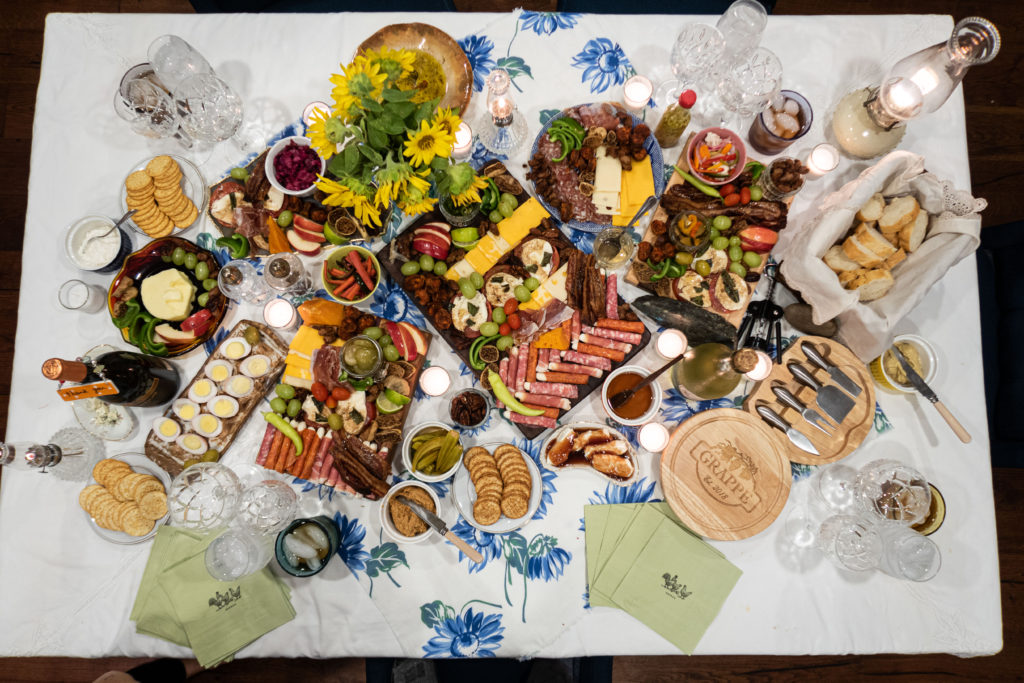
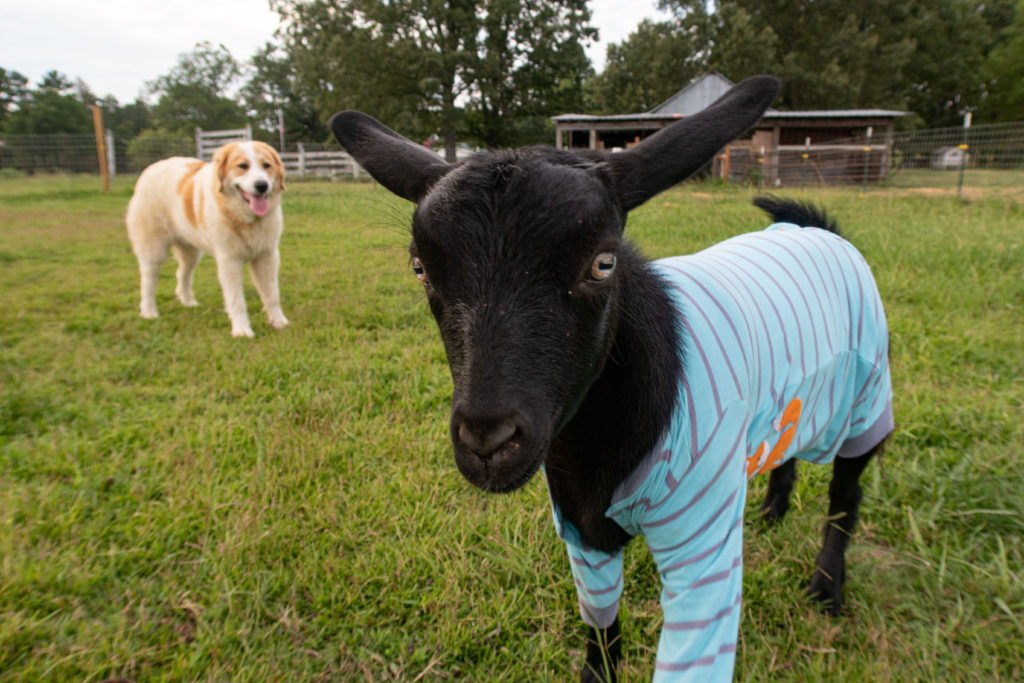
Annie Miller and I are still recovering from too much fun at Forevermost Farm in Arkansas, courtesy of "Happiness Advocates," Steve Grappe and Kelly Grappe. Wow, fresh artistically arranged food - in the form of a "Meraki Charcuterie," chickens, turkeys, pigs, fainting goats and Newman the 19 years old Dog. Goats and Chickens trying out the pajamas Ann Beck Miller designed for them. We played lots of music (Steve and I had a band while he lived in STL) and we took lots of photos (Steve was my mentor re photography). Such an oasis away from life in the city. Thanks, Steve and Kelly!
Visit the website of ForeverMost Farms to learn more about Steve and Kelly's new way of life.
Yesterday I composed this tune using Logic Pro X, digital audio workstation for the Mac. I call this tune "Striding." I like how it came out, especially the expressive trumpet sound Logic offers onboard (it comes in at 1:05). I didn't know this sound existed until yesterday. FYI, all of these sounds come with Logic and were played with a keyboard controller, with the exception of my real life wooden Fender Jazz bass guitar. Those of us who were making digital music 35 years ago are in heaven with these modern digital tools.
If you're worried about the effects of pesticides on honey bees, simply stop collecting information to solve the problem. That's the position of the Trump administration.
On the heels of the EPA's June approval of a bee-killing pesticide, the White House said it would stop collecting data on declining honey bee populations—potentially making it impossible to analyze the effects of the chemical and the administration's other anti-science policies on the pollinators.
The next step might be to stop collecting criminal justice statistics, statistics related to failing schools to "solve" those problems too. That strategy would be in line with our tendency to start wars based on faulty intel and lies. And we've already cut the budget for gathering climate data and analysis. No information, no problem. See no evil.