About Wabi-sabi

Such a beautiful concept: Wabi-sabi

In traditional Japanese aesthetics, wabi-sabi () is a world view centered on the acceptance of transience and imperfection.The aesthetic is sometimes described as one of appreciating beauty that is "imperfect, impermanent, and incomplete" in nature. It is prevalent throughout all forms of Japanese art.

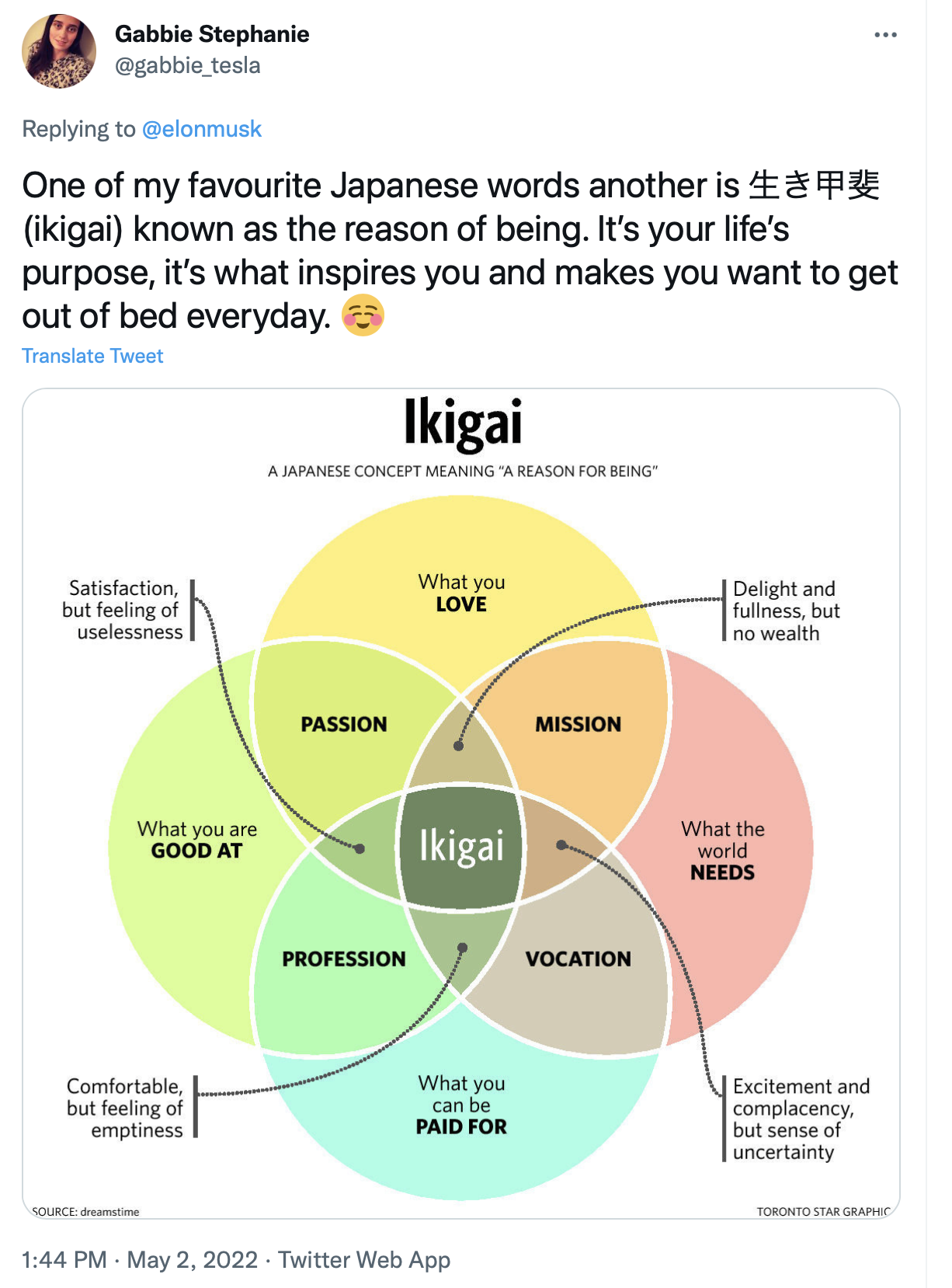
Oh, and one more concept from Japan: Ikigai.

One of my favourite Japanese words another is 生き甲斐 (ikigai) known as the reason of being. It’s your life’s purpose, it’s what inspires you and makes you want to get out of bed everyday.

Continue ReadingAbout Wabi-sabi

Things the Left-Leaning Media Refuses to Discuss

I enjoy listening to Tara Henley's podcasts, even though she unable to get along well with her former employer, the Canadian Broadcasting Corporation. Here is how Bari Weiss describes her departure from CBC:

The story of Tara Henley is the story of countless liberals. Until recently, they were the ones pushing everyone else to be more tolerant, more understanding, more open-minded, more compassionate. Then, something happened — call it ideological succession or institutional capture or the new illiberalism — and, all of a sudden (or so it felt to them), they found themselves to the right of their friends and colleagues. Their crime? Refusing to abandon their principles in the service of some radical, anti-liberal dogma. If you’ve been reading this newsletter, you know well what we’re referring to. (See under: Paul Rossi or Maud Maron or Dorian Abbot.)

And so it was with Henley, an accomplished Canadian journalist whose book, “Lean Out: A Meditation on the Madness of Modern Life,” kind of says it all. Last week, she resigned in style from the Canadian Broadcasting Corporation and struck out on her own here on Substack.

Henley's most recent article offers a list of many of the issues that left-leaning news media currently refuse to cover. The title to her article is "Meet the press: Why much of the media looks and sounds much the same."

Here’s a good place to start: Ask yourself how many liberal media pieces you’ve seen over the past two years that, say, interrogate COVID restrictions critically (especially early on, with school closures, lockdowns, and mask mandates). Or evaluate Black Lives Matter as a political movement, assessing its strengths and weaknesses. Or offer opposing viewpoints on transgender athletes in women’s sports; or mass immigration; or diversity, equity, and inclusion philosophies, trainings, or policies. Or acknowledge the excesses of #MeToo, or prejudice against the white working class. Or present critiques of identity politics. Or explore downsides of puberty blockers and gender transition surgery for teens; or delve into the growing censoriousness on social media and in education, Hollywood, the arts, and NGOs. Or probe inner city gun violence. Or reflect the positive sides of masculinity. Or talk about God. Or reference anything that’s currently deemed a conspiracy theory in non-derogatory terms (see: the lab leak theory). Or express genuine curiosity on the reasons behind the rise of independent media, whether that’s Joe Rogan or Substack.

This, I would argue, is the no-fly list. These are the tripwires.

I’ll admit that, months after leaving legacy media, I still feel an instinctive trepidation even running down this list — that’s how ingrained this is.

I would like an offer a concurring perspective from my work as a consumer attorney. Based on cases I have handled, the best way for a merchant to rip off a customer is to tell some truths (to gain some trust) but refuse to tell the full story. This is the same technique that an auto dealer uses when telling you that the brakes of a used car are "excellent" while simultaneously failing to disclose that the same car was in a flood or that the car's frame consists of two half-frames welded together in a chop shop. Failing to disclose material facts is such a powerful way to rip people off that almost every state has a consumer fraud statute that allows individuals to sue a business for financial damages resulting from such violations while advertising or selling services or merchandise (see this chart, which is helpful as an overview, even though from 2009).

[More . . . ]

Continue ReadingThings the Left-Leaning Media Refuses to Discuss

Paypal: Now in the Censorship Business

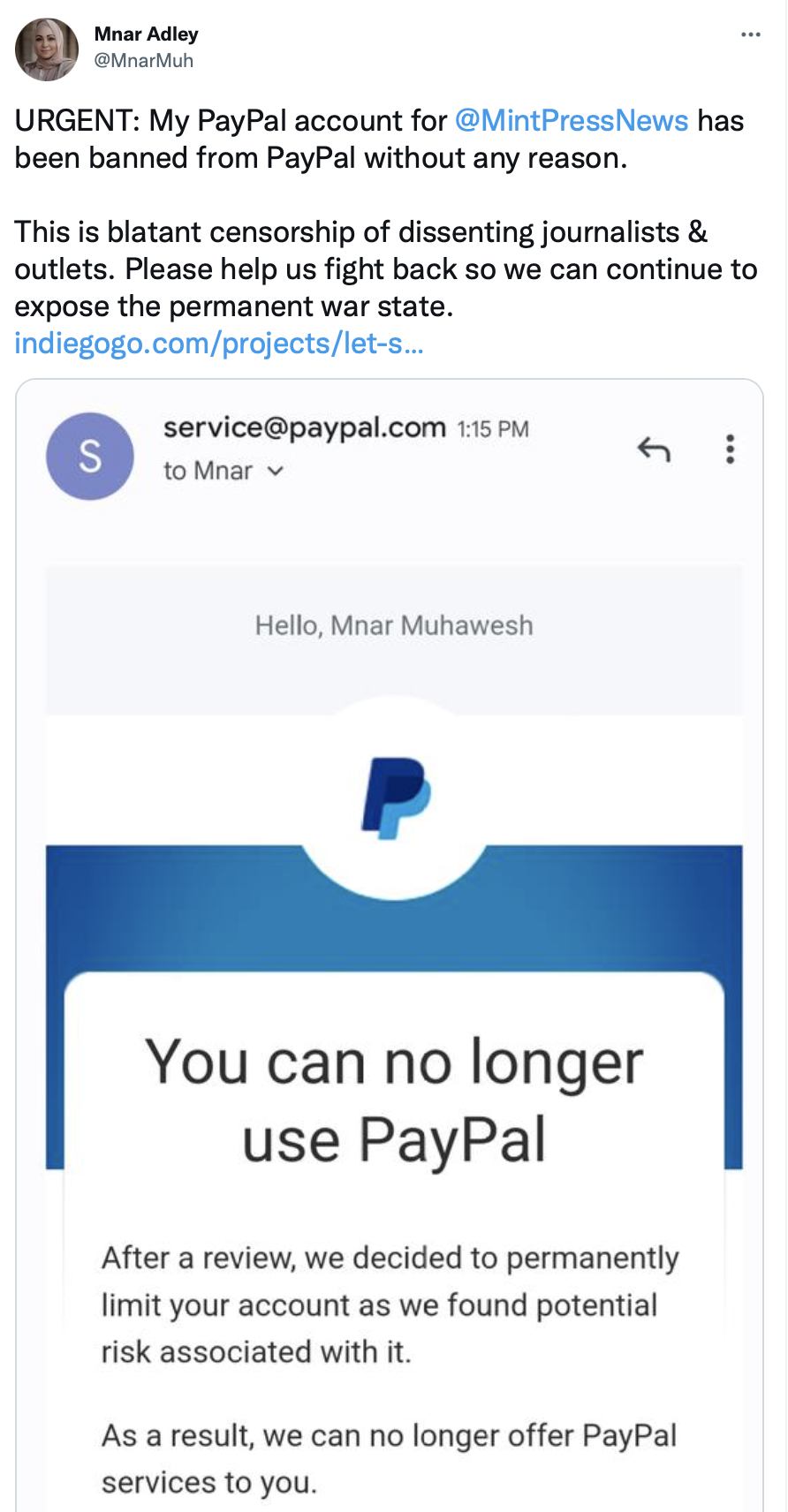
We can now celebrate that Paypal is in the business of censorship, making sure that we don't encounter news sources (such as Mint Press News) that Paypal considers inappropriate for us.
MPN has published writings of many people, some of whom I agree with some of the time, including Chris Hedges, who recently had this to say at MPN:

The ruling class, made up of the traditional elites that run the Republican Party and the Democratic Party, is employing draconian forms of censorship on its right-wing and left-wing critics in a desperate effort to cling to power. The traditional elites were discredited for pushing through a series of corporate assaults on workers, from deindustrialization to trade deals. They were unable to stem rising inflation, the looming economic crisis and the ecological emergency. They were incapable of carrying out significant social and political reform to ameliorate widespread suffering and refused to accept responsibility for two decades of military fiascos in the Middle East. And now they have launched a new and sophisticated McCarthyism. Character assassination. Algorithms. Shadowbanning. De-platforming.

Censorship is the last resort of desperate and unpopular regimes. It magically appears to make a crisis go away. It comforts the powerful with the narrative they want to hear, one fed back to them by courtiers in the media, government agencies, think tanks, and academia. The problem of Donald Trump is solved by censoring Donald Trump. The problem of left-wing critics, such as myself, is solved by censoring us. The result is a world of make-believe.

YouTube disappeared six years of my RT show, “On Contact,” although not one episode dealt with Russia. It is not a secret as to why my show vanished. It gave a voice to writers and dissidents, including Noam Chomsky and Cornel West, as well as activists from Extinction Rebellion, Black Lives Matter, third parties, and the prison abolitionist movement. It called out the Democratic Party for its subservience to corporate power. It excoriated the crimes of the apartheid state of Israel. It covered Julian Assange in numerous episodes. It gave a voice to military critics, many of them combat veterans, who condemned US war crimes.

Paypal thus joins GoFundMe as a corporate leader in the business of censorship (and see here):

Continue ReadingPaypal: Now in the Censorship Business

Culturism – Some of the Many Causes for the Breakdown of the American Family

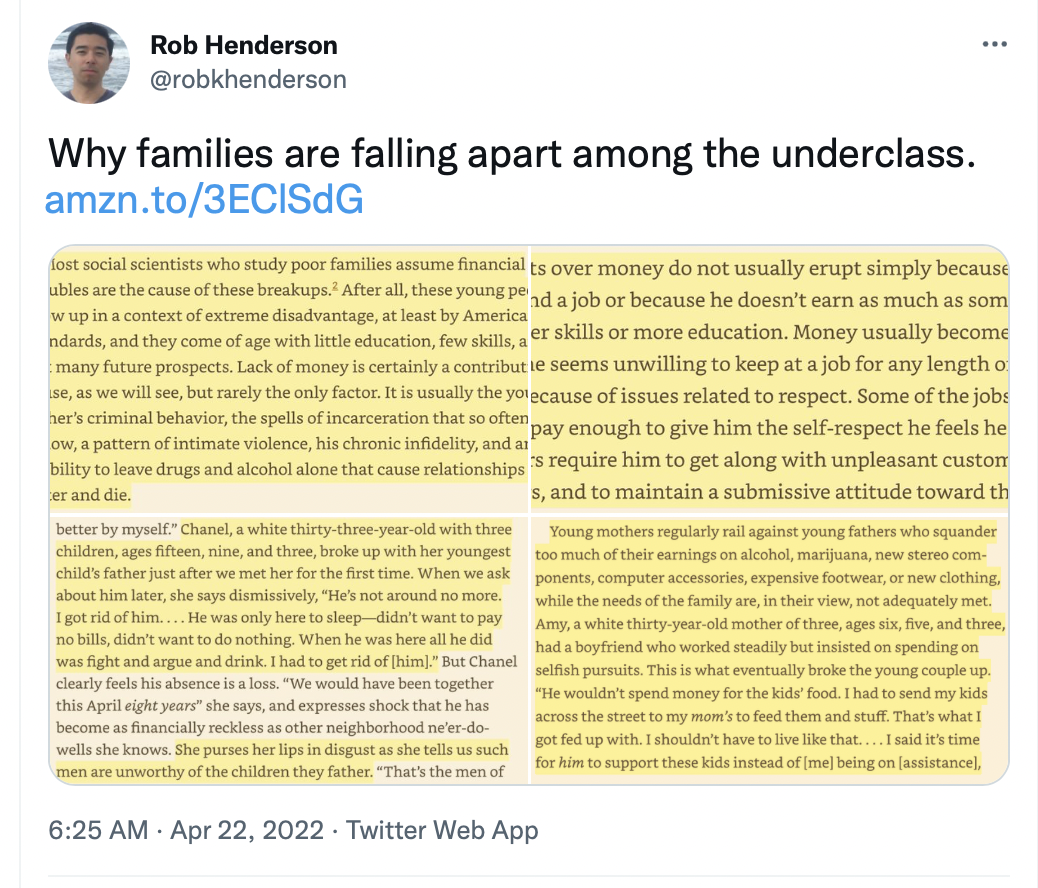
Fascinating thread by Rob Henderson. The bottom line is that financial stress is one of many reasons families fall apart.

This thread contains many excerpts from the 2011 book by Kathryn Edin, Promises I Can Keep: Why Poor Women Put Motherhood before Marriage.

Continue ReadingCulturism – Some of the Many Causes for the Breakdown of the American Family

Lots of Advice I Wish I had Known When I Was Younger

I spotted a well considered list of advice on Common Sense - Bari Weiss' website. It's a list by Kevin Kelly (Founding Editor of Wired). I'm posting it because it offers lots of good advice that I wish I had known when I was younger. Further, I have not been able to write new chapters on "How to be a Human Animal" lately. My day job and other (mostly good) obligations are keeping me away from this project. I hope get back on track in a couple more weeks . . .

Here are a few excerpts from Kelly's list:

• Three things you need: The ability to not give up something till it works, the ability to give up something that does not work, and the trust in other people to help you distinguish between the two.

• When public speaking, pause frequently. Pause before you say something in a new way, pause after you have said something you believe is important, and pause as a relief to let listeners absorb details.

• There is no such thing as being “on time.” You are either late or you are early. Your choice.

• Ask anyone you admire: Their lucky breaks happened on a detour from their main goal. So embrace detours. Life is not a straight line for anyone.

• The best way to get a correct answer on the internet is to post an obviously wrong answer and wait for someone to correct you.

• You’ll get 10x better results by elevating good behavior rather than punishing bad behavior, especially in children and animals.

• Making art is not selfish; it’s for the rest of us. If you don’t do your thing, you are cheating us.

• Spend as much time crafting the subject line of an email as the message itself because the subject line is often the only thing people read.

• Don’t wait for the storm to pass; dance in the rain.

• When checking references for a job applicant, employers may be reluctant or prohibited from saying anything negative, so leave or send a message that says, “Get back to me if you highly recommend this applicant as super great.” If they don’t reply take that as a negative.

• Half the skill of being educated is learning what you can ignore.

Continue ReadingLots of Advice I Wish I had Known When I Was Younger