Today’s Predominant Political Category Error

If only I could conjure up a sprawling, complex, monied and politically-interconnected system of prophylactic gaslighting in order to protect me from any criticism at all for my own egregious misconduct. I don't have those resources.

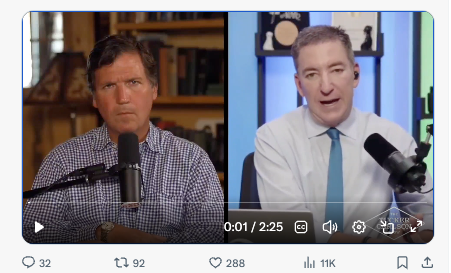
I would need a very powerful social and economic system, indeed, to sell "logic" as idiotic as this: Whenever you criticize me for despicable things I actually did, you are criticizing my puppy, the Apple tree in my backyard and my second grade music teacher. That sad state of affair is where we currently are, as Glenn Greenwald describes.

Truly, it would take an immensely powerful political/economic force to sell that level of bullshit on a nationwide basis. It would take the kind of overwhelming power capable purchasing CBS and TikTok, as well as purchasing hundreds of members of Congress through AIPAC. With that kind of power and money and reach, we now see that one could even incentivize (or frighten) a college president to implore to her college students that 2 + 2 = 5.

What we are seeing in these modern times is that sufficient money and power can dispense with the simple logic and clear meaning of this Venn diagram:

Continue ReadingToday’s Predominant Political Category Error

The Economics of Sports Betting and State Lotteries

I don't watch much TV, but I have been noticing substantial numbers of sports betting commercials when I do watch a movie. Here's the economic analysis by Aakash Gupta, based on a talk by Warren Buffett, who urges that these are taxes on stupidity and that the government shouldn't play people for suckers.

Warren Buffett, in his first sit-down since stepping down as Berkshire CEO, gave the cleanest indictment of legalized gambling in a decade. He called it a tax cut for the wealthy. The math proves him exactly right.

Americans wagered $165 billion at legal sportsbooks in 2025. They lost $16 billion of that. FanDuel pulled $6 billion of the losses. DraftKings pulled $5.3 billion. Every state with legal mobile sports betting collected a tax on the bettor side. New York alone took in over $1.2 billion in 2025 sports betting tax revenue.

Layer the lottery on top. State lotteries generate over $90 billion a year. The bottom half of income earners account for roughly 70% of total spend. The average lottery player makes $38,000. A household earning $20,000 spends three times more on tickets than one earning $30,000. The implicit tax rate, meaning whatever the state keeps after prizes, runs 30 to 50% depending on the game. No other revenue source in America has that base and that rate.

The structural design is the engine. A single straight sports bet carries a hold of 4 to 5%. A four-leg parlay carries a hold above 30%. FanDuel and DraftKings spent five years rebuilding their apps to make parlays the default product. FanDuel's blended hold rate hit 11.4% in 2025, up from roughly 7% in 2022. The product got worse for the customer and the customer wagered more anyway.

Now look at the substitution. Nine US states have no state income tax. Seven of those nine run state lotteries. Seven of those nine have legalized sports betting. The states most committed to never taxing wealth are the same states running the largest extraction machines on people who cannot afford to lose. Read it as policy.

Continue ReadingThe Economics of Sports Betting and State Lotteries

The Branding Problem of Free Speech on Campus

Q: "I'm really curious to hear from you why you think free speech has the branding issue that you know it tends to have, and why for young people, there's this perception that you know is warped. "

Greg Lukianoff: "This is probably a rough thing to say in a group full of educators, but I do think that a lot of the quote, unquote, branding issue with freedom of speech came out of K through PhD. When I was working at the ACLU back in 1999 I could see something happening, what I called the slow motion train wreck on college campuses in particular. We qualified for public assistance when I was a kid, and then I ended up at a place like Stanford Law School. And this was definitely a very weird experience for me, and it was the first time I really ran into kids who were pretty mediocre, a little ambivalent about freedom of speech. Working Class liberals were very pro freedom of speech. I thought that's what made a liberal, a liberal. But it was only when I started meeting more upper class people who came from, you know, the 1% and tended to go to the fanciest schools, that I started really running into this very anti liberal kind of idea, and that's a very typical dynamic that essentially, once your politics become a super majority of an institution--you want free speech when you're the minority, because free speech protects minority opinions. You don't need it to protect the majority. The popular vote protects the majority power. And in higher ed, there was this intentional, clear shift that free speech started being problematized partially because the people in charge of higher ed kind of thought, well, if I'm the one deciding what will get you punished and what won't, I can be trusted with that. And that's the temptation of power always."

Continue ReadingThe Branding Problem of Free Speech on Campus