Improv Everywhere rings the bell
Improve Everywhere is out in force with their hand bells this Yuletide season. It's a lot of fun, as always.

Improve Everywhere is out in force with their hand bells this Yuletide season. It's a lot of fun, as always.
Howard Dean on what pretends to be "health care reform":
Real reform would significantly lower costs, improve the delivery of health care and give all Americans a meaningful choice of coverage. The current Senate bill accomplishes none of these. Real health-care reform is supposed to eliminate discrimination based on preexisting conditions. But the legislation allows insurance companies to charge older Americans up to three times as much as younger Americans, pricing them out of coverage. The bill was supposed to give Americans choices about what kind of system they wanted to enroll in. Instead, it fines Americans if they do not sign up with an insurance company, which may take up to 30 percent of your premium dollars and spend it on CEO salaries -- in the range of $20 million a year -- and on return on equity for the company's shareholders. Few Americans will see any benefit until 2014, by which time premiums are likely to have doubled. In short, the winners in this bill are insurance companies; the American taxpayer is about to be fleeced with a bailout in a situation that dwarfs even what happened at AIG.I entirely agree with Dean. I would like to tear up the current proposals and start over. I'd do it in two steps. First, quickly pass a bill with all of the low-hanging fruit, to get them out of the way: for example, requiring portability and prohibiting rejection of new customers based on pre-existing conditions. Only then, proceed with the brunt of the program. Let the expensive part of the program live or die on its own merits. Undistracted by the low-hanging fruit, we can better evaluate how much the new program would cost and what the tax-payers would get for their money.
Here's a video sketch of Thich Nhat Hanh from 2003 that I enjoyed and decided to share. A sample quote:
THICH NHAT HANH: Using violence to suppress violence is not the correct way. America has to wake up to that reality. [Interviewer]: That’s not a sentiment you hear everyday at the Capitol. Nor is Nhat Hanh’s recommendation to this bitterly divided Congress that its members practice what he calls deep listening (to each other) and gentle speech.At the persistent urging of Lisa Rokusek (an author at this website), I've been reading some of the works of Thich Nhat Hanh lately, and enjoying their elegant wisdom. Here are a few of his quotes:
Keeping your body healthy is an expression of gratitude to the whole cosmos - the trees, the clouds, everything. People have a hard time letting go of their suffering. Out of a fear of the unknown, they prefer suffering that is familiar. The practice of peace and reconciliation is one of the most vital and artistic of human actions. People usually consider walking on water or in thin air a miracle. But I think the real miracle is not to walk either on water or in thin air,but to walk on earth. Every day we are engaged in a miracle which we don't even recognize: a blue sky, white clouds, green leaves, the black, curious eyes of a child -- our own two eyes. All is a miracle. Many of us are not capable of releasing the past, of releasing the suffering of the past. We want to cling to our own suffering. But the Buddha said very clearly, do not cling to the past, the past is already gone. Do not wait for future, the future is not yet there. The wise people establish themselves in the present moment and they practice living deeply in the present moment. That is our practice. By living deeply in the present moment we can understand the past better and we can prepare for a better future.
First Premier Bank has just introduced its new 79% interest rate sub-prime credit card. No, that's not a typo, and some experts expect to see more credit cards with sky-high interest.
Which makes me again bring up the topic of a national usury cap. Thomas Geoghegan recommended such a cap last year, in his article in The American Prospect. He suggested a credit card interest cap of 12% and a law completely barring payday loans.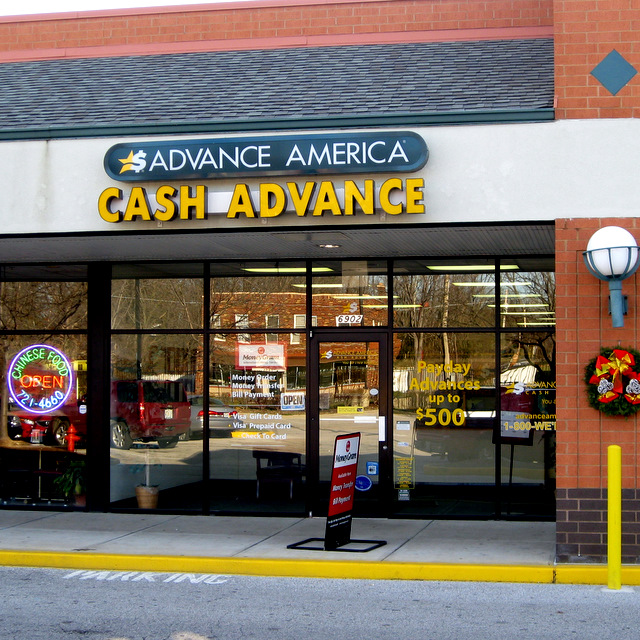 I have filed several class action suits against large payday lenders (here's a post on one of those suits). These lenders often argue that people need these 400% interest loans for short term emergencies. At what cost, though? In my experience, these lenders are commonly stretching out these "short term" loans for many months. People who borrow $500 will pay $2000 in interest over the year and they will STILL OWE THE $500.
Many states allow payday lenders to charge in excess of 1000% interest. These loans suck the very life out of working class folks. They amount to financial crack cocaine, because people often end up taking out a second, and a third payday loan in order to pay off the first one. It's a terrible mess and it's ruining lives. That's why 13 states have passed laws making sure that payday lenders cannot operate in those jurisdictions. It's time for the other states, and Congress, to get with the program.
To put this all in perspective, remember the stories about "loan sharks?" Those were the good old days. "Simple nominal annual interest rates on extortionate mafia loan shark debts averaged 250%." Syndicate Loan-Shark Activities and New York's Usury Statute, 66 Colum. L. Rev. 167, 167 (1966).
And here's another irony. The Bible clearly holds that usury is a sin comparable to murder. Usury is prohibited by Exodus 22:25: "If thou lend money to any of my people that is poor by thee, thou shalt not be to him as an usurer, neither shalt thou lay upon him usury.” Usury is also prohibited by Leviticus 25:35-37. In spite of these Bible quotes, if you want to find lots of payday stores and payday lenders, look for geographical areas where you'll also find conservative Christians. That is the finding of Steven M. Graves and Christopher Peterson, in a law review article entitled "Usury Law and the Christian Right: Faith-Based Political Power and the Geography of American Payday Loan Regulation," 57 Cath. U. L. Rev. 637, 640 (2008):
I have filed several class action suits against large payday lenders (here's a post on one of those suits). These lenders often argue that people need these 400% interest loans for short term emergencies. At what cost, though? In my experience, these lenders are commonly stretching out these "short term" loans for many months. People who borrow $500 will pay $2000 in interest over the year and they will STILL OWE THE $500.
Many states allow payday lenders to charge in excess of 1000% interest. These loans suck the very life out of working class folks. They amount to financial crack cocaine, because people often end up taking out a second, and a third payday loan in order to pay off the first one. It's a terrible mess and it's ruining lives. That's why 13 states have passed laws making sure that payday lenders cannot operate in those jurisdictions. It's time for the other states, and Congress, to get with the program.
To put this all in perspective, remember the stories about "loan sharks?" Those were the good old days. "Simple nominal annual interest rates on extortionate mafia loan shark debts averaged 250%." Syndicate Loan-Shark Activities and New York's Usury Statute, 66 Colum. L. Rev. 167, 167 (1966).
And here's another irony. The Bible clearly holds that usury is a sin comparable to murder. Usury is prohibited by Exodus 22:25: "If thou lend money to any of my people that is poor by thee, thou shalt not be to him as an usurer, neither shalt thou lay upon him usury.” Usury is also prohibited by Leviticus 25:35-37. In spite of these Bible quotes, if you want to find lots of payday stores and payday lenders, look for geographical areas where you'll also find conservative Christians. That is the finding of Steven M. Graves and Christopher Peterson, in a law review article entitled "Usury Law and the Christian Right: Faith-Based Political Power and the Geography of American Payday Loan Regulation," 57 Cath. U. L. Rev. 637, 640 (2008):
We conclude, with a high degree of statistical certainty, that states with powerful conservative Christian populations tend to host relatively greater numbers of payday loan locations per capita as well as a greater commercial density of payday lenders. These findings propound a tragic and sad irony. Those states that have most ardently held to their pious Christian traditions have tended to become more infested with the progeny of money changers once expelled by Christ from the Hebrew temple. Legislators in those states, who have effectively used biblical principles to shape their legislative agenda on social and cultural issues, have failed to consistently apply biblical principles to economic legislation.
All it would take for Congress to outlaw payday loans is to write up a bill, have a majority of members of Congress approve of it, and then refer it to the President to sign it. But that can't happen these days because the financial services industry pays our politicians huge amounts of money so that they WON'T sign these sorts of bills. And, of course, with regard to Congress, the banks "frankly own the place."A friend forwarded this from The Onion. Thought DI readers would appreciate the findings, including this:
Members of the earth's earliest known civilization, the Sumerians, looked on in shock and confusion some 6,000 years ago as God, the Lord Almighty, created Heaven and Earth.
According to recently excavated clay tablets inscribed with cuneiform script, thousands of Sumerians—the first humans to establish systems of writing, agriculture, and government—were working on their sophisticated irrigation systems when the Father of All Creation reached down from the ether and blew the divine spirit of life into their thriving civilization.