
There REALLY Ought a be a Law . . .

Former Vice President Dick Cheney has published an unapologetic paean to his war crimes, torture and tortured reasoning in a memoir which he calls; In My Time. Needless to say, some find Mr. Cheney’s alleged memoir a work of fiction and suitable “for supermarket tabloids” and “full of cheap shots.” The book will be out August 30, 2011. Mr. Cheney and his attack-dog daughter, Liz, have launched another campaign to clean up Mr. Cheney’s image but, Mr. Cheney remains one of the most unpopular politicians in American history with an approval rating going towards the single digits. In Mr. Cheney’s book he highlights how he counseled bombing Syria to “restore America’s standing among the Arabs.” Apparently, Mr. Cheney’s plans also included the possibilities of nuking Iraq, Iran and Syria to prevent the spread of nuclear weapons to those countries. I wonder if Mr. Cheney’s memoir mentions the secret CIA assassination squads which he set up and then ordered the CIA to not disclose to Congress as required by law or his advocacy of the illegal use of US troops against US citizens on US soil? [More . . . ]
Continue ReadingThere REALLY Ought a be a Law . . .

The trouble with gold

At OEN, Jimmy Walter leads a short tour through history, part of his discussion about the trouble with gold. Many people have added some gold to their portfolios, and it has often worked out well for many people, though not every person. The thought often recurs to me: What if people stop liking gold? What if they reframe gold as simply a shiny, but otherwise useless metal. As Walter states at the end of his article aimed at gold-lovers everywhere: "Gold is just a shiny stone that mesmerizes the naive natives." What are the odds that this will become the prevailing wisdom? This exposes that the power of gold is not about the metal itself--it is mostly about the value people attribute to it, which is based, for the most part, on the value people assume other people will attribute to gold. Gold is not, in the end, really about gold. It is about predicting what other people will think about gold. It is tempting to say, then, that gold comes close to being a tangible symbol of wealth.

Continue ReadingThe trouble with gold

Symbols, Fair Use, and Sensitivities

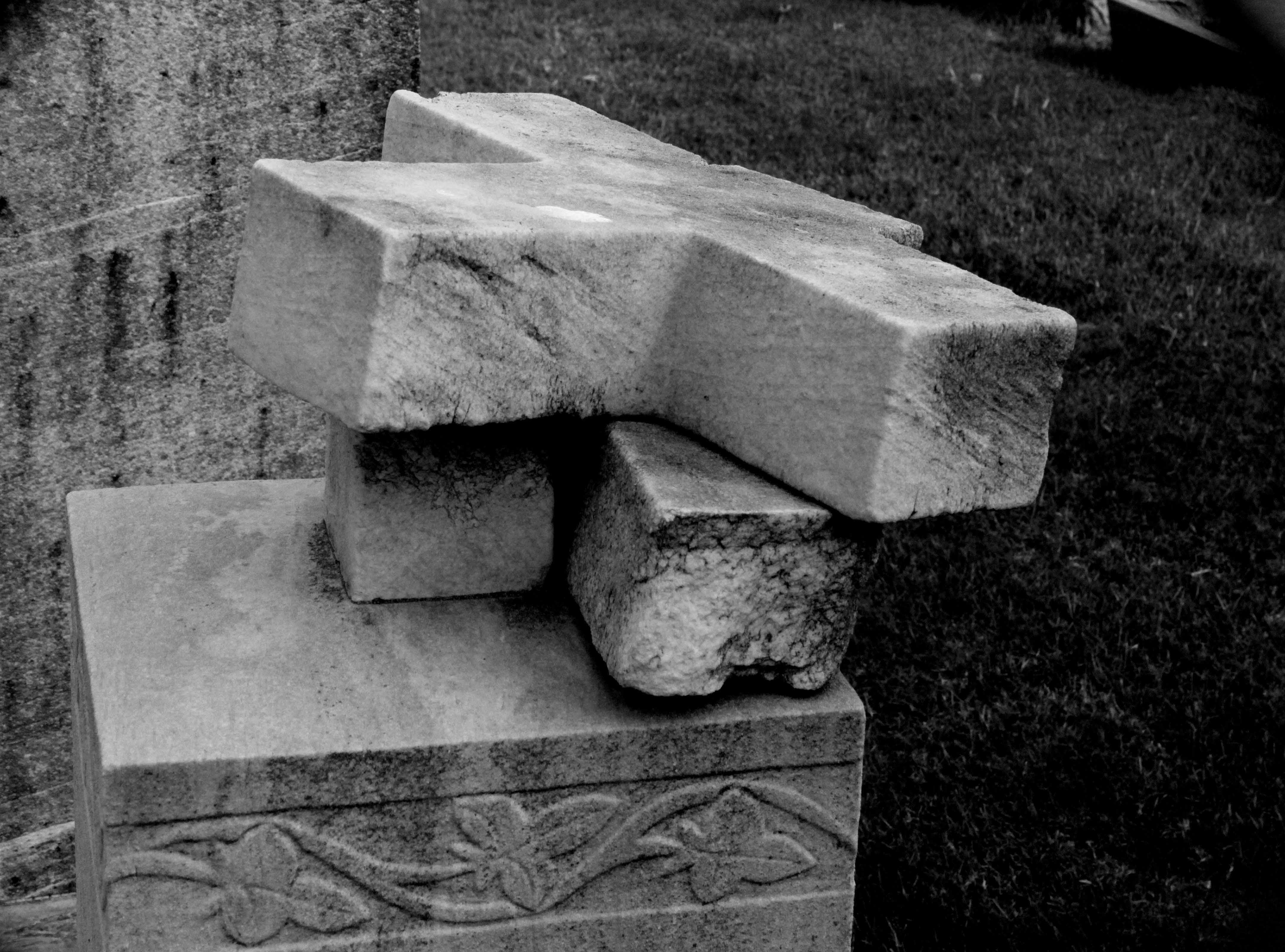
When you have a dream about an argument, maybe it has some weight and should be written about. Recently, I posted a photograph on my Google + page. This one, in fact (click on the photo for high-res version): My caption for it was “What more is there to say?” Partly this was just to have a caption, but also to prompt potential discussion. As symbol, the photograph serves a number of functions, from melancholy to condemnation. It did prompt a discussion, between two friends of mine who do not know each other, the core of which centers on the divergent meanings of such symbols for them and a question of sensitivity. I won’t reproduce the exchange here, because as far as I’m concerned the question that it prompted for me was one of the idea of “sacredness” and the appropriate use of symbols. Which immediately sent me down a rabbit hole about the private versus public use of symbols. Essentially, we all have proprietary relationships with certain symbols. Since I already posted the image, the sign of the cross is one, and not just for Christians. As a symbol it has achieved that universality advertisers dream of. It is instantly recognizable as the sign for a faith movement just about everywhere. It’s possible some aboriginal tribes in the beclouded valleys of New Zealand don’t know what it is, but on the level of international discourse it carries across all lines. [More . . . ]

Continue ReadingSymbols, Fair Use, and Sensitivities

Does LEED certification really mean a building is energy efficient?

The U.S. Green Building Council has gotten a lot of attention through promotion of its LEED standard.  I am personally aware of several organizations that have focused intense PR campaigns on claims that their buildings have been modified, usually at considerable expense, so that they are LEED-certified and thus more energy efficient.  Here's the claim as to the meaning of LEED certification on USGBC's website:

LEED, or Leadership in Energy and Environmental Design, is an internationally-recognized green building certification system. Developed by the U.S. Green Building Council (USGBC) in March 2000, LEED provides building owners and operators with a framework for identifying and implementing practical and measurable green building design, construction, operations and maintenance solutions.
Consequently, buildings that are LEED certified are understood by the general public as indicating that a building is especially energy-efficient. Today I read a disturbing article in Mother Jones (not yet available online): "Leeding us On."  The article focuses on allegations made by Henry Gifford, a New York City energy efficiency consultant, who calls LEED "a joke." Here's an excerpt: [More . . . ]

Continue ReadingDoes LEED certification really mean a building is energy efficient?