My Awkward Love Letter to Plants

This morning I pretended I lived in a world without any plants.  I pretended I was an inventor.

My first client asked me to invent something she called “plants.” She was entirely concerned with function, not aesthetics. She had some very demanding requirements. Each of these living things would be rooted to one position for their entire lives. They would not be able to move. I said, “Oh, like sponges . . . ” She corrected me: “No, sponges are animals like you!” She handed me information showing how plants differ from animals, though there are many similarities too, since all plants and all animals have common eukaryote ancestors.
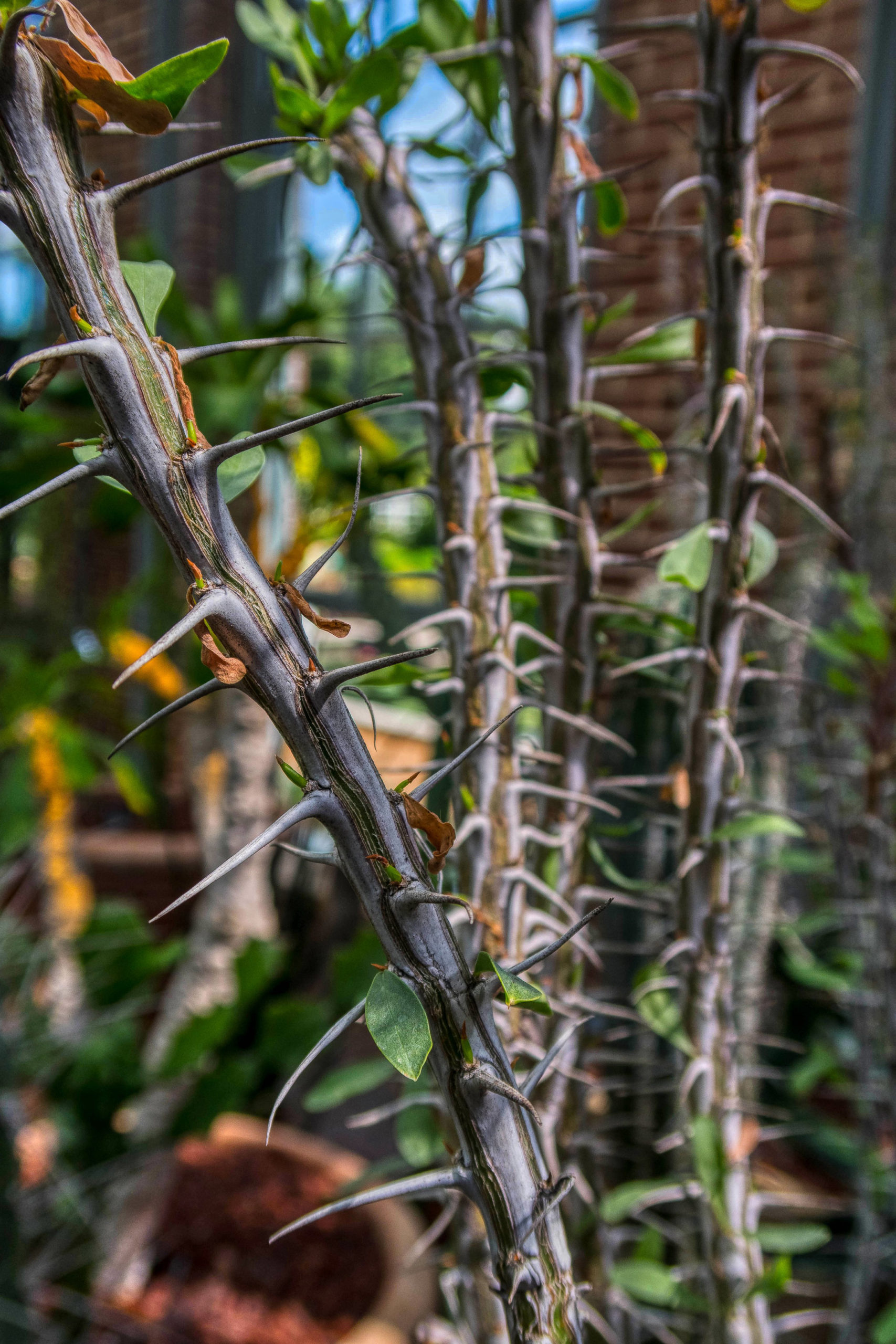
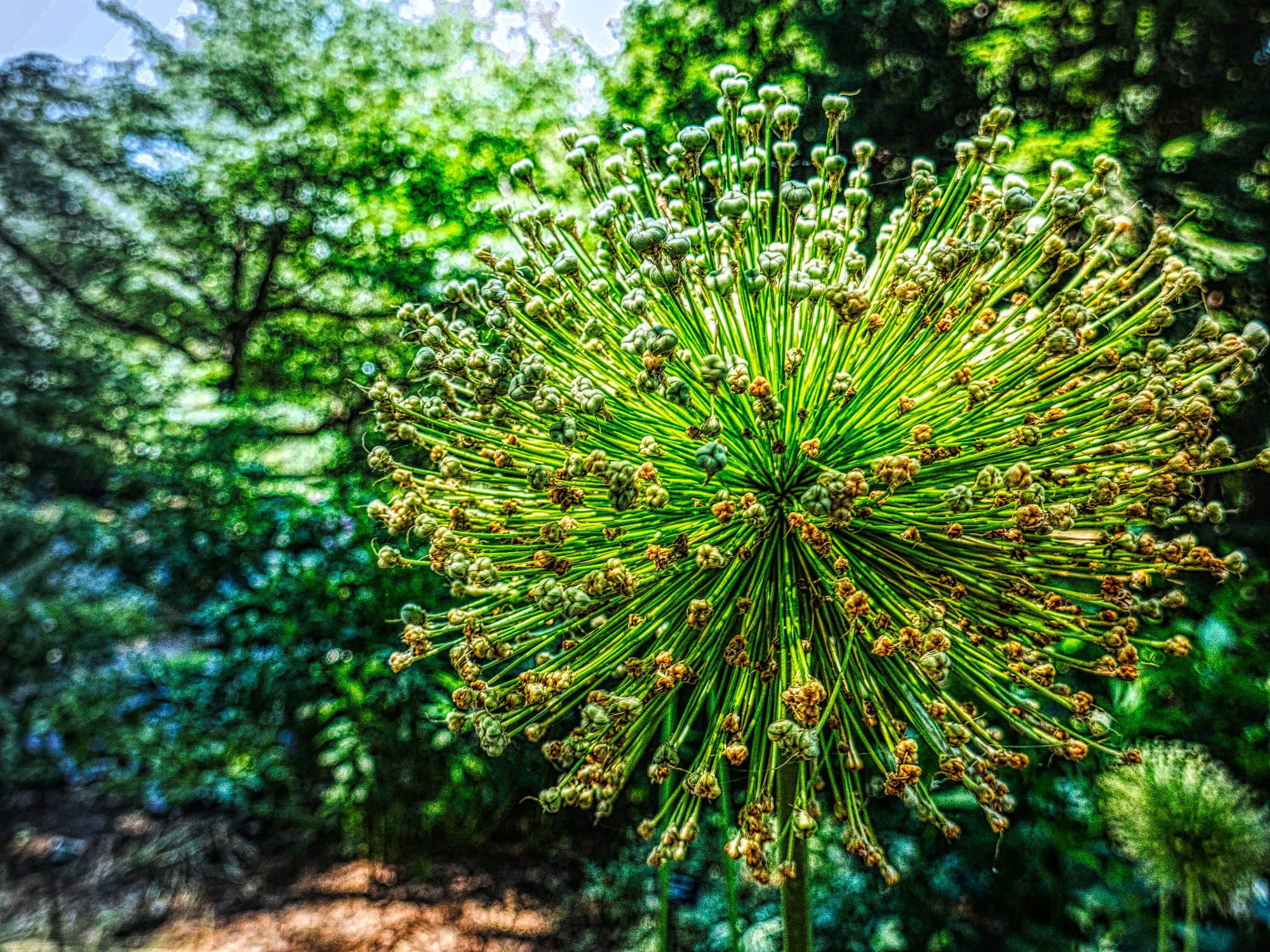
At first, I was relieved that my task was to design only plants, not animals, because this would save me a lot of work. There will be no need to design locomotion, vision, migration or hunting behaviors. There would not be a need for any sort of biologically expensive brain that would offer neural plasticity, the ability for an individual plants to learn. A bit more thinking made me realize that this was going to be incredibly difficult. How does one design the ability for organisms to survive day to day when they are stuck in one place? The more I thought about this project, the more daunting it seemed. [More . . . ]
Continue ReadingMy Awkward Love Letter to Plants

Alcohol-Related Deaths: More Than a Big Number

The following excerpt is from an article at Gizmodo: "Alcohol Is Killing More Americans Than Ever."

More and more Americans are drinking themselves to death. A new study this week finds there were around 72,000 alcohol-related deaths among people over the age of 16 in 2017—more than double the number of similar deaths recorded two decades earlier.

When an airplane crashes, killing 200 people, we get upset and we demand to know how airplanes can be made more safe. When the equivalent of 360 airplanes filled with people die of alcohol use each year, we shrug. We shrug even though every one of these alcohol deaths affects many other people, including members of the dead person's immediate family. We shrug even though for each death, there are many living alcoholics out there destroying precious relationships they used to have with their loved ones.

Gizmodo based its article on a study published January 7, 2020.  Here is an excerpt:

The number of alcohol‐related deaths per year among people aged 16+ doubled from 35,914 to 72,558, and the rate increased 50.9% from 16.9 to 25.5 per 100,000. Nearly 1 million alcohol‐related deaths (944,880) were recorded between 1999 and 2017. In 2017, 2.6% of roughly 2.8 million deaths in the United States involved alcohol. Nearly half of alcohol‐related deaths resulted from liver disease (30.7%; 22,245) or overdoses on alcohol alone or with other drugs (17.9%; 12,954). . . . The largest annual increase occurred among Non-Hispanic White females. Rates of acute alcohol‐related deaths increased more for people aged 55 to 64, but rates of chronic alcohol‐related deaths, which accounted for the majority of alcohol‐related deaths, increased more for younger adults aged 25 to 34

Continue ReadingAlcohol-Related Deaths: More Than a Big Number

Project Concludes: Many Classic Psychological Studies are Not Reproducible

Some of my favorite findings are being called into question. Excellent discussion at the Atlantic, in an article titled "Psychology’s Replication Crisis Is Running Out of Excuses":

In recent years, it has become painfully clear that psychology is facing a “reproducibility crisis,” in which even famous, long-established phenomena—the stuff of textbooks and TED Talks—might not be real. There’s social priming, where subliminal exposures can influence our behavior. And ego depletion, the idea that we have a limited supply of willpower that can be exhausted. And the facial-feedback hypothesis, which simply says that smiling makes us feel happier.

One by one, researchers have tried to repeat the classic experiments behind these well-known effects—and failed. And whenever psychologists undertake large projects, like Many Labs 2, in which they replicate past experiments en masse, they typically succeed, on average, half of the time.

Continue ReadingProject Concludes: Many Classic Psychological Studies are Not Reproducible

Family Gymnastics Traditions

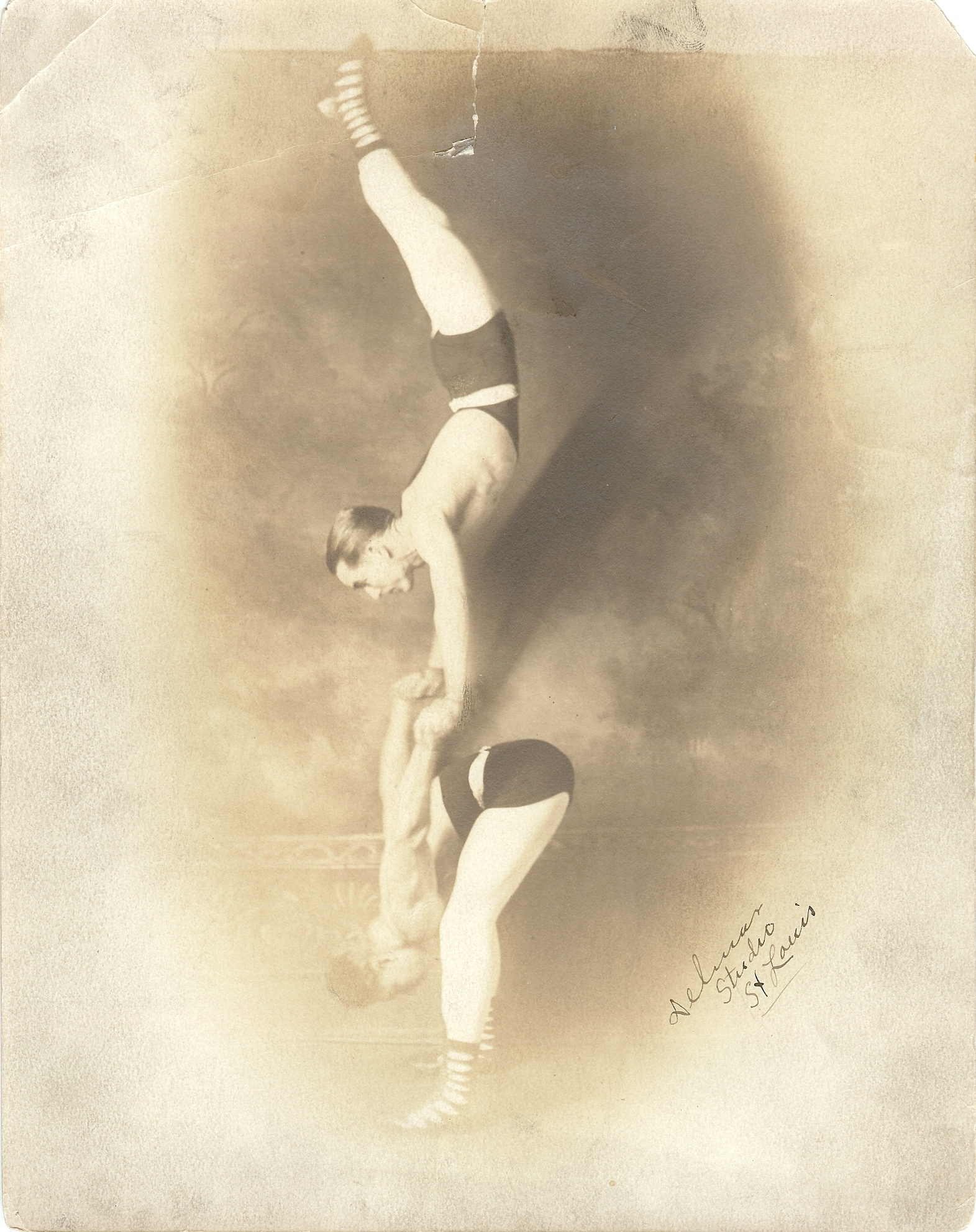
My grandfather, Robert Wich, was an amateur gymnast. Below, you'll see a photo of him doing a routine with his gymnastics partner (I'm assuming that this photo was taken in the early 1920's My grandfather is the one in the air).


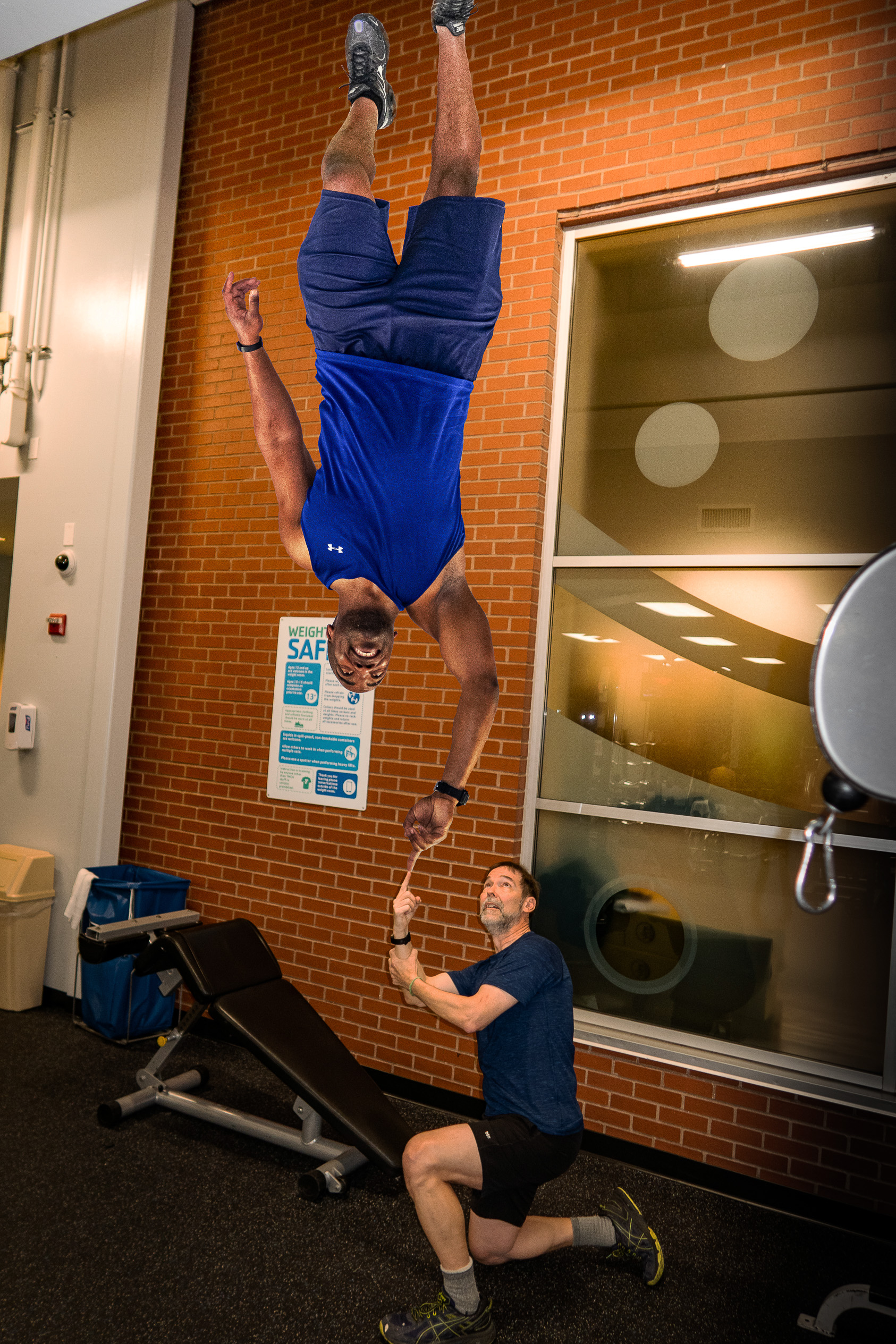
I am trying to respect this family tradition, but I find it easier to do impressive acrobatics in my own way at the Oto-phay Op-Shay Branch of the YMCA. Here I am performing the rarely seen finger-balancing routine with my gymnastics partner, Edie White. I'm also attaching a close-up so you can appreciate the critical placement of fingers.


Continue ReadingFamily Gymnastics Traditions

My Encounter with a Brown Recluse Spider . . . Maybe

This is a Public Service Announcement!

Three days ago, I was working on my cars in my garage. I reached down to toss some leaves out into the alley and got bit on the wrist by something, presumably a spider. The bite flared painfully up over the next 48 hours. Today has finally crusted over and the surrounding redness is finally receding, though it is still painful. I used ice and anti-biotic ointment.

Here is my advice: 1) If leaves are lying around in your garage, use a rake or gloves if you're going to touch them. 2) If you get bit, if it's painful, if redness starts expanding around the bite, and if you look up "brown recluse" on the Internet, you'll have an "oh, shit" moment. They are common in Missouri (where I live) and many other states to the south and east of Missouri. Most people will be OK in a few days, but it can be a big deal for which there is no anti-venom and it can inflict a small minority of people with serious long term medical complications 3) many articles tell you to bring the spider to the doctor so they can ID it. This leads to comical images of going out and looking for a spider you never actually saw. You'll imagine looking at their little spider-faces and trying to decide which one looks guilty (even though it was just minding its own business when you trashed his/her home. Which brings me back to Rule #1: Next time I touch a pile of leaves in my garage, I'm going to use a rake or wear gloves. I've never got bit before but I should have thought about it, because a good friend of mine (you know who you are!) had some serious medical treatment for a brown recluse bite several years ago while cleaning out her garage.

I have an acquaintance who works in pest control. He told me that every house in St. Louis has brown recluse spiders in the house. They go about their business and you might not see them. If you'd like to have fewer of them in the house, you can spray pesticide, but I don't like the idea of spreading those chemicals around given that my two teen-aged daughters live here. Instead, a few years ago, I bought a pack of sticky pads that people sometimes use to catch mice. They catch bugs too. If you leave them out for a few months and then inspect them, you will be AMAZED at how many spiders and other bugs end up glued to your trap.

Or rule number 4: Don't ever clean out your garage.

Continue ReadingMy Encounter with a Brown Recluse Spider . . . Maybe