Wiki vs. Britannica: Evolution vs. Design

I just finally got around to reading my June 2006 Communications of the ACM (an academic computer journal) and spotted a little news brief about Britannica trying to sue Nature magazine for this December 2005 Article that noted that the error rate in science entries of Wikipedia is comparable to…

Continue ReadingWiki vs. Britannica: Evolution vs. Design
Read more about the article Why did they bury Darwin in Westminster Abby?
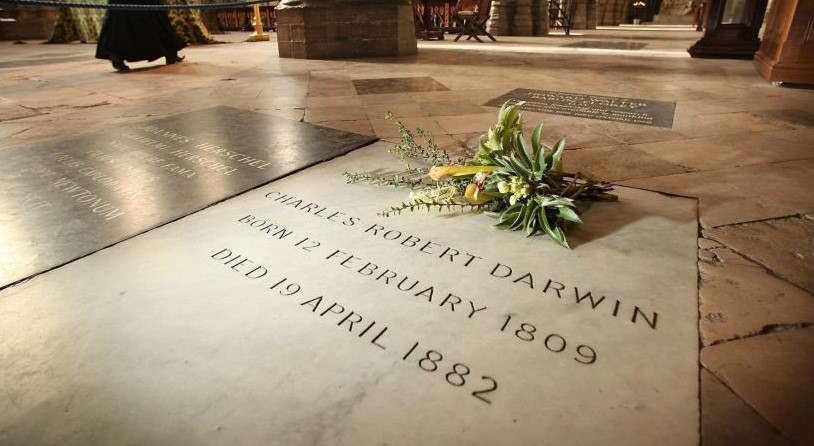
Why did they bury Darwin in Westminster Abbey

Why did they bury Darwin in Westminster Abby?

In September, 2005, I traveled to London to attend a conference.  While in London, I visited Westminster Abbey. Bury Darwin: A Deep Dive into the Historical and Political Context It is hard to imagine a place more rich in history--there was so much to see.  But I made sure that I took the…

Continue ReadingWhy did they bury Darwin in Westminster Abby?

Another “excuse” to live healthfully.

With the obesity epidemic at its current rate, we can easily conclude that a lot of people have a lot of truly excellent excuses not to eat properly and exercise. In my experience, two particular excuses take the cake, so to speak: "I don't have time" and "I can't afford…

Continue ReadingAnother “excuse” to live healthfully.

In what ways are the OTHER animals moral?

Primatologist Frans De Waal has spent much of his career pointing out how incredibly similar the emotional and moral behavior of human animals is to the behavior of many other animals (he focuses especially chimps and bonobos). In this post, I will comment on De Waal's 2005 work, Our Inner Ape, where De Waal substantiates his stunning conclusion (well, stunning to those who just can't bear to acknowledge that humans are animals - see here and here and here) that the precursors of morality are easily seen in animals other than human animals. More specifically, De Waal demonstrates that there is a well-substantiated continuity between the proto-moral behavior of chimpanzees and bonobos and the full-bloomed sense of morality that we see in human animals. De Waal is clearly frustrated that people consider only human aggression to be "animalistic," but not human empathy. De Waal describes studies clearly demonstrating empathy in many animals, ranging from rats to the great apes. Children as young as one year of age naturally reach out to comfort others. Household pets such as cats and dogs can become upset (just like children do) when family members feign distress. Empathy therefore develops even before language. This would seem to demonstrate that top-down rule-based (therefore language-based) versions of morality don't capture the essence of what it means to be moral. [More . . . ]

Continue ReadingIn what ways are the OTHER animals moral?

Time Magazine sticks to science when comparing humans to chimpanzees

I'm applauding the cover story of the October 9, 2006 edition of Time:  "What Makes Us Different?"   [The quick answer is that, out of 3 billion base pairs in the human genome, only 1.23% are different than those found in the chimpanzee genome]. The writers based this article solely on the expert…

Continue ReadingTime Magazine sticks to science when comparing humans to chimpanzees