Pandemic #2: Divisiveness Caused by Social Media

For the first step in defeating Pandemic #2, please watch the new documentary, "The Social Dilemma." (You'll find it on Netflix).

As you use social media, try to cruise at 10,000 feet like a disinterested anthropologist and then ask yourself whether kind-hearted intelligent people should be talking at each other like much of what you will see.

Pandemic #2 is invisible, just like Pandemic #1, and you'll feel like you are in charge of your thoughts the entire time. Pandemic #2 quietly invades our minds, then erects filter bubbles around us that destroy the possibility of civil discourse on the most important issues facing us. Pandemic #2 destroys the possibility of e pluribus unum. We need to take action now, because huge misplaced financial incentives guarantee that Big Tech is not going to rescue us.

Continue ReadingPandemic #2: Divisiveness Caused by Social Media

Sam Harris Explores the Global Epidemic of Child Sexual Abuse

In his introduction to "The Worst Epidemic," Sam Harris warns that the subject matter might be difficult for listeners. The topic is the global epidemic of child sexual abuse involving children as young as one year old. Sam is joined by Gabriel Dance, a NYT reporter who has thoroughly investigated this issue. Until I forced myself to listen, I had assumed that this predatory behavior was relatively rare, but I was shocked to learn that sexual predators have exploited every corner of the Internet. To illustrate, Dance mentions that law enforcement experts estimate that of the 9 million citizens of New Jersey, 400,000 have been exposed to these highly illegal images and videos, some of this exposure being inadvertent, but much of it being intentional. It makes you wonder who we are, as a nation, that so many among us are willing to torture children. The tragedy is widespread, making the technical challenges and law enforcement needs overwhelming.

As a public service, Sam has put this episode in front of his paywall. The topic spirals in many directions, including the misleading concept of “child pornography,” the failure of governments and tech companies to grapple with the problem, the tradeoff between online privacy and protecting children, the National Center for Missing and Exploited Children, photo DNA, the roles played by specific tech companies, the ethics of encryption, “sextortion,” and the culture of pedophiles.
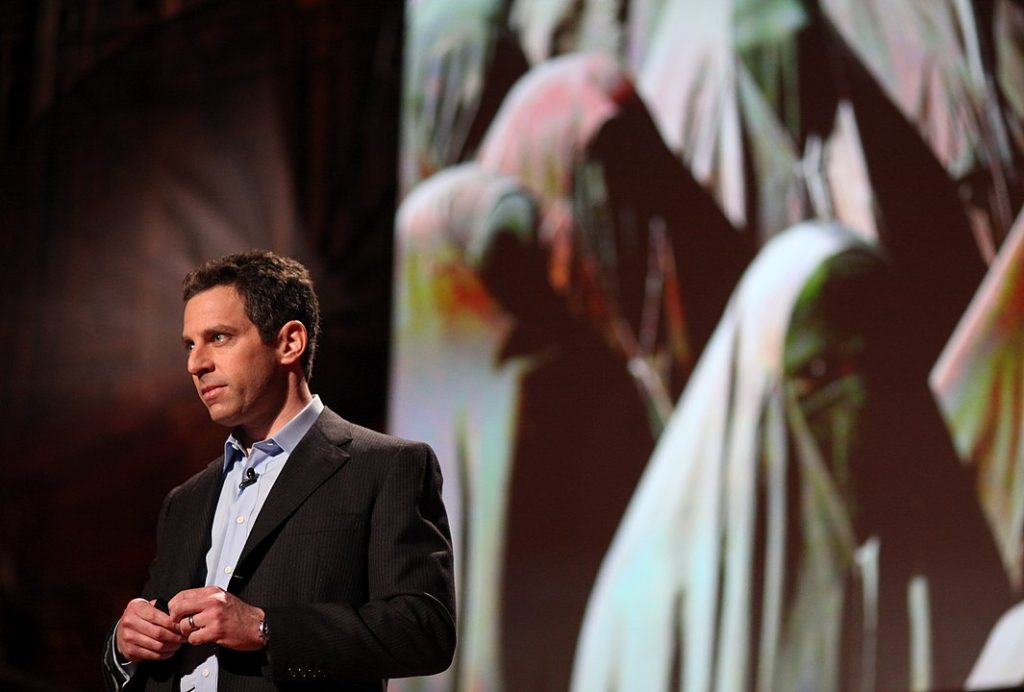
I am proud to say that I have been a paid subscriber of Making Sense for years. Sam Harris does a great job of exploring complex and oftentimes thorny issues unflinchingly, week after week.  From Sam's About Page:

His writing and public lectures cover a wide range of topics—neuroscience, moral philosophy, religion, meditation practice, human violence, rationality—but generally focus on how a growing understanding of ourselves and the world is changing our sense of how we should live.

If you are unfamiliar with the work of Sam Harris, I invite you to listen to this Episode, or any Episodes of Making Sense.

Continue ReadingSam Harris Explores the Global Epidemic of Child Sexual Abuse

Rethinking the War on Drugs in the Age of Opioid Addicted Europeans

I don't see racism everywhere I look. In my view, most issues are far too complex for "race" to serve as a dominant explanatory factor.

That said, it's rather stunning to see the recent tsunami of news articles (like this one recent news piece from NPR) taking the position that as people of European descent become an ever bigger percentage of drug addicts, throwing their asses in jail is no longer trendy as a first-choice paradigm for addressing the problem. Almost overnight, in this age of opioid addiction, compassionate treatment has become "common sense."

Continue ReadingRethinking the War on Drugs in the Age of Opioid Addicted Europeans

Alcohol-Related Deaths: More Than a Big Number

The following excerpt is from an article at Gizmodo: "Alcohol Is Killing More Americans Than Ever."

More and more Americans are drinking themselves to death. A new study this week finds there were around 72,000 alcohol-related deaths among people over the age of 16 in 2017—more than double the number of similar deaths recorded two decades earlier.

When an airplane crashes, killing 200 people, we get upset and we demand to know how airplanes can be made more safe. When the equivalent of 360 airplanes filled with people die of alcohol use each year, we shrug. We shrug even though every one of these alcohol deaths affects many other people, including members of the dead person's immediate family. We shrug even though for each death, there are many living alcoholics out there destroying precious relationships they used to have with their loved ones.

Gizmodo based its article on a study published January 7, 2020.  Here is an excerpt:

The number of alcohol‐related deaths per year among people aged 16+ doubled from 35,914 to 72,558, and the rate increased 50.9% from 16.9 to 25.5 per 100,000. Nearly 1 million alcohol‐related deaths (944,880) were recorded between 1999 and 2017. In 2017, 2.6% of roughly 2.8 million deaths in the United States involved alcohol. Nearly half of alcohol‐related deaths resulted from liver disease (30.7%; 22,245) or overdoses on alcohol alone or with other drugs (17.9%; 12,954). . . . The largest annual increase occurred among Non-Hispanic White females. Rates of acute alcohol‐related deaths increased more for people aged 55 to 64, but rates of chronic alcohol‐related deaths, which accounted for the majority of alcohol‐related deaths, increased more for younger adults aged 25 to 34

Continue ReadingAlcohol-Related Deaths: More Than a Big Number

Addiction as dysfunctional Bonding – TED talk by Jonathan Hari

Wonderful TED talk by Journalist Jonathan Hari. Two Quotes stand out:

Professor Peter Cohen in the Netherlands said, maybe we shouldn't even call it addiction. Maybe we should call it bonding. Human beings have a natural and innate need to bond, and when we're happy and healthy, we'll bond and connect with each other, but if you can't do that, because you're traumatized or isolated or beaten down by life, you will bond with something that will give you some sense of relief. . . . And I think the core of that message -- you're not alone, we love you -- has to be at every level of how we respond to addicts, socially, politically and individually. For 100 years now, we've been singing war songs about addicts. I think all along we should have been singing love songs to them, because the opposite of addiction is not sobriety. The opposite of addiction is connection.
-- See also, Rachel Wurzman's TED talk: How Isolation Fuel's Opiod Addiction.
The effects of social disconnection through opioid receptors, the effects of addictive drugs and the effects of abnormal neurotransmission on involuntary movements and compulsive behaviors all converge in the striatum. And the striatum and opioid signaling in it has been deeply linked with loneliness. 09:48 When we don't have enough signaling at opioid receptors, we can feel alone in a room full of people we care about and love, who love us. Social neuroscientists, like Dr. Cacioppo at the University of Chicago, have discovered that loneliness is very dangerous. And it predisposes people to entire spectrums of physical and mental illnesses. 10:16 Think of it like this: when you're at your hungriest, pretty much any food tastes amazing, right? So similarly, loneliness creates a hunger in the brain which neurochemically hypersensitizes our reward system. And social isolation acts through receptors for these naturally occurring opioids and other social neurotransmitters to leave the striatum in a state where its response to things that signal reward and pleasure is completely, completely over the top. And in this state of hypersensitivity, our brains signal deep dissatisfaction. We become restless, irritable and impulsive.

Continue ReadingAddiction as dysfunctional Bonding – TED talk by Jonathan Hari