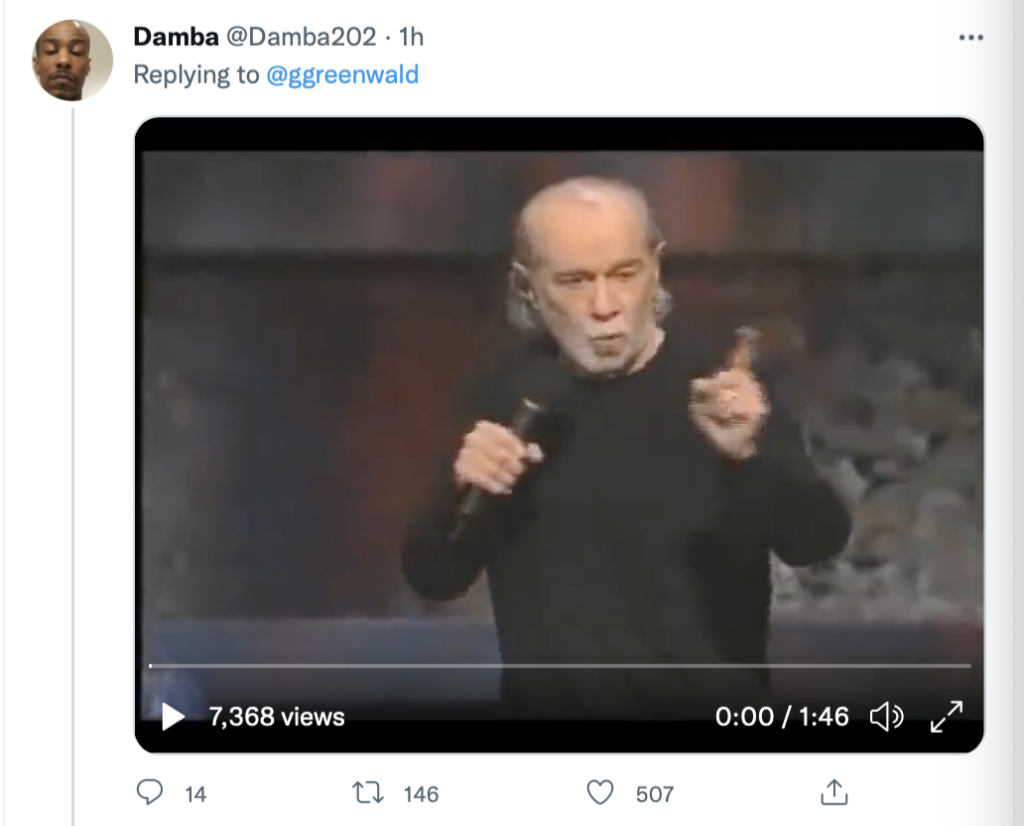
How Did the CDC Fail on COVID Information and Messaging? Krystal and Saagar Count some of the Ways . . .

How did the CDC fail the American people?  The CDC failed in many ways. Krystal and Saagar of Breaking Points review some of the main ways the CDC failed us and it is downright embarrassing. They applaud the CDC's willingness to finally decide to evaluate its many failures, but these failures are numerous and embarrassing.

To the extent that Americans (like me) have substantially lost trust in the CDC (no and in the future), the CDC has caused this damage. As Krystal Ball mentions, it was not the CDC's job to psychoanalyze Americans and try to manage our emotions. We wanted and needed straight facts, and that is where the CDC failed abysmally. They should have assumed that, by and large, Americans "can handle the unvarnished facts." Some of the main failures of the CDC:

A) Does the infection spread by surface contamination (no) or only airborne viral particles (yes). Not until May 2021 did the CDC acknowledge the basic fact that the virus was spread by airborne transmission. This was mid-vaccination.

B) whether Americans should buy or use masks. In Feb 2020, Surgeon General told the public to stop buying masks because they were allegedly not effective for the general public.  Even though health care workers needed masks.  This was absurd, oxymoronic and insane messaging that caused Americans to lose trust in the CDC.  The CDC later failed to acknowledge that some kinds of masks are essentially useless.

C) Testing.  The U.S. government refused to allow Americans to use effective and available testing because there bureaucracy of the CDC did not approve them.  We didn't have tests available until more than a year after tests were available in South Korea and other countries.  Americans were forced to "fly blind," according to Krystal.

There are many many other examples. For instance, whether lockdowns are effective.  Whether vaccination protects people from future infection and/or protects people from spreading the infection. Further, there CDC covered up the colossal risk factor of obesity. Excellent discussion.
Continue ReadingHow Did the CDC Fail on COVID Information and Messaging? Krystal and Saagar Count some of the Ways . . .

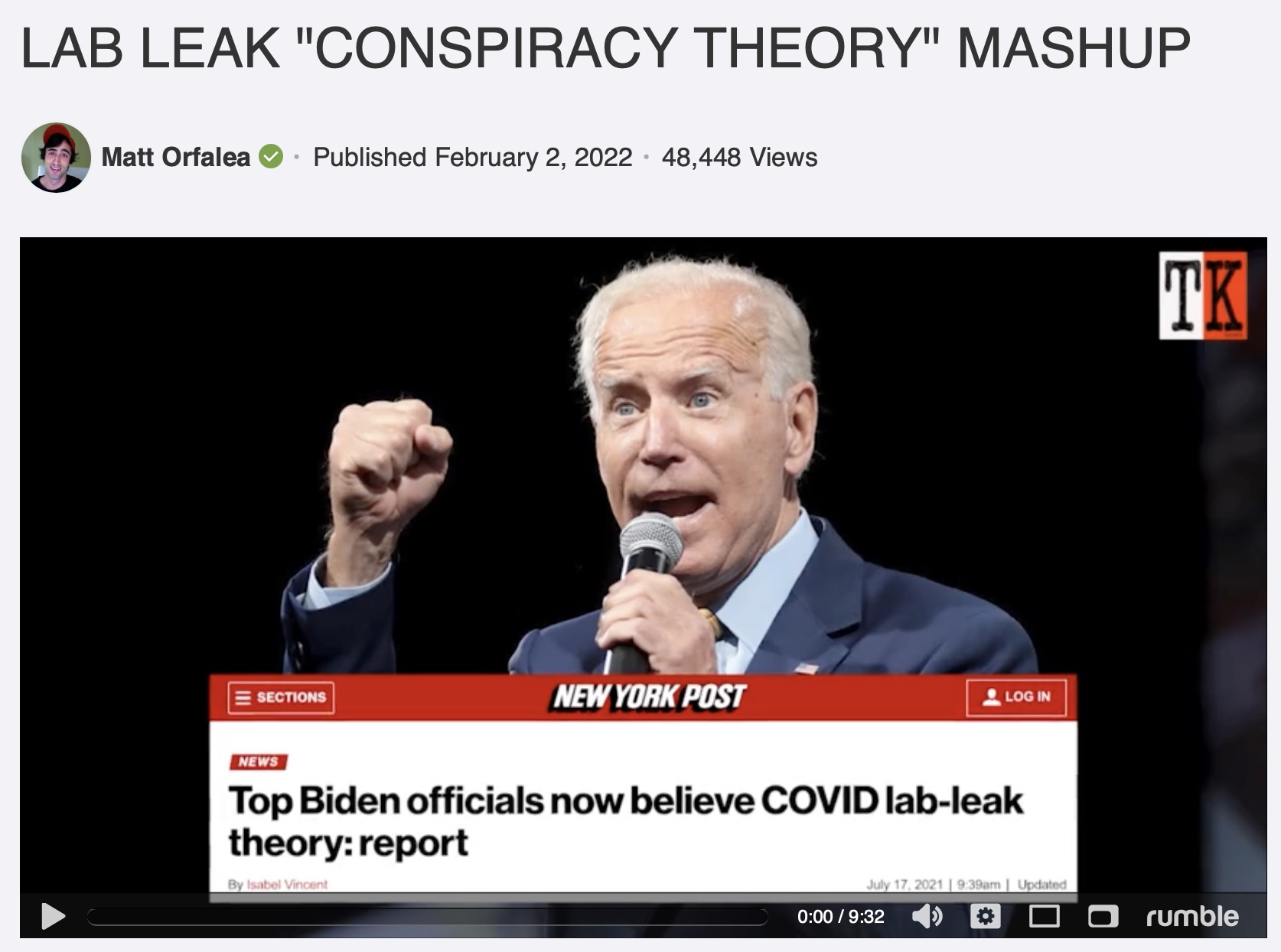
Matt Orfalea’s New Mashup on the “Lab Leak Conspiracy Theory”

My faith that legacy media outlets will take journalism seriously has plummeted in recent years. Matt Orfalea's "conspiracy theory" mashup explores one issue (of many recent issues) where media coverage has been abysmal.

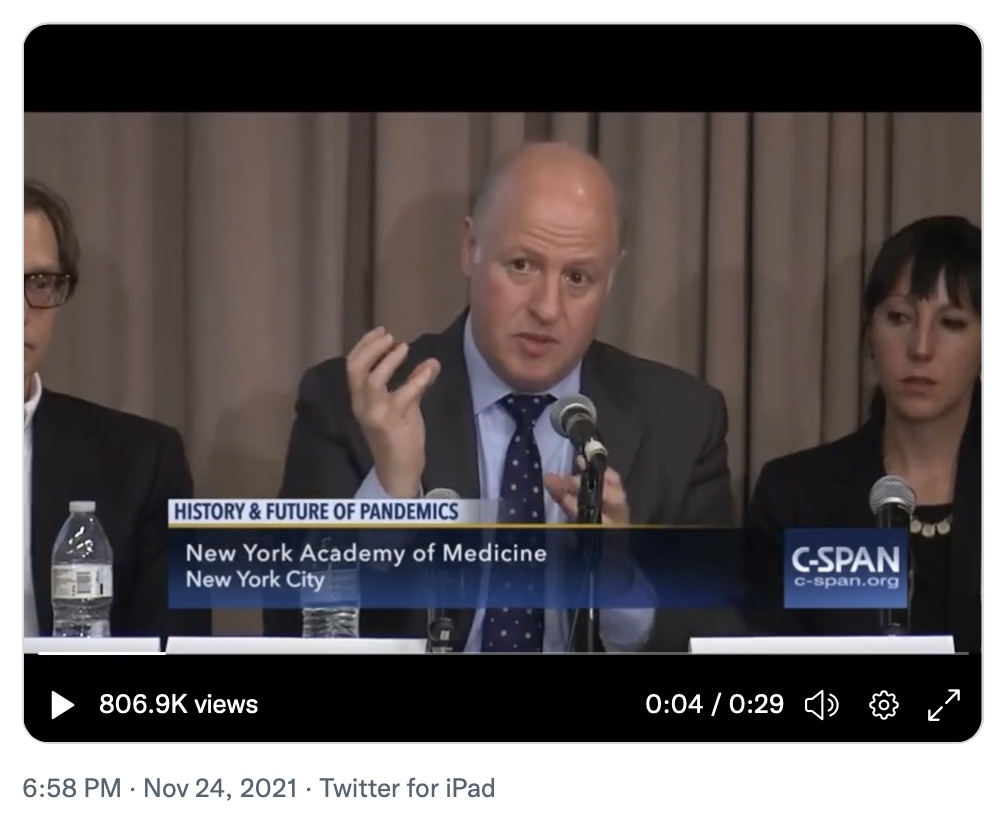
The news outlets kept claiming that the virus could never ever have emerged in a lab, yet they avoided this Peter Daszak video like kryptonite. Whenever they pompously trumpeted that the lab leak was a conspiracy theory, they NEVER mentioned this 2016 video featuring Peter Daszak, president of Eco-Health.

Continue ReadingMatt Orfalea’s New Mashup on the “Lab Leak Conspiracy Theory”

Restricting the COVID Restrictors

I agree with Dr. Vinay Prasad:

Let’s reflect on this for a moment. NYC school district has been requiring children wear masks OUTSIDE all this time. Years after we knew the virus almost never spreads outside. During recess when kids play, forced to wear a mask while exerting themselves. Wow!

Whoever made the policy is an idiot. No way around it. They are not fit for policymaking. They abused the power of government to coerce children (at incredibly low risk of bad outcomes) to wear a mask in a setting where the virus simply does not spread. In other words, they participated in something done in the name of public health, which actually made human beings worse off. Worse, they used coercive force to do it.

Post-COVID we need to seriously talk about setting restrictions. But not on people. We need to place restrictions on public health and things done in the name of public health. We cannot allow individuals who are poor at weighing risk and benefit and uncertainty to coerce human beings, disproportionately the young and powerless (waiters/ servers) to participate in interventions that have no data supporting them, for years on end.

Here are the first two of Prasad's eight take-home suggestions:

  1. In an emergency situation, if governments mandate or advise individual level behavioral interventions (e.g. masking), those entities should have generate robust data in 3 months (cluster RCTs) to demonstrate efficacy, or the intervention is automatically revoked. Some may argue 3 months is too short, but if it is truly a crisis warranting emergency proclamations, then you should see a signal in 3 months, and governments can expand sample size to ensure prompt results
  2. If a trial is positive that does not mean the policy continues forever, but must be debated (net benefit/ net harms/ tradeoffs) by the body politic.

Continue ReadingRestricting the COVID Restrictors

CDC Has Pushed Weak and Flawed Studies to Promote a Political Agenda

Here is an excerpt from "How the CDC Abandoned Science Mass youth hospitalizations, COVID-induced diabetes, and other myths from the brave new world of science as political propaganda." The author is Vinay Prasad is a hematologist-oncologist, associate professor of epidemiology and biostatistics at the University of California, San Francisco, and author of Malignant: How Bad Policy and Bad Evidence Harm People with Cancer.

So why does the supposedly impartial CDC push weak or flawed studies to support the administration’s pandemic policy goals? The cynical answer is that the agency is not in fact impartial (and thus not sufficiently scientific), but captured by the country’s national political system. That answer has become harder to avoid. This is a precarious situation, as it undermines trust in federal agencies and naturally leads to a trust vacuum, in which Americans feel forced to cast about in a confused search for alternative sources of information.

Once that trust is broken, it’s not easily regained. One way out would be to reduce the CDC’s role in deciding policy, even during a pandemic. Expecting the executive agency tasked with conducting the science itself to also help formulate national policy—which must balance both scientific and political concerns and preferences—has proven a failure, because the temptation to produce flawed or misleading analysis is simply too great. In order to firewall policymaking from science, perhaps scientific agency directors shouldn’t be political appointees at all.

Continue ReadingCDC Has Pushed Weak and Flawed Studies to Promote a Political Agenda