You have a choice. One option is to follow the dictates of the U.S. warmongering uniparty, who tells you, "Putin is bad. So shut the fuck up and support our policy of endless treasury-draining war. Or you could listen to Mike Benz, Executive Director of Foundation for Freedom Online. 
Mike discussed Ukraine and U.S. censorship recently on Twitter. I created a transcript of his conversation with Win Marshall:
Win Marshall
Do you not think America should have supported Ukraine in the war?
Mike Benz
It's good question. It's strange for-- You know, if I'm hesitating, it's because to answer that question, there are so many layers that come before it that I haven't even really honestly had to think about where I actually fall on the underlying issue, because the process is so corrupted. And we lived through Russiagate, this thing where anybody who supported a detente with Russia was it was effectively deemed to be a Putin puppet, and then you could launch a federal investigation. You could bring in indictments and domestic spycraft on, you know, Trump's whole campaign, because of his policy of neutrality, with with Russia effectively, or his NATO skepticism. They were able to argue, you know, that he was effectively a Russian puppet, and so they spied on his campaign.
Win Marshall
These things are happening today in Britain with Nigel Farage, and he's been called a Putin apologist. I think it's continuation
Mike Benz
It's the same thing. And so I think the way I would answer the question is: if you took the gun off of my head, where the state, the regime, the NGOs, the cutouts, the media, the lawyers, the federal investigators, all said, "Hey, you know what? If you have your own opinion on the Ukraine war, I'll put the gun down." Then maybe I'd think about and say, Okay, well maybe we can now talk about whether or not it actually redounds to US interests to try to secure these $12.4 trillion in the natural resources, whether it redounds to our benefit to have this elaborate CIA State Department operation to kill Gazprom and pry all the profits off with this endogenous, you know, Ukraine Petro industry and lifeline by all these US oil and gas companies and British companies like Shell. Maybe. But the answer is a hard no while they still have a gun to my head, because you can't, you can't do that.
Win Marshall
Okay, so let's say there's no gun to a head.
Mike Benz
That feels like a hypothetical that is kind of irresponsible for me to indulge in because there is a gun to my head. The censorship industry grew out of Ukraine. That whole infrastructure of censorship that Americans live under and inherited during the 2016 presidential election cycle came from the 2014 US-UK overthrow of the Ukrainian-democratically elected government. When, when we orchestrated that coup, when the head of the US Embassy was personally handing out cookies and water bottles to the January 6 style protesters surrounding the parliament building, pumping them full of money, when our own senators like John McCain were there on the ground calling for a transition of the government, when we overthrew that government and then did not expect the blowback, did not expect the counter coup.
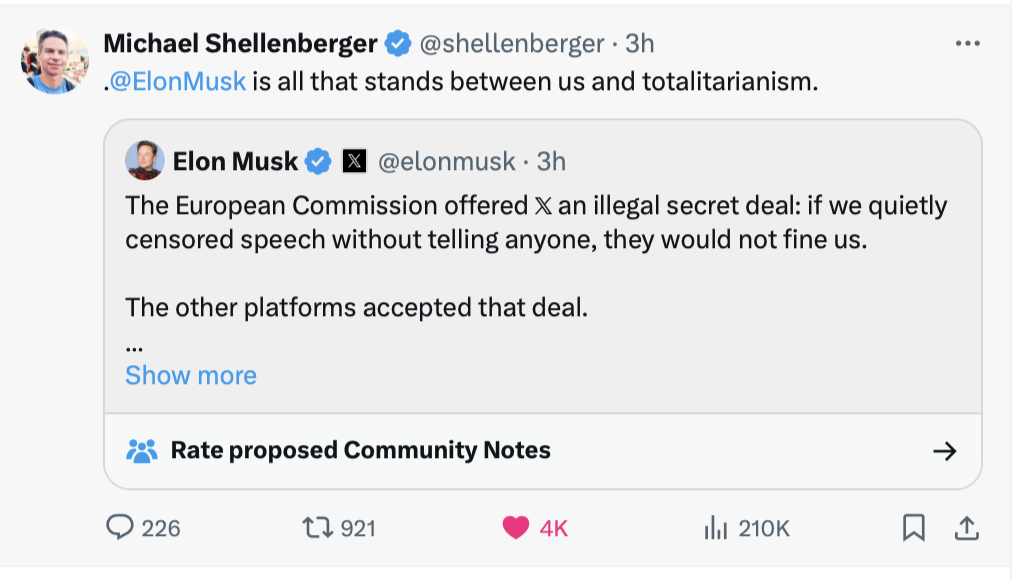
When the entire eastern side of Ukraine broke away and declared itself a breakaway state in 2014 and when Crimea voted in its referendum to formally join the Russian Federation, this set off a total crisis across NATO and called for a fundamental reimagining of how NATO understood warfare. This gave rise to something which I've talked a lot about. You know, first was called the Gerasimov doctrine. Then it was called hybrid warfare, and now it's sort of called sharp power. But it was essentially this idea that NATO could no longer just be a military alliance. It had to expand its mandate, and this is a direct quote from Jen stellenberg, from tanks to tweets. The reason that we lost in Ukraine was because we lost the information war. We lost to Russian propaganda, infecting the mines of Ukrainians. And it was Russian propaganda who was infecting the mines of Germans, because at the time the German AFD party was on the rise. They were running on restoring gas relations with Russia, because they were mostly a sort of working class, sort of like Trump, Trumpism. They were running on, sort of because these sanctions that the US State Department and UK Foreign Office effectively imposed on all these different other European countries, after Crimea, to sanction Russian gas, which was the cheapest gas.
The alternative was LNG liquefied natural gas harvested in Houston, liquefy ship 5000 miles across the Atlantic Ocean. You know, de-liquefied in ports in Portugal or in through the Baltic strait into Poland. You know, de-liquefied transported. That's orders of magnitude more expensive than Russia, which means the industries suffer, which means the middle class suffers. The welfare safety net suffers. So AFD was running on restoring gas relations with Russia. Marine. Le Pen was was running on the same from from France. So is the Vox party in Spain.
And so NATO is saying, Oh, my God, these right wing populist parties are all running on this economic nationalist what's best for us. Don't care what the US or UK says about, you know, being a good Global Citizen and sanctioning Russia, we want to do what's economically best for our own middle class citizens. And so our intelligence State, the trans military alliance of NATO, at that point in 2014 declared this hybrid warfare doctrine. Said war is actually not about tanks anymore. It's about tweets. It's about control over social media. Because we lost to Russia without Russia firing a bullet, Crimea voted itself to join the Russian Federation. It's the same thing as if they had rolled into Crimea with tanks and submarines, they now control it because of the referendum of the people.
Well, where are they getting their information?

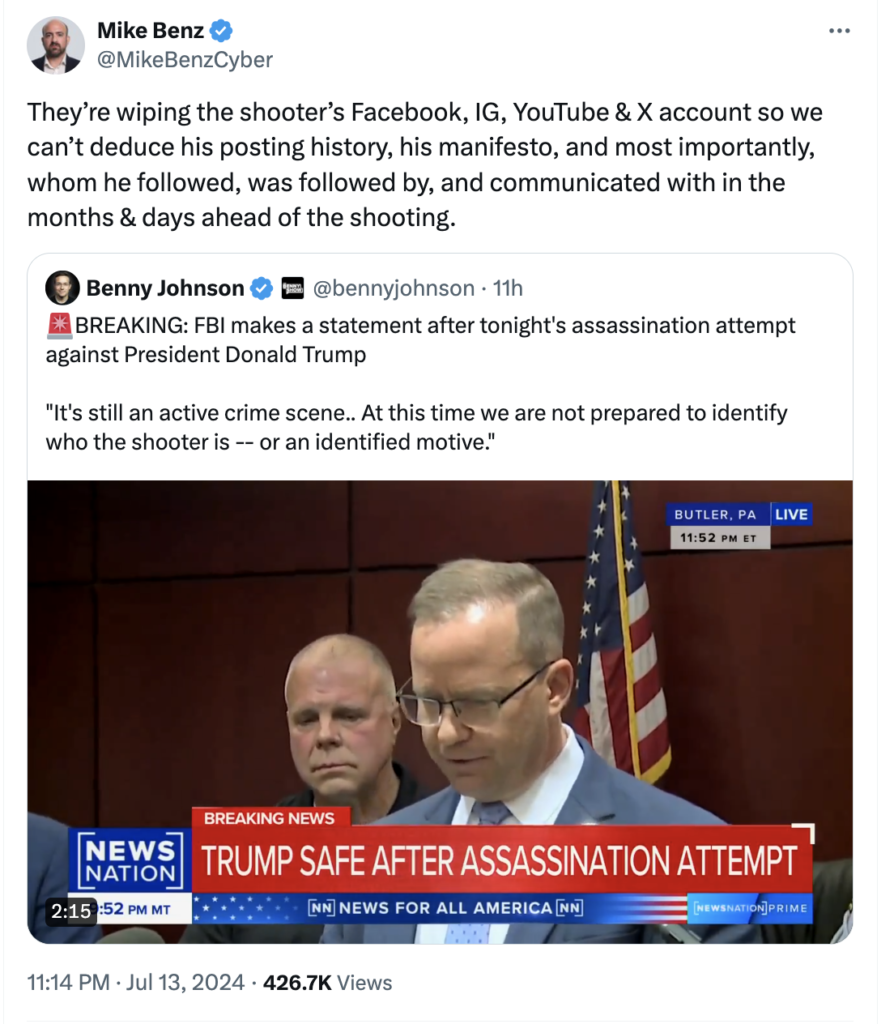 Go back to your lives and don't fuss about the motives the would-be assassin might have for trying murder the front-runner for U.S. President.