Digital IDs and Social Credit System Taking Root in EU
Michael Shellenberger reports. No wonder authoritarians of all stripes crave these powerful digital tools :
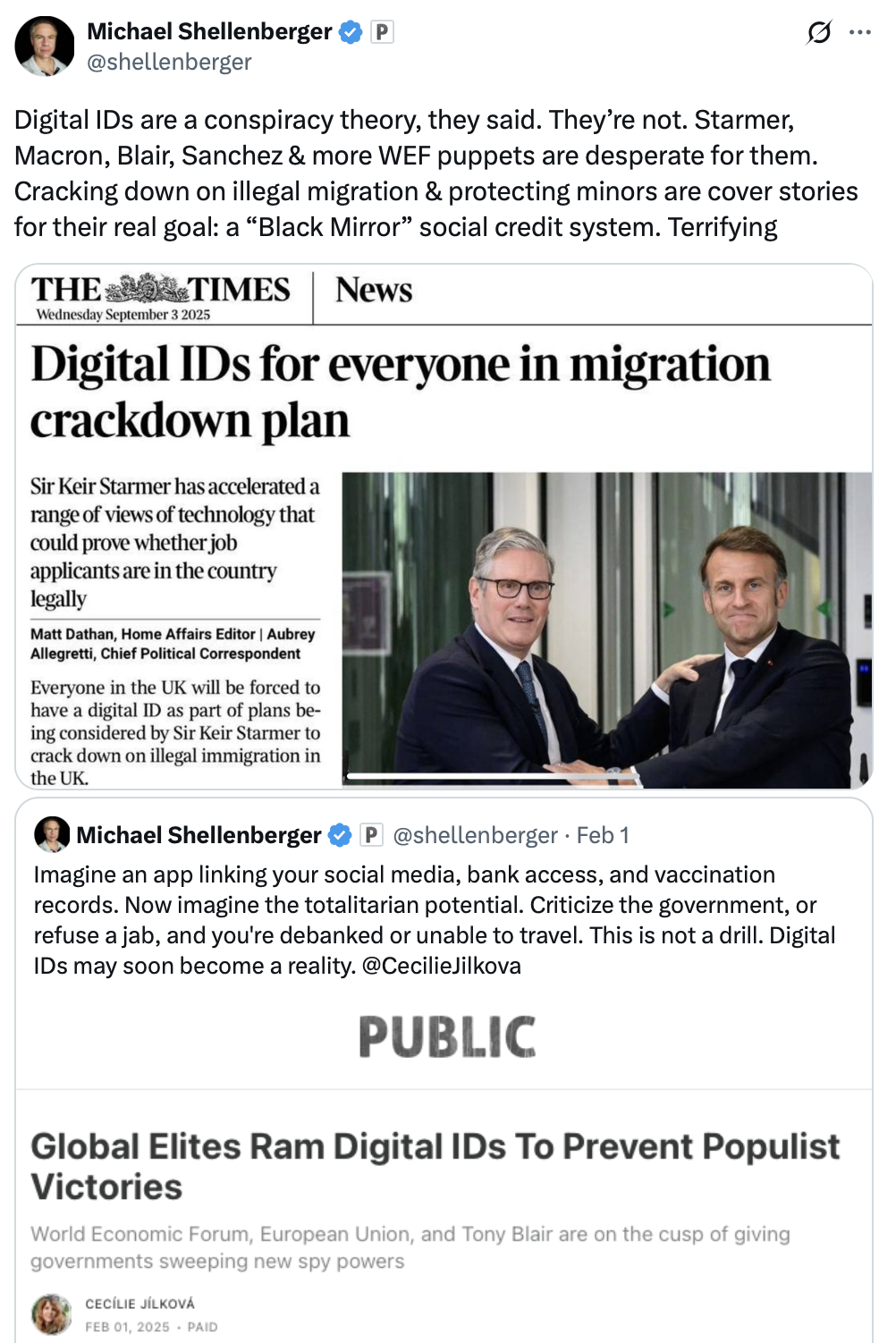
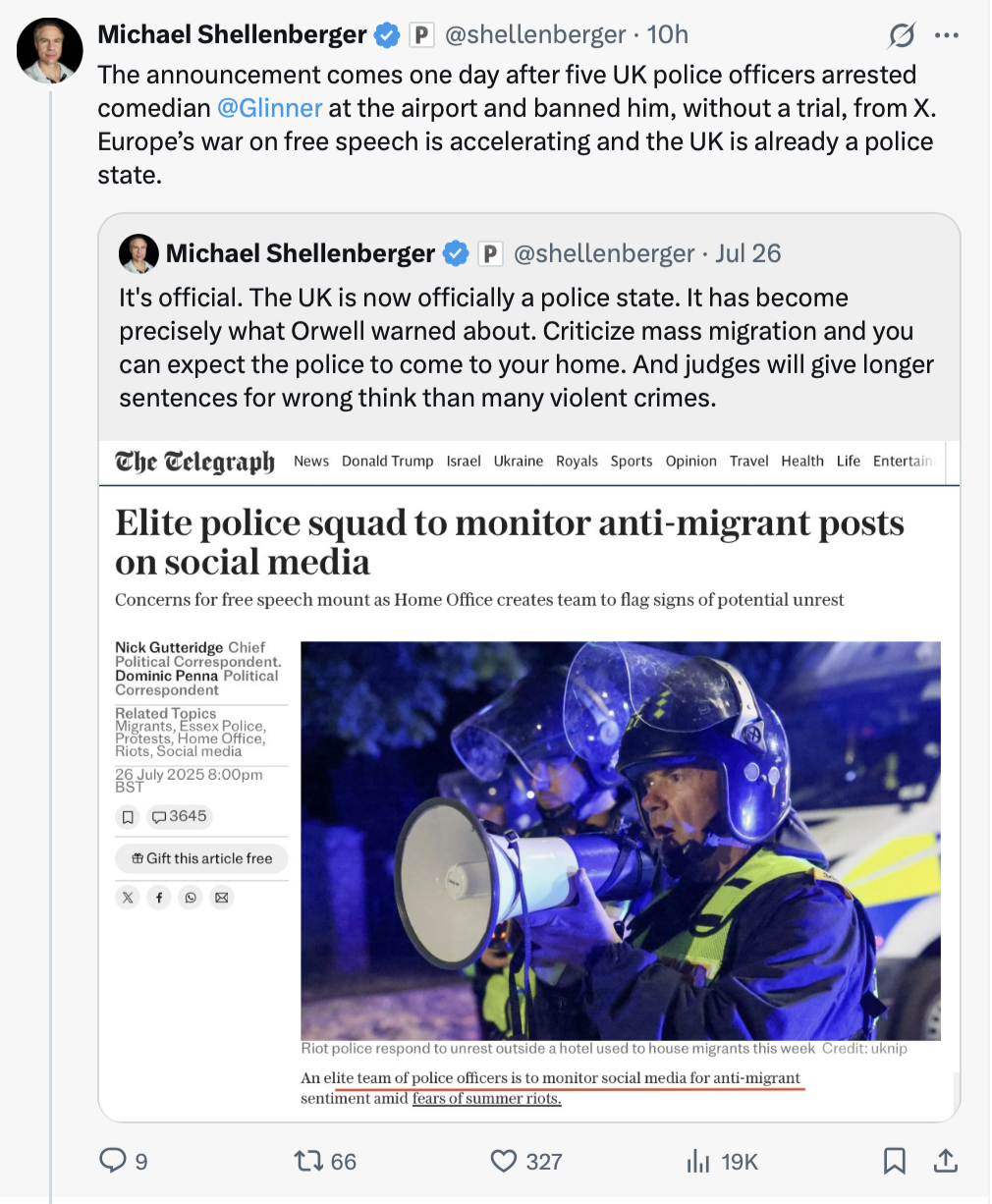

Michael Shellenberger reports. No wonder authoritarians of all stripes crave these powerful digital tools :
Greg Lukianoff began his TED talk with this: "2023 and 2024 were the two worst years for mob censorship and shout downs on record."
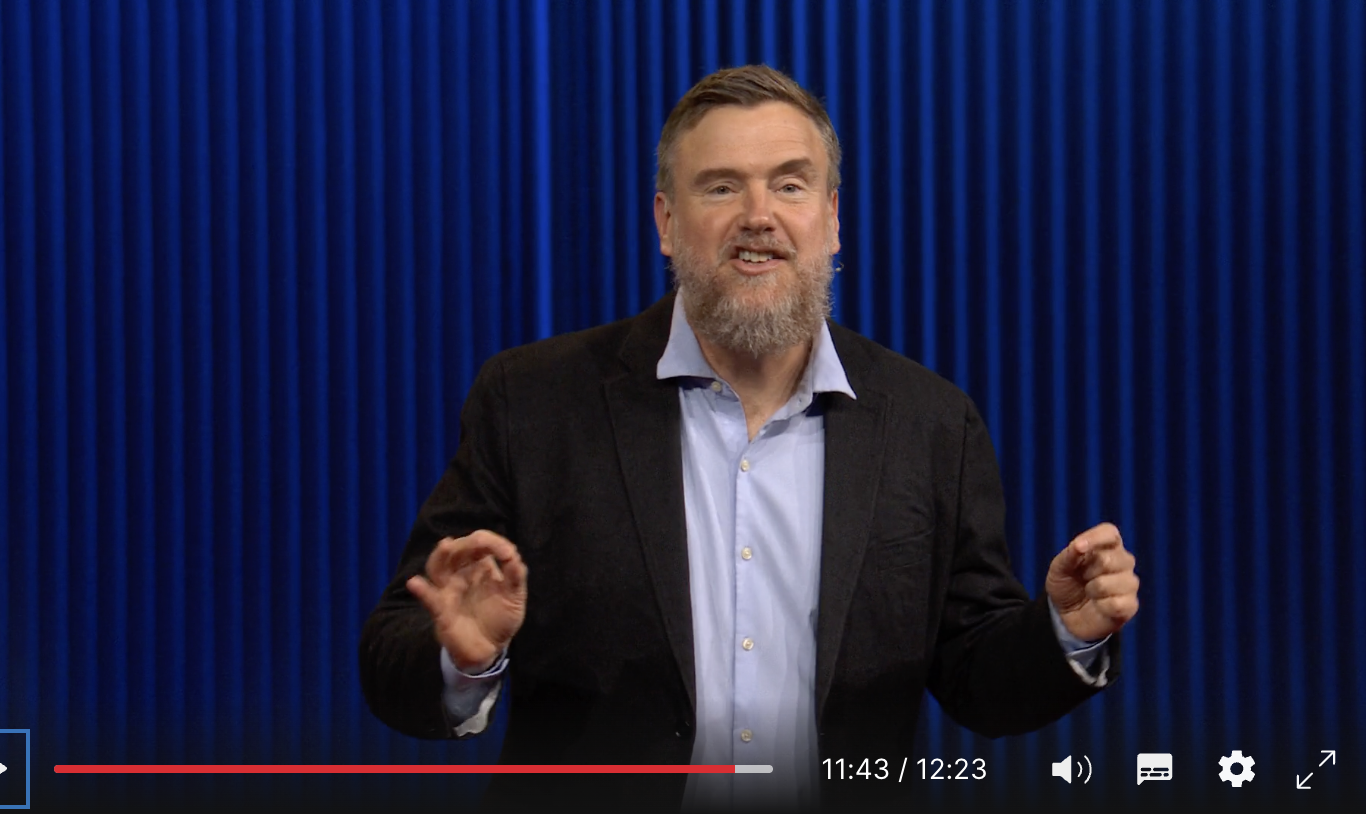
He then offered these Four Truths about free speech:
1. You are not safer for knowing LESS about what people really think.
2. Free Speech Cures Violence (Free Speech is the best alternative to violence).
3. Free Speech protects the powerless (free speech is the best check on power ever invented).
4. Even "bad" people can have good ideas (and good people aren't always right). ("Just because I hate your guts doesn't mean you are wrong.") ("The way we figure out truth ... doesn't work if you just talk to people your already agree with.").
Greg ended his talk with this gem:
"To understand the world it's crucial to know what people really think . . . For that, we need free speech."
I had the same reaction as Mike Benz:
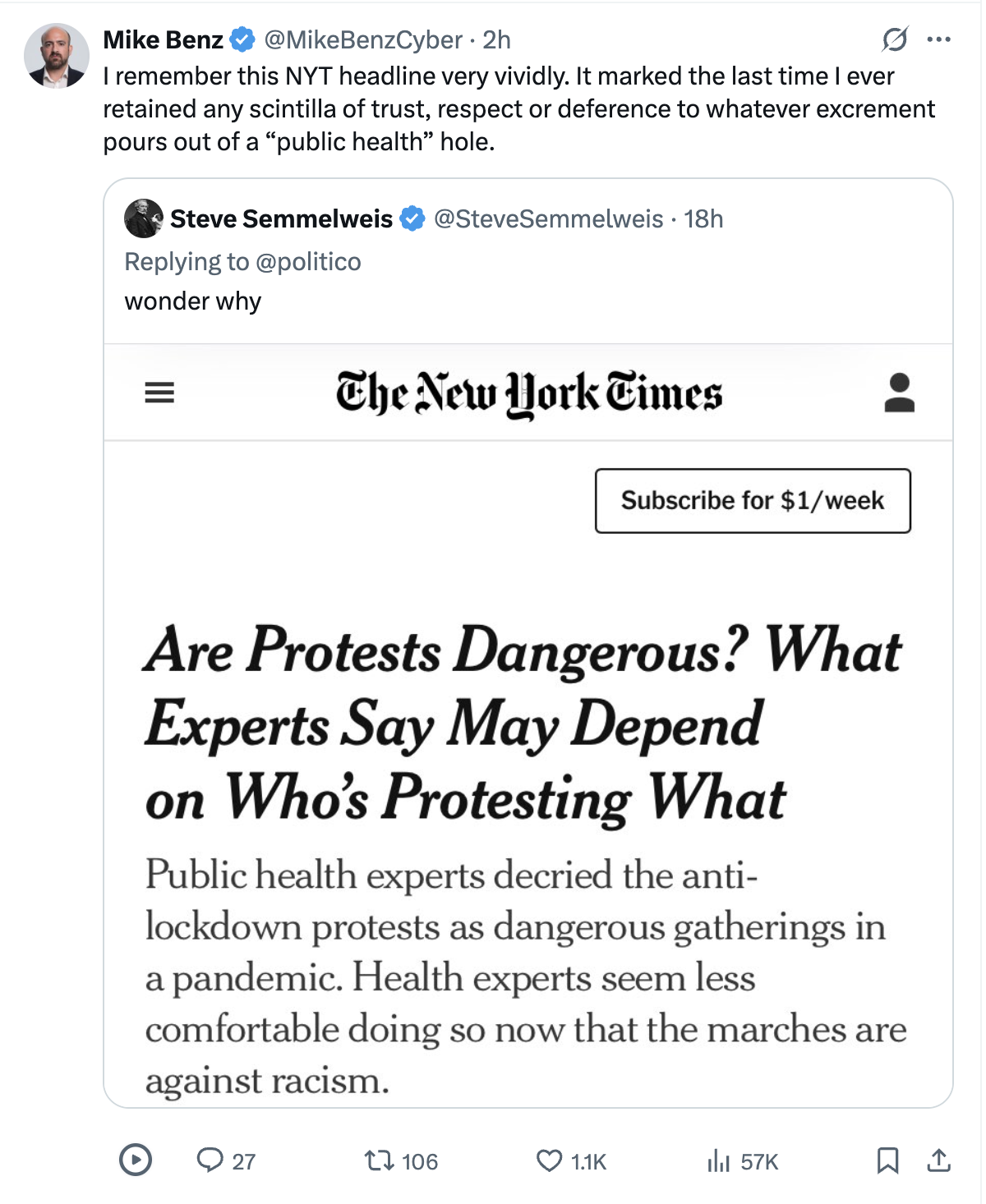
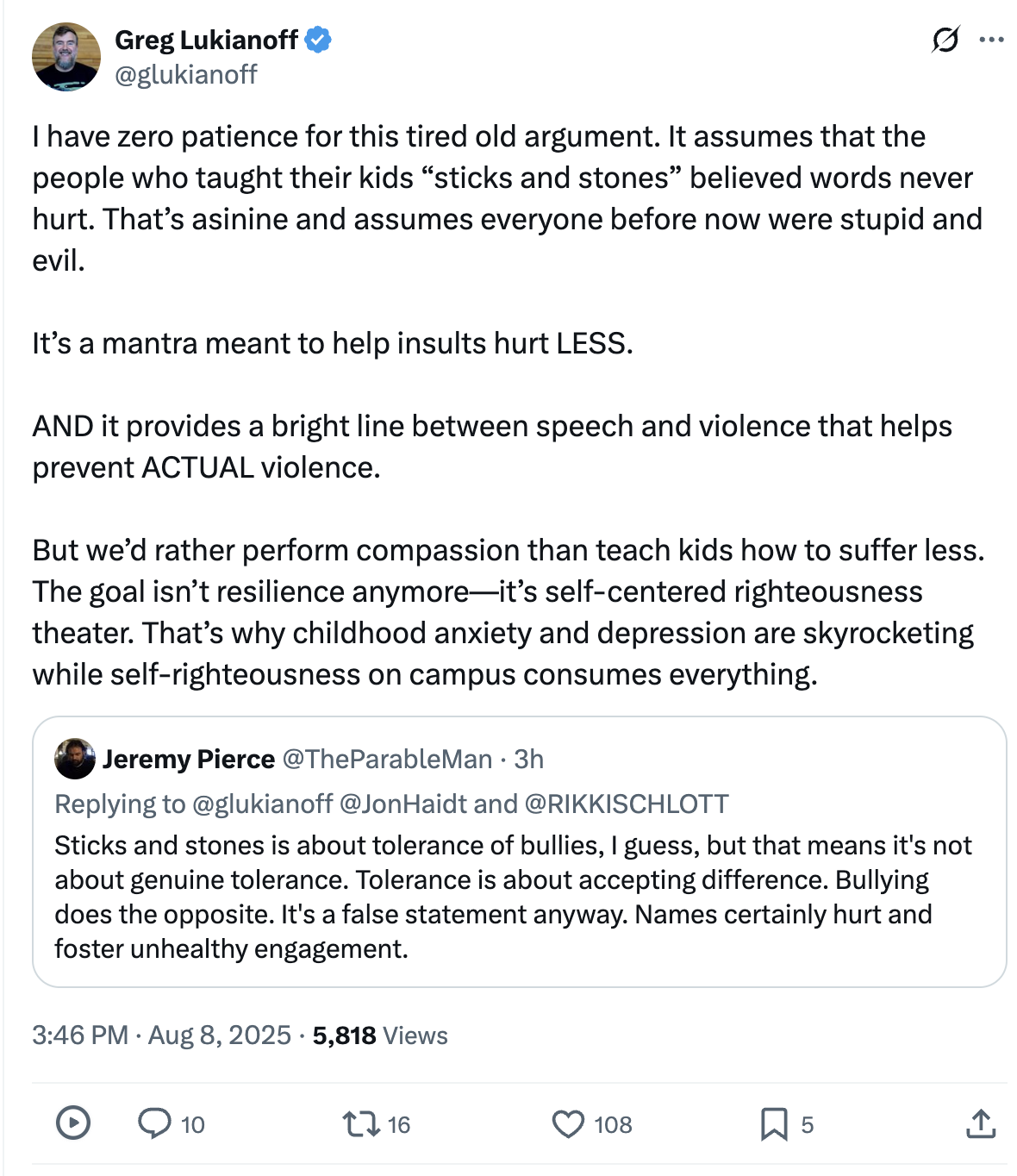
"Sticks and stones will break my bones but names will never hurt me." We used to say this often. We need to say it more. Greg Lukianoff explains why it is not an excuse for tolerating bullies:
I have zero patience for this tired old argument. It assumes that the people who taught their kids “sticks and stones” believed words never hurt. That’s asinine and assumes everyone before now were stupid and evil.It’s a mantra meant to help insults hurt LESS.
AND it provides a bright line between speech and violence that helps prevent ACTUAL violence.
But we’d rather perform compassion than teach kids how to suffer less. The goal isn’t resilience anymore—it’s self-centered righteousness theater. That’s why childhood anxiety and depression are skyrocketing while self-righteousness on campus consumes everything.
James Lindsay suggests how to tell if you are in a cult:
I was asked in an interview yesterday what some signs are that you're in a cult. Here are the three best signs:1) Ask yourself if you can support or defend someone the group doesn't like without fear. If not, you're in a cult.
2) Ask yourself what would happen if you left the group. If you'll be punished, shunned, and ostracized, you're in a cult.
3) Ask yourself what would happen if you expressed a moderating opinion within the group. If you'd be punished, bullied, or shamed, you're in a cult.
Most cults today aren't Jonestown or the Moonies. They're online phenomena headed by "influencers." By failing to recognize where and how cults form in the era of social media, we leave ourselves very vulnerable to their malicious tactics."