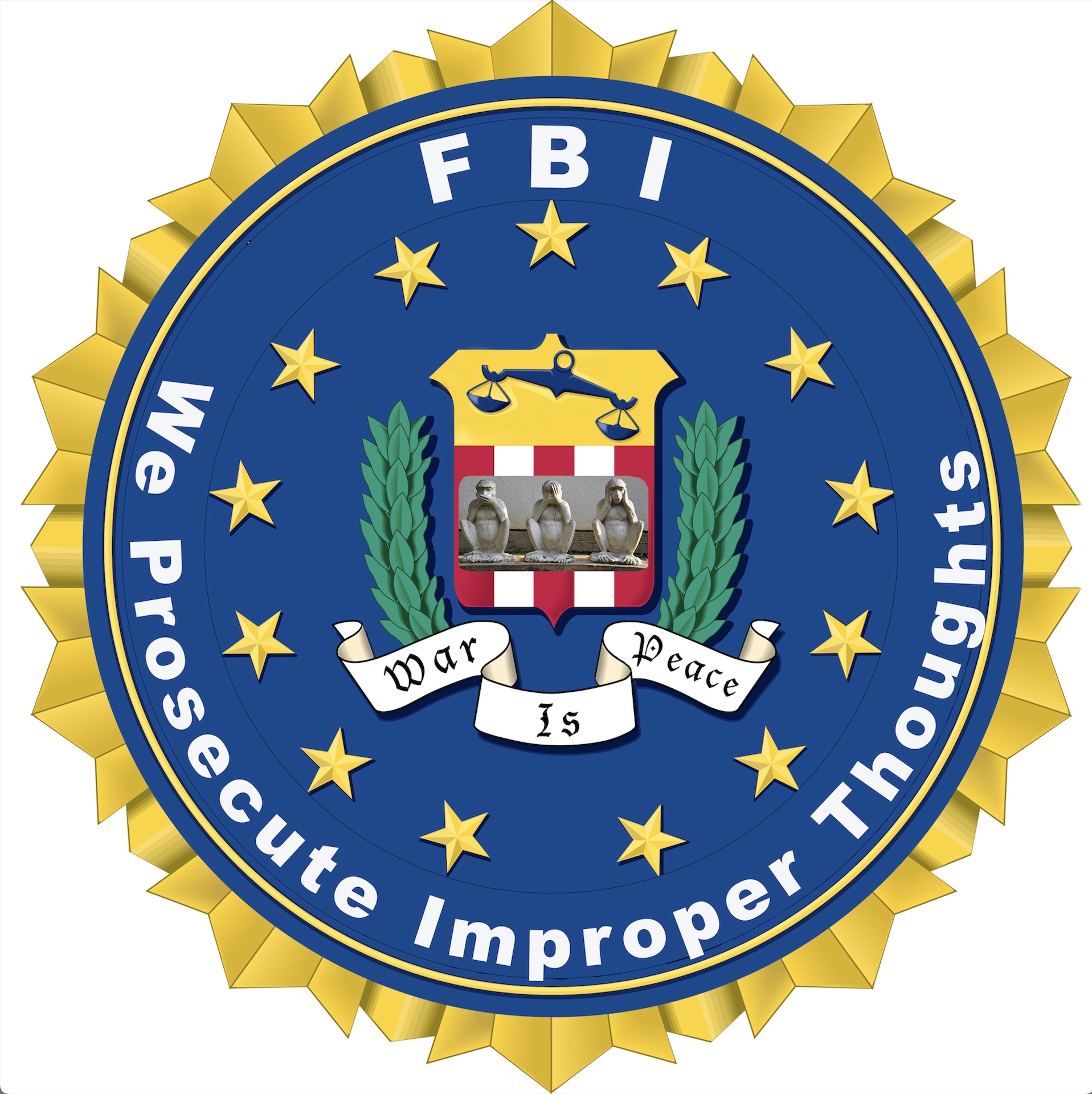
FIRE Comments on the Forbidden Words of Stanford University

Excerpt from an Article by FIRE (Foundation for Individual Rights and Expression):

By now, much has been written about the words and phrases Stanford removed from its website for their potential to cause harm. “That was insane!” isn’t palatable, because “This term trivializes the experiences of people living with mental health conditions.” What to do when referring to a whitelisted or blacklisted IP address? Try “allowlist/denylist,” because the former terms “[a]ssign value connotations based on color (white = good and black = bad), an act which is subconsciously racialized.” You get the idea. “American,” “dumb,” and “lame” are out, too . . . .

Last week, after the list became public and backlash mounted, Stanford announced it would conduct a review of the guide. The statement from Chief Information Officer Steve Gallagher clarified the website does not represent Stanford University policy. “It also does not represent mandates or requirements,” Gallagher wrote. The list simply provides “suggested alternatives.” “But, we clearly missed the mark,” Gallagher concedes. “We value the input we have been hearing, from a variety of perspectives, and will be reviewing it thoroughly and making adjustments to the guide.”

While FIRE is, of course, relieved to hear these alternatives are not required, the inherent infantilization of steering adults away from words and phrases like “tone deaf” and “mailman” is troubling. By prematurely wading into conversations and deeming words and phrases offensive on behalf of its adult students, Stanford deprives its community members the chance to build resilience and talk through the issues of the day without having to constantly worry about stepping on rakes.

We think institutions of higher education better serve students by not inserting themselves in language debates that are almost certain to produce a “Streisand effect,” occurring when more attention is brought to forbidden words and phrases in the effort to silence them. FIRE recommends a culture of trust, not coddling....

In 2016, Nick Haslam coined the term “concept creep” to describe the tendency for the semantic range of harm-related concepts to expand over time. In other words, the meaning of concepts such as “trauma,” “bullying,” and “violence” has broadened to include ever milder, subtler phenomena.

[More . . . ]
Continue ReadingFIRE Comments on the Forbidden Words of Stanford University
Read more about the article Wilfred Reilly is Keeping Score on those Twitter “Conspiracy Theories”
Wilfred Reilly: Twitter's Shadow-Banning Exposed

Wilfred Reilly is Keeping Score on those Twitter “Conspiracy Theories”

Wilfred Reilly is a fact-driven political scientist. And I'm referring to old-fashioned kinds of facts. I have followed him for several years and I enjoy his comments and candor. At The National Review, Reilly recently commented on the supposed conspiracy theories involving Twitter, which repeatedly denied that it was shadow-banning users:

What is newsworthy, however, was that the Big Lie of information neutrality was just that: a lie. Probably for decades now, conservative and heterodox thinkers have been called weird paranoids for doubting “the science ™,” “the experts,” “the trends,” “the (new) dictionary definitions,” “what the search results obviously show,” and so forth. We now know that those lonely cynics were largely correct: the Great Barrington Declaration and the Hunter Biden laptop, among many other things, never “trended” because they were not allowed to. More broadly, almost all of the information we see on a daily basis is greatly shaped by the people who allow access to it. This is not a “conspiracy theory” — it is a fact.

Definitely don’t stop tweeting and searching and reading the morning paper with your eggs — but also never forget that fact, consider the DuckDuckGo option that actually shows you all of the results, and remember also that libraries still exist. And, if I can give one last piece of takeaway advice in this first column: Buy a hard-copy dictionary and encyclopedia from before about 2012, and never let those bad boys go.

Continue ReadingWilfred Reilly is Keeping Score on those Twitter “Conspiracy Theories”

The Hate Speech Exception to the First Amendment

Contrary to the title of this post, there is no hate speech exception to the First Amendment.

FIRE explains

There is no “hate speech” exception to the First Amendment. So, many Americans wonder, "is hate speech legal?"

Contrary to a common misconception, most expression one might identify as “hate speech” is protected by the First Amendment and cannot lawfully be censored, punished, or unduly burdened by the government — including public colleges and universities.

The Supreme Court of the United States has repeatedly rejected government attempts to prohibit or punish “hate speech.” Instead, the Court has come to identify within the First Amendment a broad guarantee of “freedom for the thought that we hate,” as Justice Oliver Wendell Holmes described the concept in a 1929 dissent. In a 2011 ruling, Chief Justice John Roberts described our national commitment to protecting “hate speech” in order to preserve a robust democratic dialogue:

Speech is powerful. It can stir people to action, move them to tears of both joy and sorrow, and—as it did here—inflict great pain. On the facts before us, we cannot react to that pain by punishing the speaker. As a Nation we have chosen a different course—to protect even hurtful speech on public issues to ensure that we do not stifle public debate.

In other words, the First Amendment recognizes that the government cannot regulate “hate speech” without inevitably silencing the dissent and dialogue that democracy requires. Instead, we as citizens possess the power to most effectively answer hateful speech—whether through debate, protest, questioning, laughter, silence, or simply walking away.

Continue ReadingThe Hate Speech Exception to the First Amendment

How to Marginalize Ideas and People to Create an Illusion of Consensus, Hurting People in the Process

A story of hubris by the powers that be. This could also be characterized the sort of thing Jonathan Haidt would characterize as "structural stupidity":

People who try to silence or intimidate their critics make themselves stupider, almost as if they are shooting darts into their own brain.

What follows is an Excerpt From The Free Press. "Government Power v. People Power," By Dr. Jay Bhattacharya:

From the beginning of the Covid-19 pandemic, I was a vocal critic of lockdowns and school closures that I believed would cause more harm than good. In October 2020, with Sunetra Gupta of Oxford University and Martin Kulldorff of Harvard University, I wrote the Great Barrington Declaration, which proposed protecting vulnerable people while lifting lockdowns for the majority of the population. In other words, it advocated a return to classic principles of pandemic management that had worked to limit the harm of other respiratory virus pandemics. Tens of thousands of scientists signed on.

Four days after we wrote it, the head of the National Institute of Health, Francis Collins, wrote to Anthony Fauci, labeling us as “fringe epidemiologists” and calling for “a quick and devastating published takedown” of the declaration. A propaganda campaign quickly ensued, with various media sources falsely accusing me of wanting to let the virus rip. It wasn’t just the press. Recently I learned in these pages that Twitter placed me on a secret blacklist to limit the reach of my tweets.

So what did I learn in 2022? I learned in a very concrete and painful way the effects of Washington and Silicon Valley working together to marginalize unpopular ideas and people to create an illusion of consensus.

This censorship and smear campaign deprived the world of a needed debate over Covid policy and might have avoided much unnecessary suffering by children, the poor, and the working class harmed by lockdowns.

[Dr. Jay Bhattacharya is a professor of health policy at Stanford University, where he has taught in the medical school for over two decades].

Here is an excerpt from the Great Barrington Declaration:

Fortunately, our understanding of the virus is growing. We know that vulnerability to death from COVID-19 is more than a thousand-fold higher in the old and infirm than the young. Indeed, for children, COVID-19 is less dangerous than many other harms, including influenza.

As immunity builds in the population, the risk of infection to all – including the vulnerable – falls. We know that all populations will eventually reach herd immunity – i.e. the point at which the rate of new infections is stable – and that this can be assisted by (but is not dependent upon) a vaccine. Our goal should therefore be to minimize mortality and social harm until we reach herd immunity.

The most compassionate approach that balances the risks and benefits of reaching herd immunity, is to allow those who are at minimal risk of death to live their lives normally to build up immunity to the virus through natural infection, while better protecting those who are at highest risk. We call this Focused Protection.

Continue ReadingHow to Marginalize Ideas and People to Create an Illusion of Consensus, Hurting People in the Process