Matt Taibbi and Walter Kirn Discuss Losing Friends in our Balkanized World

I've been listening to the four-part series of conversations wherein Matt Taibbi and Walter Kirn discuss the novel 1984. In Part III, they discuss the horrific social balkanization of the modern day U.S. I transcribed it below:

Re: The Orwellian Future.

Walter Kirn:

And if you're not all educated in this program at once, you're going to fall out with each other?

Matt Taibbi

Yeah, and that's already happened. I mean, I think we, probably a lot of people who listen to this program, have had the identical experience of suddenly becoming distanced and cut off from people who with whom they were close pretty recently, right? And there's this, you know, for me that a there's an Invasion of the Body Snatchers quality to this, where I'm suddenly kind of hiding my thoughts, or either that, or I just feel, you know, increasingly alone sometimes. And I think this is a widespread phenomenon, but what I worry about is, is, is that it's going to disappear, because they're going to get better at this stuff. I mean, the less you know we're we're grounded in history and time, and realize that there are different. There's a whole range of opinions and feelings and things like that, the easier it becomes to smash

Walter Kirn

You don't want to be the control group, the people who aren't taking the drug when everybody else is taking The drug, especially if the drug for them feels urgent, necessary and perfect, and they have committed to it such that even if it has terrible side effects, they're going to keep taking it. All you will do if you don't and maybe thrive is enrage them about the choice they made and now regret and or you just become inexplicable to them. You know, why is Matt? Why is Matt repeating those conspiracy theories? What's wrong with Matt? What foreign government? What happened, you man? What malign entity has gotten a hold of him who's paying him to say these things? Exactly what happened to you? I mean, both you and I have experienced, just recently, a real upsurge in what they call concern trolling, which is, you know, I'm really worried about you, or you used to be cool. Yesterday, I saw a tweet against me, which said, Is this tweet evidence of mania or an untreated stroke, literally physicalizing it, you know, Walter, I think you need to go see a neurologist for your for your tweets. And that causes me to want to withdraw from those people, to want to withdraw from the people who know those people, and it causes them to fear that maybe there's some contagion they might get from me, or they might get punished for knowing me. They don't want to be seen. And as I say, the rate at which this process goes forth, which will be different for everyone and for every group, is going to cause new kinds of rifts we're used to. We're used to balkanization, traditionally, historically, over race, ethnicity, gender, language, religion and so on. But we're now going to face balkanization over submission levels of information.

Matt Taibbi

Yeah, Yep, absolutely. And you know, my cure for this, ironically, you know, has been spend less time on the internet, read more, you know, and that's one of the reasons I think we do this. This the show.

Walter Kirn:

And why should let's and mine too. And why should reading be, why should reading be a remedy for for this kind of cognitive balkanization, I'll call it, because by reading, you go back to a book, especially books that were written at least a few decades ago or more. You go back and you are able to be with peers in a way you're able to feel a sense of community, an intellectual community, that you can't get now. In other words, it's a less fractured existence, a less fractured reality. You. Uh, because the book has created its own in a way, community of minds. And there are commentaries on the book and and it was also written at a time when this balkanization was less advanced, and you do really find refuge,

Matt Taibbi

You do. And I mean, I remember this, when I was a kid, the the feeling, you know, if you if you're one of those kids, like I was, who, you know, had trouble at school, wasn't popular, like, if you were bullied, if you were any of those folks,

Walter Kirn

You're so big, how did they bully? Well, I wasn't big until

Matt Taibbi

A certain point, and then, yeah, then it became a, anyway,

Walter Kirn

Puny ass bitches, yeah.

Matt Taibbi

But, you know, I had a hard time when I was a kid for a variety of reasons, and, and, and I remember having this thought that, wow, like, you know, there are these people who are long dead, who I seem to have be closer to than anybody that I meet all the time, you know, in my regular daily life and but also, what's important about books is, is that it forces your mind to do things that In a society that is sort of anti thought. Those muscles are kind of turned off, right? You have to construct images. You have to feel other people's feelings. You have to do all these things that doesn't do it for you. It doesn't show it to you. And you know, the weaker that muscle gets in your head, the easier it is to kind of stamp out your individuality, and books force you to get back in shape spiritually a little bit, and they do. And so it's, it's a beautiful thing, still, but,

Walter Kirn

But also for a book to work except for, except for radical experimental books that are, you know, determined to be incoherent and jagged and, you know, internally contradictory. But for most books to work, they have to present an internally coherent universe. Okay? And it's just like going on vacation to immerse yourself in a coherent universe, even if it's a nightmare like 1984 because the much worse nightmare than being in a coherent airstrip one Oceania, World of 1984 of nightmarish political oppression is to live in a world of absolutely splintered, uncertain and unstable, endless surprise, contradiction and disappointment and in, you know, and social,

Matt Taibbi

Incompatible, paradox, all those things, yeah, absolutely.

Walter Kirn

It's like going to a small town 1984 you know, it may be the most nightmarish small town ever built by man's mind, but at least you feel, after you started reading it, that you know how it works and what its rules are and who the people are, and little of what to expect.

Matt Taibbi

Absolutely, absolutely. Yeah. So nightmarish as this is, it's still, it's it's still a respite in some ways, so but horrifying part of the book still relevant anyway, thank you, Walter.

Steve Kirsch and Bret Weinstein have also spoken of the substantial social costs one incurs by being true to one's self in a time when many people delegate fact-finding to their favorite tribe
Continue ReadingMatt Taibbi and Walter Kirn Discuss Losing Friends in our Balkanized World

Must Watch Documentary on COVID Vaccine Adverse Reactions and their Cover-Up: “Follow the Silenced.”

I just finished watching the new documentary, "Follow the Silenced," an allusion to thousands of Americans who were vaccine-injured. I'm irate at the fraud committed by public health officials, legacy media and pharma. Anyone who thinks that our COVID response was anything less than detestable should watch this video. You might have it in your mind that these entities were trying to act in good faith in a difficult set of circumstances.

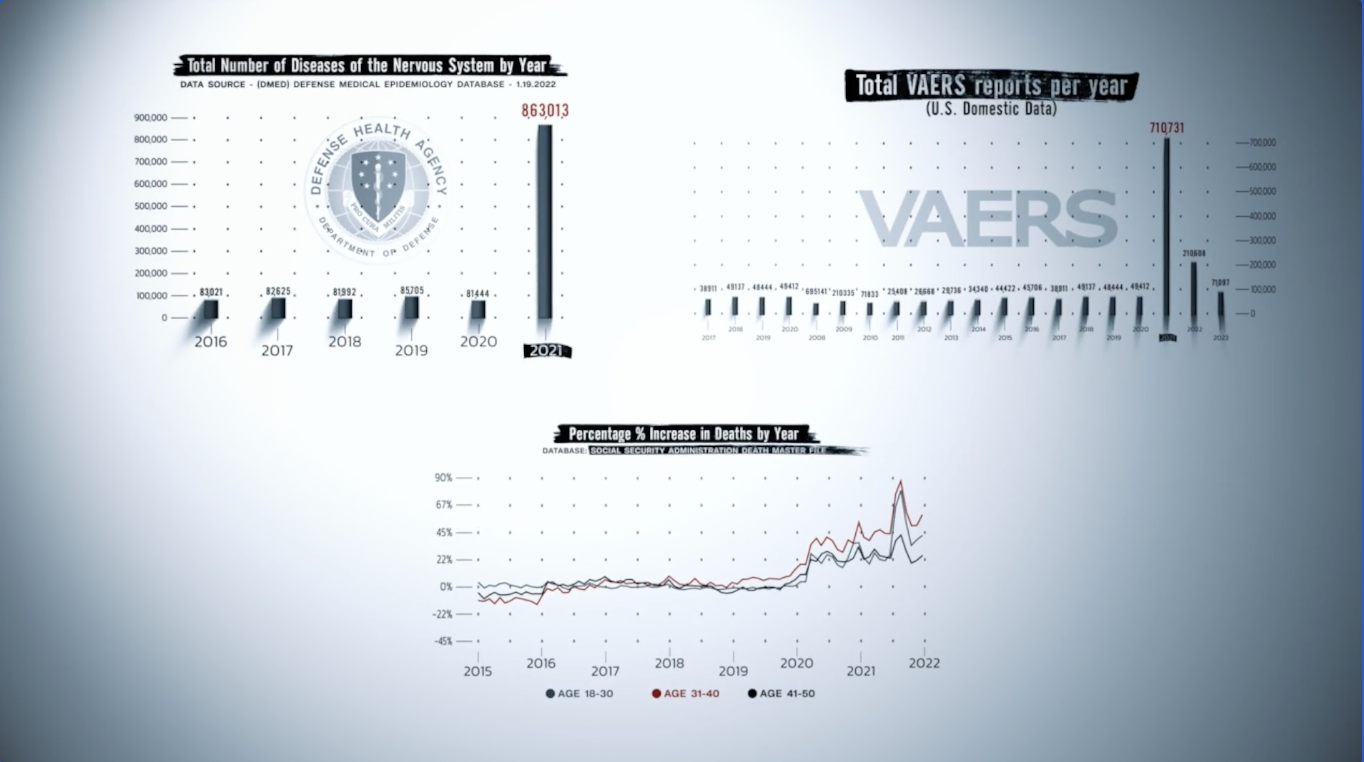
Bullshit. Why were the % of adverse reactions rigged downward by claiming that a person is not considered vaccinated until WEEKS after the first shot, even though many of the severe injuries were manifest immediately? Watching this documentary, you'll learn that doctors were discouraged from reporting side effects to VAERS. You'll learn that people who suffered severe injuries were ignored. They were told by doctors and public health that they were merely anxious and that they had no injuries even though they were bed-ridden. You'll see the actual numbers that constituted a safety signal while, at the same time, public health official and politicians were telling us to keep pumping these dangerous products into our arms. Like I did. Three times. Without informed consent. Here is the documentary's indictment: in summary form, along with some screenshots from the documentary:

Suppression of Vaccine Injury Stories: Public health authorities, pharmaceutical companies, and the government systematically silenced and censored individuals who experienced severe adverse reactions to COVID-19 vaccines. Victims, such as Brianne Dressen and Ernest Ramirez Sr., were ignored when attempting to share their experiences, pointing to a broader effort to conceal the scope of vaccine injuries.

Illegal Censorship Campaign: The federal government, in collaboration with Stanford University and social media companies, engaged in an illegal censorship campaign that violated the First Amendment rights of vaccine injury victims. This effort allegedly aimed to suppress narratives that questioned the safety of COVID-19 vaccines. For instance, FB shut down numerous groups of organically organized vaccine-injured people.

Abandonment by the Medical Establishment: The medical establishment abandoned vaccine-injured individuals, leaving them without proper care or acknowledgment. Victims were dismissed or neglected by healthcare systems after experiencing life-altering adverse effects.

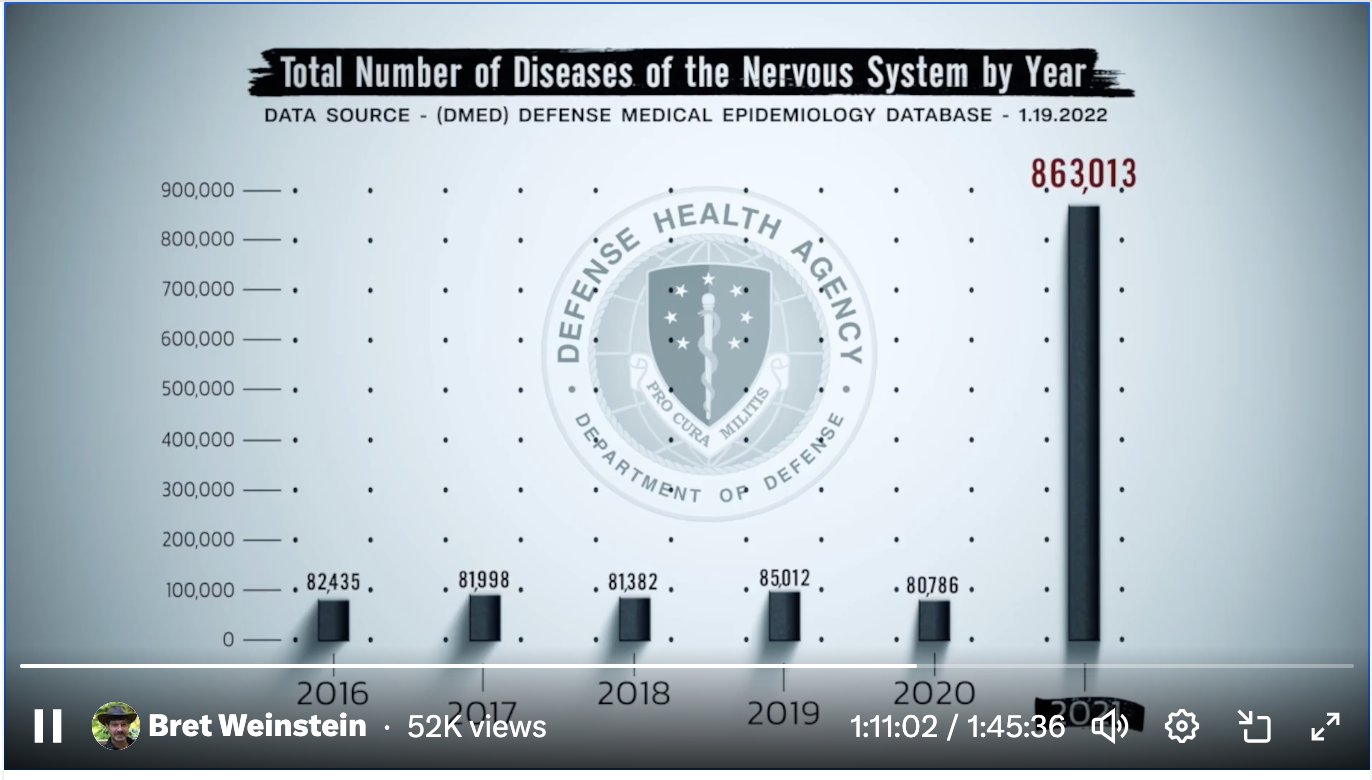
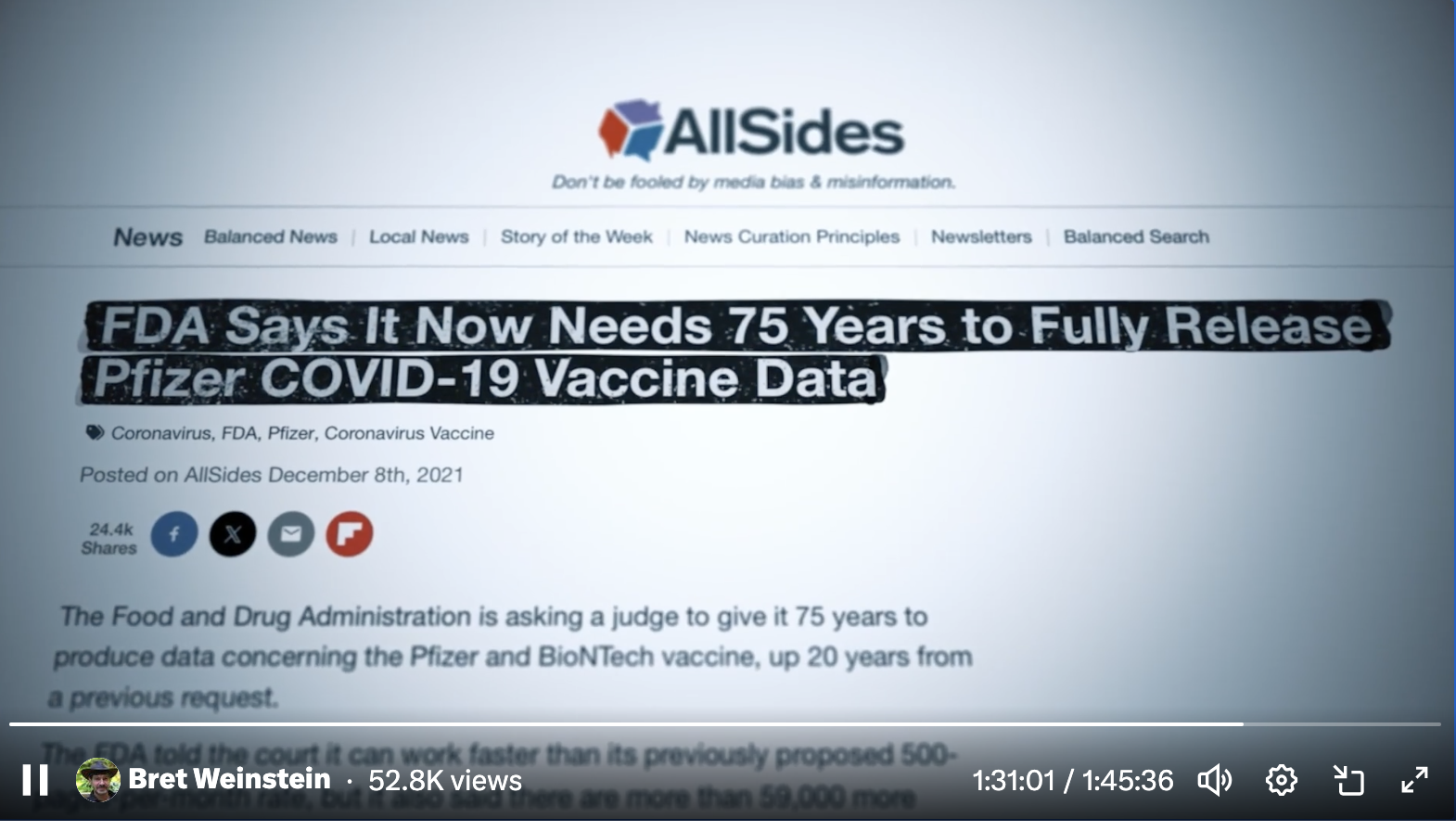
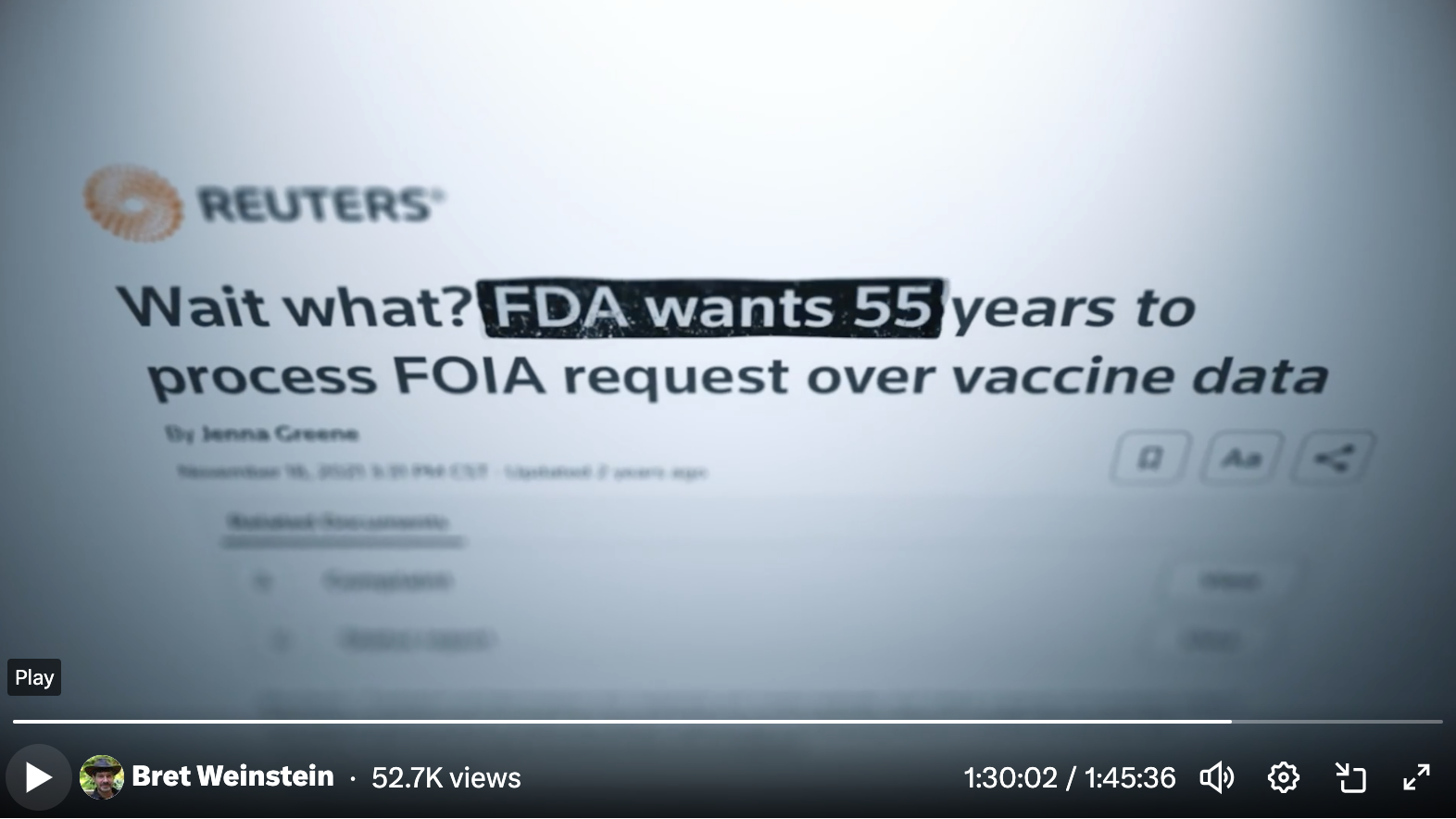
Cover-Up of Adverse Effects Data: Consider the Defense Medical Database (DMED), where an alleged 1100% increase in neurological diseases among service members was observed in the year following the introduction of COVID-19 vaccines. The Department of Defense shut down access to this data to obscure these findings, a deliberate cover-up. Pfizer's own data (that it attempted to hide) showed 26,000 cases of nervous system disorders in its clinical trials. 24 Hours after Senator Ron Johnson told the Biden WH to preserve DIMED data (that indicated that the vaccines were dangerous) the system went down and then reappeared with doctored data.

Media Complicity in Misinformation: The news media betrayed public trust by aligning with pharmaceutical and government narratives, failing to investigate or report on vaccine injury cases, and contributing to the marginalization of affected individuals. These accusations frame a narrative of systemic misconduct, lack of transparency, and disregard for those harmed by vaccines.

You are invited to view "Follow the Silenced," without charge, here:

Continue ReadingMust Watch Documentary on COVID Vaccine Adverse Reactions and their Cover-Up: “Follow the Silenced.”

Global Free Speech Threat

Michael Shellenberger explains that real progress is being made domestically to protect free speech, but the EU is actively working to impose its authoritarian speech controls over US social media:

Since taking office, President Donald Trump has moved swiftly to dismantle the federal censorship infrastructure. In his first week, he signed an executive order barring agencies from funding or facilitating the monitoring or removal of lawful domestic speech.

His administration has phased out censorship-related NSF grants, eliminated the State Department’s Global Engagement Center, which had coordinated with outside groups to shape online narratives, and shut down USAID, which funded censorship advocacy in Europe and Brazil.

And Trump’s 2026 budget proposes cutting $491 million from the Department of Homeland Security’s Cybersecurity and Information Security Agency, which oversaw election and Covid censorship in 2020 and 2021.

But the threat to free speech remains and has even grown stronger around the world, particularly in Europe. The UK is arresting 30 people per day for speech crimes. In Germany, 14 little-known state media agencies (SMAs) empowered by the 2020 “Media State Treaty” now monitor private journalists for compliance with vague “journalistic diligence” standards while exempting public broadcasters from the same scrutiny. French authorities want mandatory digital identification for users of social media platforms.

The European Commission appears to desire the power to ban or censor whole platforms, particularly Elon Musk’s X. And an Irish newspaper this week reported that the European Commission accused Ireland of “failing” to comply with laws regulating hate speech.

The wind remains at the back of free speech lovers. The change of government in the U.S. is already influencing Europe, where officials appear to be reconsidering some of the most aggressive censorship policies. In the UK, American negotiators have raised concerns about free speech tied to the Online Safety Act.

At the same time, in the EU, the Digital Services Act enforcement faces legal and logistical delays. France has drawn criticism for prosecuting satirical speech, and in Germany, a CBS 60 Minutes segment has fueled backlash against selective speech policing. Meanwhile, some in Brussels worry that the EU’s growing alignment with censorship risks its credibility as a champion of liberal democracy.

Even so, there is reason to be alarmed by what’s happening in Europe, says the Foundation for Freedom Online’s Mike Benz. “The most existential threats are now shifting around the international landscape and how that boomerangs back to the U.S.,” he said in a new podcast. American censorship leaders are working with European governments and NGOs to impose European censorship on social media platforms.

“The University of Cambridge Social Decisionmaking Lab works with the Global Engagement Center at the State Department,” he said. “It works with CISA at DHS. It works with the entire USAID network and USAID funds dozens of these funds — University of Cambridge’s censorship work, London School of Economics, King's College, Sheffield College, Oxford Internet Institute — the State Department and USAID fund all these. And they effectively are a foreign group that is paid for by taxpayers to subvert the agenda taxpayers voted for. It's an incredible scandal.”

And Europe is reacting to the Trump administration by seeking to replace the financing it cut for censorship. “Just this week,” Benz said, “the EU announced a a giant science research fund, $500 million, as an initial pool of funding and said they are actively recruiting researchers from the United States who USAID funded to come get their funds so they can continue their work by going to the EU. And this is happening in tandem with a tense standoff between the Trump administration and the EU over everything from Russia-Ukraine to tariff policy to tech regulation to you name it. And so the EU is basically pumping up the shadow diplomacy aspect of the US.”

All of this is happening at a time when the ruling parties in Germany, France, and Romania are resorting to increasingly undemocratic tactics in what appear to be desperate attempts to hold onto power as populist challengers surge in the polls. In Germany, the domestic intelligence service has officially labeled the AfD “extremist” a transparent response to the new government’s weakness and the AfD’s new status as the nation’s most popular political party. In France, prosecutors banned Marine Le Pen from running for president at a time where she too is polling first nationwide. And in Romania, the high court disqualified the leading opposition candidate from running for president, which most believe is a reaction to his opposition to a new NATO base in Romania.

“What's happening in Europe right now is simultaneously highly optimistic, white-pilling, inspiring, but also dark, twisted, sadistic, calamitous, catastrophic, and apocalyptic,” said Benz. Populist political success has caused NATO and the EU establishment to have “prosecutors and judges nullifying or barring candidates from running when they're winning, and prosecutors taking them out so they can't run again or can't make their voices heard or can't campaign because they're in prison or outright barred.”

Why is this happening? What can be done about it?

Continue ReadingGlobal Free Speech Threat

Mike Benz Explains “Whole of Society” Censorship

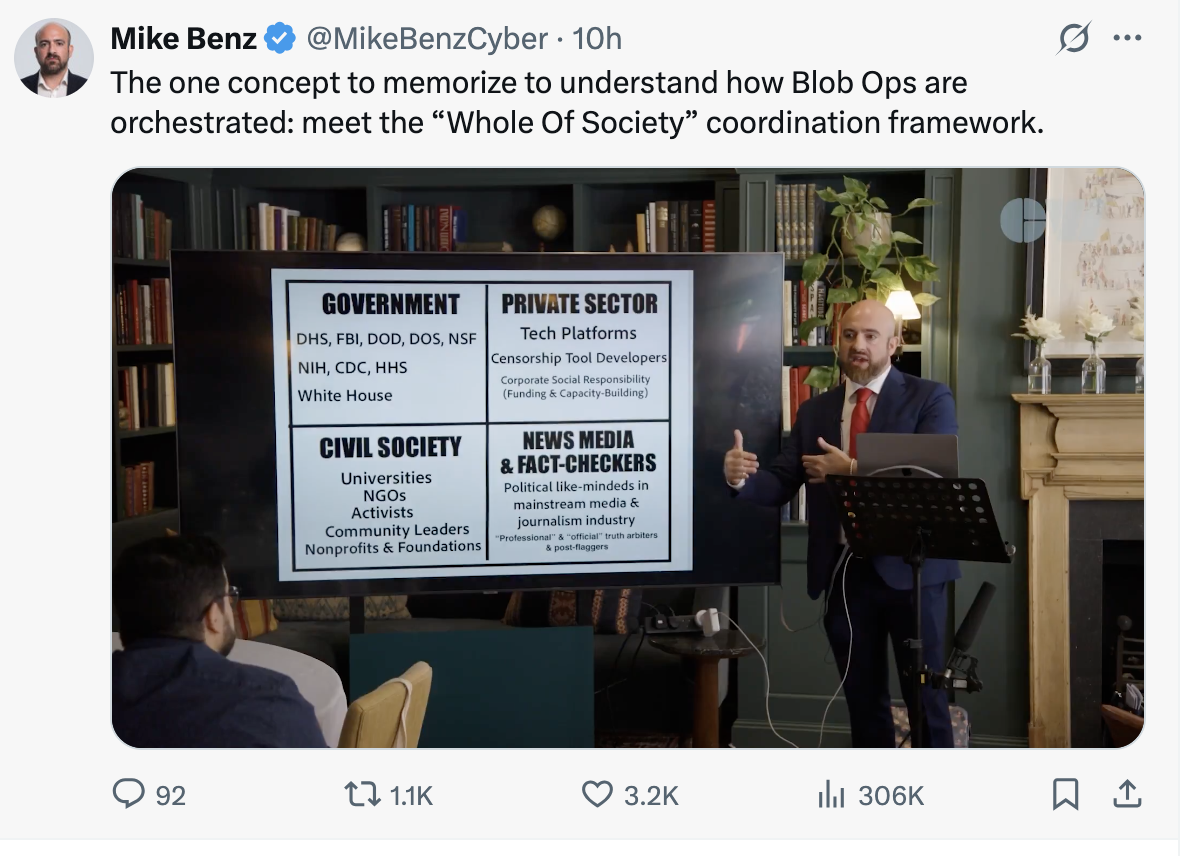
Excellent presentation by Mike Benz. Topic is "Whole of Society" Censorship.

To Supplement, I asked Grok to summarize "Whole of Society" Censorship. Here is Grok's answer:

The "whole of society" censorship approach refers to a coordinated effort involving government, private sector, academia, media, and civil society to control information and suppress certain narratives. It’s characterized by:

* Collaboration Across Sectors: Governments partner with tech companies, universities, NGOs, and media to monitor and restrict content deemed harmful or misleading, often bypassing legal constraints through informal agreements.

* Preemptive Narrative Control: Instead of just reacting to content, this approach shapes narratives proactively, promoting approved messages while marginalizing dissent through algorithms, fact-checking networks, and deplatforming.

* Broad Scope: It targets not only explicit misinformation but also "malinformation" (true information presented in ways that challenge official narratives), affecting political discourse, science, and public health.

* Examples: Documents like the Twitter Files revealed U.S. government agencies working with social media platforms to flag or remove content. The 2021 Stanford Virality Project, involving academics and tech firms, monitored vaccine-related content to counter skepticism. * Mechanisms: Include content moderation, shadowbanning, account suspensions, and funding "trusted" sources to dominate information ecosystems.

Critics argue it stifles free speech and centralizes narrative control, while proponents claim it’s necessary to combat disinformation at scale. The term gained traction in discussions about COVID-19 policy enforcement and election-related content moderation.

Continue ReadingMike Benz Explains “Whole of Society” Censorship