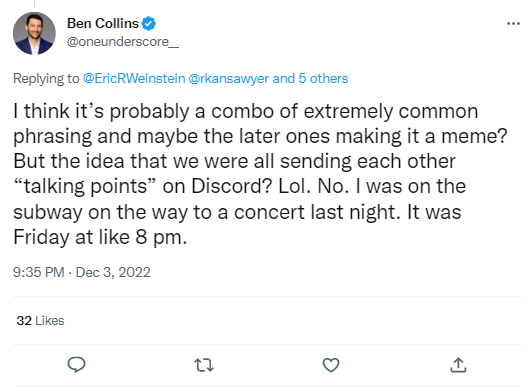
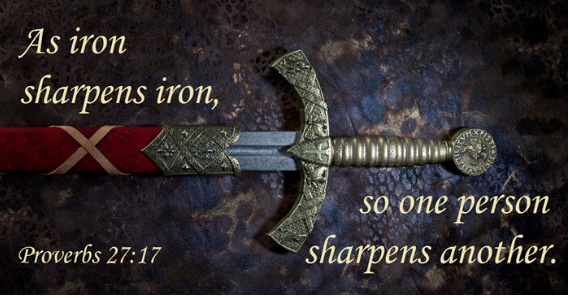
Dissolve all Political Parties. Do it for the Founders

We need to dissolve all political parties in the United States. I don't know how to make this happen.  It might be impossible. In their place, I would like to see hundreds of elected officials voting entirely by their own conscience after vigorous discussion with all other elected officials, each of them making their decision independently, unswayed by tribal instincts (and unswayed by the tribally-based money currently gushing through our system). I would like to see each senator and representative voting on each issue independently, not feeling any pressure on Issue A based on how someone else voted on Issue A voting against his or her conscience on Issue A in exchange for convincing another representative to vote against their conscience on Issue B.

What did the Founders of the United States think about political parties? They abhorred them. Here are a few quotes from "What Our Founding Fathers Said About Political Parties":

George Washington:

[Political parties] serve to organize faction, to give it an artificial and extraordinary force; to put, in the place of the delegated will of the nation, the will of a party, often a small but artful and enterprising minority of the community; and, according to the alternate triumphs of different parties, to make the public administration the mirror of the ill-concerted and incongruous projects of faction, rather than the organ of consistent and wholesome plans digested by common counsels, and modified by mutual interests. . . .Let me now . . . warn you in the most solemn manner against the baneful effects of the spirit of party .

- Letter to his “friends and fellow-citizens.”  It was published in newspapers throughout the country and later came to be known as his Farewell Address.

John Adams:

There is nothing which I dread so much as a division of the republic into two great parties, each arranged under its leader, and concerting measures in opposition to each other. This, in my humble apprehension, is to be dreaded as the greatest political evil under our Constitution.

-Letter to Johnathan Jackson, 1780.

Thomas Jefferson:

I never submitted the whole system of my opinions to the creed of any party of men whatever in religion, in philosophy, in politics, or in anything else where I was capable of thinking for myself. Such an addiction is the last degradation of a free and moral agent.  If I could not go to heaven but with a political party, I would decline to go.

-Letter to Francis Hopkinson, 1789

Thomas Paine:

Party knows no impulse but spirit, no prize but victory.  It is blind to truth, and hardened against conviction.  It seeks to justify error by perseverance, and denies to its own mind the operation of its own judgment.  A man under the tyranny of party spirit is the greatest slave upon the earth, for none but himself can deprive him of the freedom of thought.”

-The Opposers of the Bank, 1787.
Continue ReadingDissolve all Political Parties. Do it for the Founders

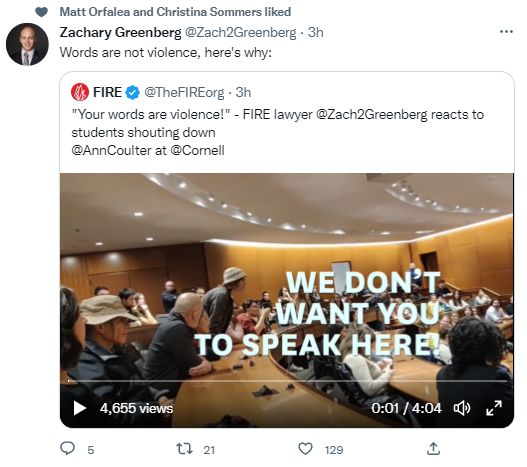
How to Handle Heckler’s Vetoes and Shout Downs.

How a school should to address heckler's Vetoes and shout down? See this short video narrated by Zach Greenberg, a FIRE attorney well versed in First Amendment law. The subject video was recorded at a talk Ann Coulter was giving at Cornell.

Do I really need to mention that I agree with Voltaire about Coulter's right to speak?: " I disapprove of what you say, but I will defend to the death your right to say it."

Continue ReadingHow to Handle Heckler’s Vetoes and Shout Downs.

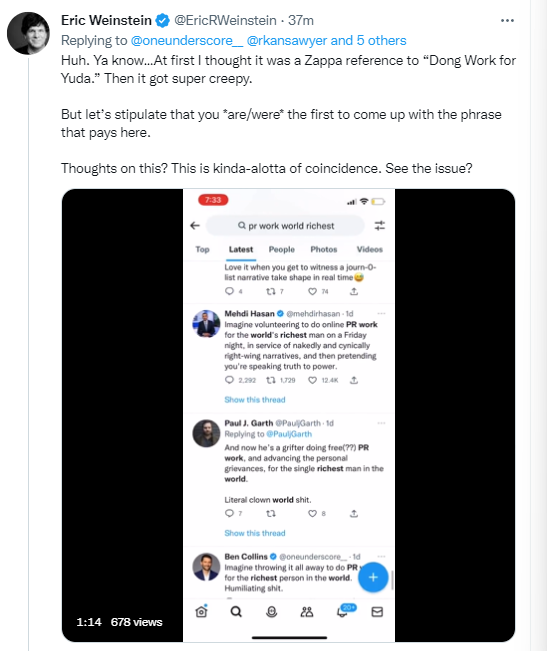
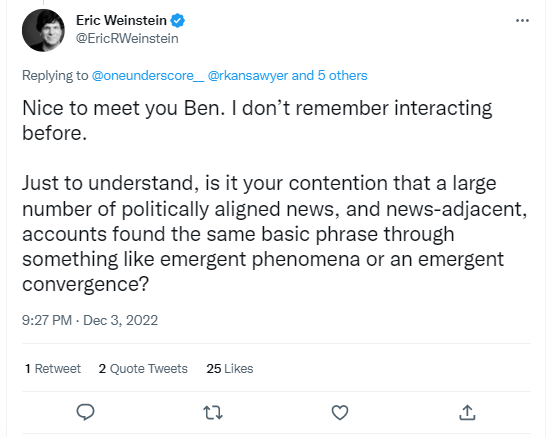
Eric Weinstein Schools Ben Collins on Cookie Cutter Talking Points Employed by Elitists Pretending to be Journalists

Eric Weinstein Points out a big problem for Ben Collins and others pretending to be journalists of Legacy Media Outlets:

Ben Collins protests too much:

Weinstein then inserts the dagger (click this image to let it scroll for the full effect):

Collins is such a joke, not a journalist.

Continue ReadingEric Weinstein Schools Ben Collins on Cookie Cutter Talking Points Employed by Elitists Pretending to be Journalists

Elon Musk’s New Role as Guardian of the Gates of Hell

Today's pro-censorship crowd doesn't seem to want to understand that the censorship powers they put into place today will eventually be used against them, possibly in the new future. Here's an excerpt from Glenn Greenwald's latest post:

It was easy to predict that there would be an all-out war from Western power centers if Musk sought to mildly reduce censorship on Twitter. Still, the media outdid itself.

It is hard to overstate how manic, primal and unhinged is the reaction of corporate media employees to the mere prospect that new Twitter owner Elon Musk may restore a modicum of greater free speech to that platform. It was easy to predict — back when Musk was merely toying with the idea of buying Twitter and loosening some of its censorship restrictions — that there would be an all-out attack from Western power centers if he tried. Online censorship has become one of the most potent propaganda weapons they possess, and there is no way they will allow anyone to dilute it even mildly without attempting to destroy them. Even with that expectation in place of what was to come, the liberal sector of the corporate media (by far the most dominant media sector) really outdid itself when it came to group-think panic, rhetorical excess, and reckless and shrill accusations.

In unison, these media outlets decreed that not only would greater free speech on Twitter usher in the usual parade of horribles they trot out when demanding censorship — disinformation, hate speech, attacks on the “marginalized,” etc. etc. — but this time they severely escalated their rhetorical hysteria by claiming that Musk would literally cause mass murder by permitting a broader range of political opinion to be aired. The Washington Post's Taylor Lorenz even warned of supernatural demons that would be unleashed by these new free speech policies, as she talked to a handful of obviously neurotic pro-censorship “experts” and then wrote about these thinly disguised therapy sessions with those neurotics under this headline: “‘Opening the gates of hell’: Musk says he will revive banned accounts.”

Continue ReadingElon Musk’s New Role as Guardian of the Gates of Hell

Everyone Sometimes Goes Off the Rails: Sam Harris Takes a Pratfall in the Limelight

Some people call the problem "hubris," which makes it sound like it's a problem stemming from conscious conceit. I see the problem as more insidious. The cause is completely silent and invisible, capable of toppling us in broad daylight even when we are trying to be step-by-step careful with our facts and analysis. Daniel Kahneman warned us ever so clearly in Thinking: Fast and Slow.

The silent process by which our thought-process falls off the rails is based on a cocktail that includes confirmation bias (evidence that conflicts with our view of the situation is invisible) and WYSIATI (We tend to focus on the thing in front of us to the exclusion of everything else). Jonathan Haidt warns us that the only way to protect ourselves from the confirmation bias is to engage with a heterodox crowd, constantly and enthusiastically subjecting ourselves to many viewpoints and perspectives, including those we find distasteful and sometimes even odious. Engaging with otherly others is the only way to protect ourselves from falling off the rails. The key is that you can't merely pretend to listen to other viewpoints. You gain nothing by trying to simply look open-minded. You need to consciously entertain those viewpoints and to let those often distasteful challenge your deepest convictions.

I suspect that "hubris" mostly caused by the thought that although other people fall off the rails, we are immune because we are especially smart/careful/creative/self-critical. That overconfidence makes us vulnerable to massive intellectual failures that can only be seen by others, not by ourselves. Sam has been brilliant for many years on many topics. He has engaged with some of the most serious-minded people in the world on complex topics. The paradox is that even though his work serves him well as an intellectual gymnasium, it seems to have given him the false confidence that he was so good that there was no risk that he would fall off the rails. Maybe he assumed that his own impressive intellect (and it has been impressive) did its on self-critical thinking. It often did. But that is not enough. One cannot really also be one's own critics, not day in and day out.

Choosing to test our views by subjecting them to views other other people that we find distasteful is John Stuart Mill 101. Those who fail to do this don't understand the views of anyone else and they don't even understand themselves. JSM: “He who knows only his own side of the case knows little of that."

Sam Harris has been running through more than a few stoplights over the past few years. He has often become intensely personal in his attacks against extraordinarily thoughtful people such as Glenn Greenwald and Brett Weinstein. His recent decision to cancel his Twitter account also seems to be a personal attack aimed at Elon Musk's quest to disband most of the censorship department at Twitter.  Sam's recently-expressed hesitance about free speech, however, is a dangerous short-term myopic reaction. Sam didn't appreciate it, but he needed more exposure to more viewpoints that challenged his own. He needed this strong medicine regarding his rigid views on CDC guidance re COVID, for example, something that he finally seemed to admit a few days ago on his visit with Bill Maher on the Club Random podcast. [More ... ]

Continue ReadingEveryone Sometimes Goes Off the Rails: Sam Harris Takes a Pratfall in the Limelight