Words Are Not Violence
When I was growing up, we often said "Sticks and stones will break my bones, but words will never hurt me." Last year, I spoke these words at a free speech presentation at a local library and the participants glared at me. I get the same stares when, after I am told that something I said was offensive, I respond by saying "You do you." or "Live and let live" or "To each his own." There are other expressions that don't fare well around the many self-appointed nannies inhabiting American universities, where wokeness still runs amok:
Be yourself
Do your thing
Do your own thing
Be true to yourself
To each their own
Live and let live
I was reminded that it still takes thick skin to say these common sense sorts of things in many places when I spotted this meme:
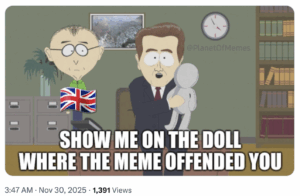
Words are not violence, yet this obvious and useful distinction is being willfully ignored and at great peril to societal flourishing. In his article at Free Press, "Bury the ‘Words Are Violence’ Cliché," Greg Lukianoff comments on this important distinction:
Words are not bullets. Words can’t strike a man from 142 yards away, causing a torrent of blood to erupt from his wound, sending him first to the hospital and then to the morgue. Only bullets can do that.
Upholding that distinction is the North Star of everything I do as president of the Foundation for Individual Rights and Expression (FIRE). For years, I’ve warned that equating words with violence erases the bright line liberal societies drew after centuries of bloodshed. The law draws this line with precision. Advocacy, even vile advocacy, remains protected unless it is intended and likely to produce imminent lawless action. That’s the Brandenburg standard, and it exists because the alternative is to let the powerful decide which ideas are allowed.
Or, as the Supreme Court put it in Texas v. Johnson, “If there is a bedrock principle underlying the First Amendment, it is that the government may not prohibit the expression of an idea simply because society finds the idea itself offensive or disagreeable.” These aren’t lawyerly niceties; they are the safety valves of pluralism. Blur them, and real violence becomes more, not less, likely.
Campus culture has been eroding that line for years. Students are told that offensive ideas are “harm,” that “silence is violence,” and—in a flourish that should now embarrass its users—that speech can be “literally” violence. Jonathan Haidt and I pushed back on that argument almost a decade ago. It’s conceptually wrong and practically dangerous—and has only grown in influence. Teach students that objectionable speech is violence and you invite them to see their own aggression as self-defense. [emphasis added]. This is the bloody fallacy we just witnessed: Accept the premise that rhetoric is a physical attack and you hand extremists a moral permission slip to answer speech with force. We need to bury this trope. Retire it—from classrooms, HR trainings, and editorials—for good.
The numbers show how far the rot has spread. FIRE’s new College Free Speech Rankings, which surveyed nearly 70,000 students across 257 campuses, find a record share now rationalizing coercion. Roughly 34 percent of students say that using violence to stop a campus speech can be acceptable in some circumstances; roughly 70–72 percent say the same about shouting down speakers. In 2021, the violence number was in the low 20s; by last year it was 32 percent. It should be zero. A university that can’t persuade students to reject violence categorically is failing at the first task of liberal education.