
The Long Road To Papal Self Destruction

The legal back-and-forth over the Vatican’s position on the sexual abuse revelations seems to Americans bizarre. While certainly the Catholic Church has a large contingent, we are a traditionally Protestant nation and after ditching the Anglican’s after the Revolution, the whole question of a Church being able to deny the right of civil authority to prosecute one of its representatives for criminal acts was swallowed up in the strident secularism that, despite the current revisionist rhetoric of a very loud activist minority, characterized the first century of the Republic. Even American Catholics may be a be fuzzy on how the Vatican can try to assert diplomatic immunity for the Pope in order to block prosecutorial efforts. But the fact is, the Vatican is a State, just like Italy, Switzerland, Germany, or the United States. The Pope is the head of a political entity (technically, the Holy See, but for convenience I use the more inclusive term Vatican), with all the rights and privileges implied. The Vatican has embassies. They have not quite come out to assert that priests, being officials (and perhaps officers) of that state, have diplomatic immunity, but they have certainly acted that way for the past few decades as this scandal has percolated through the halls of St. Peter. It would be an interesting test if they did, to in fact allow that attorneys generals, D.A.s, and other law enforcement agencies have absolutely no legal grounds on which to prosecute priests. To date, the Vatican has not gone there. So what is the political relationship between, say, the Vatican and the United States? From 1797 to 1870, the United States maintained consular relations with the Papal States. We maintained diplomatic relations with the Pope as head of the Papal States from 1848 to 1868, though not at the ambassadorial level. With the loss of the Papal States in 1870, these relationships ended until 1984, although beginning in 1939 a number of presidents sent personal envoys to the Holy See for specific talks on various humanitarian issues. Diplomatic relations resumed January 10, 1984. On March 7, 1984, the Senate confirmed William A. Wilson, who had served as President Reagan’s personal envoy from 1981, as the first U.S. ambassador to the Holy See. The Holy See in turn named Archbishop Pio Laghi as the first Apostolic Nuncio (equivalent to ambassador) of the Holy See to the U.S. The Pope, as head of the governmental body—the Holy See—has the status of head of state. Arresting the Pope—even issuing a subpoena—is a problematic question under these circumstances, as he would technically enjoy immunity stemming from his position. The question, however, more to the point is the overall relationship of the global Church to the Vatican and the prerogatives the Pope and the Holy See seem to believe they possess in the matter of criminal actions and prosecutions of individual priests, bishops, even archbishops. That requires going back a long time. At one time, the Holy Roman Church held secular power and controlled its own territories, known as the Papal States. When this “country” was established is the subject of academic study, but a clear marker is the so-called Donation of Pepin. The Duchy of Rome was threatened materially by invading Lombards, which the Frankish ruler Pepin the Short ended around 751 C.E.
Continue ReadingThe Long Road To Papal Self Destruction

Dangerous Intersection is 4 years old!

Back on February 21, 2006, I created the first post for Dangerous Intersection. Somehow, it got to be 4 years later all too quickly. Since that first post, DI authors have now published 3,840 posts. And many of you have created one or more of those 18,913 comments that you can still read at the site (all of our posts and comments are available at DI). Our traffic indicates that we're not small and we're not big (yet). We typically get about 140,000 visitors per month (about 5,000/day-- 1.7 million visitors over the past 12 months), including about 85,000 monthly unique visitors. Over the past 12 months, we dished out more than 7 million pages. Quantity doesn't mean much, in and of itself, of course. But I'd like to think that those of us who have participated in the writing and reading at this site have also learned some important things along the way, along with more than a few laughs. I'd also like to think that DI offers some perspectives that you don't find in most other places, and that we have contributed to the blogosphere and beyond in a significant way. My plan is to carry on, to learn from past mistakes and to make the site better in the future. One thing I've learned during the past few months is that digging into the news cycle too hard and too often can bring me way down, and that's not good for anyone. Therefore, when I'm feeling a paroxysm of cynicism in the future, I will make sure that I pull out of the news cycle for awhile in order to detoxify (thanks, to Ebonmuse for the encouragement and the terminology). In the future, I will also try harder to think of a take-away for those posts that concern ignorance, corruption and incompetence. It's not that we're going to solve society's big problems quickly--most of the time, it's going to be about baby steps if we see any progress at all. That's not going to be an easy task to present a take-action to every one of society's woes, but I'm going to give it more effort. The ultimate goal should be to figure out how to make some real-life progress whenever we identify social dysfunction. I'd like to give thanks to each of the authors, Mark, Brynn, Mindy, Dan, Erika, Mike, Lisa, Ebonmuse, Tony, Tim, Zoevinly, Grumpy, Hank and all the rest for provoking us with your postings and musings. And I really need to thank all of our comment-writers of whom there have been so incredibly many thoughtful people who have offered their own writings to keep the DI authors honest (special commendation to Niklaus). Yet I do know that there are many of you out there who read but don't write--thank you so much for visiting! Maybe this will be the year that you jump in and write your first comment (remember that you can do so anonymously, if you wish--many comments are anonymous). Almost all of the submitted comments get published (I even publish some of the comments that tell me that I'm going to go to hell!). If nothing else, post a comment to this post just to say hello and join in this modest fourth year celebration. I would ask for two little favors. If you know someone who might enjoy the kinds of writing you find at this site, please consider sending our home page link to them. Equally important, if a particular post seems well-written to you, please do follow the green-colored directions on the right side of the page and recommend that post to one or more social sites (e.g., Facebook, Reddit, Digg, StumbleUpon). Doing this really kicks up the traffic. It brings a wider (and hopefully a more diverse) audience to the site, which can benefit all of us thanks to more diverse comments. A larger audience would also help me to pay for the hosting costs and the other expense of running this site. I'll be candid. My hosting costs $100/month, and I'm extremely happy with it (thanks, Josh). The ads you see on the site recoup about 75% of that cost. It would be nice to break even financially, and that's my main financial goal here. BTW - none of the authors is paid. None of us has made a cent from writing at this site. All of us have day jobs--writing for DI is purely a labor of love. My overall goal is to present information and opinions that you can trust, but that also challenge you, even though you might disagree with us. In fact, when I tell people on the street about DI, I tell them to visit the site and to comment "especially if you disagree with us." One of my favorite in-person comments came from a well-accomplished lawyer who was also extremely conservative. He said, "Erich, I sometimes visit your site. It is fascinating and well-written. But I disagree with almost everything you say." That comment was a prelude to a good conversation over lunch--this kind of comment often is the beginning of something interesting. I'll end this "happy birthday" post by suggesting that I love to get email with interesting links. I know that this is true of all of the authors. If you find an good link, do write to us and you'll likely see it published at DI. Many of our email addresses can be found at the "About" page. Considerable amounts of the links you see here have been recommended by our readers. My own email address is erichvieth@gmail.com (You can also hit the "Contact" link at the top menu). If you want to reach one of the other authors, but you don't see their email addresses, send me an email and I'll pass it on. Once again, thank you. It has been a privilege to write as part of this thoughtful, iconoclastic and kind-hearted community.

Continue ReadingDangerous Intersection is 4 years old!

Welcome to Prom Night

Constance McMillen wanted to go to her high school prom. Like most students in the United States, she doubtless saw the event as the capstone of four years of effort, a gala event for students that represents a reward for getting to the end of their senior year and, presumably, graduating not only from high school but into adulthood. One night of glamor and revelry, dressed at a level of style and affluence many might never indulge again, to celebrate the matriculation into the next level of independence. A party where students can show themselves—to their peers and to themselves—as adults. It has become something more, probably, than it was ever intended to be. Patterned after high society “debuts” at which young ladies of good breeding (and potential wealth) are introduced to Society (with a capital “S”) in a manner that, when stripped of its finery and fashionable gloss, is really a very expensive dating service, with the idea of creating future matches between “suitable” couples, the high school prom is a showcase, a public demonstration of, presumably, the virtues of a graduating class. Over the last few decades, even the less well-off schools strive to shine in what a prom achieves. Instead of a local band in the high school gym, with bunting and streamers and colored lights to “hide” the fact that normally gym class and basketball are performed in this room, the prom has become elevated to a decent hotel with a ball room, a better-priced band (or a DJ), and all the attributes of a night on the town in Hollywood. Tuxedos and gowns are de rigueur and students’ families spare no expense to deck their children out in clothes they really often can’t afford. Limousines transport the budding fashionistas and their knights errant to the evening’s festivities and you know this cost a fortune. Students may be forgiven for believing that it’s for them. In its crudest terms, the prom is for the community, a self-congratulatory demonstration of how well the community believes it has done by its youth. It is a statement about what that community would like to see itself as.

Continue ReadingWelcome to Prom Night

Building lifeboats

I know that my past few posts have been bleak (see here and here), but now I must temper that sense of despair with some hope. Things are bad, and will probably get worse, but that's not to say that they will not get better. But here's the trick: we all have to stop relying upon someone else for solutions. Forgive me if I sound like a politician for just a moment: we must "be the change" we want to see in the world. I cannot tell you how to solve the peak oil problem, or the unfolding economic collapse, or climate change, or the corruption which has become endemic in our political system-- you have to figure it out for yourself. I'm not selling a prepackaged kit which contains all of the answers, and I would probably distrust anyone who was. But that's precisely why I still have hope. If we are going to make it through the challenges facing us, we must learn to pull together again as a community and actually attempt to create our own solutions. There can be no more delegation to those in Washington. We cannot afford to wait for decades as they attempt to muster the political will to combat the flood of money which has so damaged our electoral and political processes. We simply don't have time to fix the system that's been damaged beyond repair.

Continue ReadingBuilding lifeboats

Payday loan opponents struggle to get a fair hearing

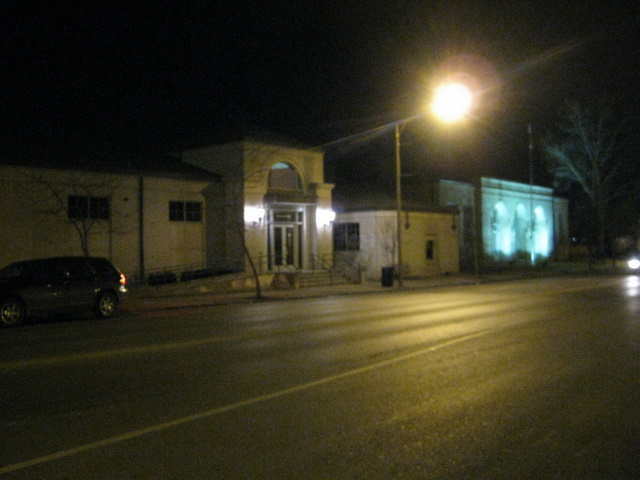
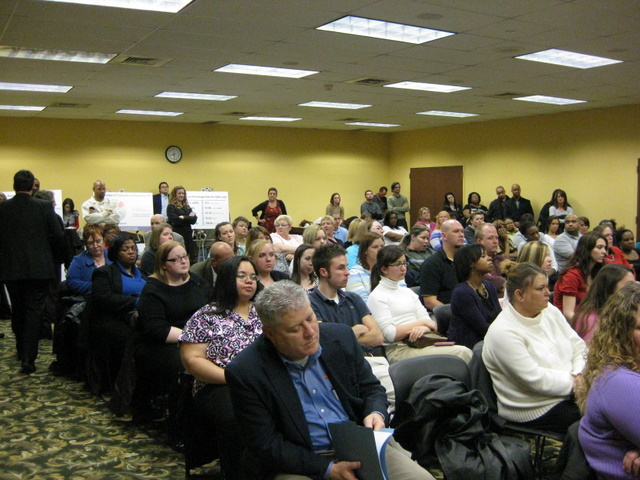
Payday loans are high-interest short-term unsecured small loans that borrowers promise to repay out of their next paycheck, typically two weeks later. Interest rates are typically 300% to 500% per annum, many multiples higher than the exorbitant rates charged by banks on their credit cards. A typical payday borrower takes out payday loans to pay utility bills, to buy a child’s birthday present or to pay for a car repair. Even though payday loans are dangerous financial products, they are nonetheless tempting to people who are financially stressed. The growth of payday lenders in the last decade has been mind-boggling. In many states there are more payday lenders than there are McDonald’s restaurants. In Missouri Payday lenders are even allowed to set up shops in nursing homes. Missouri’s payday lenders are ferociously fighting a proposed new law that would put some sanity into a system that is often financially ruinous for the poor and working poor. Payday lenders claim that the caps of the proposed new law would put them out of business. Their argument is laughable and their legislative strategy is reprehensible. Exhibit A is the strategy I witnessed Thursday night, February 18, 2010. On that night, Missouri State Senator Joe Keaveny and State Representative Mary Still jointly held a public hearing at the Carpenter Branch Library in the City of St. Louis City to discuss two identical bills (SB 811 and HB 1508) that would temper the excesses of the payday loan industry in Missouri. Instead of respecting free and open debate and discussion regarding these bills, payday lenders worked hard to shut down meaningful debate by intentionally packing the legislative hearing room with their employees, thereby guaranteeing that A) the presenters and media saw an audience that seemed to favor payday lenders and B) many concerned citizens were excluded from the meeting. As discussed further down in this post, payday lenders are also responsible for flooding the State Capitol with lobbyists and corrupting amounts of money.carpenter-branch-library When I arrived at 7:00 pm, the scheduled starting time, I was refused entry to the meeting room. Instead, I was directed to join about 15 other concerned citizens who had been barred from the meeting room. There simply wasn’t room for us. But then who were those 100 people who had been allowed to attend the meeting? I eventually learned that almost all of them were employees of payday lenders; their employers had arranged for them to pack the room by arriving en masse at 6 pm. Many of the people excluded from the meeting were eventually allowed to trickle into the meeting, but only aspayday-employees other people trickled out. I was finally allowed into the meeting at 8 pm, which allowed me to catch the final 30 minutes. In the photo below, almost all of the people plopped into the chairs were payday lender employees (the people standing in the back were concerned citizens). This shameful tactic of filling up the meeting room with biased employees has certainly been used before.

Continue ReadingPayday loan opponents struggle to get a fair hearing