The Importance of Reaching Out to One’s Perceived Enemies

Everyone out there has good stories and lessons to share. It is my faith that it is one of our highest duties as human beings to reach out to connect with other human beings to identify and share those treasures within each other without exception and without judgment. Sometimes it's not easy and it takes some deep breathing to get past crusty exteriors of ourselves and others.

Over the past year I've reached out to have coffee with several local FB Friends who had bristled at my political views (and vice versa). In each case, over a couple hours of conversation we found common concerns and common dreams along with that willingness to connect. Later this week I'm going to join one of those men for coffee again. Aside from his staunch views that many would consider gun-loving libertarian/conservative, he is also a dog lover, brought almost to tears by the thought of dogs who suffer. He is also a dedicated family man, a cancer survivor and a man who, many years ago, pulled himself up (with unfathomable hard work) from a place that would seem to most of us to be an impossibility.

Over the past couple of months, I also reached out to a woman who (I'm certain) gets indigestion when I speak of things like single payor health care. She is a dedicated nurse who, over several decades, worked her way through a dozen challenges that might have crushed many of us. She generously gave me the gift of hours on the phone, during which she invited me to lean hard on her to help me process a situation that felt like an emotional bludgeoning. [More . . . ]


Continue ReadingThe Importance of Reaching Out to One’s Perceived Enemies

Rocks, Friendships and the Power of Triangulation

There are so many smart, interesting and kind-hearted people out there! They are everywhere and all you need to do is meet them, but how do you meet them? My friend Dahven has a rule. She assumes that even at a drab party, there is someone else there who has a good story. Dahven reminds herself that she will inevitably come away from every party enriched. She only needs to start her treasure hunt to find that person and to hear that story. She tells me that she has never been disappointed.

But some of us struggle with the task of walking up to talk with strangers. Journalist Kio Stark has made a career out of urging people to talk with strangers and her best technique is triangulation. Simply put, rather than walking up to directly talk to a stranger, identify some interest that you might have in common to talk about, such as the stranger’s dog or a book they are reading. Stark’s TED talk is well worth watching (see also, James Hamblin’s video at The Atlantic--a controlled study in triangulation).

I’ve was reminded how powerful triangulation can be. I’ve recently rekindled a childhood passion: rockhounding. Most people love beautiful rocks and they serve well as objects for triangulation. I recently finished tumbling my first batch of rocks from Missouri creeks. Almost without fail, when I show these smooth colorful tumbled rocks to others, this results in smiles and good conversation. I’ve seen it over. I love rocks, other people tend to love rocks, and I really enjoy getting to know new people.  It’s a winning combination. Rocks are powerful catalysts for social interactions. Here are three quick examples.

#1: After posting my photos of tumbled rocks on FB, I was PM’d by a woman named Patti Kemper, who asked for my house address. Why? She explained that she saw how much I enjoyed rocks and she wanted to send me some exotic rocks that she had found near her home in Las Vegas. A few days later a big box of beautiful rocks, including some raw chalcedony. Wow! Why did Patti send these to me? Because she was delighted to see on FB that I was so excited about tumbled rocks. I’ve also seen this at FB rockhounds groups, where members share in each others’ discoveries and offer each other advice how to identify rocks and where to find new rocks.


[More . . . }

Continue ReadingRocks, Friendships and the Power of Triangulation

Spontaneous Conversation with Curbside Artist

Martha Ferdinand has been one of my favorite people ever since I began working with her at Arch City Defenders. More recently, we have made a habit of walking briskly through Forest Park while catching up with each other. And, of course, we often contemplate the human condition. We haven’t yet figured that out . . .

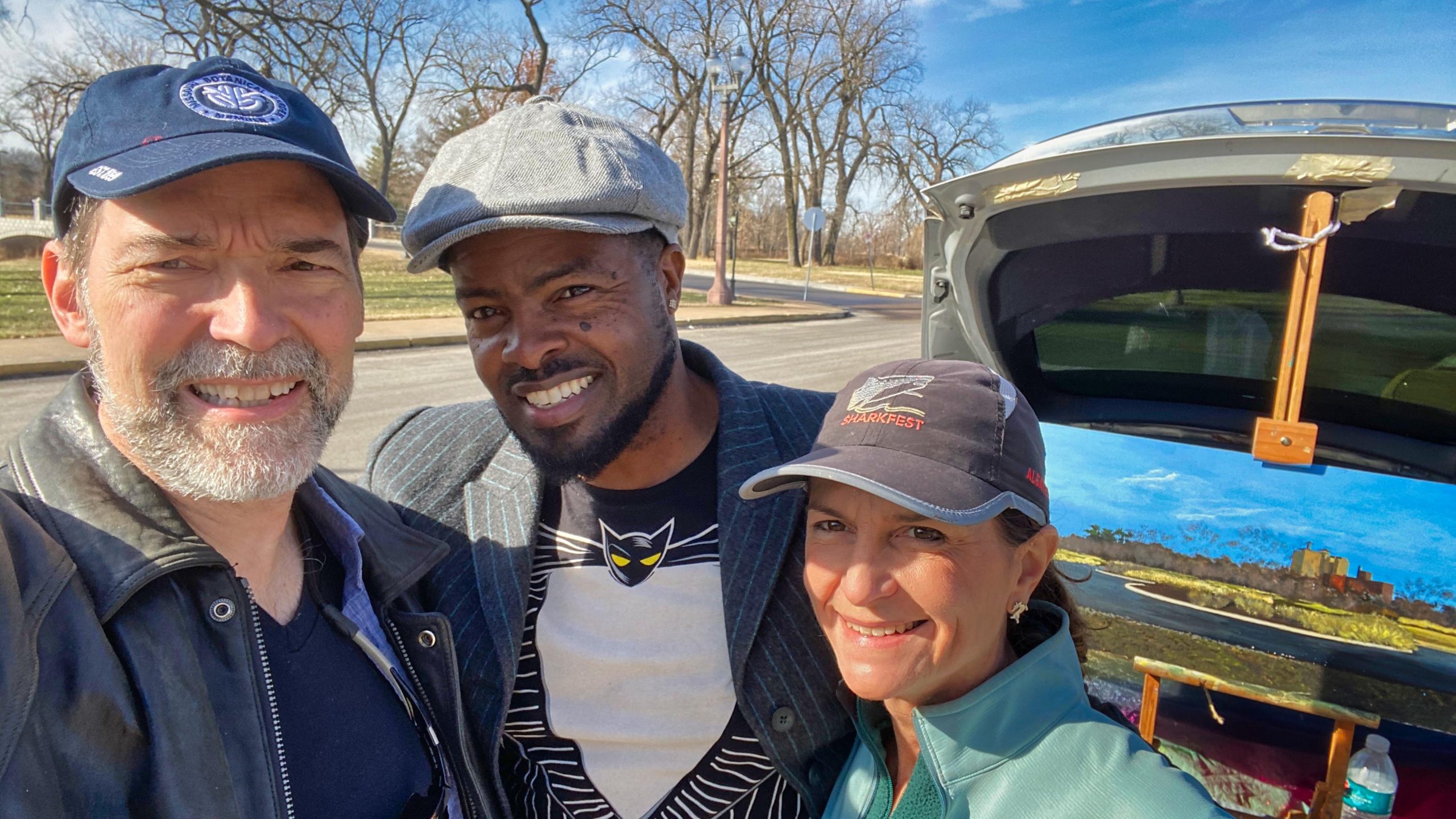
Today we took a little side-trip from our planned walk. I spotted a man painting a park scene across the street and suggested to Martha that perhaps it would be fun to go check out his work. Martha nodded, and that’s how we met “Frank James, Curbside Artist.” Frank explained that he has made a living of painting scenes of Tower Grove Park and, more recently, Forest Park. He pulled out other examples of his work from his car: several impressive detailed 30” wide panoramas of park scenes in acrylic paint. Frank offered far more than art today, however. He looked us over and offered an off-the-cuff character analysis of Martha with a big smile and lots of laughs, especially when she agreed that he was somewhat accurate. All of this while smooth music played quietly on his car stereo, but not an entire song. He only liked the first part of that song, so he cut off part where the “irritating” singer began to sing. He loops the pre-vocals beginning of the tune over and over. He explained that this is a significant part of his creative process.


We chatted for awhile about many things, not just painting, but also about his outlook on life, our thoughts on race relations and discussions about music we all enjoy (including Wes Montgomery and George Benson's Breezin’). Good vibes all around.

My friend John Simon often says, “It’s all about relationships.” I agree that this is an excellent default position for understanding almost any life situation. Certainly, my memory of Forest Park on this day will be dominated by the spirited conversations with both Martha and with that ebullient stranger-no-more, “Frank James, Curbside Artist.”

I have a theory too. It seems to me that unplanned spontaneous conversations are often the best, the most memorable. Those who know me well know that it’s hard to hold me back when I get the sense that a quirky

Continue ReadingSpontaneous Conversation with Curbside Artist

The Season for Trying to Step off the Treadmill

My 19-year old daughter Charlotte recently commented: "Time seems to go by faster now than it did when I was in high school." Yes, indeed! And it speeds up more and more, especially if you love what you are doing with your life, and if you treasure your family and friends.

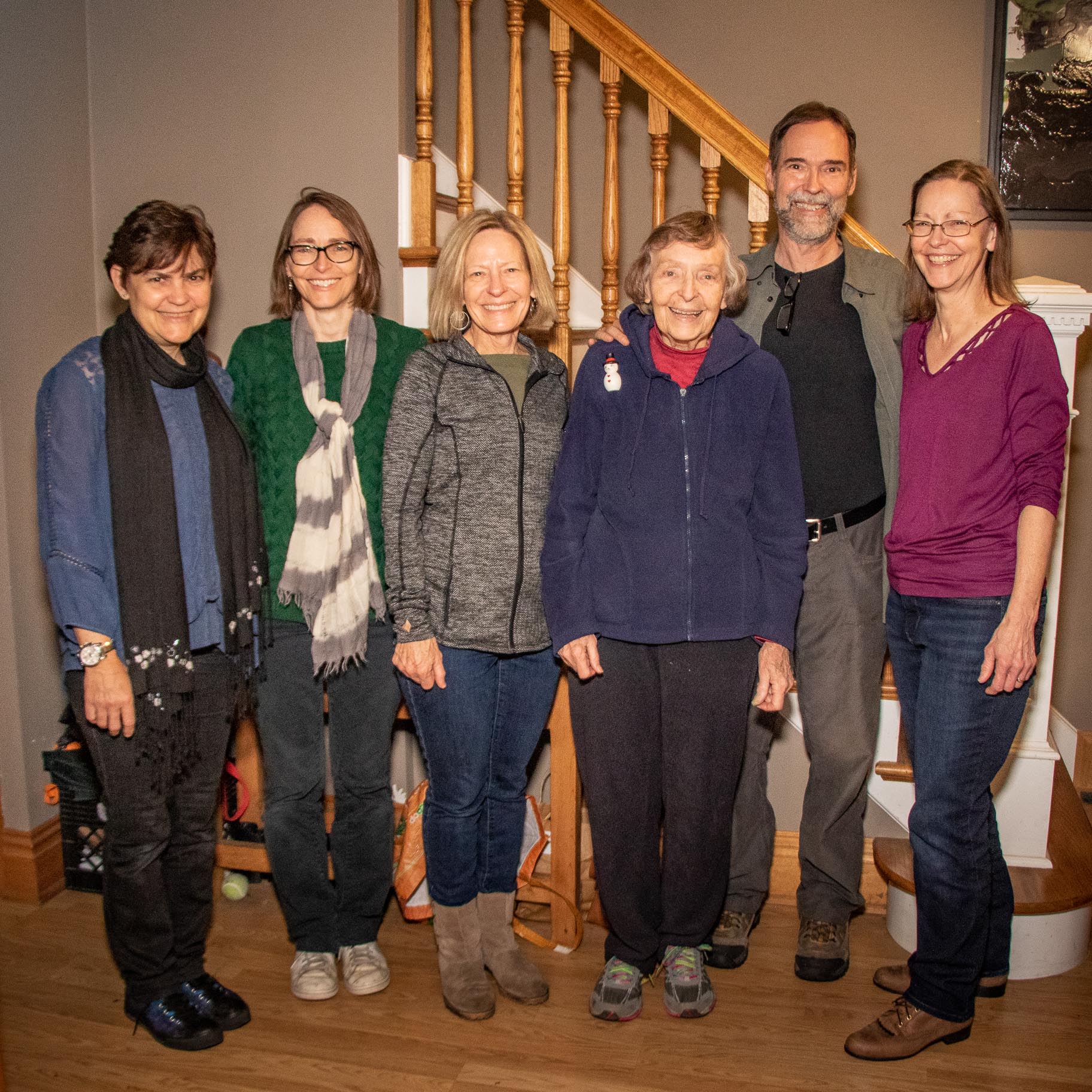
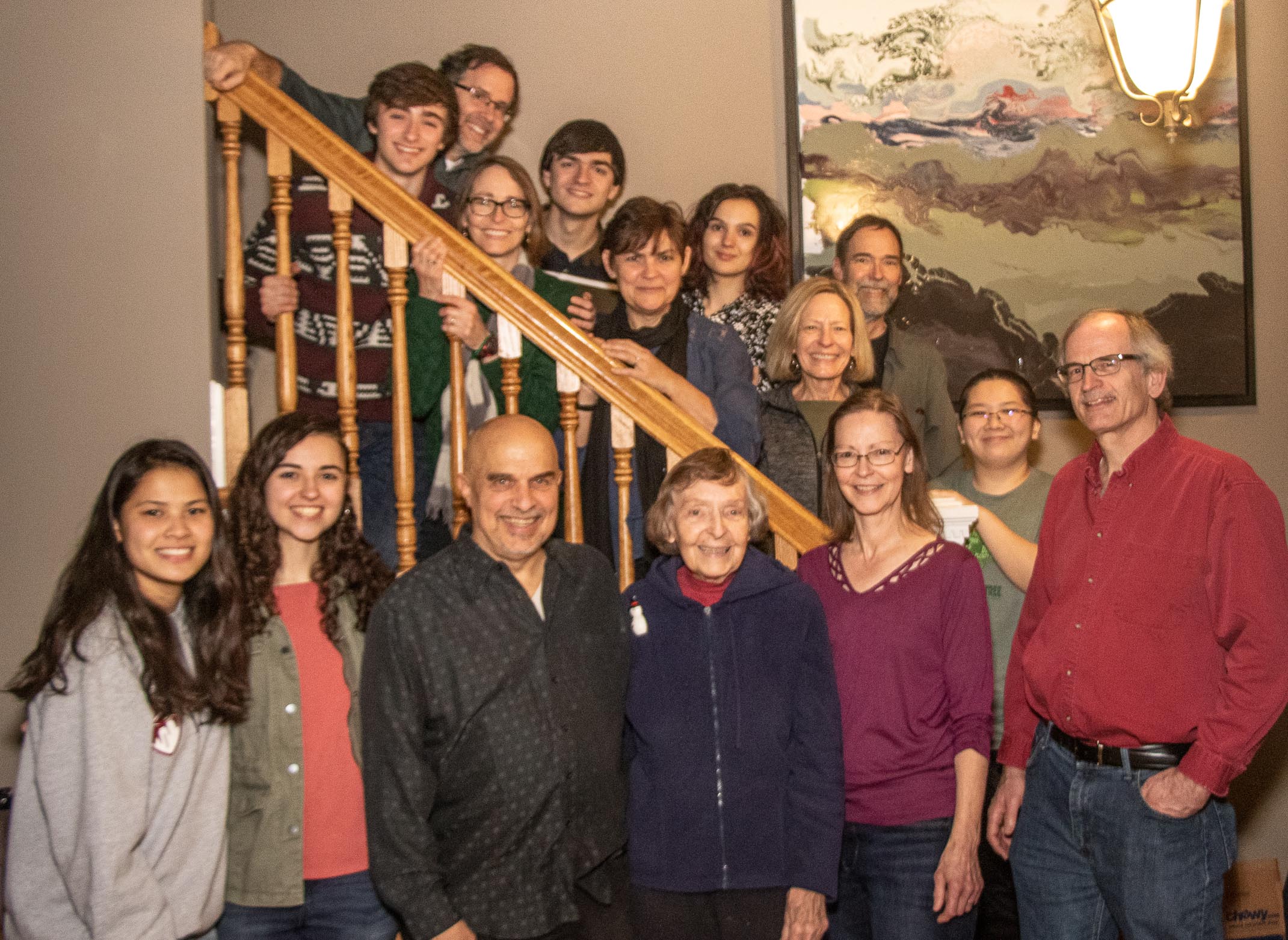
This seems to be the perfect time of year to try to step off that ever-accelerating treadmill in order to live in the moment, to appreciate the many things that went extraordinarily well this year but to also appreciate lessons learned where things didn't go as planned. What better way to kick off this season of contemplation than to spend time with your people and to share stories with each other. That's what many of us are doing tonight, of course. To me, that is the magic of the season. My family's tradition is to celebrate Christmas Eve with a feast of tacos and other Mexican food at my house in South St. Louis. My immediate family includes my 87 year old mother, who lives independently, and her five children (I have four wonderful sisters). My mom would proudly add that she has many grandchildren and also some great-grandchildren. But wow, is time ever flying by . . .


Continue ReadingThe Season for Trying to Step off the Treadmill

Marginalizing Intellectual Curiosity

Let's see. It's the weekend.  If I want to spend time with others tonight, what should I do?  Where should I go?  Who would like to spend time with me?

Here's a seemingly unrelated question: Who is more popular in most parts of American society?

a) An animated people who engages in banter about pop culture, sports, TV and movies with their like-minded friends, where loud partying and drinking alcohol are significant parts of the gathering?

b) A person who enjoys intense discussions about science and other intellectual pursuits with like-minded people in quiet places, where partying and small talk are not significant aspects of the gathering?

Today, I stumbled upon an article in Forbes that raises concerns about how those who love to study science are sometimes ostracized by others. This article by Ethan Siegel is titled, "Your Glorified Ignorance Wasn't Cool Then, And Your Scientific Illiteracy Isn't Cool Now." Here is an excerpt:

All across the country, you can see how the seeds of it develop from a very young age. When children raise their hands in class because they know the answer, their classmates hurl the familiar insults of "nerd," "geek," "dork," or "know-it-all" at them. The highest-achieving students — the gifted kids, the ones who get straight As, or the ones placed into advanced classes — are often ostracized, bullied, beat up, or worse.


The social lessons we learn early on are very simple: if you want to be part of the cool crowd, you can't appear too exceptional. You can't be too knowledgeable, too academically successful, or too smart. Someone who knows more, is more successful, or smarter than you is often seen as a threat, and so we glorify ignorance as the de facto normal position.


In my experience, it's not usually such a clear distinction as in A or B above, and there are many styles of socializing.  I'm focusing on these because am a "B" type person who found myself trapped in a few too many "A" environments over the past year. I should also make clear that I have no problem with drinking, only drunkenness, and a lot of nerdy people admittedly do enjoy alcoholic drinks.  Further, many people, nerdy or not, like to discuss the science stories they find in news sources that don't specialize in science. These things are often interesting, even when not explored in depth.

The real division lies here: Some of us take science and other intellectual pursuits much more seriously than others. Some of us read challenging and detailed science publications, and we contemplate science spontaneously, when waiting in line or walking down the street; we cannot turn it off.  Digging to deeper levels inspires us to learn even more, and this hard-earned knowledge often bears fruit in the form of connections to many other aspects of our lives. Digging deeply often enables us to challenge the way we conceive of ourselves and others.  Most people who socialize, however, get exhausted, bored, tired of discussing these topics and would rather have "fun."


Having an enthusiastic love of intellectual pursuits can be a social problem.

Continue ReadingMarginalizing Intellectual Curiosity