Earlier this year, British author Helen Pluckrose, also the Editor-in-Chief of Areo Magazine, co-authored a new book, Cynical Threories, with James Lindsay, who is the creator of the anti-woke website New Discourses. The long title to their book is also their compact thesis: Cynical Theories: How Activist Scholarship Made Everything about Race, Gender, and Identity―and Why This Harms Everybody.
Pluckrose was recently interviewed by Jason Hill of Quillette. The topic was the brand of postmodernism embraced by modern Critical Social Justice activists. In recent years CSJ's version of postmodernism has been increasingly employed as a political strategy by the Woke Left. What is "postmodernism"? Pluckrose offers these four characteristics:
Objective knowledge is inaccessible and what we consider knowledge is actually just a cultural construct that operates in the service of power.
Dominant groups in society—wealthy, white, heterosexual, western men—get to decide what is and isn’t legitimate knowledge and this becomes dominant discourses which are then accepted by the general population who perpetuate oppressive power dynamics like white supremacy, patriarchy, imperialism, heteronormativity, cisnormativity, ableism, and fatphobia.
The critical theorists exist to deconstruct these discourses and make their oppressive nature visible. This results in the breakdown of boundaries and categories through which we understand things like emotion and reason, fact and fiction, male and female.
[Critical theorists] also produce a profound cultural relativism and a neurotic focus on language and language policing as well as a rejection of individuality and humanism in favor of identity politics. This is a problem because of the resulting threats to freedom of belief and speech, the divisive tribalism and the rejection of science, reason and liberalism.
Hill asked Pluckrose why it was necessary for Lindsay and Pluckrose to write Cynical Theories at this time? Pluckrose offered this response:
At New Discourses, Calum Anderson notes that Douglas Murray is offering important ideas for our moment in time using incidents from several recent colleges to illustrate. The article is titled, "Why University Students Need to Listen to Douglas Murray." An excerpt:
As is the case with all truly interesting people, the least interesting thing about Douglas Murray is his sexuality. He has been a steadfast voice of reason during an age of unreason, and a formidable opponent of the woke activists who presume to speak of his behalf as an openly gay man . . . Murray specifically chastises employees at Penguin Random House for their attempt to prevent their employer from publishing Jordan Peterson’s upcoming book Beyond Order: 12 More Rules for Life. He calls the inability to listen to contrary points of view a “generational phenomenon” which has been adopted by children who believe that “speech is harm, and harm is not harm, that silence is violence and that violence is fine.” Murray was addressing my generation, and despite what may be regarded as a sweeping generalization I am not the least bit offended. Not every twenty-something thinks this way, but the most vocal among us do and that is a serious problem: “the best lack all conviction while the worst are full of passionate intensity” (Yeats).
I’ve followed Chloe Valdary on Twitter for many months. She is nuanced and kind-hearted, the diametric opposite of most advocates of critical race theory. In her hour-long discussion with journalist Christopher Rufo, Valdary compared and contrasted the typical training in critical race theory to the training Valdary developed, which she calls “Theory of Enchantment.” She describes her program as having the mission “to combat racism and bigotry by teaching society how to love.”
It’s not that CRT is ill-intended. CRT is good to the extent that it raises awareness of access of desperate people to material goods, jobs and healthcare. That said, Valdary accuses CRT of reducing human beings to their race. CRT claims that it is seeking equity, but it actually seeks “raw material power.” According to Valdary, CRT’s objectives are different than the objectives of the civil rights generation, which was interested in the inner lives of human beings that transcended race. For CRT, race is the “end all and be all.” CRT is defective in that it tries to reduce society to material things and disparities, ignoring transcendence—the capacity to feel empathy and the recognition of community bonding. CRT ignores the sacredness of life, the beauty of all human beings, and their imperfections and individuality that ultimately lead to “organic diversity.” Valdary points out that CRT claims to improve life, but it knows nothing about human flourishing and is thus “playing with fire.” CRT training is promoting hostile work environments that are “setting up companies for lawsuits.”
[What follows is a transcript I create for parts of the above interview. I cleaned up unnecessary or repeated words and phrases, but I have been careful to accurately preserve the flow and meaning of the conversation.]
Christopher Rufo:
Explain white fragility to me.
Chloe Valdary:
Okay, I will. I will caveat this by saying that a lot of these terms are completely incoherent. And so I will do my best to explain what my understanding of these terms are. But I think some of these are beyond explaining. White fragility is basically this idea that if you are a white person your very existence perpetuates white supremacy. You're living in a fundamentally white supremacist environment. If you disagree with any of that, then you are just demonstrating your fragility. And so disagreement is a double bind, essentially. Disagreement is proof that you are a racist. That's the cause of white fragility. It was made most popular by Robyn D'Angelo who wrote a book called white fragility. What happened was Robyn D'Angelo had a series of racist ideas about black people and projected them onto other white people. And she essentially said, oh, I'm having all these racist ideas about black people. I hardly know any black people. And she somewhat expressed that in some of her comments. It's like, I'm going to go and assume that every other person that looks like me, extensively, also has these views and projects them onto other people. And if you don't agree with it, then you just proved my point. It's a very, somewhat pathological disposition, I think.
Christopher Rufo:
It's like in high school, when one of your friends is like, Oh, yeah, man, you know, I'm feeling this way. Everyone feels that way, right? Everyone has this. Actually, no, it's just you.
Chloe Valdary:
Yeah. Yeah,
Christopher Rufo:
White fragility discourse is a way for progressive, elite institutional white people to, in a kind of critical language, center their own experience. The most important thing is happening is my own kind of internal experience, my own internal deal, my own internal shame and, in a way, elevate that experience above actually anything productive or tangible.
Chloe Valdary:
I set up what I like to think of as a practice. The purpose of the practice is to teach people that, from a psychological perspective, racism often flourishes or occurs when individuals are operating from a space that is informed by a lack of holiness. What I mean by that is on a very, I say, psychological spiritual level, what we perceive often of others is what we perceive of ourselves. What we do in our program, is we train people, first, how to develop that sense of inner contentment and inner wholeness based upon three principles. First principle is to treat people like human beings, not political abstractions. We help our clients work through what it actually means to be a human being, which sounds really obvious and cliche, but it's actually one of the most profound things, I think, one of the most beautiful things, most sophisticated things. How does one deal with this thing that is the human condition? How do you deal with vulnerability? How do you deal with mortality? How do you deal with imperfection? How do you make peace with these things so that they don't control you? And how do you deal with emotional regulation? We teach stoicism for example, in the course and how you reckon with your own potential. You are trying to live up to your own potential. So the first third of the full training is really about teaching people how to make peace with these things, make peace with themselves and the human condition
The remaining two-thirds is all about, okay, now that you know this about yourself, understand that every single human being you meet is dealing with these same issues, because this is what is universal. So human experience. Now we can work on developing that capacity for empathy, developing that capacity for compassion, for curiosity even for people you meet who don't look like you and have different opinions from you, because diversity comes in many different forms. Diversity is itself a very diverse thing, right? So that's really the process. And then the actual pedagogical experience is very rich because it uses pop culture to teach all these things. I believe in bringing the past with the present, having the past in conversation with the present. We use articles and essays written by James Baldwin, speeches from Dr. King, Maya Angelou, you know, folks who came before us who were part of that civil rights generation who had a lot to teach us, not merely about race, but about the human condition itself. And working through issues on race, being rooted in an understanding of the sacredness of the human being. This is what these great leaders brought to us. There's also stoicism. We also bring in a really multicultural, I'd say, curation of different things. So there's snippets of Disney films that folks have to say, in words, to understand human condition. There is music, a study of different aspects of theme song and hip hop. There's a rich conversation between the past and the present that transforms the client's relationship to both, transforms the client's relationship to themselves, and to their neighbors, and to those around them. That's what the process is like.
Christopher Rufo:
How do you how do you deal with race? This is a fraught concept, something that is difficult to discuss, and for most folks, even more difficult to discuss, as it's been highly politicized. How do you address it in a way that cuts through in a way that is rooted in the kind of the kind of philosophical foundation that you've described, but then actually gets to this as an issue.
Chloe Valdary:
We tackle race by specifically using texts. I'll just give you a quick example. James Baldwin's essays are taught in the very first part of the training. Our clients study the essays, which are on race, but are again, rooted in that understanding that something transcends race and that something is sacred about the human being. And that works through the challenges of race, through that paradigm of understanding the sacredness of the human being. By absorbing those texts by these individuals, knock on wood, James Baldwin doesn't get canceled by these individuals.
[More . . . ]
The self-annointed thought police are still working overtime at Haverford, where free-speech is merely a phrase and where tribal truths are the reality. I could not imagine sending any student to Haverford if they wanted to learn how to think self-critically and be prepared to hold a job in the outside world.
Jonathan Kay's long article leaves a pit in my stomach and casts a pall over my evening as I write this comment. He needed to fill his article with an extraordinary amount of details in order to substantiate his extraordinary conclusions, including the following: A) Nothing insensitive or racist occurred at Haverford College leading up to the current shrill unrest. B) Nothing that happened at Haverford justified the long ridiculous list of student demands (to which the administration mostly acceded). C) Most chillingly, the administrators of Haverford (and many other colleges) lack the the necessary resources to have meaningful conversations with students or to take respectable negotiating positions during these Woke-fueled paroxysms.
A few excerpts from Jonathan Kay's excellent article:
[T]he mania that swept Haverford College in late October and early November 2020 lays bare, with unusual clarity, the fervid atmosphere of grievance and self-entitlement that has made the administration of elite colleges and universities so difficult.
Of all the Haverford community members I spoke with, the only one who asked to be quoted by name was recently graduated philosophy major Alex Gutierrez, who once summarized the mindset of campus activists in an essay about Jacques Lacan. “Modern activists have psyches that are built for the joy of transgression,” he observed. “They engage in activism so they can repeatedly experience that joy, a joy that is denied them in everyday life because everyday life is dominated by the ethics of pleasure… And so they need to invent fictional dominant orders so that they can defy them. This is why protesters would actually be extremely unhappy if oppression went away. They want white patriarchy to be as powerful as possible, so they can defy it.”
Gutierrez wrote these words before his alma mater fell into upheaval in late October. But his analysis seems apt. When students complained that Raymond had caused them “harm” with her October 28th email, they weren’t really speaking up as activists denouncing racism on campus (since there doesn’t seem to be much of it), but as consumers whose parents paid good money for them to experience the sensation of transgressive social-justice heroism. “Normally, the administrators are the perfect target for student transgression,” Gutierrez told me. “They take the abuse and they’re not supposed to push back. That’s part of their role. That’s what students expect.”
‘Do Vulva Owners Like Sex?’ Is the Wrong Question — Here’s What You Should Ask Instead. . . . Some do like sex and some don’t. Just like some penis owners like sex and some don’t.
This question, in and of itself, isn’t great, though. It makes some broad generalizations and assumptions about people and sex in general.
So instead of asking whether vulva owners like sex, you should really be focusing on the person you want to have sex with, and ask them how they feel, what they want, and what they need.
Here's an article about a recent ad by Tampa. Same issue:
Hello, I invite you to subscribe to Dangerous Intersection by entering your email below. You will have the option to receive emails notifying you of new posts once per week or more often.

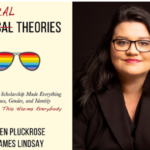 Scholarship Made Everything about Race, Gender, and Identity―and Why This Harms Everybody.