In Which I Render God Speechless

Robots. Whilst not yet able to disguise themselves as innocent-looking assault vehicles which drive themselves, make ghastly jokes and lay waste to entire cities & provide fodder for truly reprehensible motion pictures, robots will one day be our oppressors. To attempt in some small way to understand our eventual machine overlords (and perhaps locate a weakness that can be exploited) before the inevitable enslavement of humanity, I recently went to this website: http://www.titane.ca/concordia/dfar251/igod/main.html and had a chat with a rudimentary AI which has been named God. I decided to treat it as the all-knowing all-seeing creator of the universe, whom you may have encountered as a central character in a series of very popular books.

[more . . .]

Continue ReadingIn Which I Render God Speechless

When lyrics were not as self-absorbed

There are still many incredible lyricists who write about a wide variety of issues, but it seems to me that today's typical lyrics (at least those that on can hear broadcast on mainstream radio) tend to be self-absorbed: songs about a small social circle consisting mostly of me and what I want and what I'm feeling about me, and aboutyou and what you think of me. Maybe it's more difficult to write about political change these days because our problems today seem so much more intractable. Back in the 70's I was part of a eight-piece jazz-rock band we called "Ego." Yes, many of the tunes we played were about falling in love and breaking up, but we also played songs dealing with the need for social change. One of those tunes was called "Dialogue," by Chicago. It consisted of a dialogue between Peter Cetera (also the bass player) and Terry Kath (an extraordinary guitar player). As I listened to "Dialogue" this morning, I was transported back to an earlier day when more of the music that was played on the radio challenged us to think and to change. The consolidation of the mass media makes it much less likely that you'll hear these kinds of ideas when you listen to music on the radio, but you could hear such ostensibly political lyrics in the past, and they planted powerful seeds in some of us. Here is the two-part dialogue that so moved me: Part I Are you optimistic 'bout the way things are going? No, I never ever think of it at all Don't you ever worry When you see what's going down? No, I try to mind my business, that is, no business at all When it's time to function as a feeling human being Will your Bachelor of Arts help you get by? [more . . . ]

Continue ReadingWhen lyrics were not as self-absorbed

Fans, Freedom, and Frustration

Over on her blog, Kelley Eskridge has a video of a "Bono Moment" in which you see two distinct types of fans interacting with U2's lead singer. Check it out and come back here. Okay, the guy in the t-shirt obviously is carrying on a conversation. he may be being a fan, but he hasn't lost his mind. The female is being...a groupie, I guess. Though the groupies I've met in my time have been a bit more specific about what they wanted and had a better plan on how to get it. In any event, the questions Kelley raises are interesting and relate on so many levels to so many different things. The fan reaction---mindless adulation bordering on deification---looks to me, has always looked to me, like exactly the same kind of nonsense people put into religion. Mindless, utterly uncritical adoration of an image and the set of emotions with which that image is connected in the mind of the adulant. You can see the same thing in politics. To a lesser degree with less public personalities---writers, painters, photographers (I never knew anyone who elevated a photographer to the level of sex god, but I have known people who got off on sleeping with painters, and of course there's a kind of Nabokovian/Bellow/DeLillo-esque subculture of writer groupies...) and other creative types---but actors and musicians seem to get all the dedicated obsessives. I've never had this happen to me. I'm not sure if I'm grateful or resentful---having somebody want to associate themselves with you in a mindless swoon because your work has made them, I don't know, climax maybe is on a certain level appealing. But it's appealing the same way porn is---something most people, if they're at all sane and grounded, kind of grow out of and get over. I know I would not find it very attractive now. When I was twenty-five? You betcha. Bring 'em on. But if I'd had that then I think I'm fairly sure I would have wearied of it very quickly. I long ago realized that sex, to me, involved the other person---emphasis on Person---and the best sex I ever had included the good conversations before and, especially, after. (There is a point, of course, where you realize that sex is a conversation, of a very particular sort, and takes on a whole new dimension, which one-night-stands, no matter how good they might be, just can't provide.) But the real problem with all this is that art is more than just any one thing and the artist is not the art. The two are inextricably linked. Here is a video discussing the question of artist-in-relation-to-muse which I find illuminating. The notion that the talent "arrives" and you act as conduit through which creativity happens is not, as the speaker suggests, a new one, and it's not one I'm particularly in sympathy with---it all happens in my brain, it's definitely mine---but I certainly find her analysis of the psychology of following through intriguing and true. Once the muse is finished with you on a given project, you do not continue to exist as though in the grip of the work. There is a person there that pre-figures the work and who will be there after it's done that has all the needs and wants and sensibilities of a normal human being. To be treated as some kind of transcendence generating machine by people is in some ways disenfranchising. For a writer, if the well from which inspiration and material are drawn is the honesty of human interaction, then the gushing idiot fan robs the writer, for a few minutes at least, of exactly that. But it also sets the artist up to become a prisoner. A prisoner of other people's expectations. Those expectations always play a part in anyone's life, but certain aspects---the most artificial ones---get exaggerated in the instance of fan adoration. Watch Bono shift from one stance to another when he finally acknowledges the female. No, he doesn't stop being Bono, but it's almost as if he says "Oh, it's time to do this sort of thing now" as he first recognizes her presence and then automatically poses for the camera, with this not-quite-disingenuous smirk. Because he also recognizes that, however silly this person is being, what she's feeling right then is her's and to claim it is artificial is wrong. Maybe an artificial set of expectations led her to this point, but now that she's In The Moment, the emotions are real. If he'd ignored her or told her something snarky in an attempt to snap her out of it, all that would have resulted would have been an ugly moment, a bit of cruelty, and a lot of confusion on the fan's part. [more . . . ]

Continue ReadingFans, Freedom, and Frustration

What Jesus looks like; what God is like.

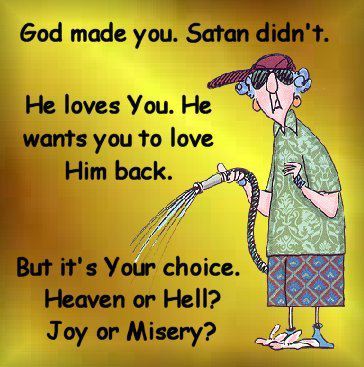
I somehow got onto a emailing list that sends me lots of information on God and heaven. The latest email included a provocative photograph of Jesus. He looks like a wealthy young man from Los Angeles, hanging out at the beach. These sorts of "photos" of Jesus were extremely popular when I was growing up. These sorts of images still appear in the Christian literature handed to me on the streets and at my front door. It makes me wonder, though, whether Jesus would be nearly as popular if he was represented as he might have looked in reality (if he existed at all): He would have had much darker skin and hair; he'd likely be much shorter than most modern men; he would not have been so well groomed, his complexion wouldn't be that of a pampered movie star, his clothing would not have been well-washed and he would not have spoken nor understood English. If he visited our modern world, he would hang around prostitutes, criminals, other types of sinners, and the poor and down-and-out. He would likely assume the role of "terrorist," attempting to detonate the corporate temples of the big Wall Street money-changers/Mammon idolaters. He would, if he visited us, encourage his followers to give up their suburban lifestyles, and to empty out their 401K's and give all of that money to the poor, which would mean that they would be asked to hand their hard-earned retirement money to needy strangers. If he visited us, he would also ask his followers to conjure up the images of the people (gays, atheists, Democrats, Iranians) that they most despise, and to affirmatively take real life steps to demonstrate that they love them. If he visited in person, those who love the beach-boy Jesus, would become dismayed that Jesus is actually a prickly, even accusatory fellow (as he often was in the new testament stories), challenging people to dramatically change the way they lived their lives. He would not be the kind of fellow most Christians would repeatedly invite to their cocktail parties: "This is my best friend, Jesus, who will follow you around tonight insisting that you give away all your property to poor strangers and criminals." I know that many folks would say that they would follow Jesus no matter what he was like, but is that so? How many American Christians have any friends who fluently speak only a language used in the Middle East, and whose skin is darker then their own? Who spend lots of time giving comfort to street people and criminals? If the answer is "none," then it is unlikely they would have paid any attention to Jesus. The Christians who bond over images like the "Jesus" shown above need to at least have the courage to get the picture more accurate before deciding how much they love him.For more on what Jesus "looked like," see this earlier post. In that same email, I was sent a cartoon summing up that God loves me so incredibly much that he will send me to hell for eternal torture if I don't love him back. Hell is usually described in such terms that it would clearly be unconstitutional. Of course, it's always presented as "my choice." I've heard that such warped and sadistic people like this exist on Earth--love me on my terms or I will get violent. I avoid those people like the plague--as all rational people should do. This little cartoon vividly illustrates the principle that the "God" is "good" even though he allegedly loves us like an abusive parent would "love" us, at least for some Christians. And BTW, it was the kind and gentle beach hippie Jesus of the New Testament who invented hell. heaven-or-hell

Continue ReadingWhat Jesus looks like; what God is like.