

Tucker Carlson’s Interview of Open AI’s CEO, Sam Altman
This is perhaps the most intense and surreal interview I've ever seen: Tucker Carlson interviewing Open AI's CEO, Sam Altman, about the alleged suicide of Suchir Balaji , a former Open AI employee who had, only weeks before in a NYT personal essay, accused Open AI of violating copyright law. Balaji had claimed that ChatGPT and similar chatbots failed the fair use test and were consequently ruining the commercial viability of the individuals and organizations who produced the data that the AI systems are trained on.

Regression into Autism
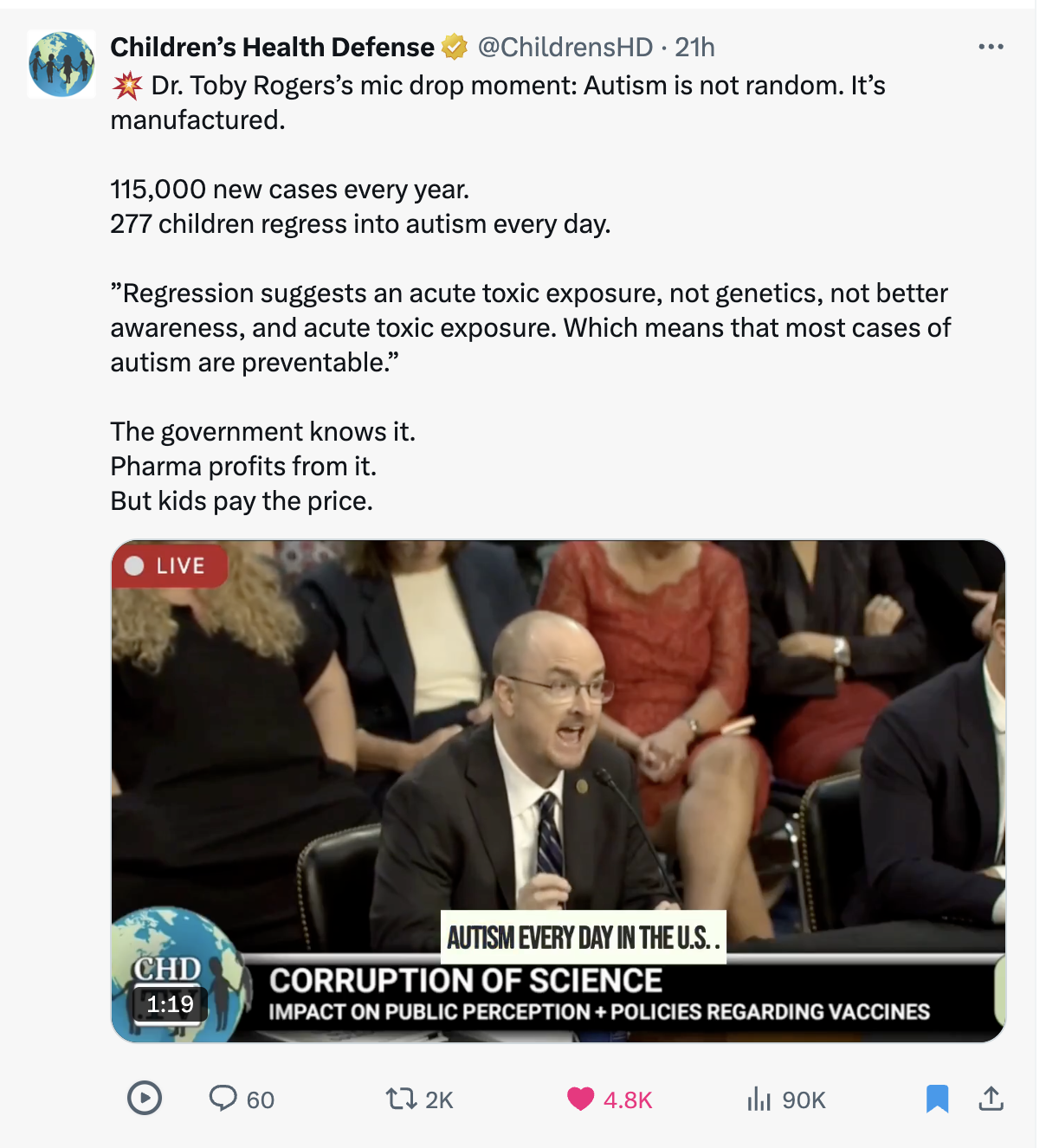
Of all the vaccine videos I've seen this week, this one is the most haunting. Many case of autism REGRESS into autism. The child is initially healthy. Then, in many cases, shortly after vaccines, the parents notice a shocking loss of function. I've seen several videos where the parents describe this. Admittedly, this is not true of all cases of autism, but it is true of many.
J.K. Rowling’s Individual Points Regarding Gender Ideology
Speaking of assassinations, J.K. Rowling occasionally posts some of the many death threats she receives. They are shocking in their intensity and details. What has she done to deserve these threats? She recently took the time to spell out her positions on gender ideology. I follow these issues closely and I largely agree with her on these issues (though I have other opinions too and some of my view are more nuanced). This makes me wonder. Instead of framing the issue broadly as one of "gender ideology," I wonder how people would respond to the individual points that Rowling raises below? Or, at least, how would they respond if they could vote by secret ballot, without any fear that someone would harm or kill them? I assume that almost all people would agree with many or most of her positions. I would like to see the data.
Here is Rowling's Sept 1, 2025 post:
Here is Rowling's Sept 1, 2025 post:
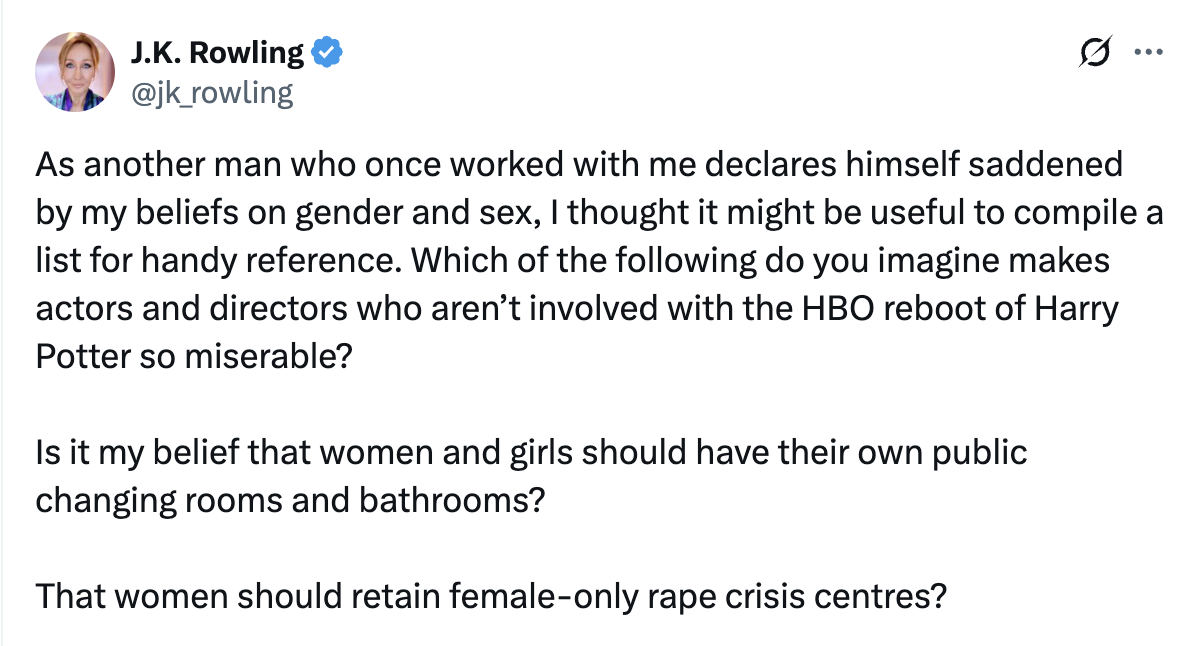
As another man who once worked with me declares himself saddened by my beliefs on gender and sex, I thought it might be useful to compile a list for handy reference. Which of the following do you imagine makes actors and directors who aren’t involved with the HBO reboot of Harry Potter so miserable?Is it my belief that women and girls should have their own public changing rooms and bathrooms?
That women should retain female-only rape crisis centres?
That men don’t belong in women’s sport?
That female prisoners shouldn’t be incarcerated with violent men and male sex offenders?
That women should remain a protected class in law, because they have sex-specific needs and issues?
That language should reflect reality rather than ideological jargon, especially in a medical context?
That women shouldn’t be harassed, persecuted or fired for refusing to pretend humans can change sex?
That women should not be threatened with violence and rape when they assert their rights?
That freedom of speech and belief are essential to a pluralistic democratic society?
That troubled minors, especially those who are gay, autistic and trauma-experienced, should be given mental health support instead of irreversible surgeries and drug treatments on non-existent evidence of benefit?
That gay people shouldn’t be pressured to include the opposite sex in their dating pools, nor should they be smeared as ‘genital fetishists’ when they don’t?
That cross-dressing heterosexual male fetishists aren’t actually oppressed, but having the time of their lives piggybacking off gender identity ideology?
That said ideology, and the privileged, blinkered fools pushing it because they suffer zero consequences themselves, have done more damage to the political left’s credibility than Trump and Farage could have achieved in a century?
Let me have your thoughts.
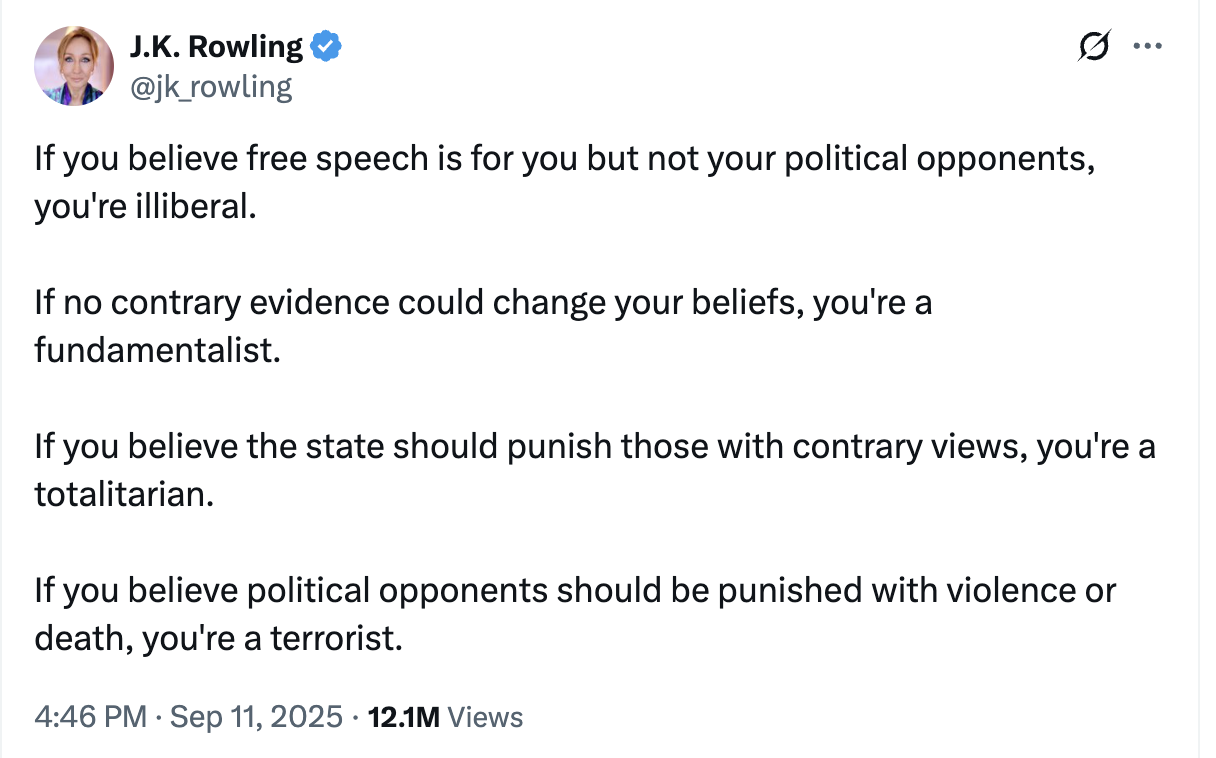
Here's a good way to end this post, with Rowlings' post from yesterday:
If you believe free speech is for you but not your political opponents, you're illiberal.
If no contrary evidence could change your beliefs, you're a fundamentalist.
If you believe the state should punish those with contrary views, you're a totalitarian.
If you believe political opponents should be punished with violence or death, you're a terrorist.
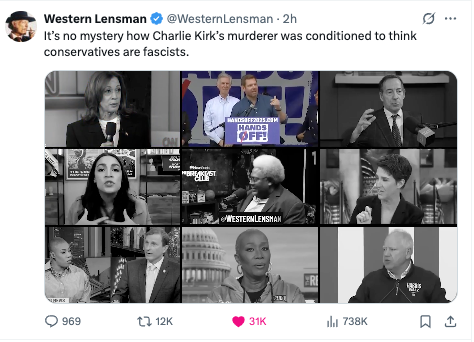
How Could it be that Politicians We Disagree with Come to be Seen as Facists?
Why don't we simply see politicians we disagree with as politicians we disagree with? How is it that so many people seem then as so morally degenerate that we need to get rid of them and the end justifies the means?
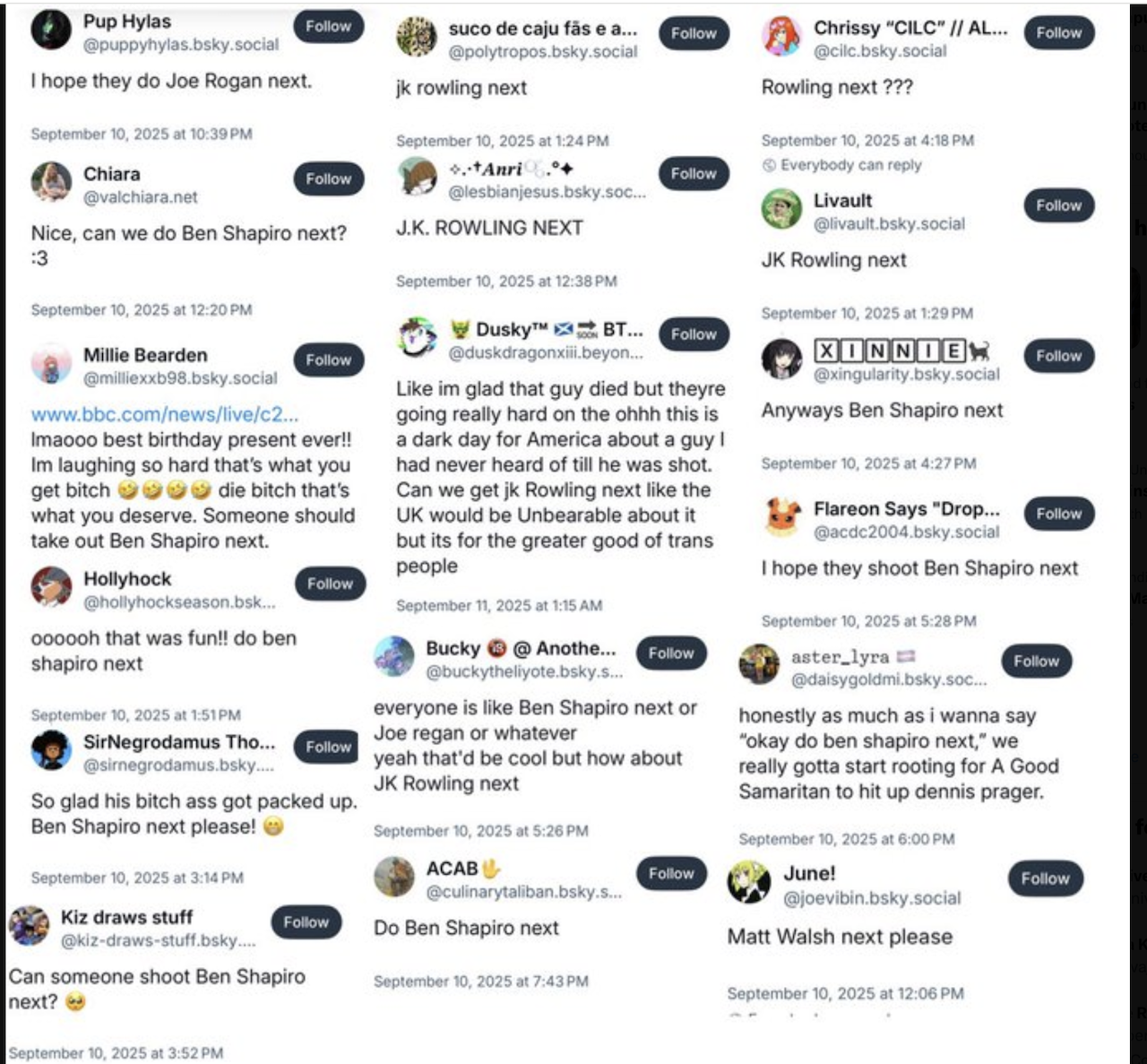
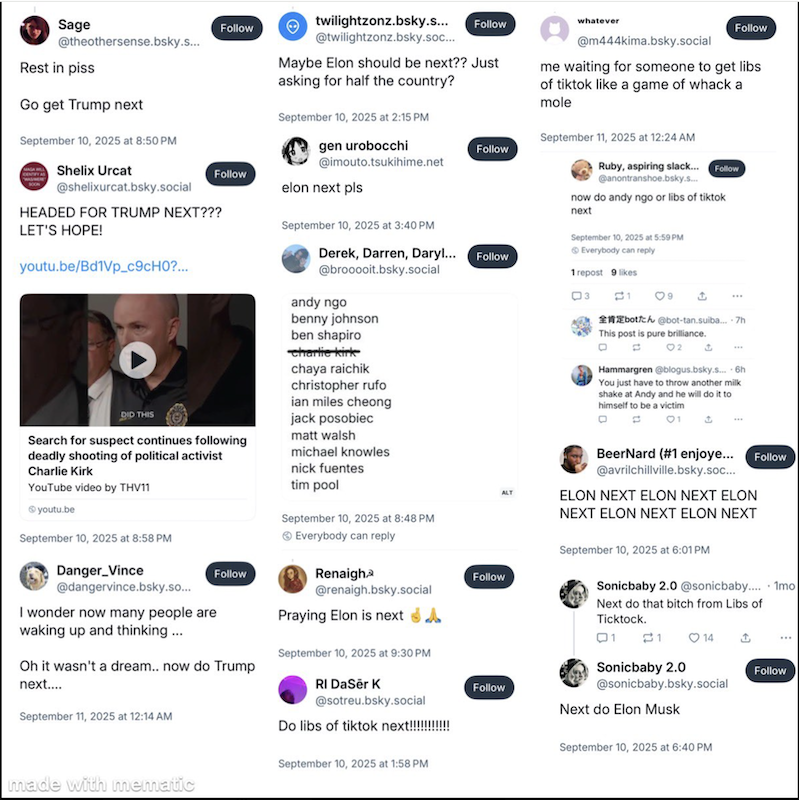
The end result of this conditioning is what is currently flooding BlueSky (the social media platform catering especially to people leaning to the Left) in the wake of the assassination of Charlie Kirk:
- Go to the previous page
- 1
- …
- 44
- 45
- 46
- 47
- 48
- 49
- 50
- …
- 1,826
- Go to the next page