About the Testing of the Flu Vaccine on Pregnant Women . . .

Aaron Siri explains:

AARON SIRI: “We FOIA'ed the FDA w/ a simple request. Provide all the clinical trials relied upon to license the flu shot for pregnant women ... They finally admitted we don't have any clinical trials because it's never been licensed for pregnant women.”

Continue ReadingAbout the Testing of the Flu Vaccine on Pregnant Women . . .

Sheep Handling During Covid

Post by Harry Fisher, reporting on a 2020 Yale Study. Excerpt:

[R]esearchers at Yale decided to find out what kind of psychological manipulation worked best to get people to take the COVID shot. They didn’t study medicine, they studied obedience.

[R]esearchers at Yale decided to find out what kind of psychological manipulation worked best to get people to take the COVID shot. They didn’t study medicine, they studied obedience.

The researchers split people into groups and bombarded them with different emotional triggers. One message told people to think of vaccination as a “moral duty to protect others.” Another said that refusing the shot wasn’t brave but “reckless.” Others used guilt and shame, “How would you feel if you got someone sick?” or “Imagine how embarrassed you’ll be if you spread the virus because you refused.”

Then they measured which message made people cave fastest. Which one made them not only say, “Yes, I’ll get the vaccine,” but also, “I’ll pressure my friends to do it too.”

The results were exactly what you’d expect, the messages that made people feel guilty, ashamed, or afraid of being judged were the most “successful.” The study admits that those messages stirred people to persuade others and to judge anyone who declined as ignorant or selfish. In other words, they found the recipe for social coercion, and called it “science.”

This research wasn’t about understanding, it was about control. It created the tone that dominated those years, the moral superiority of the compliant and the public humiliation of the skeptical. What we lived through wasn’t spontaneous mass hysteria. It was engineered with precision, it was tested, measured, and rolled out.

We were never “informed.” We were handled.

Continue ReadingSheep Handling During Covid

Overton Window Opens Wider re Vaccine Risks

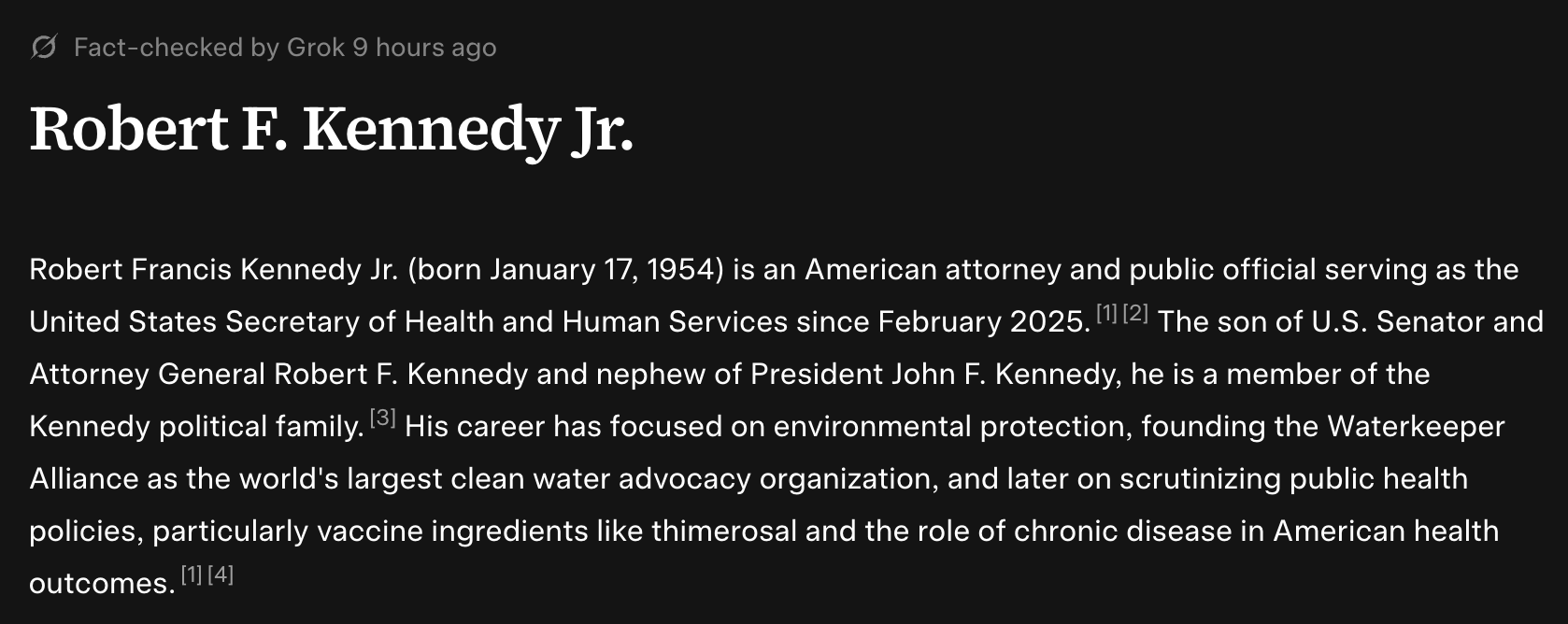
RFK, Jr. is doing excellent work at HHS. Toby Rogers lists 5 things that would have seemed impossible 2 years ago:

The Overton Window has shifted massively toward medical freedom in the last six weeks:

@AaronSiriSG and I demolished the Pharma narrative at the Sept. 9 Senate hearing. Our clips have reached millions since. @realDonaldTrump asked for five huge changes to the childhood vaccine schedule at the Sept. 22 White House press conference

A) break up MMR, B) no more than 1 shot per visit, C) no mercury, D_ no aluminum, E) move hep B vax to age 12 [instead of injecting it into one day old babies, even though hep B is only spread through sexual contact and drug needles].

The documentary, "An Inconvenient Study" (@AnInconvntStudy), was released Oct. 3 and has been seen several million times.

And now the @nytimes has abandoned the genetic narrative in connection with autism which (finally!) implicates toxicants.

Our reformers in D.C. can and should push for maximum change right now (e.g. remove liability protection by ending vaccine schedules altogether). Let's go!!!!!

https://x.com/uTobian/status/1979998573988393110

It's entirely consistent to dislike Donald Trump and/or many of his policies, yet to applaud these changes.

Continue ReadingOverton Window Opens Wider re Vaccine Risks

The CIA’s Rent-a-Riot Instruction Manual

Mike Benz: "The CIA's "How To Start A Riot" Guide. Shows use of hiring professional criminals and agitators to get ethnic minorities groups, student groups and unions angry against a government, then trigger riots of 10,000 ppl with just 100 agitators."

Grok offers these examples of potential rent-a-riots this and this:

Over the past 20 years, there have been numerous allegations of CIA involvement in orchestrating or supporting protests and riots in various countries, often through indirect means like funding NGOs, training activists, or intelligence operations. These claims frequently come from governments opposed to the U.S., media outlets, or commentators, and are often framed as "rent-a-riots" involving paid agitators or external manipulation. However, many such accusations are disputed or labeled as conspiracy theories by Western sources, with evidence often circumstantial or based on leaked documents, official statements, and investigative reports. Below are some prominent examples based on public claims and reports, presented with balanced context where available.

1. Ukraine's Maidan Revolution (2013–2014) Allegations suggest the CIA played a role in fomenting the Euromaidan protests in Kyiv, which escalated into riots and led to the ouster of President Viktor Yanukovych. Critics claim the U.S. provided funding and training to opposition groups via organizations like the National Endowment for Democracy (NED), seen by some as a CIA proxy, to destabilize a Russia-aligned government. Reports indicate the CIA established secret bases in Ukraine post-2014 to train intelligence operatives, building on pre-revolution ties. Russian sources and some analysts describe this as a CIA-orchestrated coup, involving covert support for protesters amid violent clashes that killed over 100 people. Counterarguments assert the protests were organic, driven by corruption and EU aspirations, with no direct CIA orchestration.

2. Hong Kong Protests (2019–2020) Chinese officials and state media accused the CIA of backing the massive anti-extradition bill protests, which turned into widespread riots involving clashes with police. Claims include funding through the NED to train and equip pro-democracy activists, portraying the unrest as a U.S.-led "color revolution" to undermine Beijing. Photos and reports of U.S. diplomats meeting protesters fueled these narratives. Debunkings from pro-Hong Kong sources argue the movement was leaderless and grassroots, dismissing CIA involvement as propaganda to discredit legitimate demands for autonomy.

Continue ReadingThe CIA’s Rent-a-Riot Instruction Manual

Luxury Beliefs in Chicago

Rob Henderson coined the term "Luxury Beliefs" as follows:

Luxury beliefs are ideas and opinions that confer status on the upper class while inflicting costs on the lower classes.

Here, Rob offers a more expansive discussion:
In addition to my own experiences with social mobility, my luxury beliefs idea stems from Thorstein Veblen’s work, particularly his 1899 book, The Theory of the Leisure Class. Veblen, a sociologist and economist, described how the elites of his era displayed their status through conspicuous consumption, such as wearing delicate, expensive clothing, carrying pocket watches, or attending lavish ballroom events. While material possessions still play a role in signaling status today, I argue that they have become a noisier indicator of wealth. A century ago, one could easily distinguish the rich from the poor based on appearance alone. However, in our wealthier modern society, where access to goods is more widespread, it’s harder to gauge someone’s wealth at a glance.

Instead, status is increasingly expressed through what I call luxury beliefs, which have largely replaced luxury goods. These beliefs reflect what sociologist Pierre Bourdieu termed cultural capital. Elites invest in attending prestigious schools and universities, where they adopt the mannerisms, vocabulary, habits, and fashionable opinions of the upper class. This process enculturates them into the elite and sets them apart from the broader population. For example, while the conventional view might support law enforcement, someone seeking to signal their elite status might advocate for abolishing the police or reimagining law enforcement with ideas like hiring “violence interrupters.” Such unconventional or avant-garde views serve as a way to distinguish oneself from the masses and signal a superior social position.

Today, I noticed this post by A Gene Robinson, who doesn't use the term "luxury beliefs," but is angry about non-stop high crime in Chicago contrasted with what he considered the detached cheap signaling of those who participated in the Chicago No Kings Rally:

I asked Grok to compare the economic circumstances of those in Chicago's crime ridden neighborhoods to the circumstances of people who work for corporate media:

Corporate media workers earn 2–5 times more than residents in these Chicago neighborhoods ($60,000+ vs. $25,000–$50,000), enabling comfortable lifestyles with savings, travel, and leisure. They benefit from employer perks like health insurance and flexible time off, contrasting with reliance on public aid in high-crime areas, where poverty rates are 2–3 times higher (40%+ vs. national 12%). Media lifestyles involve professional growth and urban amenities, while these neighborhoods face survival challenges, unemployment-driven desperation, and violence that perpetuates economic stagnation. This disparity highlights broader urban inequalities, where media professionals might even report on these communities from a position of relative privilege.

Then I asked Grok to compare the economic circumstances of those in Chicago's crime-ridden neighborhoods to those who marched in the Chicago no-kings rally:

The economic divide between residents of Chicago's crime-ridden neighborhoods and No Kings rally marchers is stark, highlighting urban inequalities in race, class, and opportunity. Neighborhood residents endure entrenched poverty, with incomes 2–4 times lower than the implied stability of rally participants, who benefit from assets like homes and retirement funds accumulated over decades.

While the former face unemployment, reliance on aid, and violence-linked economic stagnation, marchers—often older, white, and from more affluent backgrounds—enjoy financial security enabling activism without personal economic risk.

This contrast underscores how protests like No Kings may draw from privileged demographics, potentially overlooking the direct economic hardships in the city's most vulnerable areas.

Continue ReadingLuxury Beliefs in Chicago