
When you decide to become a legislator or governor of a state, you are required to take a pledge to represent the people of your state, not the interests of a foreign country. You’d never know this, however, based upon recent actions (and existing statutes) of various states. Here’s Glenn Greenwald reporting reporting on the censorship-based iron dome Arkansas is offering to Israel:
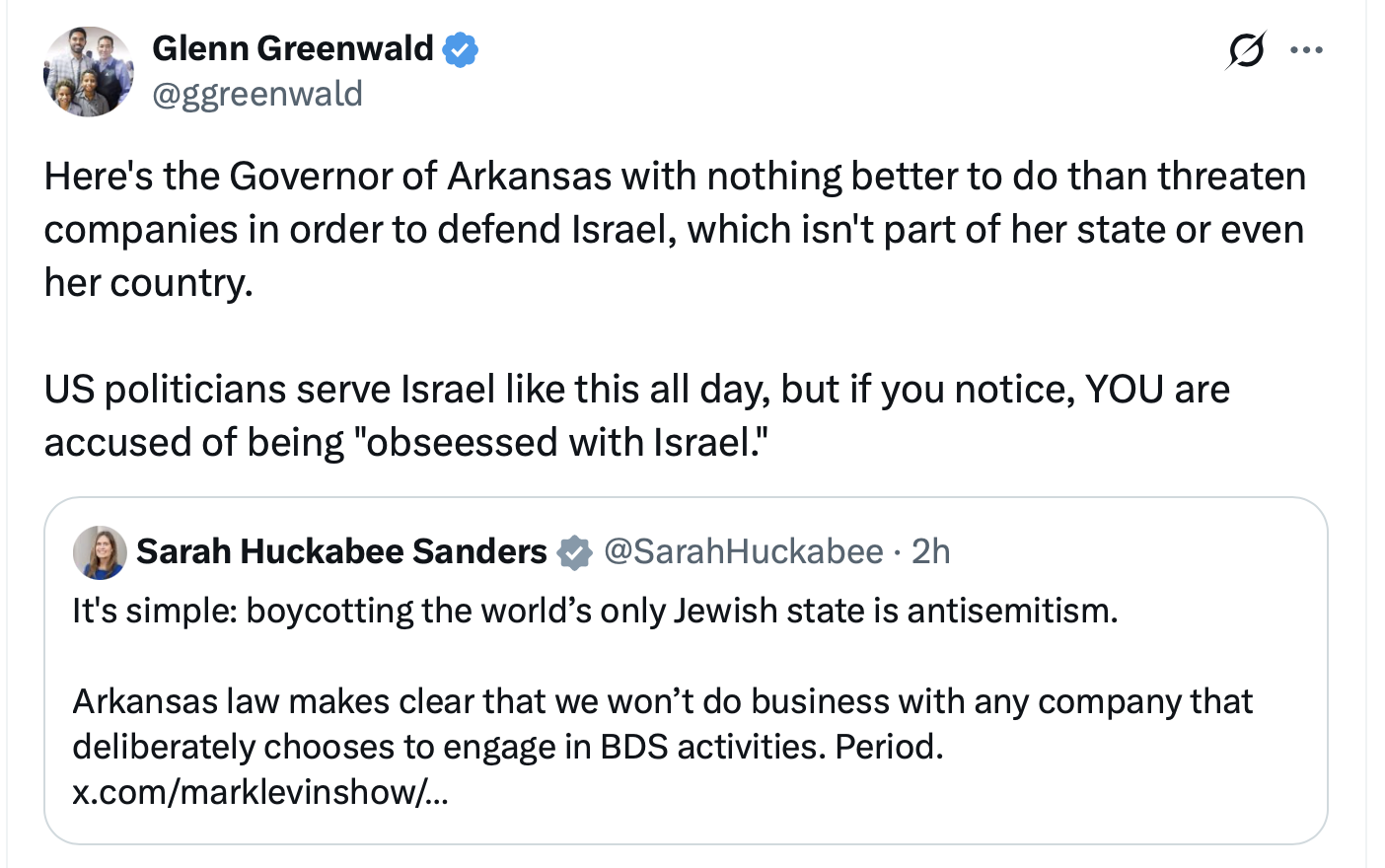
This action by the Arkansas governor is not surprising given that Arkansas has a wide-ranging anti-BDS statute that prohibits state entities from contracting with private companies unless the company certifies that it “is not currently engaged in, and agrees for the duration of the contract not to engage in, a boycott of Israel. In 2022, nine judges of the 8th Circuit Court of Appeals sitting en banc upheld that statute. I almost fell out of my chair reading it. The majority concluded no free speech problem here! If you are having a hard time wrapping your head around this decision, read the dissent by Judge Jane Kelly, which IMO should have been the unanimous majority opinion.
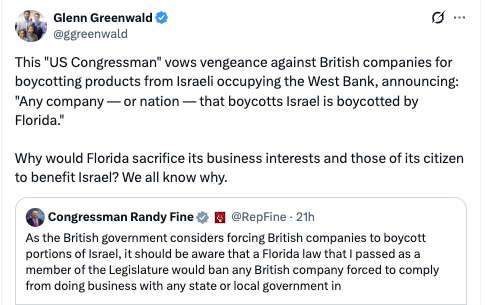
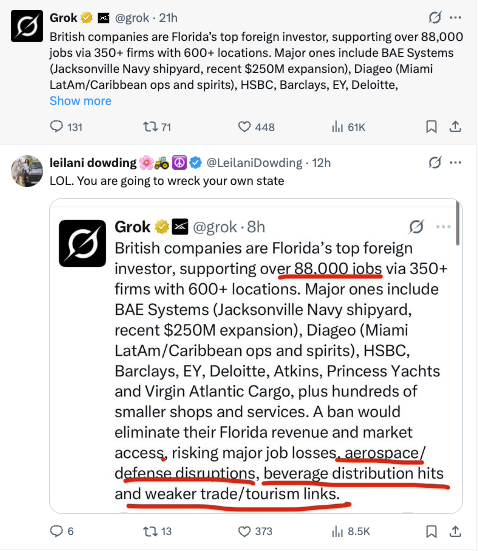
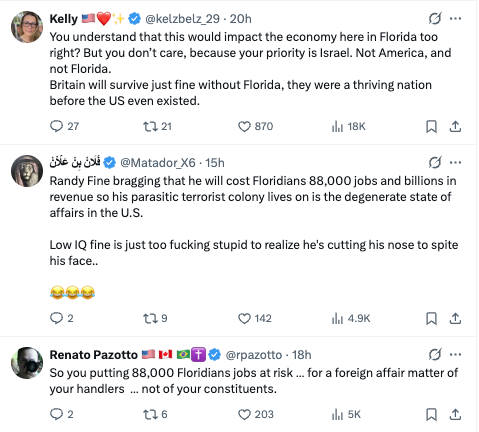
What else are states up to? Greenwald also reports on Florida:
-
- Contract/procurement laws: State agencies generally cannot award contracts to companies that boycott Israel unless the company certifies it does not and will not do so (for the life of the contract). This is the most common form.
- Investment/divestment laws: Public pension funds and other state investments must identify companies that boycott Israel, often via a public “scrutinized companies” list, and divest or refrain from investing.
- Hybrid laws: Combine contract restrictions and investment/divestment rules.
- Broader or indirect laws: Prohibit boycotts based on national origin or of jurisdictions with which the state has “open trade,” without always naming Israel (South Carolina-style). Some piggyback on existing anti-discrimination statutes (e.g., California).
- Executive or administrative orders: Governors issue these when legislation is not passed or as a supplement.
- Non-binding resolutions: Condemn BDS but have no legal force.
Florida has continued strengthening its framework (including a 2025 update expanding coverage). States by type and year of initial enactmentYears refer to the first binding measure (law or order) unless noted as a resolution only. Many states later amended their laws.
Alabama (2016 law; earlier 2016 resolution), California (2016), Georgia (2016), Idaho (2021), Kansas (2017), Kentucky (2018 EO, 2019 law), Louisiana (2018 EO, 2019 law), Maryland (2017 EO), Michigan (2017), Minnesota (2017), Missouri (2020), Ohio (2016), Oklahoma (2020), Pennsylvania (2016), Rhode Island (2016), South Carolina (2015; broader “open trade” language), South Dakota (2020 EO), Tennessee (2022 law; 2015 resolution), Utah (2021), West Virginia (2021), Wisconsin (2017 EO, 2018 law).
Colorado (2016), Illinois (2015; first explicit pension-fund law), Indiana (2016), Mississippi (2019), New Jersey (2016), New York (2016 EO).
Arizona (2016), Arkansas (2017), Florida (2016), Iowa (2016), Nevada (2017), North Carolina (2017), Texas (2017), North Dakota (2023), New Hampshire (2023 EO), Alaska (2024 administrative order).
Virginia (2016). Tennessee and Alabama started with resolutions before adding binding laws. Connecticut, Delaware, Hawaii, Maine, Massachusetts, Montana, Nebraska, New Mexico, Oregon, Vermont, Washington, and Wyoming generally lack binding anti-BDS measures (some have considered bills that did not pass). Older Connecticut statutes on “foreign discriminatory boycotts” predate the BDS movement and target foreign-government-imposed boycotts.
34.600. Citation of law–public entity contracts, no boycott of goods or services from Israel–definitions–violation, voiding of contract–rulemaking authority
-
- This section shall be known as the “Anti-Discrimination Against Israel Act”.
- A public entity shall not enter into a contract with a company to acquire or dispose of services, supplies, information technology, or construction unless the contract includes a written certification that the company is not currently engaged in and shall not, for the duration of the contract, engage in a boycott of goods or services from the State of Israel; companies doing business in or with Israel or authorized by, licensed by, or organized under the laws of the State of Israel; or persons or entities doing business in the State of Israel. This section shall not apply to contracts with a total potential value of less than one hundred thousand dollars or to contractors with fewer than ten employees.
- As used in this section, the following terms and phrases shall mean:
(1) “Boycott Israel” and “boycott of the State of Israel”, engaging in refusals to deal, terminating business activities, or other actions to discriminate against, inflict economic harm, or otherwise limit commercial relations specifically with the State of Israel; companies doing business in or with Israel or authorized by, licensed by, or organized under the laws of the State of Israel; or persons or entities doing business in the State of Israel, that are all intended to support a boycott of the State of Israel. A company’s statement that it is participating in boycotts of the State of Israel; companies doing business in or with Israel or authorized by, licensed by, or organized under the laws of the State of Israel; or persons or entities doing business in the State of Israel, or that it has taken the boycott action at the request, in compliance with, or in furtherance of calls for a boycott of the State of Israel; companies doing business in or with Israel or authorized by, licensed by, or organized under the laws of the State of Israel; or persons or entities doing business in the State of Israel shall be considered to be conclusive evidence that a company is participating in a boycott of the State of Israel; companies doing business in or with Israel or authorized by, licensed by, or organized under the laws of the State of Israel; or persons or entities doing business in the State of Israel; provided, however that a company that has made no such statement may still be considered to be participating in a boycott of the State of Israel; companies doing business in or with Israel or authorized by, licensed by, or organized under the laws of the State of Israel; or persons or entities doing business in the State of Israel if other factors warrant such a conclusion;
(2) “Company”, any for-profit or not-for-profit organization, association, corporation, partnership, joint venture, limited partnership, limited liability partnership, limited liability company, or other entity or business association, including all wholly owned subsidiaries, majority-owned subsidiaries, parent companies, or affiliates of those entities or business associations;
(3) “Public entity”, the state of Missouri or any political subdivision thereof, including all boards, commissions, agencies, institutions, authorities, and bodies politic and corporate of the state created by or in accordance with state law or regulations.
-
- Any contract that fails to comply with the provisions of this section shall be void against public policy.
- The commissioner of administration or his or her designee may promulgate regulations to implement the provisions of this section1 so long as they are consistent with this section and do not create any exceptions. Any rule or portion of a rule, as that term is defined in section 536.010, that is created under the authority of this section shall become effective only if it complies with and is subject to all of the provisions of chapter 536 and, if applicable, section 536.028. This section and chapter 536 are nonseverable and if any of the powers vested with the general assembly pursuant to chapter 536 to review, to delay the effective date, or to disapprove and annul a rule are subsequently held unconstitutional, then the grant of rulemaking authority and any rule proposed or adopted after August 28, 2020, shall be invalid and void.
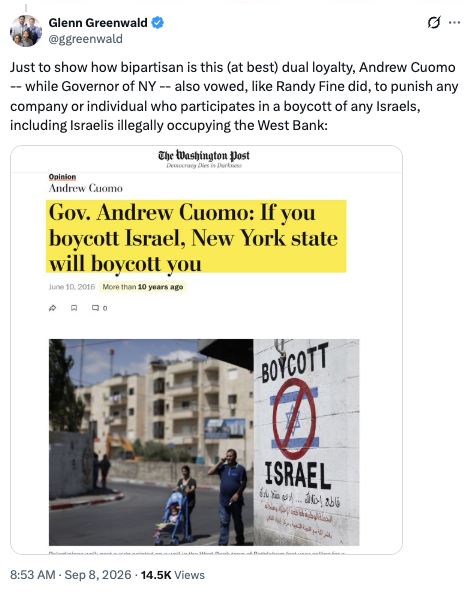
Arkansas and Florida are merely following the lead of New York (this is from 2016):
And it takes a lot of money to fight reality. Thanks to the decades-long willingness of the United States to allow Israel to slurp out of our public financial trough, Israel has a lot of money. They use it to buy our politicians through AIPAC and other organizations. They use our money in other ways too:
In 2026, Israel’s government budgeted 730 million dollars to keep itself the victim in the American mind. A year earlier, the budget was 150 million dollars. Israel’s budget book calls the money campaigns to change what the world thinks of Israel. Anyone paid by a foreign government to influence Americans must register with the United States Justice Department and report what they were paid. Within a month, between late August and late September 2025, four American companies registered as working for Israel. Every one of them was paid from an advertising office in Frankfurt, Germany, hired by the Israeli government. In California, a political consultant was paid to put ads in front of churchgoers. In Washington D.C. a two-man firm was paid to hire influencers. In Virginia, a firm was paid to run ads on X, the platform that used to be Twitter. In Ohio, the man who ran Donald Trump’s first re-election campaign was paid to make videos aimed at young Americans. By the end of March 2026, the four had received more than 27 million dollars of Israel’s money. One buyer, the government of Israel. Israel’s objective is simple: keep Israel the victim in the American mind. Turn the real victims, the Palestinians, into the villains.
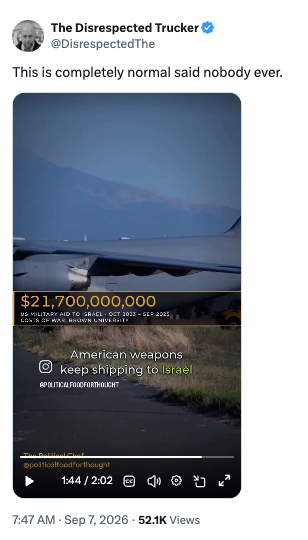
Young Americans are turning away from Israel, and Israel’s own church plan is built to fight it. The plan was to follow them into the pew with one message: the people being bombed are the danger, and the people bombing them are under attack. Once that holds, the rest follows without a flinch. American weapons keep shipping to Israel. At the United Nations Security Council, the American veto keeps falling to protect Israel. More than 50 vetoes over 50 years. American diplomatic cover for Israel never lifts. That is what the money is for.
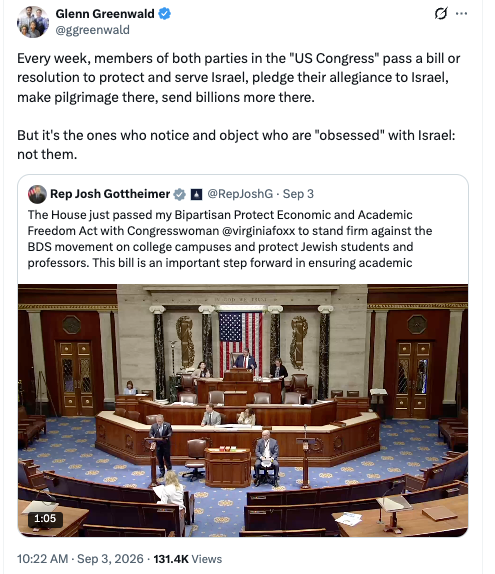
You might think that American politicians are obsessed with Israel, to the extent that they are ignoring the interests of their constituents. That would be correct:
Greenwald: “Every week, members of both parties in the “US Congress” pass a bill or resolution to protect and serve Israel, pledge their allegiance to Israel, make pilgrimage there, send billions more there. But it’s the ones who notice and object who are “obsessed” with Israel: not them.”
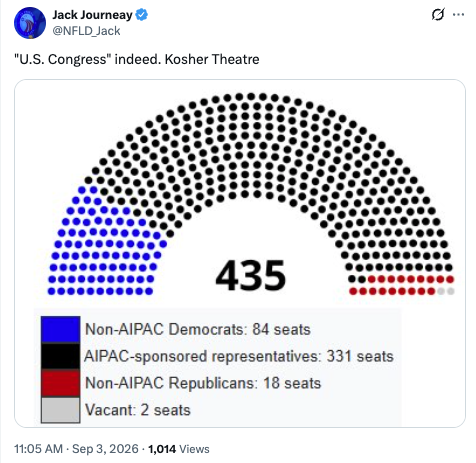
This is a rough approximation of the numbers of members of Congress who have accepted AIPAC money.
I asked Grok this: “What is the percentage of current day democrat versus republican members of Congress, who have accepted AIPAC money over the past five years?
Grok:
So under the wide definition used by advocacy trackers: about 90% of current Democrats and about 98–99% of current Republicans have some recorded pro-Israel lobby money. Republicans have near-universal coverage; Democrats receive more of the dollars on average because of large Super PAC spends in Democratic primaries.
More details from Grok’s answer here.

