
If I heard anyone saying these things three years ago, I would have thought that person needed help for a mental condition. Based on many things I’ve read and seen in the past three years, however, I am gravely concerned that Michael Shellenberger is not overstating the problems we face:
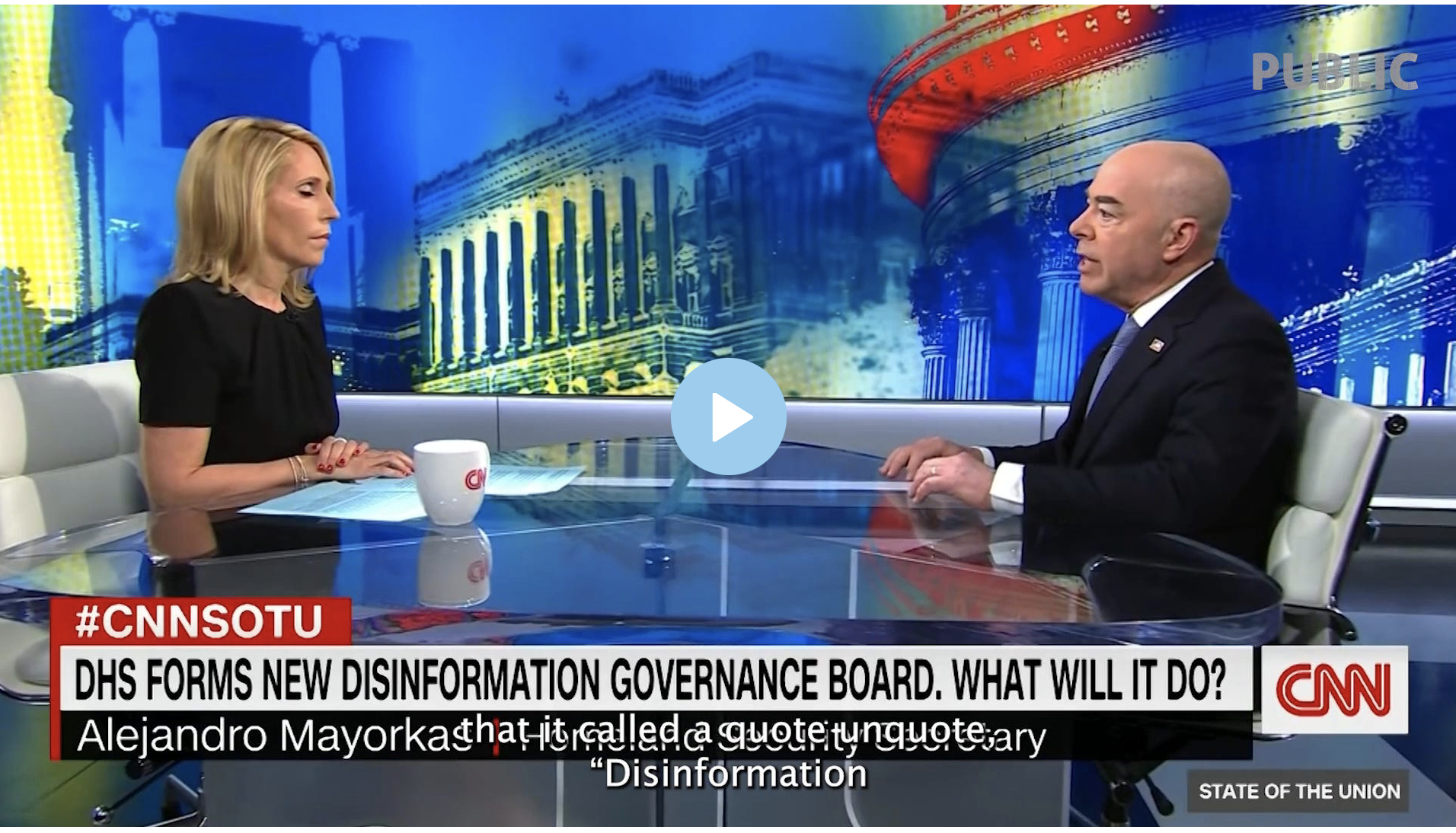
Around the world, politicians have either just passed or are on the cusp of passing sweeping new laws, which would allow governments to censor ordinary citizens on social media and other Internet platforms.
Under the guise of preventing “harm” and holding large tech companies accountable, several countries are establishing a vast and interlinked censorship apparatus, a new investigation by Public finds.
Politicians, NGOs, and their enablers in the news media claim that their goal is merely to protect the public from “disinformation.” But vague definitions and loopholes in new laws will create avenues for broad application, overreach, and abuse.
In Ireland, for example, the government may soon be able to imprison citizens simply for possessing material that officials decide is “hateful.” Under the RESTRICT Act in the US, the government may soon have the authority to monitor the Internet activity of any American deemed a security risk.
Governments aim for total control. In Canada, a state agency can filter and manipulate what Canadians see online. In Australia, a single government official can compel social media companies to remove posts.
Governments and allied NGOs intend to force tech companies to comply with their rules. UK lawmakers have threatened to imprison social media managers who don’t censor enough content. And Brazil has introduced severe penalties for platforms that fail to remove “fake news.”
The key area of action is the European Union. It is seeking sweeping new powers to regulate social media companies. And if it acts, it may change how social media companies operate worldwide, given the EU’s economic power and influence globally.
Under the EU’s Digital Services Act, large tech companies must share their data with “vetted researchers” from non-profits and academia, which would cede content moderation to NGOs and their state sponsors.
The US’s RESTRICT Act, sponsored by Senator Mark Warner (D-VA), threatens 20 years in prison or a $250,000 fine for accessing blacklisted websites through “virtual private networks,” or VPNs, which are ways to create a private connection between a computer or phone and the Internet.
There has been no moment similar to this one in the roughly 30 years of widespread public Internet usage in Western societies.
Officials have introduced these policies mostly in the dead of night with little publicity or outcry. There has been a virtual blackout of what’s happening by mainstream news media corporations, with many appearing to support the new laws.
As shown with the Twitter Files, the Censorship Industrial Complex is as much about discrediting accurate facts, true narratives, and content creators who threaten its power while boosting the ones that do.
We are thus witnessing the emergence of a governmental apparatus with the power to control the information environment in ways that determine what people believe to be true and what is false.
As such, it is no exaggeration to say that the West is on the cusp of a new and much more powerful form of totalitarianism than either Communism or Fascism, which were limited in their reach by geography.
If we are to defeat it, we must understand it. Why are governments seeking to crack down on freedom of speech from New Zealand to the Netherlands and Brazil to Canada? Why now? And why are they getting away with it?


From Reclaim the Net,