RFK, Jr. Detonates the ACIP (Vaccine Approval) Process

From Sudden and Unexpected:

BREAKING: RFK Jr. has fired all 17 members of the CDC’s Advisory Committee on Immunization Practices (ACIP), citing their conflicts of interest in shaping vaccine policy. He calls the action a “total overhaul to rebuild trust in vaccine science.”

“Today we are prioritizing the restoration of public trust above any specific pro- or anti-vaccine agenda,” Kennedy said. “The public must know that unbiased science—evaluated through a transparent process and insulated from conflicts of interest—guides the recommendations of our health agencies.”

The ACIP process is pure insanity. Nothing scientific about it.

Jeffrey Tucker:

For those new to ACIP who want to know why RFK blew up the entire racket today, you need only watch this clip of a typical meeting. Just remember when you read the thousands of MSM articles on how RFK is "anti-science," this is the garbage they are defending.

Continue ReadingRFK, Jr. Detonates the ACIP (Vaccine Approval) Process

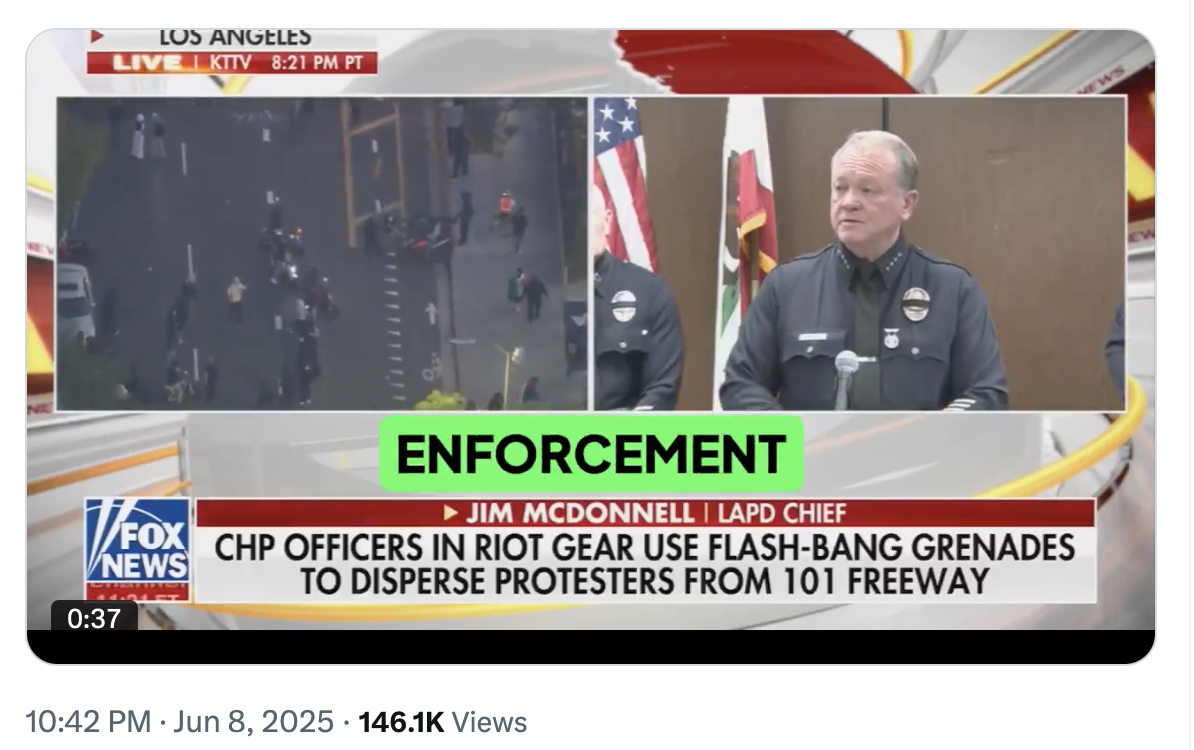
About LA’s Rent-a-Riots

From Tweet by The Vigilant Fox:

LAPD Chief Jim McDonnell just exposed what many already suspected—the chaos unfolding in Los Angeles is being escalated by professional leftist agitators:

“When I look at the people who are out there doing the violence, that’s not the people that we [see] during the day.”

“These are people who are all hooded up. They’ve got a hoodie on. They’ve got face masks on. They’re people who do this all the time.”

“Get away with whatever they can. Go out there from one civil unrest situation to another, using the same or similar tactics frequently.”

“They are connected. Some would call them anarchists.”

“They’re people that we run across routinely, city to city, and this is what they do.”

“Many of the people who are doing this come in from other places just to hurt people and to cause havoc.”

This isn’t spontaneous. It’s organized, and it’s designed to burn the city to the ground.

Continue ReadingAbout LA’s Rent-a-Riots

Vaccines to the Rescue? To What Extent Are Vaccines Responsible for Lowered Rates of Dangerous Infectious Diseases in the U.S.?

To what extent were vaccines responsible for the lowered rates of measles, whooping cough, smallpox, typhoid fever, enteric fever, typhus, scarlet fever and tuberculosis? According to Roman Bystrianyk, not much.

Who is Roman Bystrianyk? Excerpt from Grok:

Roman Bystrianyk is a researcher, author, and software engineer known for his work questioning mainstream narratives about vaccines and infectious diseases. He co-authored Dissolving Illusions: Disease, Vaccines, and the Forgotten History with Suzanne Humphries, MD, which argues that the decline in infectious disease mortality in the 19th and early 20th centuries was primarily due to improved sanitation, nutrition, and living conditions rather than medical interventions like vaccines.

Take a look at this chart, then see his Tweet below:

Imagine a massive drop in all infectious diseases—measles, whooping cough, smallpox, typhoid fever, enteric fever, typhus, and especially the biggest killers of the time: scarlet fever and tuberculosis. All of them began to decline around the same time, steadily trending toward zero—with or without vaccines. Smallpox, once feared, became as mild as chickenpox, even as vaccination rates fell.

When we zoom in on the New England states—an area known for better living conditions and access to healthcare—the story becomes even clearer. In 1962, measles-related deaths were almost nonexistent across all six states:

Connecticut: 0 deaths

Maine: 1 death

Massachusetts: 0 deaths

New Hampshire: 0 deaths

Rhode Island: 1 death

Vermont: 3 deaths

Yet we’re still told that vaccines were the main reason for the decline—even though there was never a national vaccination program for scarlet fever or tuberculosis, the diseases that had taken the most lives. And the vaccines for the diseases we hear about nonstop didn’t show up until after the death rates had already dropped by nearly 100%.

Does really looking at the data and history give you a different perspective on vaccination?

Continue ReadingVaccines to the Rescue? To What Extent Are Vaccines Responsible for Lowered Rates of Dangerous Infectious Diseases in the U.S.?

Definition of Vaccine

Matt Taibbi points out the CDC's quiet change to its definition of "vaccine":

In December 2021, the Centers for Disease Control made a change to its definition of “vaccine.” The old one read, “A product that stimulates a person’s immune system to produce immunity to a specific disease, protecting the person from that disease.” The new definition removed “immunity,” reading, “A preparation that is used to stimulate the body’s immune response against diseases.”

The change was made just ahead of the widespread administration of a Covid vaccine that did not produce immunity:

Continue ReadingDefinition of Vaccine

Michael Strong: The Problem with Compliance in Education

Fantastic conversation. I transcribed it:

Interviewer:

"I was looking at these John Taylor Gatto quotes, and I've got another one. It's a little long, but I'm going to read it because I want to get your reaction to it.

'I've noticed a fascinating phenomenon in my 30 years of teaching, schools and schooling are increasingly irrelevant to the great enterprises of the planet. No one believes anymore that scientists are trained in science classes or politicians in civics classes or poets in English classes. The truth is that schools don't really teach anything except how to obey orders. This is a great mystery to me, because 1000s of humane, caring people work in schools as teachers, aids and administrators, but the abstract logic of the institution overwhelms their individual contributions.'

So how can that be how can individuals be good and the system be rotten?"

Michael Strong:

"So good question.First of all, John Taylor Gatto, essential reading, his "Seven Lesson School Teacher." Gatto, New York State Teacher of the Year. Absolutely essential reading for anyone in education, as that quotation is one of my lodestars, absolutely. Going back into how the system can be when you think about it, you've got, first of all, we all know we don't want to work for two bosses or three bosses. Everybody in a school system is working for the school district governed by the school board. They also have State Department of Education rules. They also have federal Department of Education rules, and these rules are not always consistent.

So to start with, we have three different bureaucracies all imposing compliance going back to the school district level. Once I knew a wonderful superintendent, and he said the worst part of the job is he had to hang out with other superintendents, and part of it is there are politicians in charge of bureaucracies. How do you maintain tenure as a superintendent of a school district? You avoid as many controversies as possible, and you basically keep these school board members happy while not making any waves. And so you become an expert in being a politician, enforcing compliance and not doing anything too different. There are superintendents that try to do little innovations, but it's so risky. They're by nature, necessarily risk averse, and you can go down the ranks. So which principles win? Well, compliance is number one. Doing well by kids is number 3, 4, 5, 6,

You know. And again, even teachers. There's a joke that the teachers of the year are the ones that break all the rules. If your job is to teach this curriculum in this manner, in this timeline, it's all about compliance, and everything great in the human history is by creative and entrepreneurial people who have broken rules, who've decided to do what they believe is right or interesting, often with little evidence, often with social pressure against them. That's the whole story of innovation. And so you can look at school as an anti innovation machine. And yet, going back to Gatto's point, everything valuable is created by innovators. And so it filters out anybody who would want to do something differently."

Continue ReadingMichael Strong: The Problem with Compliance in Education