
Why we should eat insects.
Marcel Dicke is a Dutch insect agricultural specialist. At TED, he made a strong case they need to switch our diets from eating mammals to eating insects.
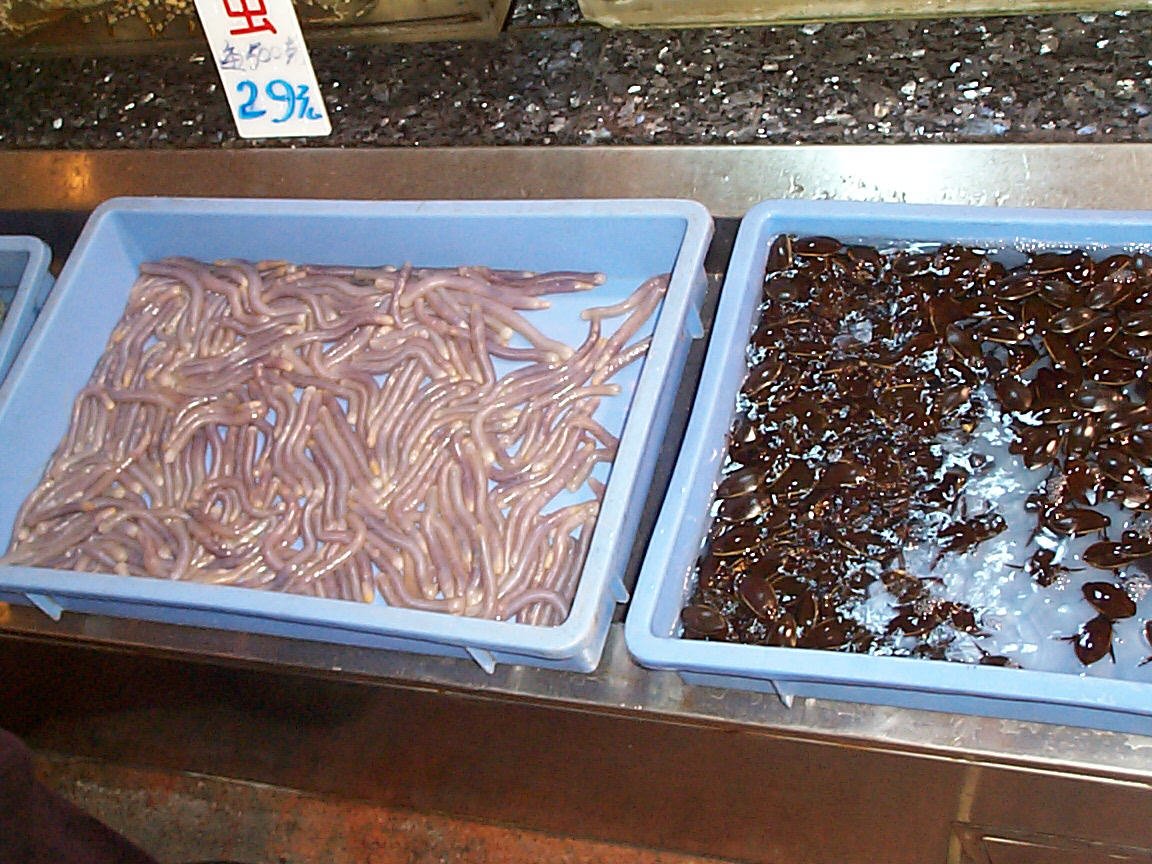 By insects, Dicke is referring to critters with six legs, of which there are 6 million species. 80% of the people of the world currently eat insects (relatively wealthy Western countries being the exception to the rule), and they pick and choose from as many as 1000 species of insects. Dicke referred to fine restaurants in China that allow customers to pick and choose from the bugs they want to eat (I once went to one of these restaurants Guangzhou).
Dicke makes a wide variety of impressive arguments. For instance, we should not get grossed out about eating insects because we already eat lots of insects. On average, each of us already eats 500 g of insects per year--they are ground-up and made part of our peanut butter, tomato soup and other processed foods. Many food dyes are made of insects. There are also pragmatic reasons for switching over to insects. For instance, the Earth's population is rapidly growing, and it is predicted that we will need 70% more food in coming decades, yet there does not seem to be any way to obtain this increase relying on traditional sources of protein. Meat is expensive to produce and, on average, each person on the planet eats 80 kg of meat per year (that's 120 kg per year in the United States). 70% of our land is already used for producing livestock. We have no more land to use for raising food, unless we are willing to destroy even more of our precious dwindling rain forests, and this would give us only an incremental increase in production. The main reason that we should eat insects is that "we will have to." We are already making the move to insect food. Dicke notes that we are increasingly finding insect food products even in developed Western countries.
Insects do not present the danger of recombinant viruses that mammals do. Insects are amazingly efficient at converting food into protein (10 kg of food can be turned at 9 kg of locusts). Further, insects produce far less greenhouse gases and far less waste in general then mammalian livestock. Dicke argues that insects also provide excellent nutrition, and they can be made into a wide variety of foods-- they can be ground into an innocuous looking meal that provides excellent protein. He argues that we already eat a delicacy much like insects when we each shrimp. "The locust is a shrimp of the land." And insects taste good. Many people currently eat insects because they prefer to eat insects.
And check out the specialty foods and pastries that Dicke presents to the audience toward the end of the presentation.
By insects, Dicke is referring to critters with six legs, of which there are 6 million species. 80% of the people of the world currently eat insects (relatively wealthy Western countries being the exception to the rule), and they pick and choose from as many as 1000 species of insects. Dicke referred to fine restaurants in China that allow customers to pick and choose from the bugs they want to eat (I once went to one of these restaurants Guangzhou).
Dicke makes a wide variety of impressive arguments. For instance, we should not get grossed out about eating insects because we already eat lots of insects. On average, each of us already eats 500 g of insects per year--they are ground-up and made part of our peanut butter, tomato soup and other processed foods. Many food dyes are made of insects. There are also pragmatic reasons for switching over to insects. For instance, the Earth's population is rapidly growing, and it is predicted that we will need 70% more food in coming decades, yet there does not seem to be any way to obtain this increase relying on traditional sources of protein. Meat is expensive to produce and, on average, each person on the planet eats 80 kg of meat per year (that's 120 kg per year in the United States). 70% of our land is already used for producing livestock. We have no more land to use for raising food, unless we are willing to destroy even more of our precious dwindling rain forests, and this would give us only an incremental increase in production. The main reason that we should eat insects is that "we will have to." We are already making the move to insect food. Dicke notes that we are increasingly finding insect food products even in developed Western countries.
Insects do not present the danger of recombinant viruses that mammals do. Insects are amazingly efficient at converting food into protein (10 kg of food can be turned at 9 kg of locusts). Further, insects produce far less greenhouse gases and far less waste in general then mammalian livestock. Dicke argues that insects also provide excellent nutrition, and they can be made into a wide variety of foods-- they can be ground into an innocuous looking meal that provides excellent protein. He argues that we already eat a delicacy much like insects when we each shrimp. "The locust is a shrimp of the land." And insects taste good. Many people currently eat insects because they prefer to eat insects.
And check out the specialty foods and pastries that Dicke presents to the audience toward the end of the presentation.
