Temple of Disinformation

In America's heartland there is a modern temple to the denial of five nines (99.999%) of what we've learned about the universe in the last couple of centuries. The Creation Museum is a sleek, elegant, well presented indoor theme park almost entirely lacking in actual knowledge. It is derided worldwide, and is a source of shame for our once forward thinking nation. It is also, I grant, an edifice to the principle of free speech. The ham, showman and charlatan who created this institution in Kentucky after he was laughed out of his Australian homeland seems to be quite sincere about the project. Ken Ham is actually his name. And he has been raking in major profits for nearly three years from this place, well beyond even his early hopes. Apparently there is more than one born again every minute. Busloads of young Christians long to go on pilgrimages to shore up their Young Earth ideology. The younger ones (under 12) can even get their picture taken on the back of a dinosaur, just like those that people rode. That is, before the old west cowboys killed the last of them off. That's why all those T-Rexes are found out on the great plains. You don't have to take this from me on faith, follow the links from the Wikipedia article on the Creation Museum. See actual video tours. So, why am I venting my bile right now? Wasn't this already adequately covered on this site? I just learned that a young collateral relative, a bright young man, is looking forward to his trip there this weekend! Half a dozen years ago, he was in public schools, in every advanced program they offered. Advanced science and math and lead cello in the district orchestra. Then his parents removed him from all that intellectual wealth to put him in a small Christian school. He still excelled, eventually garnering college board scores that got him invitations to Harvard and Yale and such. But he wants to go to a small school with an influential chapter of the Campus Crusade. Sigh. Most of this is re-posted from this FaceBook note.
Continue ReadingTemple of Disinformation

Ripped off because we don’t do well at math

I'm in the process of reading Stopped Getting Ripped off: Why Consumers Get Screwed, and How You Can Always Get a Fair Deal, by Bob Sullivan (2009). He starts off by asking you to pretend that you are in a restaurant and you are presented with a menu that he illustrates on page 5 of his book. You are asked to assume that you ordered the onion soup (the price is clearly listed on the menu as $.60) and the "Lancaster Special Sandwich" (the price is clearly listed on the menu for $1.95). The question he asks is this: "How much should you leave for a 10% tip? I'll wait for a bit while you do your calculation in your head. No calculators, please. What did you come up with? [more . . . ] The answer is 25.5 cents, so either 25 cents or 26 cents would be an acceptable answer. What Sullivan next states is shocking:

If you answer this question correctly, consider yourself part of an elite group, because when the US Department of education asked US adults to answer it as part of a nationwide study, only 42% answered correctly. Less than half of American adults were able to pick two numbers from the list, add them, then perform the most basic of all percentage calculations--simply moving the decimal point one column to the left to calculate 10%.

Innumeracy is literally killing us. Try to think of a major issue facing our country that does not require a basic proficiency in mathematics that most of us don't seem to have. Think of the environment, energy, national budget, climate, health care, evolution being taught in public schools, space exploration, public health issues (e.g., the importance of vaccinations), the true cost of the "war on drugs," reform of financial institutions or taxation policy. Since most Americans cannot understand how to calculate a 10% tip, there is little chance that they could meaningfully participate regarding most of the big issues facing our country. These are truly painful words to write. Just think of the many math-related claims that got math-ignorant voters excited during the last presidential election, including Sarah Palin's claim that American could live long and prosperously on Alaskan oil (when straight-forward calculations based on known reserves showed that there is only enough Alaskan oil to supply America's current rate of use for six months). Imagine how different things would be if most Americans could actually calculate the minimal chance that they would be affected by an act of terrorism, and if they were able to compare that risk to the immense numbers of lives that could be saved by much more modest expenditures. But it's not even clear whether most Americans can benefit from further training regarding statistics. It's certainly true that many health care professionals don't adequately understand basic problems involving risk. The reasons so many of us are innumerate are not easily addressed. We desperately need proficient math skills to tamp down our fears. I know it has been tried (and abused) before, but a sinister thought enters my mind. The information presented by Sullivan makes me wonder whether we should make voters take and pass a rudimentary math test before allowing them to vote. How indignant could a rejected voter be if he/she can't figure out a ten percent tip? Understanding the many math-based claims asserted by candidates is sometimes the only way to see past their slick acting abilities. I'm not seriously suggesting a poll quiz, though I'm sure that my frustration is showing through. What we really need to do is provide better math education all the way through school. It appears that we are paying dearly for the many grade schools that fail at math education, individually and as a country.

Continue ReadingRipped off because we don’t do well at math

Dilemma at Rocky Mountain National Park

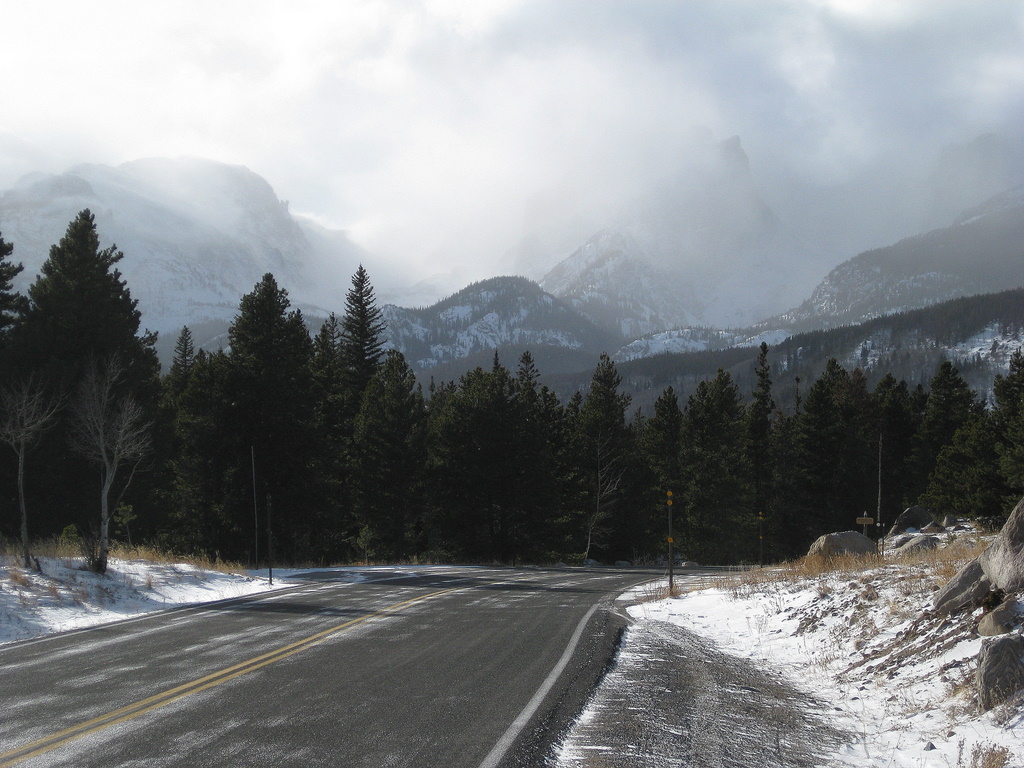
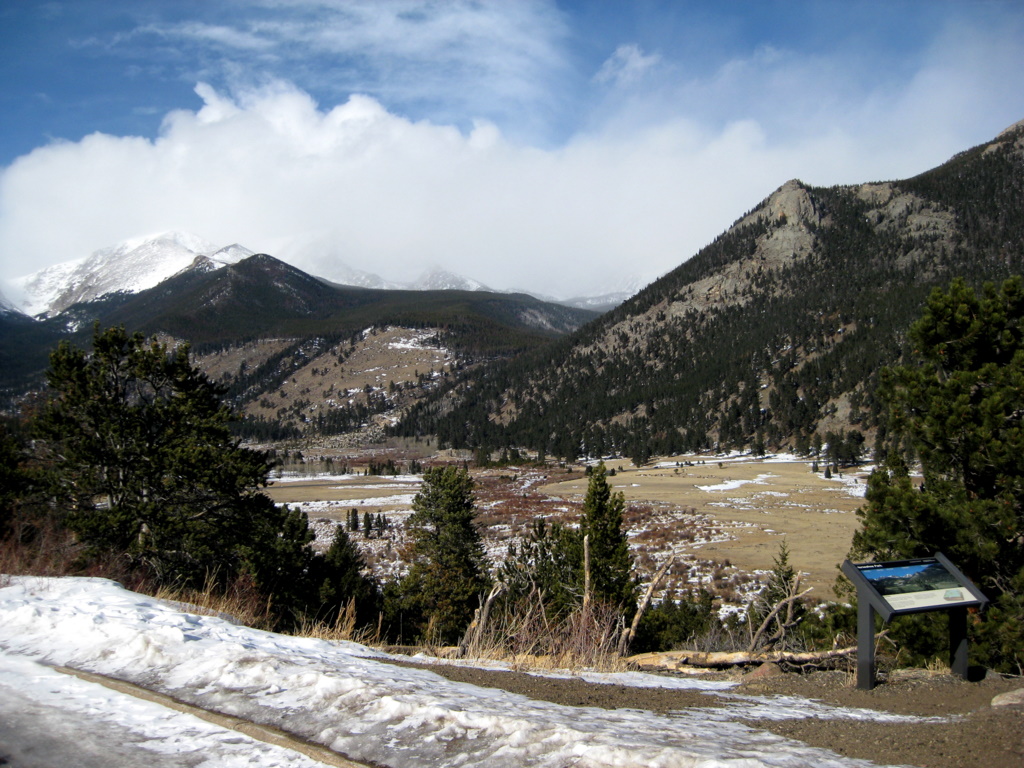
To shoot photos, or not to shoot photos; that is the question raised by Erika Price's most recent post. During yesterday's long trip through Rocky Mountain National Park in Colorado, I often stayed away from my camera to stay in the moment, but I often just had to try to capture yet another photo, because I wanted to remember it, and my memory doesn't provide images in brilliant color. But I didn't want it all to be about capturing yet another image. It was quite a conundrum. Experience it versus photograph it. There were other conundrums too. Look at these incredible scenes wordlessly, or think about them in words while you look at it. img_1676 What an incredible experience, to be able to walk through this incredible park, even though it was about 20 degrees and even though the wind was often howling. Down on the trails of Bear Lake, I had my first chance to walk on snow shoes. The perfect tool for the job, when you are sometimes walking on two or three feet of snow. Note: Click on any of these images for a much larger version. My camera (a Canon SD1100IS is a consumer grade camera with photo stitch feature--most consumer cameras have this feature. I ended up taking about 10 panoramas, because a single photo just doesn't quite preserve that immense feeling of space. panorama-plains I was in Denver for a conference last week, and my trip to Rocky Mountain National Park was only for a day. Alas, I dreamed of someday staying there for a week, hiking during the day and writing at night. img_1784 Then, when I thought I had seen the most magnificent sights, today I was greeted with a brilliant sky on the way to the airport. img_1952

Continue ReadingDilemma at Rocky Mountain National Park

Pics or it didn’t happen!

Image by Rohan Kar, courtesy of Wikimedia Commons I was mulling around the Lincoln Park Zoo today with a friend when a man stepped on me. He was filming a Siberian tiger with a high-end digital video camera, which he held on an expensive mounting. He was fidgeting with all of the camera's features, backing up to get the perfect shot, and he stepped all over my feet. The foot-stomping didn't bother me so much as the man's intent focus on something other than his present surroundings. A beautiful creature stood before him, but his attention was directed at the camera and the filming of the tiger more than it was the tiger itself. Not much later, something similar occurred in the Tropical Birds House. As I was watching the bleeding-heart pigeons, a man, family in tow, came around the corner with a massive video camera. He also had it placed on an expensive mount. Obliviously, he nudged forward until his lens nearly leaned on the display's glass. He fiddled and fidgeted. He zoomed on the critters for a moment, and left. "Do you think he'll ever watch that footage?" my friend asked. "No," I guessed. Without much thought I noted, "It isn't about the footage. He probably just bought that camera, and is filming because he wants to play with it." "So the actual footage is useless," he observed in return. I intuited that the man's camera was a new purchase because I've done the exact same thing with a fresh 'toy'.

Continue ReadingPics or it didn’t happen!

Avatar

Okay, so I contributed to the James Cameron Self Love Fund and saw AVATAR. Yesterday we went to the 3-D showing (no way I would spend money on the normal view, I can wait for the DVD the way I do with 99% of the movies I see anymore). I’ve had a day to think about it now and I’ve come to some conclusions, which are hardly profound, but I think worth saying. Let me say up front that I wasn’t bored. Visually, this is a stunning achievement. But that’s what everyone is saying. It is, in fact, the best 3-D I’ve ever seen. Often in the past the effect is minimal and the cost in headache high. This was neither. And it fully supported the visuals rather than masking mundane or poor image elements. Pandora, the planet involved, is magnificently realized. Cool stuff. Real gosh wow. The biology is problematic. You have a wide mix of lifeforms analogous to Earth. Some big lumbering critters like hippos or rhinoceri that also have features of a dinosaur, and some small things that are clearly wolves, and one big nasty cat-like thing that’s like a sabertooth tiger. It’s unclear if any of these creatures are mammalian, but it doesn’t matter much. Dinosaur analogs. Most of them apparently four-legged. But the “horses” the natives ride are six-legged, reminiscent of Edgar Rice Burroughs’ thoats. How does that play out in evolutionary terms? Well, maybe that’s a quibble. How then do you evolve humanoids out of this? Well, maybe that’s a quibble, too. This film is not about science on any level, regardless of the few bits of dialogue suggesting there are, you know, scientists, and that there is a studyable cause to any of this. Because the story, basically, is hackneyed, cynical, and cliched. [more . . . ]

Continue ReadingAvatar