More of my favorite quotes

I collect quotes (who doesn’t?). Really, it’s a good hobby. It’s cheap and often interesting. When they are really good quotes, it’s like a novel condensed to a mere sentence.

The first two of this set are about one of my favorite topics, rampant materialism. The others all relate closely to one another, but only if you have a wild imagination or if you think of a very broad topic like “meaning of life.” Without further ado:

Who is content with nothing possesses all things.
— Nicolas Boileau Despreaux

Wealth is the number of things one can do without.
— Feodor Dostoyevsky

The trouble is that you think you have time.
— Zen Master

Observe your enemies, for they first find out your faults.
— Antisthenes

A hole is nothing at all, but you can break your neck in it.
— Austin O’Malley

War is when the government tells you who the bad guy is. Revolution is when you decide that for yourself.
–Anonymous

Never mistake motion for action.
— Ernest Hemingway

Share
Share

Continue ReadingMore of my favorite quotes

If you like romance and music, I’ve got a movie for you: “Once” (2007)

I knew something was up when, in the opening scene of the film, an actor was playing the guitar but he really knew how to handle that guitar. "Once," which was written and directed by John Carney, is a low-budget ($160,000) Irish love story that deservedly won a slew of…

Continue ReadingIf you like romance and music, I’ve got a movie for you: “Once” (2007)

We knew him when . . . Nick Smith designs his way to PWN or Die

Do any of you remember the Nick Smith of 30 months ago? Back then, Nick, based in Decatur, Illinois, designed a brand new site called Dangerous Intersection. At that time, DI was only the most recent of Nick’s accomplishments—he had already established himself as a graphic designer for music groups…

Continue ReadingWe knew him when . . . Nick Smith designs his way to PWN or Die

Citizens act like dysfunctional children when kept ignorant of “natural consequences.”

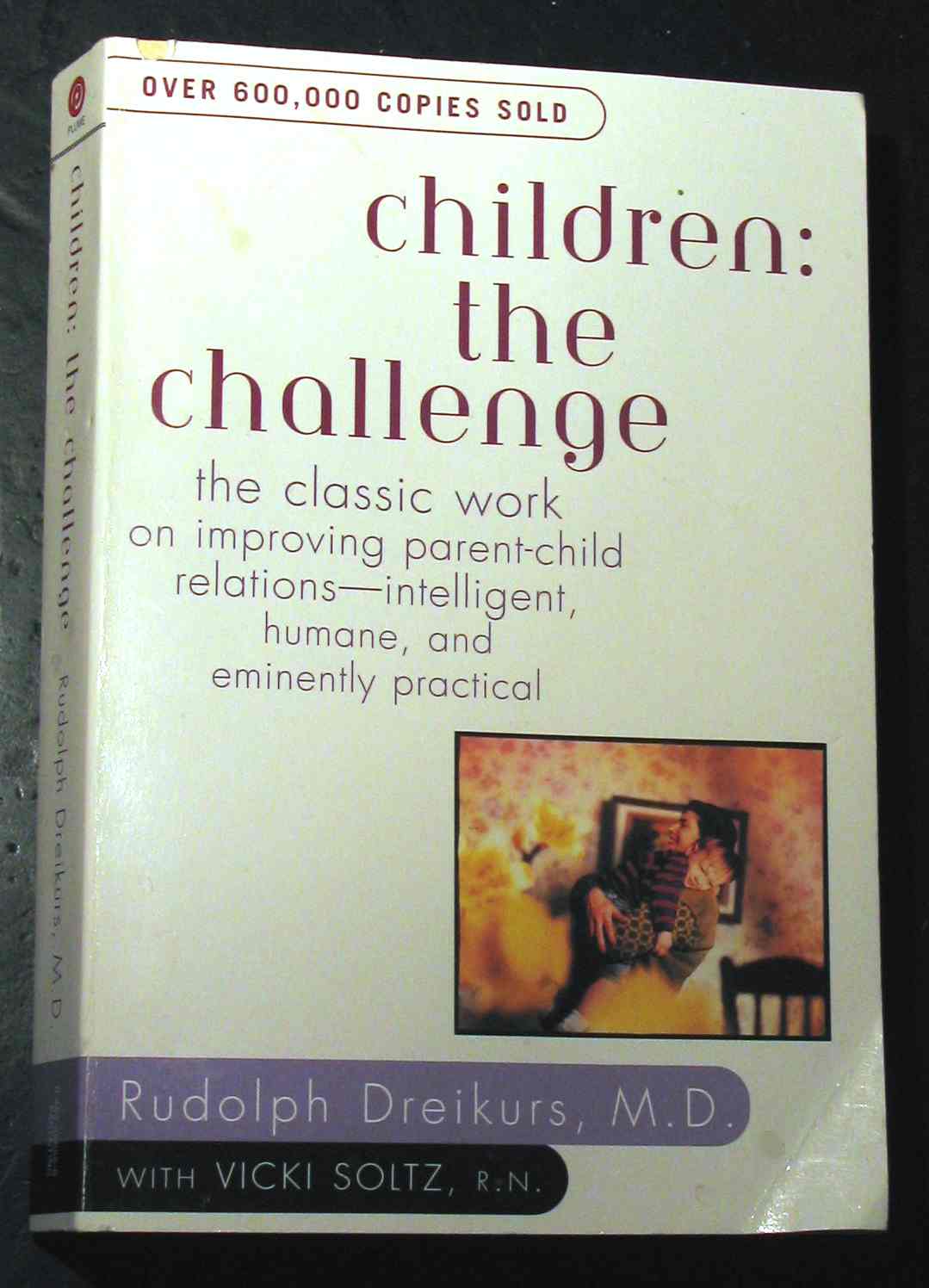
In 1964, Rudolph Dreikurs wrote a child psychology book that is still considered a classic by child psychologist: Children: the Challenge. Dreikurs argued that using punishments to change behavior is inefficient.

No amount of punishment will bring about lasting submission. Confused and bewildered parents mistakenly hope that punishment will eventually bring results, without realizing that they are actually getting nowhere with their methods or, at best, they gain only temporary results from punishment. When the same punishment has to be repeated again and again, it should be obvious that it does not work. The use of punishment only helps the child to develop greater power of resistance in defiance.

Dreikurs argued that the authoritative idea of using punishment needs to be replaced with a sense of mutual respect and cooperation. Children need real leadership. “A good leader inspires and stimulates his followers into action that suits the situation.” It is important to arrange the learning situation such that a child learns “without a show of power, for power insights rebellion and defeats the purpose of child-raising.”

children the challenge book lo res

Dreikurs also cautions parents about using rewards:

The system of rewarding children for good behavior is as detrimental to their outlook as a system of punishment. The same lack of respect is shown. We “reward” our inferiors for favors or for good deeds. In a system of mutual respect among equals, a job is done because it needs doing, and the satisfaction, for the harmony of two people doing a job together…. satisfaction comes …

Share

Continue ReadingCitizens act like dysfunctional children when kept ignorant of “natural consequences.”