RFK, Jr.: Three Rules About Totalitarianism

[Transcription by Camus on X]

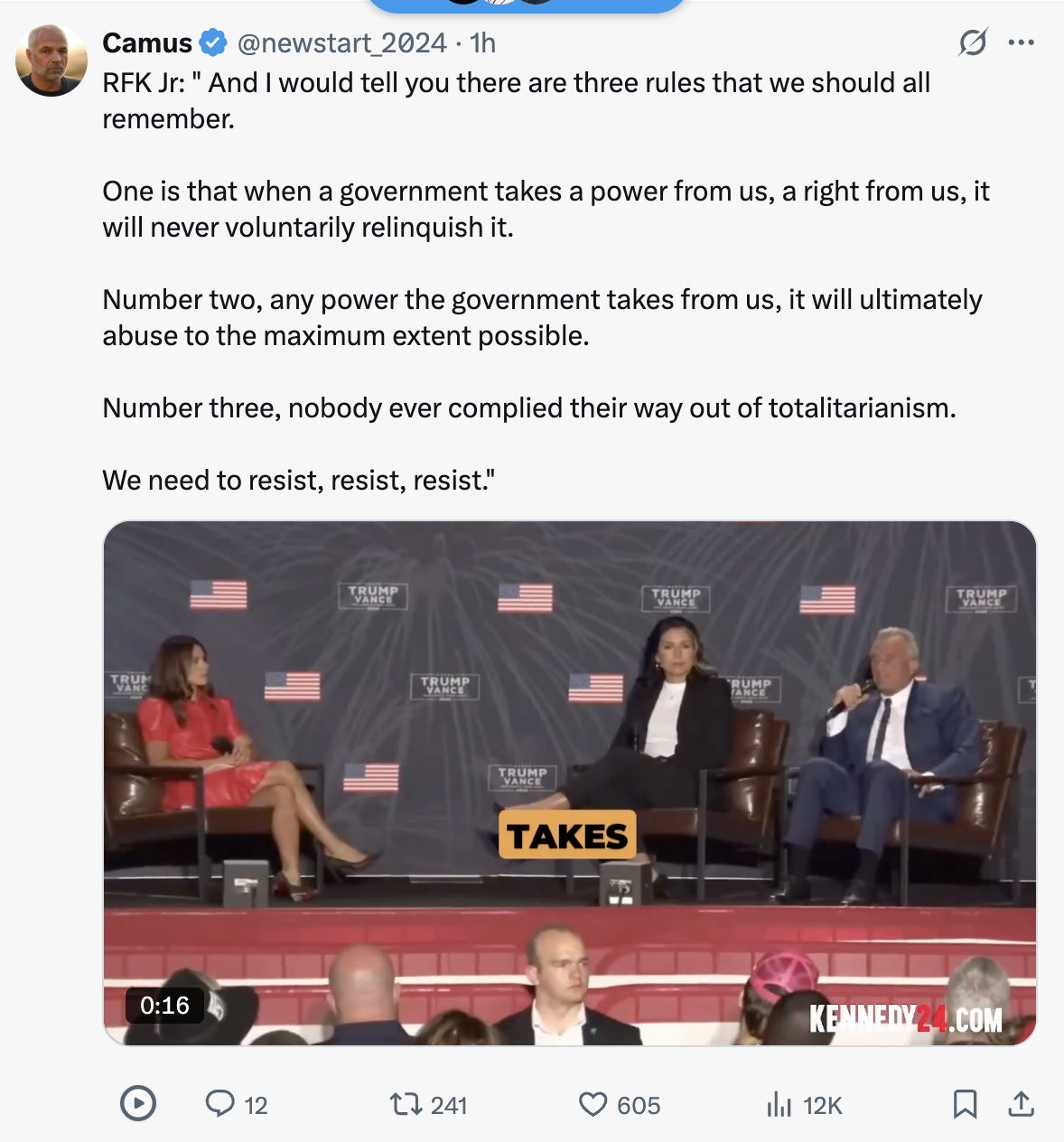
RFK Jr: " And I would tell you there are three rules that we should all remember.

One is that when a government takes a power from us, a right from us, it will never voluntarily relinquish it.

Number two, any power the government takes from us, it will ultimately abuse to the maximum extent possible.

Number three, nobody ever complied their way out of totalitarianism.

We need to resist, resist, resist."

Continue ReadingRFK, Jr.: Three Rules About Totalitarianism

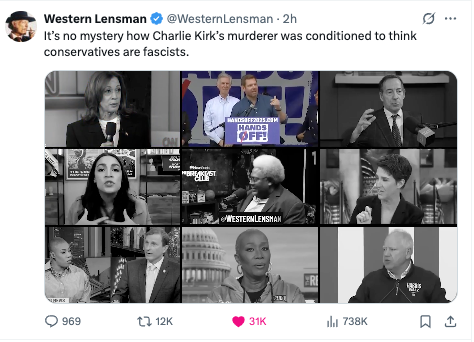
How Could it be that Politicians We Disagree with Come to be Seen as Facists?

Why don't we simply see politicians we disagree with as politicians we disagree with? How is it that so many people seem then as so morally degenerate that we need to get rid of them and the end justifies the means?

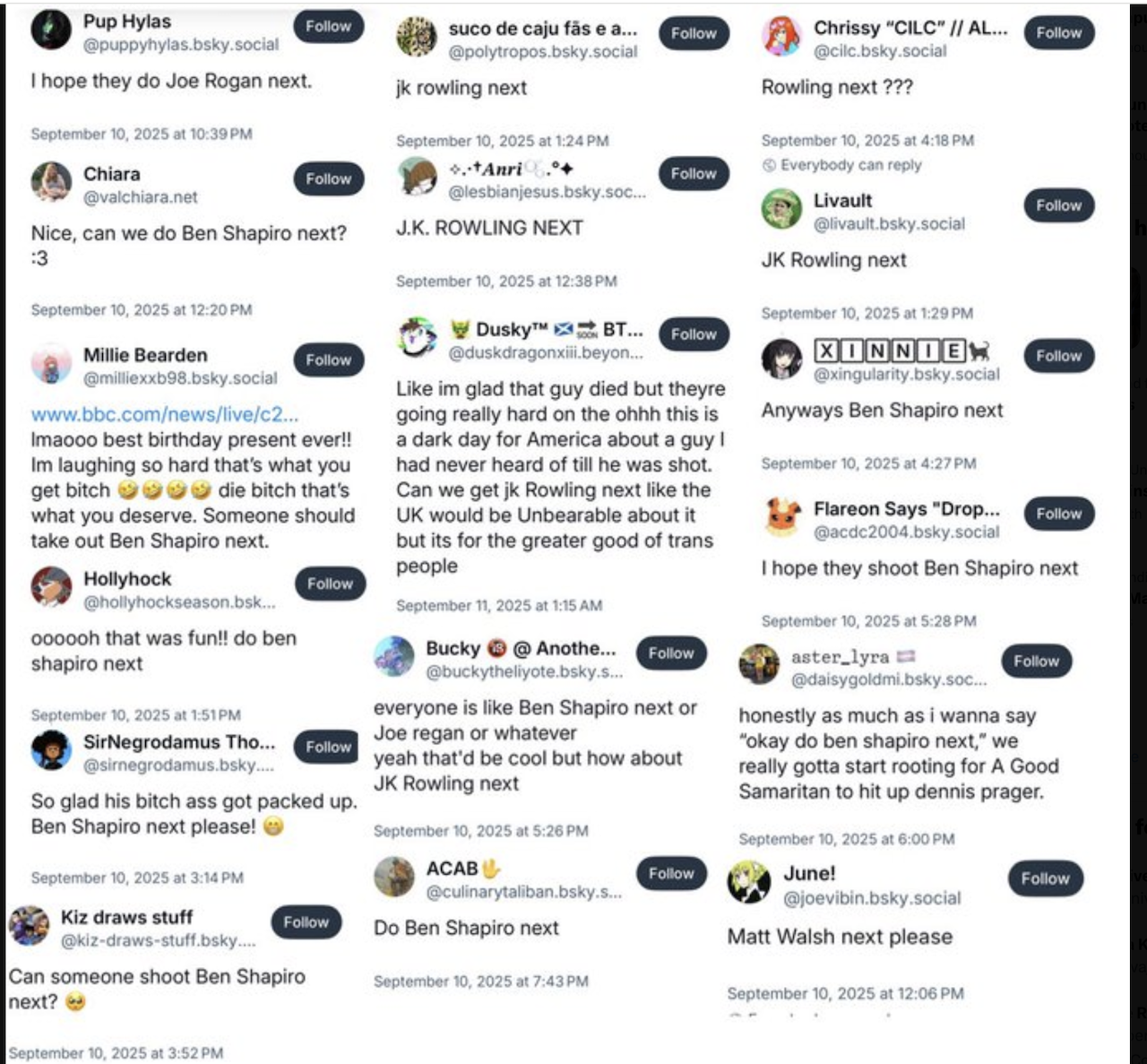
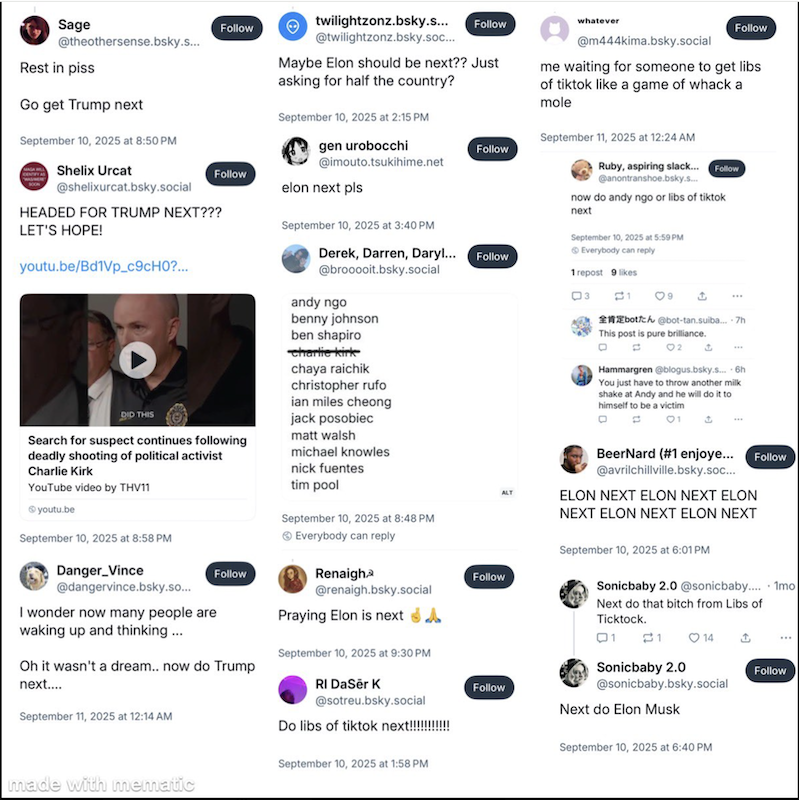
The end result of this conditioning is what is currently flooding BlueSky (the social media platform catering especially to people leaning to the Left) in the wake of the assassination of Charlie Kirk:

Continue ReadingHow Could it be that Politicians We Disagree with Come to be Seen as Facists?

Getting the Facts Straight First

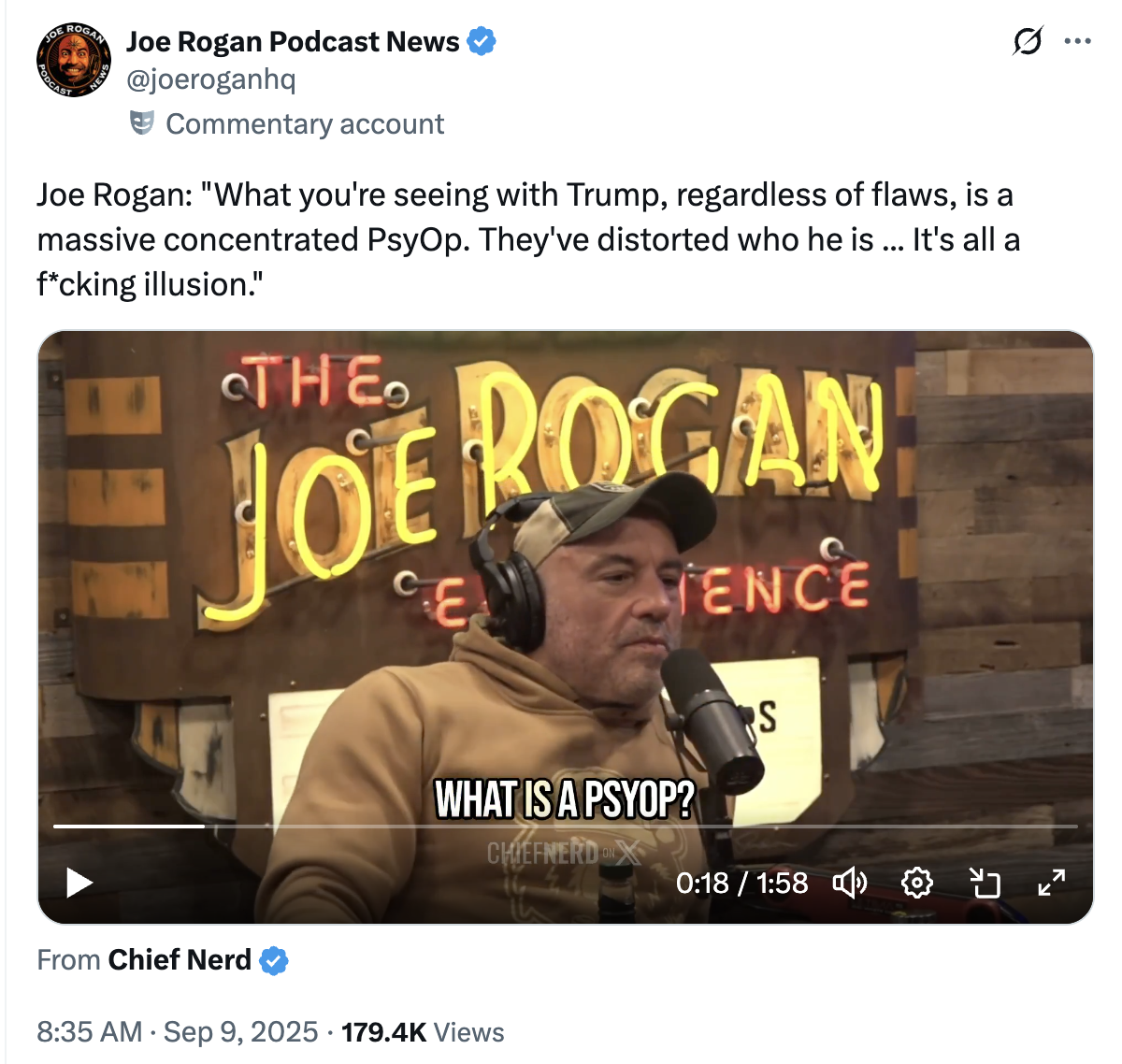
On all topics we need to get the facts straight before we can have any meaningful conversations. Joe Rogan brings up two examples regarding immigration.
1. FAR more people were deported under Obama than under Trump I and II. Look it up or see the link in the comments.

2. Hillary Clinton position on illegal immigration in 2008: Re people in the US illegally,

If they've committed a crime, deport them, no questions asked. They're gone. If they are working and law abiding, we should say, "Here are the conditions for you staying: You have to pay a stiff fine because you came here illegally. You have to pay back taxes and you have to try to learn English. And you have to wait in line."

What changed after Hillary Clinton took this strong stand that would convince her to reverse her stand? And for most elected Democrats and their supporters, what changed? What changed that would reverse their positions on warmongering, censorship, immigration, COVID mandates, experimental transgender medical interventions and the "need" for primary school teachers to confuse their students about whether they are boys or girls? How is it possible that so many people would flip their positions without a massive revelation of new facts to justify the flip? I suspect that the mechanism is social contagion (of the type discussed by Abigail Shrier), but what was the driver of the contagion? I suspected it is the highly coordinated actions by NGOs, many of whom were financed through the federal government (though USAID). The evidence is starting to pour out, starting with the Twitter Files

Here are Grok's numbers of deportations under Trump and Obama:

During Barack Obama's presidency (2009-2017), the U.S. government carried out approximately 3 million formal removals (deportations) of noncitizens. This figure refers specifically to removals, which involve a formal court order and often carry long-term consequences like bars to reentry, as defined by the Department of Homeland Security (DHS). Some sources cite higher totals for Obama (around 5.3 million) when including voluntary returns at the border in addition to formal removals.

During Donald Trump's first term (2017-2021), approximately 1.2 million noncitizens were formally removed. Other estimates put this at around 2.1 million when including returns.

As of late August 2025 (about seven months into Trump's second term), Immigration and Customs Enforcement (ICE) had deported nearly 200,000 people. When including actions by U.S. Customs and Border Protection, the Coast Guard, and self-deportations, the total rises to nearly 350,000 deportations since January 2025. By September 2025, this number would likely be slightly higher but still far below Obama's totals.

Overall, far more illegal immigrants were deported under Obama than under Trump's second term to date (or even his first term).

Rogan's conclusion, we are being subjected to a "massive concentrated psyop."

Grok on PsyOp:

A psyop, short for psychological operation, refers to planned activities designed to influence the perceptions, emotions, attitudes, and behaviors of targeted audiences, often through the dissemination of information, propaganda, or other non-violent means. In a military context, psyops are used by armed forces—such as the U.S. Army's Psychological Operations (PSYOP) units—to convey selected messages that support strategic objectives, like persuading enemies to surrender or building support among allies. This can involve tactics such as leaflet drops, broadcasts, social media campaigns, or cultural engagements to shape opinions without direct combat.

The term is closely related to psychological warfare (sometimes called PSYWAR), which encompasses broader efforts to demoralize opponents or rally support using misinformation, rumors, or symbolic actions. Outside of official military use, "psyop" is sometimes invoked colloquially or in conspiracy theories to describe perceived manipulative campaigns by governments, media, or other entities, though this is more informal slang than a formal definition.

Also see Robert Malone's new book, Psywar.

Continue ReadingGetting the Facts Straight First

The Continuing Cover-Up of Russiagate

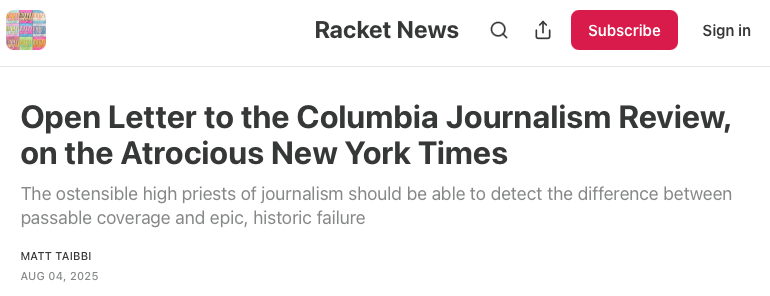
I know more than a few people who swear that Donald Trump colluded with Russia to win the 2016 election. They "know" this because they limit their informational ecosystem to the New York Times, Washington Post and other corporate media outlets. When the Columbia Journalism Review published its August 1 paean to the New York Times, Matt Taibbi took exception to the many well-documented lies and distortions published by the NYT on this topic and also called out the CJR. Here's an excerpt of Taibbi's well-deserved response to the CJR, titled "Open Letter to the Columbia Journalism Review, on the Atrocious New York Times: The ostensible high priests of journalism should be able to detect the difference between passable coverage and epic, historic failure":

Letter to Bill Grueskin, former Dean of the Columbia Journalism School, on his recent article in the Columbia Journalism Review

Mr. Grueskin,

Regarding your August 1 article, “Knowing: Still Only Half the Battle,” which lauds Charlie Savage of the New York Times for having “dissected and eviscerated” Director of Intelligence Tulsi Gabbard’s claims about corruption of intelligence in the Trump-Russia investigation:

You praised Savage’s article, “New Reports on Russian Interference Don’t Show What Trump Says They Do,” as an example of the work of an “experienced beat reporter” who can distill complex stories into a “coherent, compelling whole.” Your sub-headline stressed the importance of “showing receipts” in journalism, where “most people don’t follow stories very closely,” but “they can learn a lot when an experienced beat reporter helps them sort out what’s important and what’s chaff.”

Chaff.

Except — and you should know this because the Columbia Journalism Review published over 20,000 words on the subject in January 2023 — Savage and his colleagues at the Times have badly miscovered this story for nearly a decade, and continue to do so. The 2018 Pulitzer Prize the paper won on the topic along with the Washington Post will go down as the same kind of “disgrace” as its 1932 Pulitzer for Walter Duranty’s breathless coverage of Stalin’s Russia. In this case, the Times drifted so far from its traditional mission that it became an animating motive for Gabbard and other investigators in Donald Trump’s administration.

It is critically important to remember here that in 2023, Jeff Gerth excoriated the NYT for its "coverage" of Russiagate.

Jeff Gerth's article critically examined how the media, particularly The New York Times, amplified the "Russia thing" narrative, often relying on anonymous sources and incomplete context, such as the Times' reporting on a February 2017 story about Trump campaign contacts with Russian intelligence, which Comey later criticized as “almost entirely wrong.” Gerth argued that the NYT often lacked rigor, contributing to a polarized public perception and Trump’s distrust of the press, as evidenced by his “enemy of the American people” rhetoric.

The piece also critiques the media’s handling of leaks, such as Comey’s memos, and the subsequent appointment of Special Counsel Robert Mueller, suggesting that sensationalized reporting fueled a narrative that sometimes outpaced evidence. Gerth points to specific examples, like the Times’ failure to fully retract or clarify disputed stories, and contrasts this with other outlets like The Washington Post, which included more context in their reporting. Through interviews and analysis, Gerth underscores a broader pattern of media overreach, arguing that the lack of accountability and reliance on uncorroborated sources damaged credibility.

Continue ReadingThe Continuing Cover-Up of Russiagate