Democracy Now's Amy Goodman led a discussion also involving Chris Hedges and Geoffrey Stone, law professor at the University of Chicago Law School. Hedges supports the disclosure of government secrets to the press by people of conscience where the secrets are disclosed to the press. Stone indicates that what Edward Snowden disclosed was clearly a crime and he should be prosecuted, although the government needs to reevaluate the scope of its surveillance state. Fascinating conversation. My own position is quite close to Hedges on this issue, but I also believe that citizen journalism should be regarded as comparable to mainstream journalism in terms of protection offered from prosecution for engaging with whistle-blowers to discuss what they believe to be government wrong-doing. Elevating citizen journalists (I aspire to assume that role) to the category of the press, of course, means that any whistle-blower could talk to any blogger about any government secret and yet be protected from prosecution. This is a thorny issue, but one where work-arounds seem possible, especially given Stone's alternative.
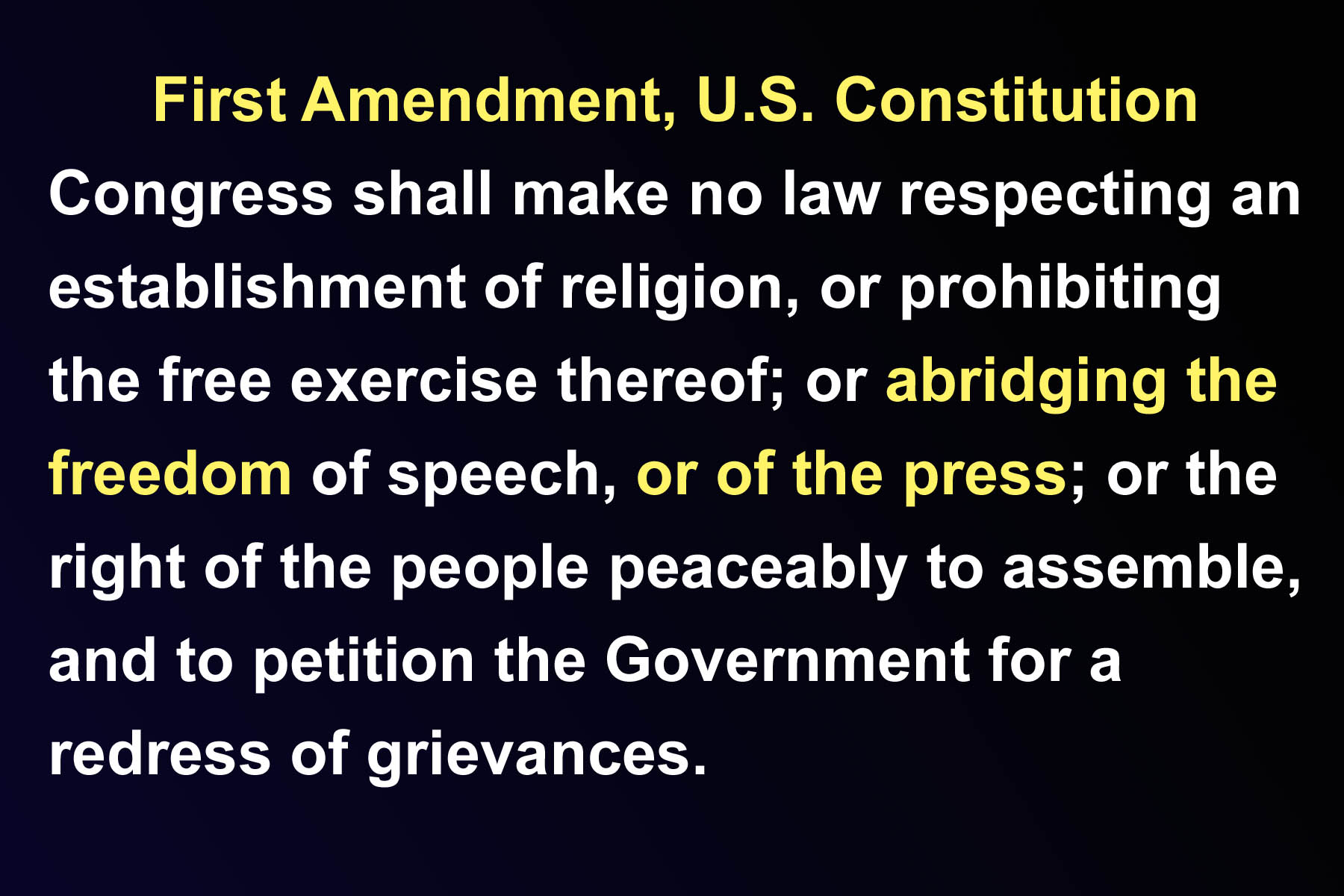
Stone argues that where government is acting inappropriate in realms involving classified information, the leakers should be prosecuted, even in situations involving grave government injustice. The press is immune from prosecution in this situation, based on the Pentagon Papers case. Stone's position is deeply unsettling, however, because the issue today is out-of-control government surveillance. This rampant spying, including on reporters and sources, means that there won't be any more revelations of government wrongdoing by the press. The current situation amounts to shutting down the press, meaning that the public will be kept in the dark. Stone's "solution" for this is that government should seek internal solutions to its own injustices, in the dark. Stone asserts this to be a solution despite his earlier statements that governments are strongly motivated in the direction of NOT finding true solutions, but rather in maintaining and aggregating power over the citizens. My challenge to Professor Stone, then would be to offer a real long-term solutions. He pulls out the threat of terrorism card near then end of the discussion to justify what apparently amounts to the status quo approach (prosecute whistle-blowers who talk to the press, which Hedges argues will destroy the press). Hedges further disparages the concern with terrorism, indicating that terrorists communicate off the grid, meaning that the Surveillance State's victims are ordinary people.
[Note: This discussion occurred prior to more recent disclosures that the U.S. government is collecting far more than metadata]
Here is an excerpt from the discussion:
CHRIS HEDGES: Well, what we’re really having a debate about is whether or not we’re going to have a free press left or not. If there are no Snowdens, if there are no Mannings, if there are no Assanges, there will be no free press. And if the press—and let’s not forget that Snowden gave this to The Guardian. This was filtered through a press organization in a classic sort of way whistleblowers provide public information about unconstitutional, criminal activity by their government to the public. So the notion that he’s just some individual standing up and releasing stuff over the Internet is false.
But more importantly, what he has exposed essentially shows that anybody who reaches out to the press to expose fraud, crimes, unconstitutional activity, which this clearly appears to be, can be traced and shut down. And that’s what’s so frightening. So, we are at a situation now, and I speak as a former investigative reporter for The New York Times, by which any investigation into the inner workings of government has become impossible. That’s the real debate.